The Future Of Space Travel : Solar sails could reach Mars in just 26 days

The Future Of Space Travel : Solar sails could reach Mars in just 26 days
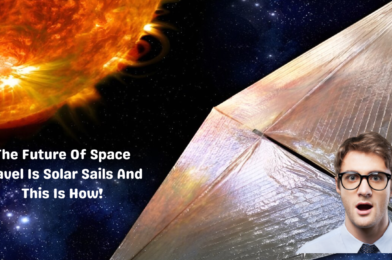
Solar sails are a type of spacecraft propulsion system that uses the pressure of sunlight to push a spacecraft through space. Solar sails are made of thin, reflective materials, and they are typically much larger than the spacecraft itself. This allows them to capture a large amount of sunlight, which can be used to accelerate the spacecraft to high speeds.

Solar sails have a number of advantages over traditional rocket propulsion systems. First, they do not require any fuel, which can significantly reduce the weight and cost of a spacecraft. Second, solar sails can generate thrust for an extended period of time, which allows them to reach very high speeds.

A recent study by researchers at the University of California, Los Angeles (UCLA) has found that solar sails could be used to reach Mars in just 26 days. This would be a significant improvement over the current travel time of 6-9 months.

The UCLA researchers developed a new type of solar sail made of aerographite, which is a material that is extremely lightweight and strong. They also developed a new trajectory that would allow the solar sail to reach Mars in a shorter amount of time.

The UCLA researchers’ study is a significant step forward in the development of solar sail technology. It shows that solar sails could be used to dramatically reduce the travel time to Mars and other planets in the solar system.

Here are some of the potential benefits of using solar sails to travel to Mars:

1. Faster travel time : Solar sails could reach Mars in just 26 days, compared to the current travel time of 6-9 months. This would allow astronauts to spend more time on Mars conducting research and exploration.

2. Reduced cost : Solar sails do not require any fuel, which can significantly reduce the cost of a mission to Mars.

3. Increased safety : Solar sails are a very safe and reliable propulsion system. They have no moving parts, and they are not prone to explosions.

Of course, there are still some challenges that need to be addressed before solar sails can be used for regular missions to Mars. One challenge is that solar sails are very fragile and difficult to manufacture. Another challenge is that solar sails are not very effective in low-light conditions.

Despite these challenges, solar sails have the potential to revolutionize space travel. They could allow us to reach Mars and other planets in the solar system much faster and more efficiently than we can today.

Here are some of the potential applications of solar sails in space exploration:

1. Planetary missions : Solar sails could be used to send spacecraft to Mars, Venus, Jupiter, Saturn, and other planets in the solar system.

2. Interstellar travel : Solar sails could be used to send spacecraft to other stars.

3. Space tourism : Solar sails could be used to send tourists to space at a much lower cost than traditional rocket-powered spacecraft.

Solar sails are a promising new technology that has the potential to change the way we explore space. It is an exciting time to be involved in space exploration, and I look forward to seeing what the future holds for solar sail technology.
Tagged : / / / /

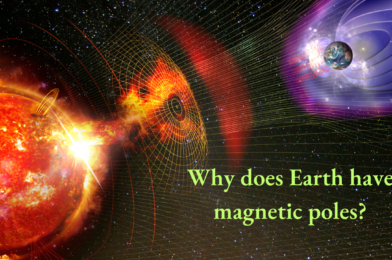
Why does Earth have magnetic poles?

Why does Earth have magnetic poles?
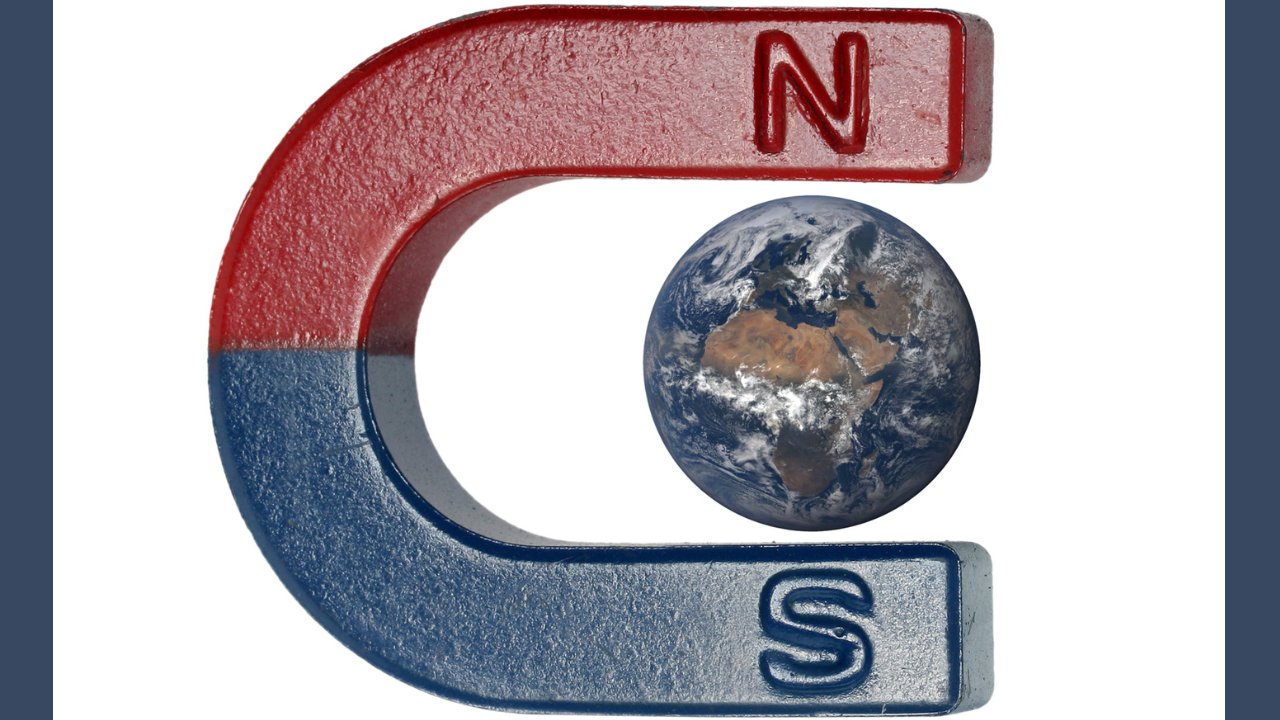
Earth is the only rocky planet in the solar system with strong magnetic poles. These poles are generated by the movement of molten iron in Earth’s outer core. The magnetic poles help to protect Earth from harmful solar radiation.

How does Earth generate magnetic field?

The centre of the Earth is composed of two distinct layers, the inner core, which is solid, and the outer core, which is molten metal. Both layers are composed of a mixture of magnetic iron and nickel, with a few dashes of lighter elements like oxygen, silicon, and sulphur sprinkled in for good measure. The interior is exceedingly dense and extremely hot, resembling a gigantic glowing stone in appearance. On the other hand, the outer core is fluid, and it has its own convective circulation, which causes it to spin around the solid mass. This continuous convection is the source of the magnetic field that surrounds the Earth. The material that is being cooled by plate tectonic activity is encountered by heat that is continuously radiating from the inner core into the outer core. This cycle generates convection, which in turn gives rise to the so-called geodynamo that is responsible for producing the magnetic field.

The Earth’s magnetic field is important for several reasons. First, it protects Earth from harmful solar radiation. The magnetic field deflects charged particles from the sun, which would otherwise damage Earth’s atmosphere and ozone layer.
Second, the Earth’s magnetic field helps to orient compasses and other navigational instruments. The magnetic field also helps to create the aurora borealis and aurora australis, which are beautiful light displays that can be seen in the sky near the poles. The Earth’s magnetic field is constantly changing. The poles slowly drift over time, and the strength of the magnetic field can also vary. These changes can cause problems for compasses and other navigational instruments. However, the Earth’s magnetic field is generally very stable. It has been protecting Earth from harmful solar radiation for billions of years.

Because plate tectonics does not exist on other planets, such as Mars and Venus, magnetic fields are absent. Research points to the possibility that these planets originally had self-sustaining geodynamos, but for reasons that are yet unclear, they failed. While Mercury’s magnetic field is feeble, it is nevertheless 1.1% stronger than Earth’s and does little to protect the planet from solar radiation. Also a compass would be useless on Mars.

Additional facts about the Earth’s magnetic poles

  • The North Magnetic Pole is located in the Arctic Ocean, north of Canada.
  • The South Magnetic Pole is located in the Antarctic Ocean, north of Antarctica.
  • The North and South Magnetic Poles are not the same as the North and South Geographic Poles. The Geographic Poles are the points where the Earth’s axis of rotation intersects the Earth’s surface. The Magnetic Poles are the points where the Earth’s magnetic field is strongest.
  • The Earth’s magnetic poles have reversed polarity several times in the past. This means that the North Magnetic Pole has become the South Magnetic Pole, and vice versa.
  • The last time the Earth’s magnetic poles reversed polarity was about 780,000 years ago.
  • Scientists are not sure why the Earth’s magnetic poles reverse polarity, but they think it may have something to do with the movement of molten iron in the outer core.

The Earth’s magnetic field is a fascinating and important part of our planet. It helps to protect us from harmful solar radiation and helps us to navigate. The Earth’s magnetic field is also responsible for the beautiful aurora borealis and aurora australis.

Tagged : / / / /

Google develops new AI tool capable of predicting harmful genetic mutations

Google develops new AI tool capable of predicting harmful genetic mutations
Google has developed a new artificial intelligence (AI) tool that can predict whether genetic mutations are likely to be harmful. The tool, called AlphaMissense, could revolutionize the diagnosis and treatment of genetic diseases.

AlphaMissense works by analyzing the sequence of a gene and comparing it to a database of known mutations. The tool can then predict whether a new mutation is likely to cause a disease, and how severe the disease is likely to be.

In a recent study, AlphaMissense was able to predict the harmful effects of genetic mutations with 90% accuracy. This is a significant improvement over current methods, which are only able to predict the harmfulness of mutations with about 70% accuracy.

The development of AlphaMissense is a major breakthrough in the field of genetic medicine. The tool could help scientists to better understand the causes of genetic diseases, and to develop more effective treatments.

Potential benefits of AlphaMissense

AlphaMissense has the potential to revolutionize the diagnosis and treatment of genetic diseases. Here are some of the potential benefits of the tool:

1. More accurate diagnosis: AlphaMissense can help doctors to more accurately diagnose genetic diseases. This is because the tool can predict the harmful effects of mutations with 90% accuracy.

2. Earlier diagnosis: AlphaMissense can help doctors to diagnose genetic diseases earlier. This is because the tool can be used to screen for mutations in newborns, even before the child shows any symptoms of a disease.

3. More personalized treatment: AlphaMissense can help doctors to develop more personalized treatments for genetic diseases. This is because the tool can predict the severity of a disease based on the specific mutation that is present.

4. New drug development: AlphaMissense can help scientists to develop new drugs for genetic diseases. This is because the tool can be used to identify genes that are involved in causing diseases.

Challenges and limitations

While AlphaMissense is a powerful new tool, there are still some challenges and limitations that need to be addressed. One challenge is that the tool is still under development. This means that it is not yet perfect, and it may not be able to accurately predict the harmful effects of all mutations.

Another challenge is that AlphaMissense is a complex tool that requires a lot of data and computing power to run. This means that it may not be accessible to all doctors and hospitals.

Finally, AlphaMissense is only able to predict the harmful effects of mutations. It cannot be used to diagnose or treat diseases. This means that doctors will still need to use other methods to diagnose and treat diseases, even if they have access to AlphaMissense.

The development of AlphaMissense is a major breakthrough in the field of genetic medicine. The tool has the potential to revolutionize the diagnosis and treatment of genetic diseases. However, there are still some challenges and limitations that need to be addressed before the tool can be widely used.

Overall, AlphaMissense is a promising new tool that has the potential to make a significant impact on the lives of people with genetic diseases.

Tagged : / / /

From Space Balloons to Zero-gravity Planes : US Company to Unveil Luxury Space Adventures in India

From Space Balloons to Zero-gravity Planes : US Company to Unveil Luxury Space Adventures in India
A US-based company called SpaceVIP is set to unveil its luxury space adventures in India next month. The company offers a variety of experiences, from travel to the International Space Station (ISS) to space balloons and zero-gravity flights.

SpaceVIP was founded by Roman Chiporuka and Eddie Miller in early 2021. Chiporuka is a former investment banker who has worked on several space tourism projects. Miller is a former pilot who has flown over 100 missions.

The company’s goal is to make space travel more accessible to high-net-worth individuals. SpaceVIP’s prices start at $50 million for a trip to the ISS. The company also offers shorter and more affordable experiences, such as a 3-hour space balloon flight for $125,000.

SpaceVIP is targeting the Indian market because of the country’s growing interest in space activities. India has a strong space program, and the country is home to a number of high-net-worth individuals.

The company’s launch in India is being supported by the Indian Space Research Organisation (ISRO). ISRO is providing SpaceVIP with technical assistance and access to its facilities.

The launch of SpaceVIP is a significant development in the space tourism industry. The company’s luxury experiences are likely to appeal to a wealthy clientele in India and around the world.

Here are some of the luxury space adventures that SpaceVIP will offer in India:

Travel to the International Space Station (ISS): This is the ultimate space adventure. SpaceVIP offers clients the opportunity to spend several days on the ISS, conducting experiments and enjoying the views of Earth from space.

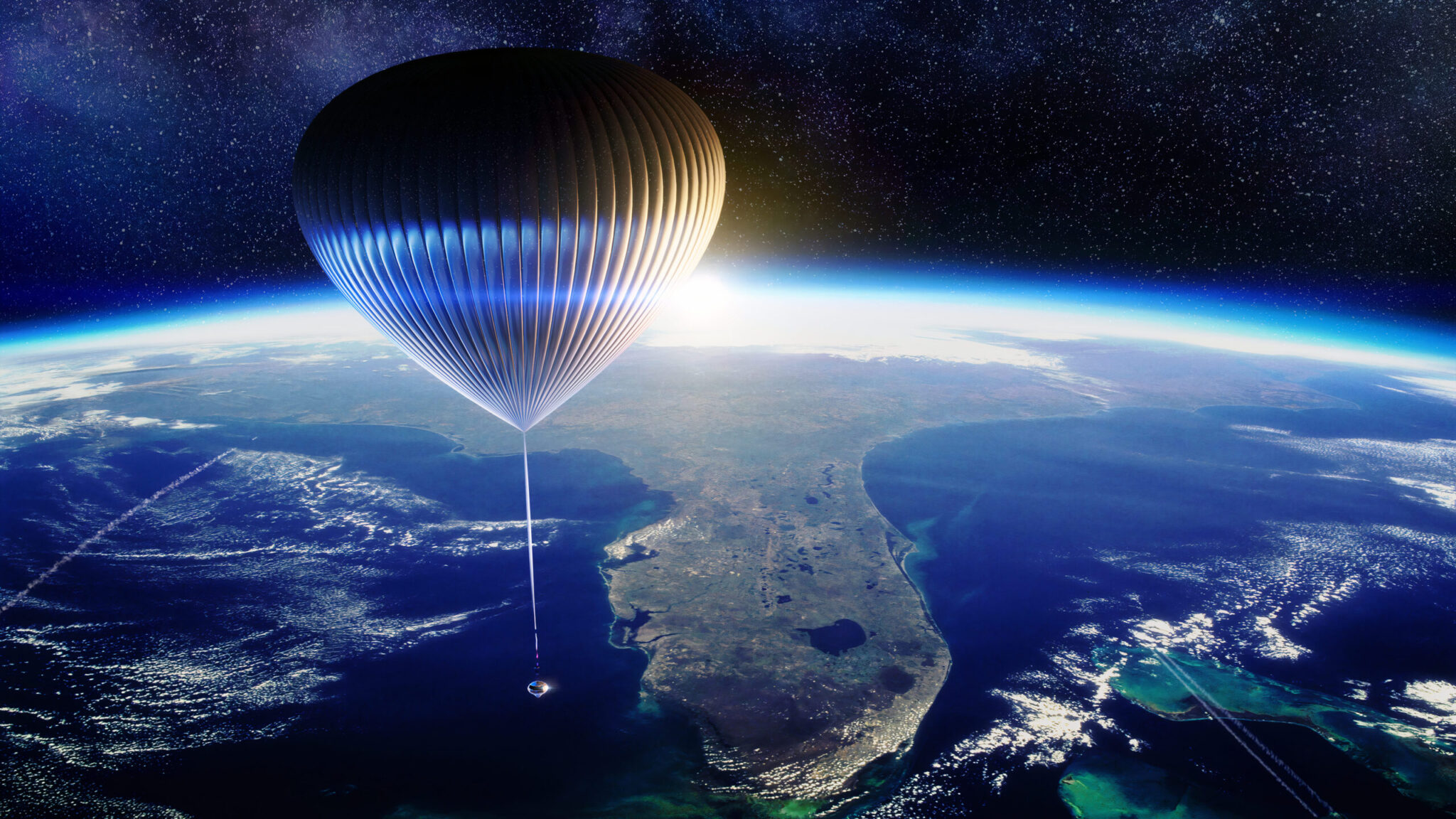
Space balloons: Space balloons are a more affordable way to experience space travel. These balloons can reach altitudes of up to 100,000 feet, offering stunning views of the Earth below.

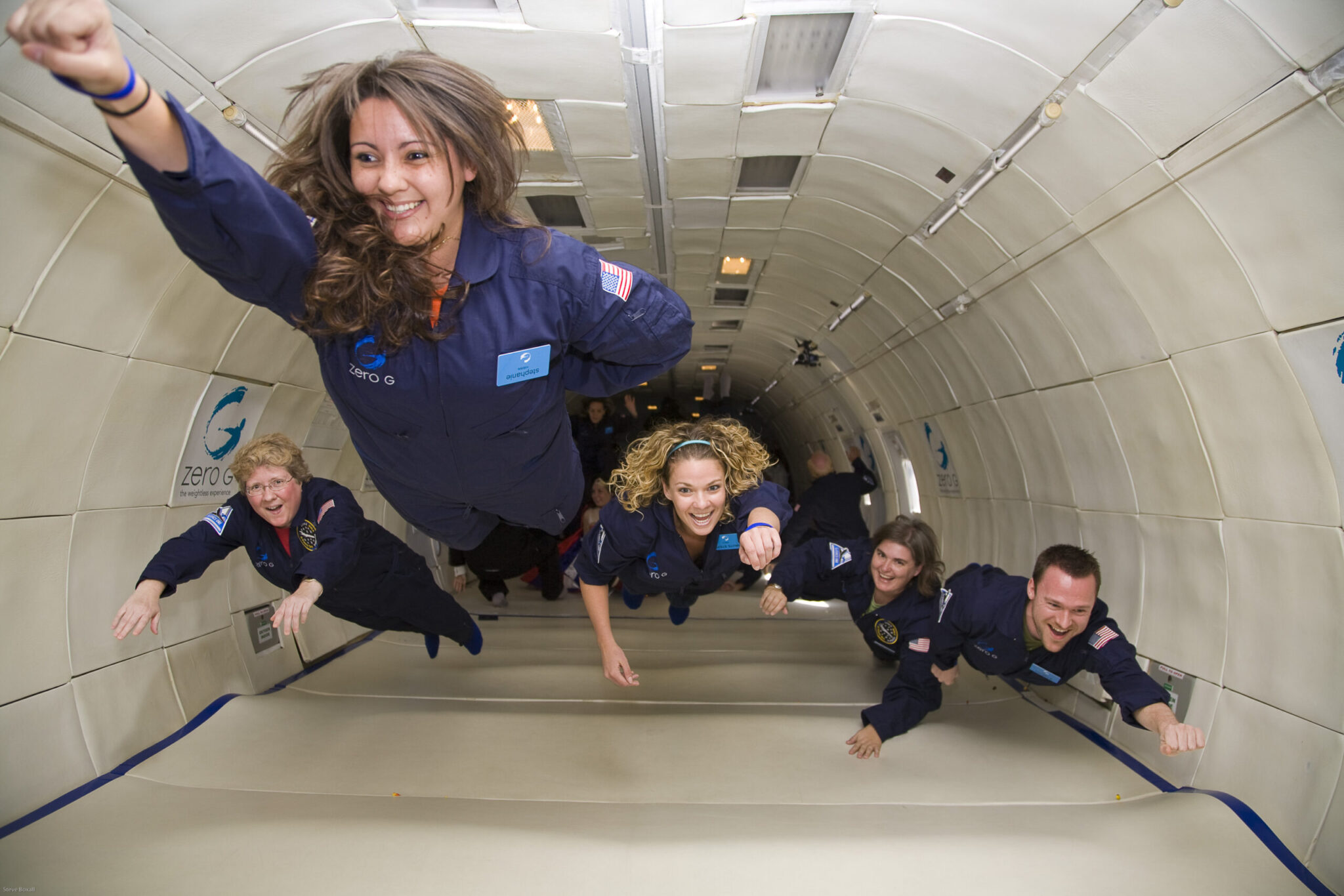
Zero-gravity flights: Zero-gravity flights are a great way to experience the sensation of weightlessness. These flights are typically conducted in specially-modified airplanes that fly parabolic arcs.

SpaceVIP is also planning to offer other space experiences in India, such as astronaut training and educational programs. The company is committed to making space travel more accessible and affordable for everyone.

The launch of SpaceVIP is a major milestone in the development of the space tourism industry. The company’s luxury experiences are likely to appeal to a wealthy clientele in India and around the world. This could help to further popularize space travel and inspire the next generation of scientists and engineers.

Tagged : / / / / / /

Earth-like Planet Discovered Within Our Solar System

Earth-like Planet Discovered Within Our Solar System
Japanese researchers may have discovered evidence that points to the existence of another planet in our solar system that is analogous to Earth.

Patryk Sofia Lykawka of Kindai University in Osaka and Takashi Ito of the National Astronomical Observatory of Japan in Tokyo said in their study that was published in the Astronomical Journal, “It’s possible that a body of a primordial planet can survive in the far Kuiper Belt as a KBP, as so many bodies existed early in the solar system.” Their findings were based on the fact that so many bodies existed in the early stages of the solar system.

Interstellar objects such as dwarf planets, asteroids, carbon masses, and ice volatile substances like methane and ammonia call the Kuiper Belt, which is located just beyond the orbit of Neptune and surrounds the Sun like everything else in our solar system, home. The Kuiper Belt may be found just beyond Neptune’s orbit.

The research group noted in their report, “We predict the existence of an Earth-like planet and several trans-Neptunian objects on peculiar orbits in the outer solar system which can serve as observationally testable signatures of the putative planet’s perturbations,” The researchers believe that the new planet might be anywhere from 200 to 500 astronomical units away from the Sun, and that it could be anywhere from 1.5 to 3 times the size of Earth.

They also mentioned the ways in which their proposed planet varies from the planet referred to in earlier forecasts as “Planet Nine.” According to the earlier forecasts, “Planet Nine” was going to be considerably more large and located in an orbit that was far further away.

According to what was stated by the researchers, “in conclusion, the results of the Kuiper Belt planet scenario provide support for the existence of a yet-to-be-discovered planet in the far outer reaches of the Solar System.” Finding planets that are analogous to Earth is a crucial element of the field of astronomy, and the idea that these planets might contain conditions that are suitable for the existence of life is a significant contribution to our understanding of the possibilities of livable habitats beyond the confines of our own planet.

Tagged : / / / /

ISRO Announces Details For Aditya L1: India’s Mission To Study The Sun!

ISRO Announces Details For Aditya L1: India’s Mission To Study The Sun!
After its gigantic leap into lunar studies with the success of Chandrayaan -3 , India is taking the next step and moving on the Sun. The Sun will be the subject of India’s very first space-based scientific mission, which will be called Aditya L1. It is planned to position the spacecraft in a halo orbit around the Lagrange point 1 (L1) of the Sun-Earth system, which is located around 1.5 million kilometres away from the planet Earth. The most significant benefit that comes with having a satellite in a halo orbit around the L1 point is the ability to observe the Sun nonstop without experiencing any occultation or eclipse. ISRO Has announced the details of this mission. Aditya-L1, the first space-based Indian observatory to study the Sun, is slated to be launched from Sriharikota on September 2, 2023 at 11:50 Hours IST.

This will provide an even larger edge when it comes to studying the solar activity and how they affect the weather in space in real time. Using electromagnetic, particle, and magnetic field detectors, the spacecraft is equipped to study the photosphere, chromosphere, and outermost layers of the Sun (the corona). It carries seven payloads. By utilising the unique vantage point L1, four payloads directly observe the Sun, while the remaining three payloads carry out in-situ investigations of particles and fields at the Lagrange point L1. This allows for crucial scientific studies of the propagatory influence of solar dynamics in the interplanetary medium to be conducted.

In order to comprehend the problem of coronal heating, coronal mass ejection, pre-flare and flare activities and their features, dynamics of space weather, propagation of particle and fields, etc., the suits of Aditya L1 payloads are anticipated to offer the most significant information.

1. Studying the dynamics of the Sun’s upper atmosphere (including the chromosphere and corona) is one of the primary scientific goals of the Aditya-L1 mission.

2. The investigation of chromospheric and coronal heating, the physics of partially ionised plasma, the beginning of coronal mass ejections, and flares.

3. Perform in-situ observations of the particle and plasma environment, which will provide data for the investigation of particle dynamics originating from the Sun.

4. The physics of the solar corona and the mechanism that causes its heating.

5. Temperature, velocity, and density are the diagnostic parameters for the plasma in the corona and the coronal loops.

6. The evolution, behaviour, and primary sources of CMEs.

7. Determine the order of the activities that take place at different levels of the sun (such as the chromosphere, the base, and the extended corona) that ultimately result in solar eruptive events.

8. Both the structure of the magnetic field and measurements of the magnetic field can be found in the solar corona.

9. The origin, make-up, and movement of solar wind all play a role in the formation of space weather.

Here is wishing the Indian Space Research Team All The Best.

Tagged : / / / / /

Why 23rd August Was Chosen As The Date Of Landing For Chandrayaan -3? What Is So Special About This Date?

Why 23rd August Was Chosen As The Date Of Landing For Chandrayaan -3? What Is So Special About This Date?
The Indian Space Research Organisation (ISRO) successfully landed the Chandrayaan-3 lander and rover on the lunar south pole on August 23, 2023. The landing was a major milestone for India’s space program and a testament to the ingenuity and determination of the Indian scientists and engineers who made it possible.

This is to note that the lunar south pole is a region that has never been visited by a spacecraft before. This made it a challenging but also an exciting target for the Chandrayaan-3 mission. The landing date was chosen to coincide with the beginning of the lunar day at the landing site. The timing of the landing was chosen taking into account the amount of local sunshine. On August 23, the sun will rise over the landing location, and it will set two weeks later. As the Vikram lander is solar-powered, these 14 sunlight days are crucial for Thermal, seismic, and mineralogical observations and Vikram lander and rover using a variety of equipment. A spectrometer investigation of the lunar surface’s mineral makeup is part of this. This would ensure that the lander and rover would have access to sunlight, which is needed to power their systems.

The landing date was also chosen to avoid the lunar eclipse season. Lunar eclipses can interfere with communications between the spacecraft and the ground, so it was important to avoid this during the landing. The successful landing of Chandrayaan-3 is a major achievement for India’s space program and a stepping stone to future missions to the moon. The Pragyaan rover, which is deployed from the lander, will now spend the next two weeks exploring the lunar south pole and searching for signs of water ice. The findings of the Pragyaan rover will help us to better understand the moon and its potential as a resource for future human exploration.

In addition to the factors mentioned above, there were also some technical considerations that influenced the choice of August 23 as the landing date. For example, the lander and rover needed to be in a specific position relative to the sun in order to land safely. The landing date was also chosen to ensure that the lander and rover would have enough time to complete their mission before the lunar day ended.

Overall, the choice of August 23 as the landing date was a careful and deliberate one. It was a date that met the scientific, technical, and operational requirements of the Chandrayaan-3 mission. The successful landing of Chandrayaan-3 is a testament to the hard work and dedication of the ISRO team. It is a proud moment for India and a significant step forward in our exploration of the moon.

Tagged : / / / /

As Chandrayan 3 Reaches The Moon, What Will The Pragyaan Rover Do? Will Chandrayaan 3 Come Back to Earth?

As Chandrayan 3 Reaches The Moon, What Will The Pragyaan Rover Do? Will Chandrayaan 3 Come Back to Earth?
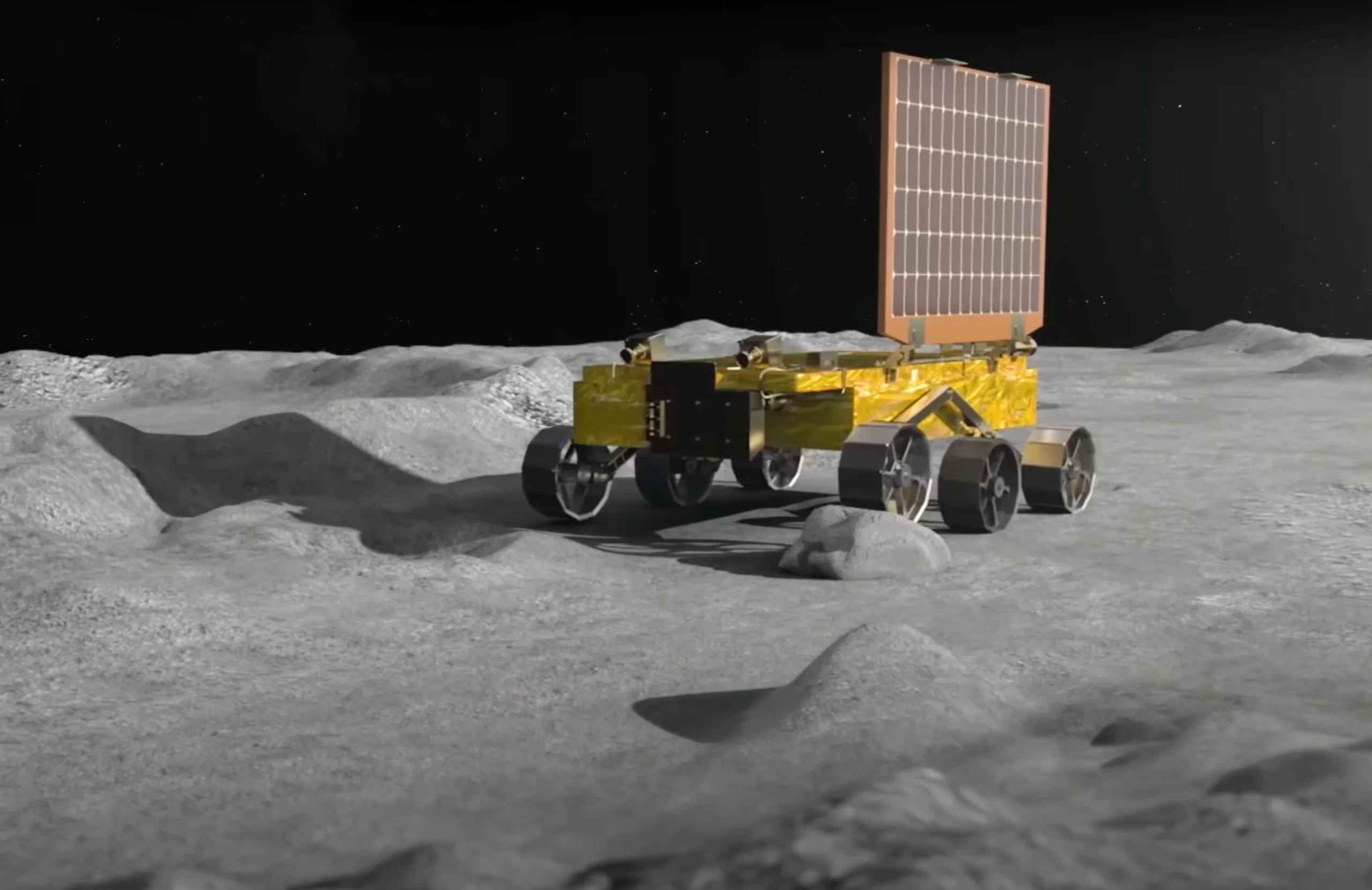
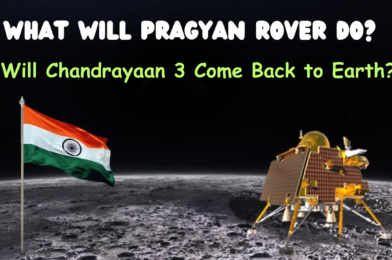
The Pragyaan rover has successfully rolled out of the Vikram lander and is now ready to begin its mission on the surface of the moon. The rover is named after the Sanskrit word for “wisdom” and is designed to explore the lunar south pole, a region that has never been visited by a rover before.

What will Pragyan Rover do?

The rover is equipped with six wheels and a variety of scientific instruments. ISRO claims that the lander and the Rover each have five research payloads that have been put inside of the Lander Module (LM) of the spacecraft.

1. The Alpha Particle X-Ray Spectrometer (APXS) aboard the Rover will be utilised to determine the chemical composition of the lunar surface and to infer the mineralogical composition in order to further expand our understanding of the lunar terrain.

2. The Laser Induced Breakdown Spectrometer (LIBS) will analyse the soil and rocks around the landing site on the Moon to identify their elemental make-up. ISRO has stated that the use of Rover to conduct scientific experiments on the moon in their natural environment would take lunar exploration to a whole new level.

3. The RAMBHA-LP (Langmuir Probe) that is part of the Lander Payloads will monitor the density of the plasma (ions and electrons) near the surface as well as how it varies over time.

4. ChaSTE Chandra’s Surface Thermo Physical Experiment will carry out the measurements of the thermal characteristics of the lunar surface in the vicinity of the polar area.

5. The Instrument for Lunar Seismic Activity, or ILSA, will be used to delineate the structure of the lunar crust and mantle as well as measure the seismic activity that is occurring close to the landing site.

Over the next 14 days, which is equivalent to one lunar day, the Pragyan rover will travel up to 500 meters from the lander and conduct a series of experiments to study the geology, mineralogy, and history of the lunar south pole. The rover will also look for signs of water ice, which is believed to be present in the permanently shadowed craters of the region.

The Pragyan rover is a major milestone for India’s space program and is expected to make significant contributions to our understanding of the moon. The rover’s mission is also a testament to the ingenuity and determination of the Indian scientists and engineers who made it possible.

What will happen to Chandrayaan 3 after 14 days?

Following the passage of 14 days, the moon will experience a nighttime phase that will also last for 14 days. Because Vikram and Pragyan can perform their jobs only when the sun is shining, they will become inactive after 14 days because the weather would be extremely chilly. In addition, both the lander and the rover have been built with a lifespan of fourteen days in mind. However, the researchers at ISRO have not ruled out the chance that Vikram and Pragyan would regain consciousness when the sun once more rises on the moon. If this is the case, then it will be a bonus benefit for India’s expedition to the moon.

Will Chandrayaan 3 come back to earth?
No, Vikram and Pragyan are not supposed to come back to the earth. They will remain on the moon.

Tagged : / / / / / / /

One Earth Day Would Have Been 60 Hours Long If The Moon Had Not Done This!

One Earth Day Would Have Been 60 Hours Long If The Moon Had Not Done This!
The Moon’s gravitational pull is slowing down Earth’s rotation on its axis. This has been happening for billions of years, and as a result, Earth’s days have been getting longer. When the Moon first formed, Earth’s days were only 10 hours long. Today, they are 24 hours long. And if the Moon’s gravitational pull continued to act unopposed, Earth’s days would eventually be 60 hours long.

However, a team of astrophysicists has recently discovered that the Moon’s gravitational pull was counteracted by another force for approximately one billion years. This happened between two billion years ago and 600 million years ago. During this time, the Sun’s atmospheric tide worked against the Moon’s effect, ensuring that Earth’s rotational speed remained constant and the day length stayed fixed at 19.5 hours.

If this interruption had not occurred, Earth’s days would have continued to lengthen at a rate of approximately 1.7 milliseconds per century. This means that by now, Earth’s days would have been 60 hours long.

The researchers who made this discovery say that it is important to understand the history of Earth’s rotation because it has implications for our understanding of the planet’s climate and evolution. For example, it is thought that the longer days that Earth had in the past may have contributed to the development of life on the planet.

Here are some additional details about the research:

  • The research was conducted by a team of astrophysicists from the University of California, Los Angeles.
  • The team used computer simulations to track the evolution of Earth’s rotation over time.
  • The simulations showed that the Sun’s atmospheric tide reached its peak strength around two billion years ago.
  • This peak strength counteracted the Moon’s gravitational pull, causing Earth’s rotational speed to remain constant for approximately one billion years.
  • After the Sun’s atmospheric tide began to weaken, the Moon’s gravitational pull once again began to slow down Earth’s rotation.
  • This process is still ongoing, and as a result, Earth’s days continue to lengthen at a rate of approximately 1.7 milliseconds per century.
    The research into the history of Earth’s rotation is ongoing. As scientists learn more about this topic, they will be able to better understand the planet’s climate and evolution.
Tagged : / / / /

Harvard Scientists Finally Find A Way To Reverse Ageing!

Harvard Scientists Finally Find A Way To Reverse Ageing!
A team of scientists at Harvard Medical School have discovered a cocktail of drugs that can reverse aging in mice and monkeys. The drugs, which target a specific protein called SIRT6, have been shown to rejuvenate cells and tissues, improve vision, and extend lifespan.

The study, which was published in the journal Aging, was led by David Sinclair, a professor of genetics at Harvard Medical School. Sinclair and his team have been studying SIRT6 for several years, and they believe that it is a key regulator of aging. SIRT6 is a protein that helps to protect cells from damage, and it also plays a role in metabolism and longevity.

In the study, Sinclair and his team gave mice and monkeys a cocktail of drugs that activated SIRT6. The drugs were effective in reversing aging in both species. In mice, the drugs improved vision and extended lifespan by up to 30%. In monkeys, the drugs improved vision and reduced age-related inflammation.

The findings of the study are significant because they suggest that it may be possible to reverse aging in humans. However, more research is needed to determine the safety and efficacy of the drugs in humans.

If the drugs are eventually shown to be safe and effective in humans, they could have a major impact on the treatment of aging-related diseases. They could also be used to extend lifespan and improve quality of life.

The study’s findings are still preliminary, but they are very promising. They suggest that it may be possible to develop drugs that can reverse aging and extend lifespan. This would be a major breakthrough in the field of aging research, and it could have a profound impact on human health.

Tagged : / / / /

Why Chandrayaan-3 Will Take 40 Days to Reach the Moon While China’s “Change’2” Took Only Four?

Why Chandrayaan-3 Will Take 40 Days to Reach the Moon While China’s “Change’2” Took Only Four?
The Indian Space Research Organisation’s (ISRO) Chandrayaan-3 mission is scheduled to reach the Moon in over 40 days. This is in contrast to NASA’s Apollo 11 mission, which took only four days to reach the Moon and even China’s Change’2 which took 4 days just like the Apollo 11 mission.

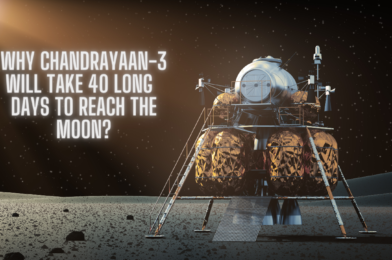
There are a few reasons why Chandrayaan-3 will take longer to reach the Moon. First, ISRO does not have a rocket powerful enough to put Chandrayaan-3 on a direct path to the Moon. Instead, Chandrayaan-3 will be placed into a low Earth orbit first. From there, the spacecraft will use its onboard engines to gradually increase its speed and altitude. This process will take several weeks.

Second, Chandrayaan-3 is carrying a heavier payload than Apollo 11. This means that the spacecraft will need to travel at a slower speed in order to conserve fuel.

Finally, ISRO is taking a more cautious approach to Chandrayaan-3. The mission is designed to demonstrate India’s ability to soft-land a spacecraft on the Moon. As a result, ISRO is taking its time to ensure that the mission is successful.

The main objective of Chandrayaan-3 is to achieve a soft landing on the lunar surface. Once the spacecraft has landed, it will deploy a rover to explore the surface of the Moon. The rover will conduct scientific experiments to study the composition of the lunar soil and rocks.

The Chandrayaan-3 mission is a significant milestone for India’s space program. It is the country’s third lunar mission, and it will be the first time that India has soft-landed a spacecraft on the Moon. The success of Chandrayaan-3 will help to pave the way for future Indian space missions to the Moon and beyond.

Here are some additional details about the Chandrayaan-3 mission:

The spacecraft was launched on July 14, 2023, from the Satish Dhawan Space Centre in Sriharikota, India.
The spacecraft is carrying a lander, a rover, and an orbiter.
The lander will soft-land on the Moon’s south pole.
The rover will explore the lunar surface for up to 14 days.
The orbiter will study the Moon’s surface and atmosphere.
The Chandrayaan-3 mission is expected to last for one year. The spacecraft is scheduled to return to Earth in July 2024.

Tagged : / / / /

India’s Chandrayaan 3 Mission: A Countdown to History

India’s Chandrayaan 3 Mission: A Countdown to History
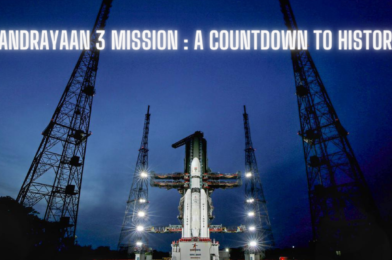
The countdown is on for India’s Chandrayaan 3 mission, which is scheduled to launch at 2.35 pm today ( Friday, July 14th 2023). The mission will attempt to soft-land a lander and rover on the lunar surface, and will also conduct a number of scientific experiments. Chandrayaan 3 is the third lunar mission by the Indian Space Research Organisation (ISRO), and is a follow-on to the Chandrayaan-1 and Chandrayaan-2 missions. The lander and rover on Chandrayaan 3 are similar to those used on Chandrayaan-2, but the mission will not have an orbiter.

The main objectives of Chandrayaan 3 are to:

1 Demonstrate safe and soft landing on the lunar surface.
2 Demonstrate rover roving on the moon.
3 Conduct in-situ scientific experiments.

The lander on Chandrayaan 3 is called Vikram, and the rover is called Pragyan. Vikram is equipped with a number of scientific instruments, including a camera, a magnetometer, and a seismometer. Pragyan is a robotic rover that will be able to travel up to 500 meters on the lunar surface.

The scientific experiments that will be conducted on Chandrayaan 3 will focus on the study of the moon’s surface, its composition, and its history. The mission will also look for signs of water on the moon. The launch of Chandrayaan 3 is a major milestone for India’s space program, and it is expected to make a significant contribution to our understanding of the moon. The mission is also a testament to the growing technological capabilities of India, and it is sure to inspire future generations of scientists and engineers.

The Launch

The Chandrayaan 3 mission is scheduled to launch on Friday, July 14, at 2:35 p.m. IST from the Satish Dhawan Space Centre in Sriharikota, India. The launch will be broadcast live on ISRO’s website and YouTube channel.

The mission will use a GSLV Mark 3 (LVM 3) heavy lift launch vehicle to place the lander and rover into orbit around the moon. The lander and rover will then separate from the launch vehicle and descend to the lunar surface.

The landing is scheduled to take place on August 23 or 24. If the landing is successful, Chandrayaan 3 will be the first Indian mission to soft-land on the moon since Chandrayaan-2 in 2019. In the Chndrayaan -2 mission Chandrayaan-2 spacecraft inserted into lunar orbit and then on September 2, 2019; Vikram Lander was separated while orbiting the moon in a 100kms lunar polar orbit, however, communication from the lander to the ground stations was lost at an altitude of 2.1 km from the surface of the moon.

The Significance of the Mission

The Chandrayaan 3 mission is a significant milestone for India’s space program. It is the third lunar mission by ISRO, and it is the first mission to attempt a soft-landing on the moon since Chandrayaan-2. The success of Chandrayaan 3 would be a major achievement for India, and it would boost the country’s reputation as a spacefaring nation. The mission would also help to advance our understanding of the moon, and it could lead to future missions to explore the lunar surface.

The Future of Space Exploration

The Chandrayaan 3 mission is a stepping stone to future space exploration missions. If the mission is successful, it could pave the way for future Indian missions to the moon, such as a human mission.The mission could also help to inspire future generations of scientists and engineers to pursue careers in space exploration. The success of Chandrayaan 3 would show that India is a leading nation in space exploration, and it would encourage other countries to pursue their own space exploration programs.

Conclusion

The Chandrayaan 3 mission is a major milestone for India’s space program, and it is sure to have a significant impact on the future of space exploration. The success of the mission would be a major achievement for India, and it would boost the country’s reputation as a spacefaring nation. The mission would also help to advance our understanding of the moon, and it could lead to future missions to explore the lunar surface.

Tagged : / / / / / /

NASA recovers water from urine : A new milestone to help in space exploration missions!

NASA recovers water from urine : A new milestone to help in space exploration missions!
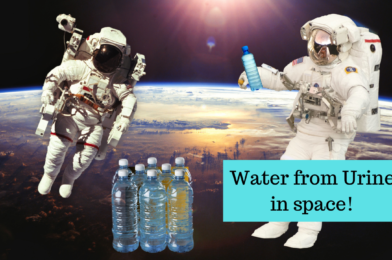
NASA has achieved a new milestone in water recovery on the International Space Station (ISS). The space agency has announced that it has successfully recovered 98% of the water used by astronauts on the ISS, including urine and sweat. This is a significant improvement over previous water recovery rates, which were only around 80%.

The water recovery system on the ISS is called the Urine Processing Assembly (UPA). The UPA first distills the urine and sweat, separating the water from the solids. The water is then further purified using a process called reverse osmosis. Reverse osmosis is a process that uses pressure to force water molecules through a semi-permeable membrane. The membrane allows the water molecules to pass through, but it blocks the passage of the solids.

The purified water is then stored in tanks and can be used by the astronauts for drinking, cooking, and bathing. The UPA can recover up to 98% of the water used by astronauts on the ISS. This means that for every 100 gallons of water used by the astronauts, only 2 gallons need to be brought up from Earth. This is a significant savings, as it reduces the amount of cargo that needs to be transported to the ISS.

The UPA is a critical part of the ISS’s life support system. It helps to ensure that the astronauts have a sustainable supply of water, even on long-duration missions. The UPA also helps to reduce the amount of waste that needs to be disposed of on the ISS.

The successful recovery of 98% of the water used on the ISS is a major achievement for NASA. It is a testament to the ingenuity and hard work of the engineers and scientists who designed and built the UPA. The UPA is a critical technology that will help to support future long-duration missions in space.

Jill Williamson, ECLSS water subsystems manager said : “the drinking water has been reclaimed, filtered and cleaned such that it is cleaner than what we drink here on Earth.”

Tagged : / / /

India to Send Second Indian to Space in 2024!

India to Send Second Indian to Space in 2024!
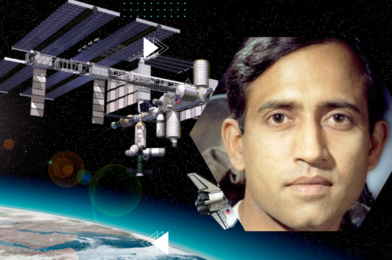
Forty years after Rakesh Sharma became the first Indian in space, India is planning to send another astronaut into orbit in 2024. The Indian Space Research Organisation (ISRO) has partnered with NASA on the project, which will see three Indian astronauts spend three days in space.

The mission, known as Gaganyaan, will be the first human space flight mission by India. The astronauts will be launched into orbit on an Indian rocket and will return to Earth in a crew module that will splash down in the Indian Ocean.

The training for the Gaganyaan mission is already underway. The astronauts are undergoing rigorous physical and mental training, as well as training in spacewalks and other activities that will be required during the mission.

The Gaganyaan mission is a major milestone for India’s space program. It will demonstrate India’s ability to send humans into space and will pave the way for future human space missions by India.

When asked about why it took 40 years for India to put a human into space again, the legendary Rakesh Sharma replied : “There is a reason for that. ISRO was focused on a satellite program, so the manned program was not on the agenda. Their vision has been fulfilled. Now they are going to the next level.”

Here are some additional details about the Gaganyaan mission:

The mission is scheduled to launch in the fourth quarter of 2024.
The astronauts will spend three days in space.
They will be launched into orbit on an Indian GSLV Mk III rocket.
The crew module will splash down in the Indian Ocean.
The training for the mission is already underway.
The Gaganyaan mission is a significant achievement for India’s space program. It will demonstrate India’s ability to send humans into space and will pave the way for future human space missions by India.

Tagged : / / / / /

7 Unusual things that astronauts experience in the space!

7 Unusual things that astronauts experience in the space!
Going to space is an incredible experience, but it’s also one that comes with a lot of challenges and strange sensations. Here are some of the most unbelievable things that astronauts experience in space:

1 See Sunrise and Sunsets every 45 minutes
The International Space Station (ISS) completes one orbit of Earth in 90 minutes. It is because of this phenomenon that astronauts in space are able to witness sunrise and sunset at an interval of 45 minutes.

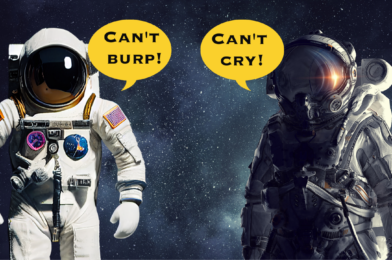
2 They can’t cry in space
Tears are pulled down by gravity, but in space, there’s no gravity to pull them down. So, when astronauts get emotional, they might feel like crying, but no tears will come out or if they did, they will make a ball around the corner of their eyes which will be very uncomfortable.

3 They can’t burp
In space, there is no gravity to pull things straight down, so the gas and liquids in the astronauts’ stomachs don’t separate. This means the gas can’t come back up to create a burp!

4 Their hair grows faster in space
This is because there’s no gravity to weigh down their hair, so it grows more quickly.

5 Get thrown back when sneeze
Gravity is so important and even a sneeze is enough to show you that in space. If an astronaut sneezes in space he or she will be thrown back because of the lack of gravity. They can be thrown back vigorously and their sneeze can travel up to 20 feet.

6 Their blood cells change shape
In space, the lack of gravity causes the blood cells to become more spherical. This makes it harder for the blood to circulate, which can lead to problems like fatigue and dizziness.

7 The silence
There’s no sound in space. This is because there’s no air to carry sound waves. The only sound they hear is their own breathing and the occasional equipment noise.

Can you imagine how it all must feel?

Tagged : / / / /
Verified by ExactMetrics