No! Our Universe Was Never Empty, Not Even Before The Big Bang!

No! Our Universe Was Never Empty, Not Even Before The Big Bang!
The Big Bang is the most widely accepted theory about the origin and evolution of the universe. It states that the universe began as an extremely hot and dense point about 13.8 billion years ago and has been expanding ever since.

But what happened before the Big Bang? Was the universe empty?

According to some scientists, the universe was not empty before the Big Bang. Instead, it was filled with a strange and exotic form of energy known as quantum vacuum energy.

Quantum vacuum energy is the energy of empty space. It is created by the constant creation and annihilation of virtual particles. Virtual particles are pairs of particles that are created and destroyed so quickly that they cannot be detected directly.

However, the energy of virtual particles is very real. It is responsible for a number of strange and unexpected phenomena, such as the Casimir effect, which is the attraction between two uncharged parallel plates.

Some scientists believe that quantum vacuum energy played a key role in the Big Bang. They believe that the energy of the vacuum was so great that it caused the universe to expand rapidly and exponentially. This rapid expansion is known as inflation.

Inflation can explain a number of puzzling observations about the universe, such as why the universe is so flat and why it is so homogeneous.

If quantum vacuum energy played a role in the Big Bang, then the universe must have existed before the Big Bang. However, the universe was very different before the Big Bang. It was incredibly hot and dense, and the laws of physics may have been very different from the laws of physics that we know today.

So what was the universe like before the Big Bang?

One possibility is that the universe was in a state of eternal inflation. This means that the universe was constantly expanding and contracting, and the Big Bang was just one of many cycles of expansion and contraction.

Another possibility is that the universe was created in a collision between two branes. Branes are higher-dimensional objects that exist in parallel universes.

It is also possible that the universe was created by a higher power.

Whatever the cause of the Big Bang, it is clear that the universe was not empty before the Big Bang. Instead, it was filled with a strange and exotic form of energy known as quantum vacuum energy.

Implications of a pre-Big Bang universe 

The idea that the universe existed before the Big Bang has a number of implications for our understanding of the universe.

First, it means that the universe may be infinite in size and time. If the universe has been expanding and contracting forever, then there is no beginning or end to the universe.

Second, it means that the laws of physics may be different in different parts of the universe. If the universe has been expanding and contracting forever, then different regions of the universe may have experienced different conditions. This could mean that the laws of physics are different in different parts of the universe.

Third, it means that the universe may be one of many universes. If the universe was created in a collision between two branes, or if it was created by a higher power, then there may be other universes out there.

The idea that the universe existed before the Big Bang is still a controversial one, but it is gaining acceptance among scientists. As we learn more about the universe, we may come to understand what happened before the Big Bang.

Tagged : / / / /

Psyche Mission : NASA To Launch Mission To An Asteroid Worth All The Gold On The Earth!

Psyche Mission : NASA To Launch Mission To An Asteroid Worth All The Gold On The Earth!
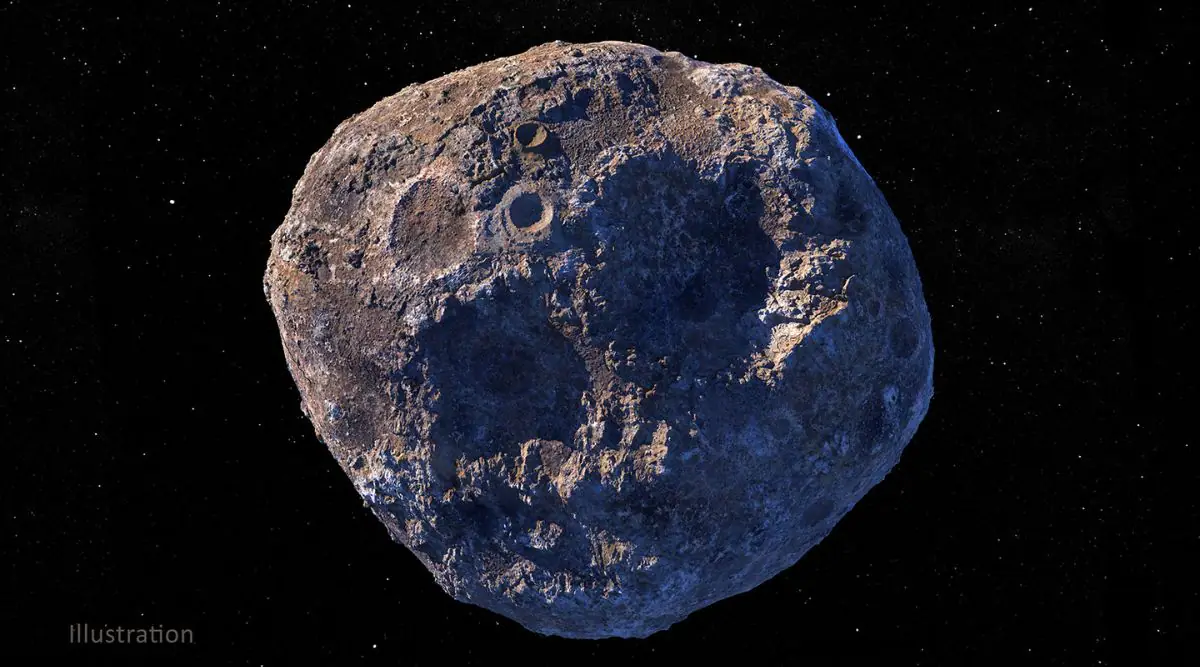
NASA is preparing to launch a mission to an asteroid worth more than all the gold on Earth. The asteroid, called Psyche, is located in the asteroid belt between Mars and Jupiter. It is thought to be made up of mostly iron and nickel, with a smaller amount of gold and other precious metals.

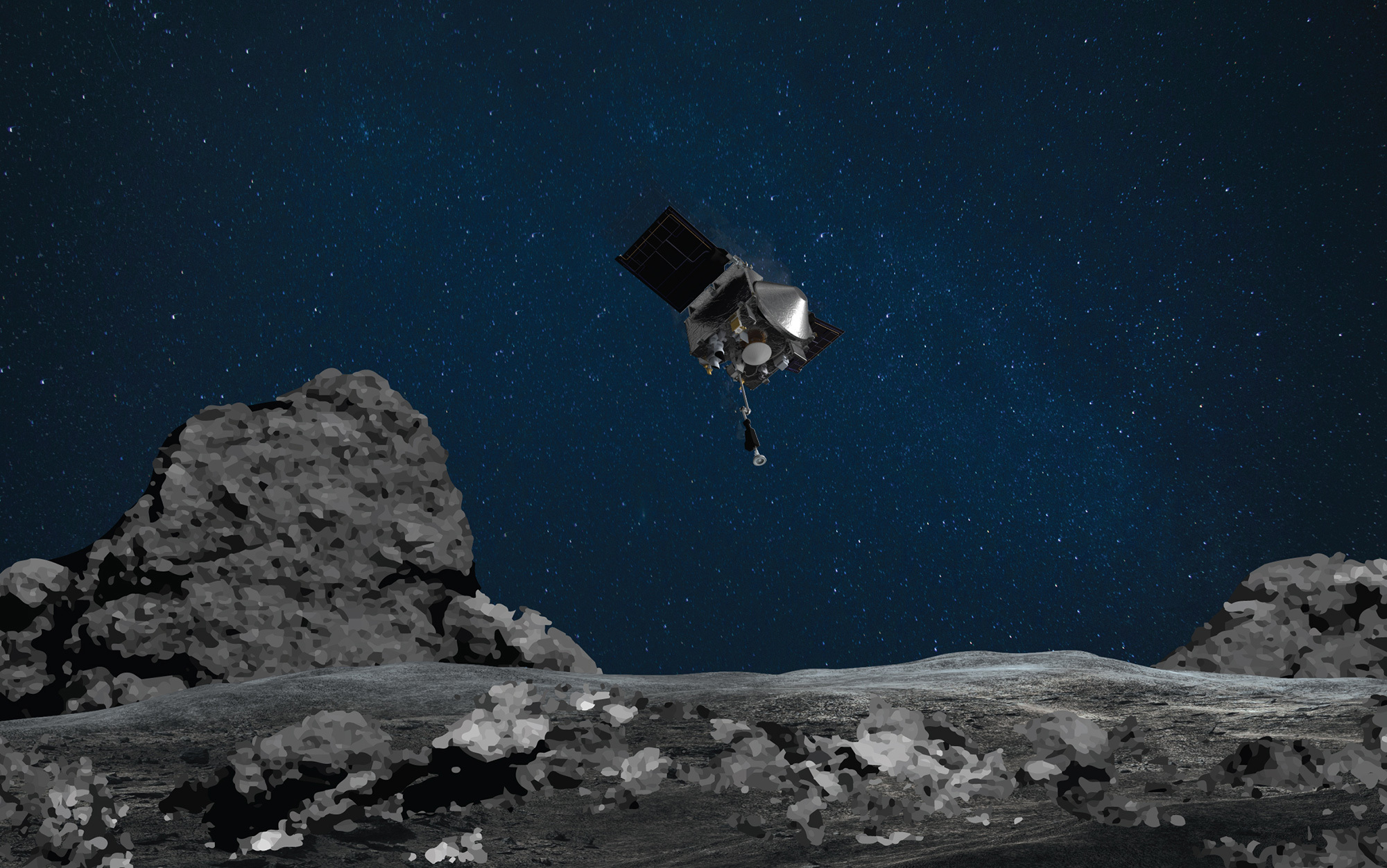
The Psyche mission is scheduled to launch on October 12, 2023. The spacecraft will travel to the asteroid and orbit it for two years. During that time, it will use a variety of instruments to study the asteroid’s composition, shape, and magnetic field.

Scientists are excited to study Psyche because it is thought to be the exposed core of a protoplanet, or a planet that never fully formed. By studying Psyche, scientists hope to learn more about how planets form and evolve.

The Psyche mission is also of interest to the mining industry. The asteroid is estimated to be worth $10 quintillion, which is more than the total value of all the gold that has ever been mined on Earth. However, it is still unclear whether it will be possible to mine Psyche in a cost-effective way.

The Psyche mission is a complex and ambitious undertaking. However, it has the potential to revolutionize our understanding of the solar system and to open up new possibilities for space mining.

What will the Psyche mission do?

The Psyche mission will use a variety of instruments to study the asteroid, including:

  • A magnetometer to measure the asteroid’s magnetic field
  • A gamma ray and neutron spectrometer to measure the asteroid’s composition
  • An infrared imaging spectrometer to map the asteroid’s surface temperature and mineralogy
  • A multispectral imager to take high-resolution images of the asteroid’s surface
  • The Psyche mission will also use solar electric propulsion, a type of propulsion that uses solar energy to power the spacecraft. This type of propulsion is very efficient, but it is also very slow. As a result, the Psyche mission will take four years to reach the asteroid.

What do scientists hope to learn from the Psyche mission?

Scientists are hoping to learn a lot about Psyche and about the formation of planets from the Psyche mission. Some of the questions that scientists hope to answer include:

What is Psyche’s composition?
How did Psyche form?
Does Psyche have a magnetic field?
Is Psyche the exposed core of a protoplanet?
What can Psyche teach us about the formation and evolution of planets?
The Psyche mission is a very exciting mission with the potential to revolutionize our understanding of the solar system.

What are the implications of the Psyche mission for space mining?

The Psyche mission is also of interest to the mining industry. The asteroid is estimated to be worth $10 quintillion, which is more than the total value of all the gold that has ever been mined on Earth. However, it is still unclear whether it will be possible to mine Psyche in a cost-effective way.

There are a number of challenges that would need to be overcome in order to mine Psyche. One challenge is the distance to the asteroid. Psyche is located in the asteroid belt, which is between Mars and Jupiter. This means that it is very far from Earth, which would make mining it very expensive.

Another challenge is the asteroid’s composition. Psyche is thought to be made up of mostly iron and nickel, with a smaller amount of gold and other precious metals. This means that the asteroid would need to be processed in order to extract the valuable metals. This processing would also be very expensive.

Despite the challenges, the Psyche mission is a sign that space mining is becoming a reality. As technology continues to improve, it is possible that we will be able to mine Psyche and other asteroids in the future.

Tagged : / / / / / /

5 Unsolved Mysteries of Physics That Have Left Scientists Baffled!

5 Unsolved Mysteries of Physics That Have Left Scientists Baffled!
Physics is the study of matter and its interactions. It is one of the most fundamental sciences, and it has helped us to understand the universe around us in incredible ways. However, there are still many mysteries of physics that remain unsolved.

Here are five of the biggest unsolved mysteries of physics:

1. Dark matter

Dark matter is a mysterious substance that makes up about 85% of the matter in the universe. However, we have never been able to directly detect it. Dark matter is only known to exist because of its gravitational effects on visible matter.

Scientists are still trying to figure out what dark matter is made of and how it interacts with other matter. There are many different theories about dark matter, but none of them have been definitively proven.

2. Parallel universes

The multiverse theory is the idea that there are many different universes, each with its own unique laws of physics and history. There is no scientific evidence to prove the existence of parallel universes, but many physicists believe that they are possible.

If parallel universes do exist, it raises many interesting questions. For example, is it possible to travel between parallel universes? And if so, what would happen if we did?

3. Inside of a black hole

Black holes are regions of space where gravity is so strong that nothing, not even light, can escape. Black holes are formed when massive stars collapse at the end of their lives.

We know very little about what happens inside of a black hole. Some scientists believe that black holes lead to other universes, while others believe that they destroy everything that falls into them.

4. Unified forces

The four fundamental forces of nature are gravity, electromagnetism, the strong nuclear force, and the weak nuclear force. Scientists are trying to develop a unified theory of physics that can explain all four forces as a single force.

A unified theory of physics would be a major breakthrough in our understanding of the universe. However, it is a very difficult problem to solve, and scientists have not yet been able to develop a successful unified theory.

5. The origin of time

Time is one of the most fundamental concepts in physics, but we still don’t fully understand what it is or how it began. Some physicists believe that time is an illusion, while others believe that it is a fundamental property of the universe.

The origin of time is one of the deepest mysteries of physics. It is a question that has puzzled philosophers and scientists for centuries.

These are just a few of the many unsolved mysteries of physics. While we have made great progress in our understanding of the universe, there is still much that we don’t know. Scientists are constantly working to solve these mysteries, and each new discovery brings us closer to a deeper understanding of the cosmos.

Conclusion

Physics is a fascinating and constantly evolving field. There are still many unsolved mysteries of physics, but scientists are making progress all the time. The study of physics helps us to understand the universe around us and our place in it.

If you are interested in learning more about physics, there are many resources available online and in libraries. You can also find many popular science books that discuss the latest discoveries in physics.

Tagged : / / / / / /

James Webb Space Telescope Spots Thousands of Milky Way-Like Galaxies in the Early Universe

James Webb Space Telescope Spots Thousands of Milky Way-Like Galaxies in the Early Universe
The James Webb Space Telescope (JWST) has made another incredible discovery, this time spotting thousands of Milky Way-like galaxies in the early universe. This discovery challenges our current understanding of how galaxies form and evolve.

The galaxies were found in a new image of the distant universe taken by JWST’s Near-Infrared Camera (NIRCam). The image shows a patch of sky that is only about one-twelfth the size of the full moon, but it is packed with thousands of galaxies.

Many of the galaxies in the image are spiral galaxies, similar to our own Milky Way galaxy. However, some of the galaxies are also elliptical galaxies, which are much rarer in the early universe.

The discovery of these galaxies is significant because it suggests that galaxies formed much earlier than previously thought. The galaxies in the image are so distant that their light has taken billions of years to reach us. This means that they were formed when the universe was just a few billion years old.

The discovery of these galaxies also challenges our current understanding of how galaxies form. According to the current theory, galaxies form slowly over time as smaller galaxies merge together. However, the discovery of so many Milky Way-like galaxies in the early universe suggests that galaxies can form much more quickly.

Astronomers are still trying to understand what this discovery means for our understanding of galaxy formation. However, it is clear that the JWST is revolutionizing our understanding of the early universe.

Here are some of the implications of this discovery:

  • It suggests that galaxies formed much earlier than previously thought.
  • It challenges our current understanding of how galaxies form.
  • It suggests that the early universe was much more crowded with galaxies than we thought.
  • It raises the possibility that there are many more galaxies in the universe than we previously thought.
  • This discovery is just the beginning. The JWST is expected to make many more groundbreaking discoveries in the years to come.
Tagged : / / / / /

Astrophysicists Finally Weigh The Universe !

Astrophysicists Finally Weigh The Universe!
Astrophysicists have successfully measured the total amount of matter, dark matter, and dark energy in the universe for the second time. The study, published in The Astrophysical Journal, found that matter makes up 31% of the total amount of matter and energy in the universe, with the remainder consisting of dark energy.

To make the measurement, the team used a technique called weak gravitational lensing. Weak gravitational lensing is a phenomenon that occurs when light from distant galaxies is bent by the gravity of galaxies in the foreground. By measuring the amount of bending, scientists can calculate the mass of the foreground galaxies.

The team used data from the Dark Energy Survey (DES), a survey of over 400 million galaxies. The DES is one of the largest and deepest galaxy surveys ever conducted.

The team’s findings are consistent with other measurements of the composition of the universe. For example, the Cosmic Microwave Background (CMB), which is the leftover radiation from the Big Bang, suggests that dark energy makes up about 68% of the universe.

The new measurement of the total amount of matter and energy in the universe is a significant advance in our understanding of the cosmos. It provides further evidence for the existence of dark matter and dark energy, and it helps to constrain cosmological models.

What is dark matter?

Dark matter is a mysterious substance that makes up about 85% of the matter in the universe. We can’t see dark matter directly, but we know it’s there because of its gravitational effects on visible matter.

What is dark energy?

Dark energy is an even more mysterious substance than dark matter. It makes up about 68% of the universe and it’s causing the universe to expand at an accelerating rate. We don’t know what dark energy is or how it works, but it’s the most dominant form of energy in the universe.

Implications of the new measurement

The new measurement of the total amount of matter and energy in the universe has a number of implications. First, it confirms the existence of dark matter and dark energy. Second, it helps to constrain cosmological models. Cosmological models are used to describe the evolution of the universe from the Big Bang to the present day. The new measurement will help scientists to develop more accurate cosmological models.

The new measurement also has implications for our understanding of the future of the universe. Dark energy is causing the universe to expand at an accelerating rate. This means that the galaxies in the universe will eventually move so far apart that they will no longer be able to interact with each other. This will lead to a very cold and empty universe.

The new measurement of the total amount of matter and energy in the universe is a significant advance in our understanding of the cosmos. It provides further evidence for the existence of dark matter and dark energy, and it helps to constrain cosmological models.

Future research

Scientists are continuing to study dark matter and dark energy. They are developing new experiments to search for dark matter and to measure the properties of dark energy. Scientists are also using cosmological models to try to understand the origin and nature of dark matter and dark energy.

The study of dark matter and dark energy is one of the most exciting areas of research in physics and cosmology. It is a field that is full of mystery and promise.

Tagged : / / / / /

Dark Photons: Could They Explain One of the Universe’s Greatest Mysteries?

Dark Photons: Could They Explain One of the Universe’s Greatest Mysteries?
Dark matter is one of the greatest mysteries of the universe. It makes up about 85% of the matter in the universe, but we don’t know what it is. Dark matter doesn’t interact with light, so we can’t see it directly. But we know it’s there because of its gravitational effects on visible matter.

One possible explanation for dark matter is that it’s made up of dark photons. Dark photons are hypothetical particles that are similar to photons, the particles of light, but they interact with ordinary matter much more weakly.

Dark photons could have been created in the early universe, when the universe was much hotter and denser. As the universe expanded and cooled, the dark photons would have become trapped in dark matter halos, which are large clouds of dark matter that surround galaxies.

Dark photons could explain a number of the observed properties of dark matter. For example, they could explain why dark matter doesn’t interact with light and why it’s so evenly distributed throughout the universe.

Scientists are searching for dark photons in a number of ways. One way is to look for them in particle accelerators. Another way is to look for them in the cosmic microwave background radiation, which is the leftover light from the Big Bang.

If dark photons are discovered, it would be a major breakthrough in our understanding of dark matter and the universe as a whole.

Here are some of the potential benefits of discovering dark photons:

1. A better understanding of dark matter: Dark photons could provide a new way to study dark matter and learn more about its properties.

2. A new window into the early universe: Dark photons could help us to understand how the universe formed and evolved in the early stages of its existence.

3. A new way to search for other dark matter candidates: If dark photons are discovered, they could help us to search for other dark matter candidates, such as weakly interacting massive particles (WIMPs).

The discovery of dark photons would be a major milestone in physics and cosmology. It would help us to better understand the universe and our place in it.

Here are some of the challenges of searching for dark photons:

  • Dark photons are very weakly interacting particles: This makes them very difficult to detect.
  • There are many different types of dark matter candidates: This makes it difficult to know which type of dark matter to search for.
  • Particle accelerators and other detectors are not very sensitive to dark photons: This makes it difficult to find dark photons, even if they exist.

    Despite the challenges, scientists are optimistic that dark photons will be discovered one day. The discovery of dark photons would be a major breakthrough in our understanding of the universe.

Tagged : / / / / /

Indian-origin scientist leads study that detects possible life on distant planet

Indian-origin scientist leads study that detects possible life on distant planet
With the discovery of a molecule on a distant planet that, at least on Earth, can only be created by living things, NASA’s James Webb Space Telescope (JWST) may have stumbled onto preliminary evidence of extraterrestrial life.

The molecule in question, dimethyl sulphide (DMS), as well as other carbon-bearing molecules like methane and carbon dioxide, were found in the atmosphere of exoplanet K2-18 b, indicating the presence of an ocean of water as well as the tantalising possibility of extraterrestrial life. K2-18 b is 2.6 times the radius of Earth, orbits a cool dwarf star in the constellation of Leo, and is in the habitable zone (or the Goldilocks Zone, as it is known) of the distant system. This makes NASA’s discoveries all the more encouraging. It is located 120 light-years away (1,135,287,656,709,696 km to be precise).

NASA stated that the possibility of a water ocean beneath a hydrogen-rich atmosphere in K2-18 b is supported by the abundance of methane and carbon dioxide and the lack of ammonia.

The dimethyl sulphide (DMS) molecule may have been detected by the first Webb observations. This can only be made by life on Earth. The space agency continued, “Phytoplankton in marine areas release the majority of the DMS in Earth’s atmosphere.

Simply put, current research indicates that a planet’s capacity to support life depends on the presence of carbon and liquid water, as well as the proper temperatures. According to preliminary JWST observations published by NASA, K2-18 b appears to meet all criteria.

Although the study’s prospects are expected to spark some creative thought, scientists are proceeding cautiously. The authors of the paper have already stated that additional validation is necessary for the detection of DMS in K2-18 b’s atmosphere.

Given the promise of these preliminary findings, the study’s team will now try to determine whether DMS is present in K2-18 b’s atmosphere in detectable concentrations.

Tagged : / / / / /
Verified by ExactMetrics