Mars Gets Wings: NASA Considers Sending “Maggie,” a Giant Flying Explorer, to the Red Planet

Mars Gets Wings: NASA Considers Sending “Maggie,” a Giant Flying Explorer, to the Red Planet
Hot on the heels of Ingenuity’s historic helicopter flights on Mars, NASA is eyeing the skies with its next ambitious Martian mission: the Mars Aerial and Ground Intelligent Explorer (Maggie). This proposed behemoth wouldn’t be another nimble chopper, but a colossal fixed-wing plane, dwarfing its predecessor in both size and scope.

Dubbed “Maggie” for short, this solar-powered aircraft wouldn’t just soar through the thin Martian air; it would be designed to revolutionize our understanding of the Red Planet. Its impressive wingspan, stretching potentially 32 meters, would allow it to traverse vast distances, covering up to 179 kilometers on a single charge. And Maggie isn’t built for fleeting expeditions; its extended-range fuel cells could keep it cruising for over 16,000 kilometers throughout a Martian year, roughly two Earth years.

But what would Maggie be exploring in its cosmic voyages? Unlike its helicopter cousin, focused on short, targeted flights, Maggie aims to paint a panoramic picture of Mars. Its mission will revolve around three key objectives:

1. Unveiling the Secrets of Martian Water: Water, the elixir of life, is one of Mars’ biggest mysteries. Maggie will carry sophisticated instruments to detect evidence of past and present water, searching for hidden deposits in polar ice caps and subterranean reservoirs.

2. Decoding the Martian Magnetic Field: Mars’ weak magnetic field leaves it exposed to harmful solar radiation, a major hurdle for future human missions. Maggie will map the Martian magnetic field in unprecedented detail, helping us understand how it works and its impact on the planet’s environment.

3. Chasing the Methane Puzzle: Methane, a potential indicator of biological activity, has been detected on Mars, sparking excitement about possible life forms. Maggie will meticulously measure methane concentrations across the planet, providing crucial clues to this tantalizing mystery.

Sending a giant plane to Mars presents unprecedented challenges. The thin atmosphere requires innovative designs for efficient lift and propulsion. Maggie’s landing system will need to be robust enough to handle the Martian terrain, and its solar panels must withstand the harsh dust storms that rage across the red landscape.

But if these hurdles are overcome, Maggie could change the game for Martian exploration. Its ability to cover vast distances, map large areas, and carry sophisticated instruments makes it a powerful tool for understanding the Red Planet like never before. The tiny chopper Ingenuity proved that flight is possible on Mars; Maggie could show us just how far we can soar.

While still in the conceptual stage, Maggie represents a bold step forward in our quest to unlock the secrets of Mars. As NASA engineers refine the design and technology, one thing is clear: the Martian skies might soon welcome a new kind of explorer, one with wings as wide as our ambitions.

Tagged : / / / / /

Space Mining: Harvesting the Riches of the Universe! How And Why Do We Do It?

Space Mining: Harvesting the Riches of the Universe! How And Why Do We Do It?
Imagine a future where we don’t just gaze at the stars, but reach out and extract resources from them. This is the vision of space mining, a burgeoning field with the potential to revolutionize our future. But what exactly is it, and why would we want to mine in space?

Space Mining 101

Space mining refers to the extraction of resources from celestial bodies like asteroids, moons, and even planets. These resources can be anything from precious metals like platinum and gold to water ice, building materials, and even fuel for spacecraft.

Why Mine in Space?

There are several compelling reasons to pursue space mining:

i. Limited Earthly Resources: We’re rapidly depleting Earth’s finite resources like minerals and water. Space mining offers a sustainable way to secure these resources for future generations.
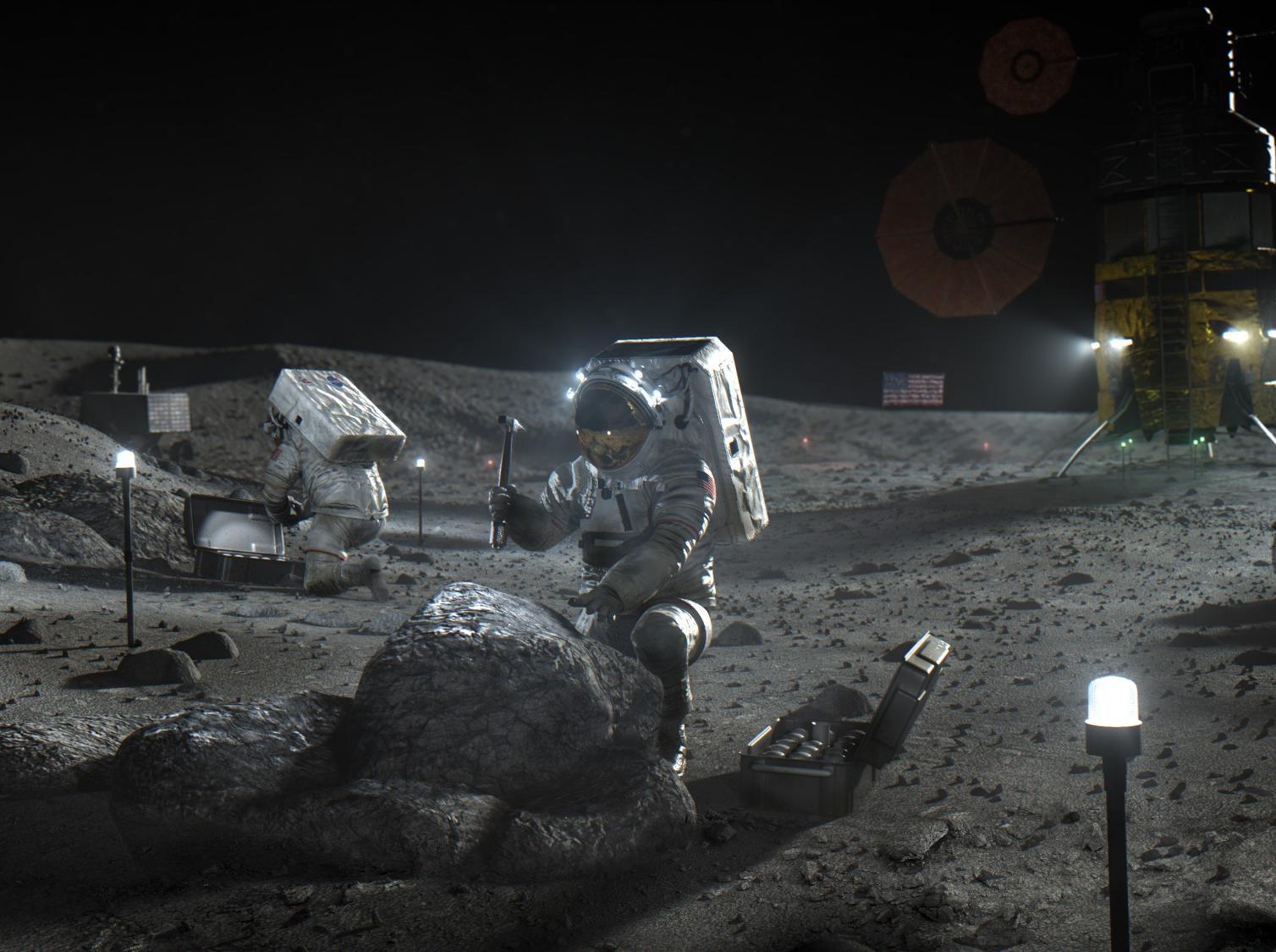
ii. Fueling Space Exploration: Mining asteroids for water ice could be crucial for establishing permanent settlements on the Moon or Mars. Water can be converted into fuel for spacecraft and life support systems.
iii. Economic Boom: Space mining could open up a new economic frontier, creating jobs, generating wealth, and potentially triggering technological advancements.

How Do We Mine in Space?

Space mining is still in its early stages, but several approaches are being explored:

Robotic Extraction: Robots would be sent to asteroids to collect and process resources. This minimizes human risk and allows for remote operations.
Asteroid Mining: Exploiting asteroids closer to Earth could be a first step, with resources extracted and brought back to Earth or used in space.
In-situ Resource Utilization (ISRU): Processing resources directly on the Moon or Mars, using existing materials like lunar regolith, could be crucial for long-term settlements.

Challenges and Considerations

Space mining faces several challenges, including:

  • High Costs: Launching and operating equipment in space is expensive.
  • Technological Hurdles: Developing reliable and efficient extraction and processing technologies is crucial.
  • Legal and Ethical Considerations: Establishing international regulations and addressing ethical concerns regarding resource ownership and environmental impact are essential.

    The Future of Space Mining

While space mining still has a long way to go, it holds immense potential for humanity’s future. As technology advances and costs decrease, space mining could become a reality, paving the way for a sustainable and prosperous future beyond Earth.

So, the next time you look up at the night sky, remember, it’s not just a starry expanse; it’s a treasure trove waiting to be unlocked.

Tagged : / / / /

Olympus Mons : The Largest Volcano In The Universe Is Two Mount Everests High!

Olympus Mons : The Largest Volcano In The Universe Is Two Mount Everests High!
Imagine a mountain so vast, it could span the entire state of Arizona and still tower over Mount Everest by two Mount Everests stacked on top! Meet Olympus Mons, the unrivaled ruler of the volcanic kingdom, not just on Mars, but across the entire solar system. But what makes this fiery giant so impossibly big, leaving even the mightiest Earthly volcanoes blushing in its shadow? Buckle up, space explorers, because we’re about to uncover the secrets of Olympus Mons’ majestic reign.

Size Matters: First things first, sheer scale. Olympus Mons dwarfs its Earthly counterparts. With a height of 21.9 kilometers (13.6 miles) and a base diameter of 600 kilometers (370 miles), it’s about three times taller than Mount Everest and six times wider! It’s not just tall, it’s broad, covering an area roughly the size of France. It’s like stretching from Paris to Marseille… on a volcano!

The Calm Giant: Unlike Earth’s restless tectonic plates, Mars enjoys a more stable crust. This means the hot spot beneath Olympus Mons, a molten plume deep within the planet, hasn’t budged in millions of years. Earth’s volcanoes, constantly shifting with plate movements, rarely have the luxury of erupting from the same spot for so long. Olympus Mons has had millennia to pile on layer after layer of lava, building itself into a monstrous mountain.

Thick as a Brick: Mars boasts a thicker, sturdier crust than Earth. This robust foundation can handle the immense weight of Olympus Mons without buckling or collapsing. Imagine trying to stack skyscrapers on a flimsy deck of cards – not going to happen. But on Mars’ sturdy platform, Olympus Mons erupts with impunity, building its volcanic empire without fear of crumbling.

Volcanic Buffet: While Earth’s volcanoes often erupt explosively, spewing ash and gas, Olympus Mons favors a calmer approach. Its eruptions are typically slow and flowing, like a never-ending volcanic buffet. This gentle oozing, combined with the long lifespan of its hot spot, has allowed Olympus Mons to accumulate its staggering size.

So, there you have it! Olympus Mons isn’t just a mountain; it’s a testament to the unique geological conditions of Mars, where a calm hot spot, a thick crust, and millions of years of tireless eruption have combined to create the biggest volcano in the solar system. So next time you gaze at the stars, remember the fiery giant reigning supreme on the Red Planet, a silent reminder of the wonders that lie beyond our earthly home.

Tagged : / / /

India Joins Elite Group Of Nations With “Pseudo-Satellites”: Keeping an Eye on the Stratosphere and Beyond

India Joins Elite Group Of Nations With “Pseudo-Satellites”: Keeping an Eye on the Stratosphere and Beyond
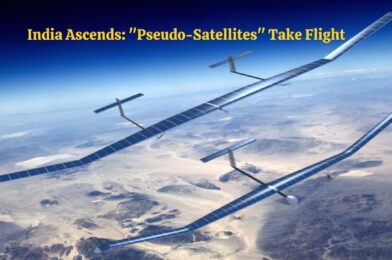
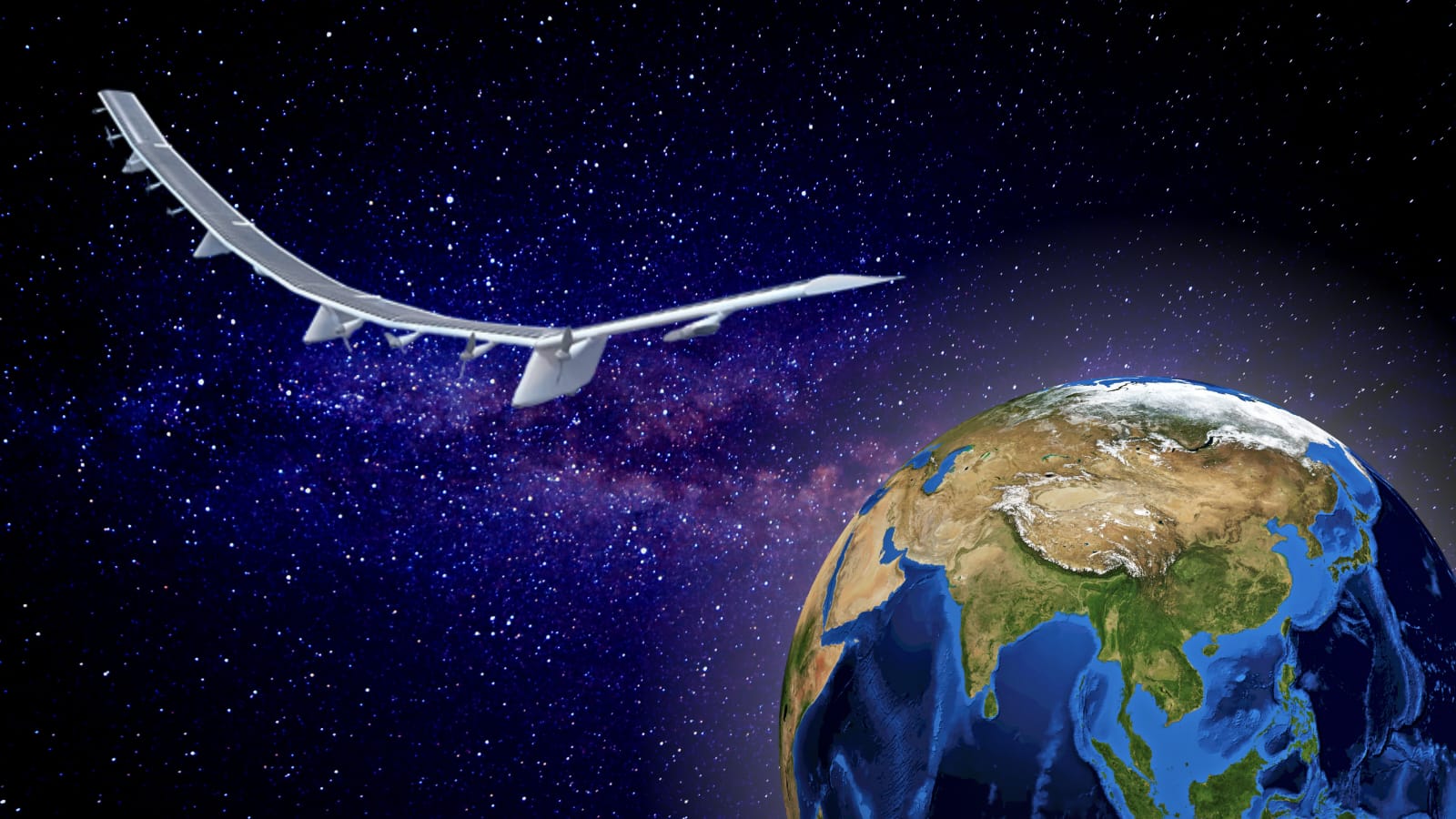
India’s ambitions are reaching new heights with the development of “pseudo-satellites,” a game-changing technology placing it among the elite nations exploring the stratosphere. These innovative platforms, also known as High-Altitude Platform Systems (HAPS), promise not only to revolutionize surveillance and communication but also hold strategic implications for regional dynamics.

Imagine solar-powered drones, the size of airplanes, cruising at breathtaking altitudes of 65,000 feet, above weather and air traffic. That’s the essence of HAPS: persistent aerial platforms capable of staying aloft for months, offering a unique vantage point for observation and communication.

For India, HAPS offer a multitude of benefits. Firstly, they provide a cost-effective and persistent surveillance capability. Unlike traditional satellites, HAPS operate closer to Earth, offering higher image resolution and the ability to monitor specific areas continuously. This could prove invaluable for border security, especially along the contested Himalayan border with China.

Secondly, HAPS open new avenues for communication in remote areas. Their high altitude allows them to cover vast distances, providing internet connectivity to underserved regions and disaster-stricken zones. This could be a game-changer for disaster relief efforts and bridging the digital divide.

Thirdly, HAPS hold immense potential for scientific research. Their long endurance and ability to carry specialized equipment make them ideal platforms for atmospheric studies, environmental monitoring, and even disaster prediction.

The successful test flights of a prototype HAPS developed by Bengaluru-based NewSpace Research and Technologies Pvt. Ltd., under the Ministry of Defense’s Innovation for Defense Excellence (iDEX) initiative, mark a significant milestone in India’s HAPS journey. With plans for the first operational flight in 2024, India is poised to join the ranks of nations like the United States, China, and Japan in exploiting this cutting-edge technology.

Of course, challenges remain. Regulatory frameworks for operating HAPS at such high altitudes need to be established. Integration with existing communication systems and addressing potential security concerns are also crucial steps.

However, the potential benefits of HAPS are undeniable. As India takes to the stratosphere with these pseudo-satellites, it not only strengthens its strategic capabilities but also opens doors to novel applications in communication, research, and disaster management. This is a giant leap forward, not just for India’s technological prowess, but for the future of aerial technology itself.

So, keep an eye on the sky, for India’s HAPS are just the beginning of a new era in aerospace, filled with possibilities as limitless as the stratosphere itself.

Tagged : / / / /

Hold My Corona, There’s a Planet Hotter Than the Sun Out There!

Hold My Corona, There’s a Planet Hotter Than the Sun Out There!
Our Sun, a blazing behemoth at a scorching 5,500 degrees Celsius, reigns supreme in our solar system. But hold onto your spacesuits, because a recent discovery has rewritten the cosmic rulebook: a planet outside our solar system has been found that’s even hotter than our own star!

Meet WASP-96b, a gas giant roughly twice the size of Jupiter orbiting a distant star 1,170 light-years away. This fiery fiend boasts a surface temperature of a jaw-dropping 3,100 Kelvin (2,827 degrees Celsius), making it over 500 degrees hotter than the Sun’s surface!

But how can a planet be hotter than its star? Unlike Earth, which basks in reflected sunlight, WASP-96b is locked in a tight, ultra-close orbit around its sun. It takes this inferno planet only 3.4 Earth days to complete one scorching lap around its star, literally feeling the heat at a cosmically close distance.

This proximity subjects WASP-96b to an intense barrage of stellar radiation, directly heating its atmosphere to unimaginable temperatures. Imagine a constant solar flare bombarding your backyard – that’s the life of WASP-96b!

But the story doesn’t end there. Scientists believe the intense heat has stripped away most of the planet’s gas, leaving behind a heavy metal core shrouded in a thin, hazy atmosphere of vaporized metals like sodium and iron. This makes WASP-96b more akin to a giant, molten metal ball than a typical gas giant.

The discovery of WASP-96b throws up some fascinating questions about planetary formation and evolution. How can a planet survive such extreme heat? What exotic materials might exist in its vaporized metal atmosphere? Could life, as we know it, even remotely exist in such a hellish environment?

Unraveling these mysteries requires further exploration. Astronomers are already planning to train powerful telescopes on WASP-96b, hoping to glean its secrets through detailed spectral analysis. Understanding this extreme world could give us valuable insights into the diverse range of planets that might exist out there in the vast cosmic ocean.

So, the next time you gaze at the Sun, remember, there’s a planet out there that gives it a run for its money in the heat department. WASP-96b serves as a reminder of the universe’s boundless diversity and the endless possibilities that await us in the cosmic frontier. Buckle up, space explorers, it’s going to be a wild ride!

Tagged : / /

Calling All Earthlings: Why Phoning Home From Distant Stars Might Be Tricky?

Calling All Earthlings: Why Phoning Home From Distant Stars Might Be Tricky?
Gazing at the star-studded night sky, it’s easy to imagine future astronauts effortlessly video-calling home from distant planets, sharing their cosmic adventures in real-time. But the reality of galactic communication is far more complex, presenting a multitude of challenges that could leave those brave explorers feeling a bit disconnected.

The Tyranny of Distance:

The vastness of space is the most fundamental obstacle. Light, our current champion of information exchange, travels at a measly 186,000 miles per second. This means a message from just our nearest star system, Proxima Centauri, would take over four years to reach Earth, and the reply another four years to make its way back. Imagine trying to have a conversation with a four-year delay between each word!

Cosmic Time Warp:

Even if we overcome the speed of light limitation (a feat currently beyond our grasp), Einsteinium throws another wrench in the works. According to relativity, time dilation occurs for objects traveling at high speeds or in strong gravitational fields. This means time passes differently for the astronauts and those back on Earth. While a few years might pass for the crew during their interstellar voyage, decades or even centuries could have elapsed on Earth, making real-time communication practically impossible.

Cosmic Static and the Signal Scramble:

Space isn’t exactly quiet. It’s filled with a cacophony of electromagnetic radiation from stars, black holes, and other celestial bodies. This cosmic static can corrupt and scramble signals, making it difficult to decipher messages, especially over vast distances. Additionally, interstellar gas and dust clouds can further attenuate and distort signals, adding another layer of complexity to the communication puzzle.

Technological Hurdles:

Building powerful antennas and transmitters capable of sending and receiving messages across interstellar distances is another hurdle. We currently lack the technology to generate and maintain signals strong enough to pierce the cosmic noise and reach their destination with enough clarity to be understood. Additionally, designing equipment that can withstand the harsh environment of space, with its intense radiation and extreme temperatures, is a significant challenge.

Beyond the Technical: The Psychological Toll:

The psychological impact of delayed or limited communication with loved ones back on Earth shouldn’t be underestimated. Imagine the loneliness and isolation of being millions of miles away, with news from home arriving years out of date. Astronauts venturing out into the cosmos will need robust psychological support and communication protocols to cope with the challenges of interstellar disconnection.

While the challenges of galactic communication are daunting, they don’t preclude us from striving for that first interstellar call. Breakthroughs in physics, advancements in signal processing technology, and the development of new materials could one day bring us closer to that dream.

In the meantime, we can celebrate the ingenuity of our scientists and engineers who are constantly pushing the boundaries of what’s possible. After all, who wouldn’t want to hear the first “Hello from Alpha Centauri”?

So, the next time you gaze at the stars, remember that the vastness of space isn’t just a physical barrier, but also a communication one. But with a little human ingenuity and a lot of determination, we might just bridge that gap and bring the cosmos a little closer to home.

Tagged : / / /

The Universe Unfurled: Measuring Distances Without Leaving the Couch

The Universe Unfurled: Measuring Distances Without Leaving the Couch
Gazing at the night sky, it’s hard to grasp the unimaginable vastness. Stars twinkle billions of light-years away, galaxies swirl in the cosmic dance, and yet, we know their distances with surprising precision. How? Unlike interstellar travellers hurtling through space, we rely on ingenious methods for unraveling the universe’s cosmic map.

Imagine holding a fingernail at arm’s length, that’s roughly the scale of Earth compared to our nearest star, Proxima Centauri. For such close neighbors, we employ a trick called parallax. By observing Proxima from opposite sides of Earth’s orbit, we witness a tiny shift in its position. This shift, like the difference in two photos taken from slightly different angles, reveals its distance.

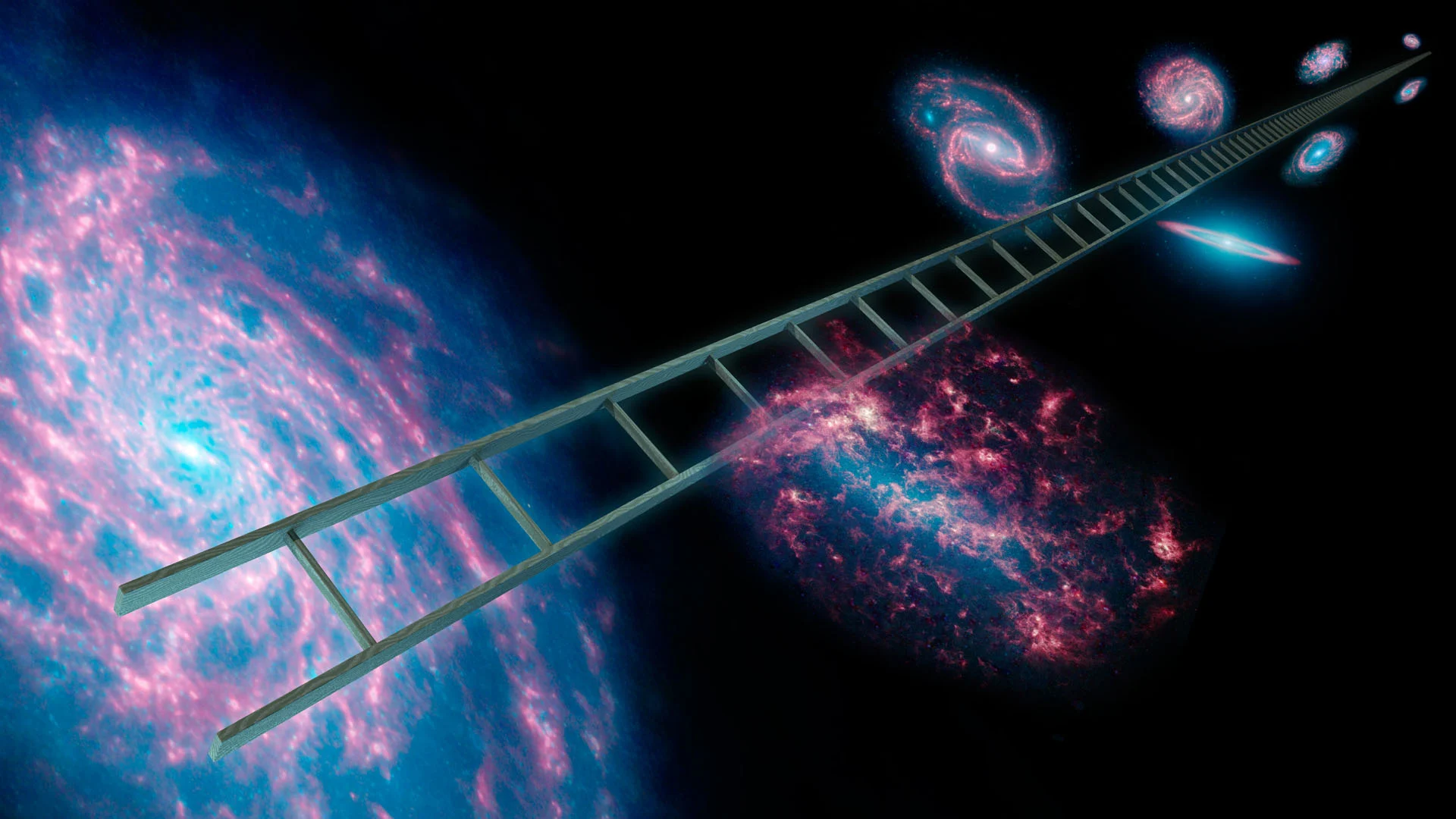
But what about objects beyond our galactic doorstep? Enter the cosmic distance ladder, a series of rungs, each calibrated against the previous one. Pulsating stars called Cepheids act as our first rung. Their predictable brightness variations betray their intrinsic luminosity, allowing us to calculate their distance even in distant galaxies.

Think of these pulsating stars as cosmic lighthouses, their flashes signaling distance. But as with lighthouses, their visibility fades with distance. For far-flung galaxies, we turn to cosmic explosions called supernovae. These brilliant flares, though rare, provide a temporary cosmic yardstick, their peak brightness revealing their cosmic address.

The ladder reaches its final rungs with a concept called redshift. Galaxies moving away from us stretch the light they emit, making it appear “redder.” This stretching, like the Doppler effect for sound, tells us how fast they’re receding, and thanks to Hubble’s Law, we know their speed is directly proportional to their distance.

Each rung of the ladder builds upon the last, allowing us to climb ever deeper into the cosmos. It’s a bit like measuring the height of a skyscraper by first measuring the height of a door, then comparing it to the number of doors stacked on top.

So, while human probes may not yet roam the Milky Way’s outskirts, our minds, armed with scientific ingenuity, can travel billions of light-years. We map the universe’s expanse, not with footprints, but with the subtle whispers of light and the grand explosions of distant stars. Next time you gaze at the night sky, remember, you’re holding a cosmic map in your mind’s eye, a testament to the boundless human thirst for knowledge, even when confined to our earthly couch.

Tagged : / / /

Earth’s Expiration Date: Does NASA Hold the Key to Our Escape?

Earth’s Expiration Date: Does NASA Hold the Key to Our Escape?
A recent NASA study sent shockwaves through the world, claiming to pinpoint the date of Earth’s eventual demise: one billion years from now. While the news might sound apocalyptic, the study also suggests humanity has enough time to find an escape route. But let’s unpack this cosmic announcement before booking one-way tickets to Mars.

The culprit behind Earth’s expiration date is our trusty sun. As it ages, its internal temperature will increase, causing it to expand into a red giant. This fiery transformation will engulf Mercury and Venus, while pushing Earth out towards the outskirts of the solar system. Thankfully, this shift in orbit should prevent our planet from getting roasted.

However, the expanding sun will significantly heat Earth’s atmosphere, causing oceans to evaporate and rendering the planet uninhabitable for life as we know it. So, does this mark the end of the line for humanity? Not necessarily.

NASA’s research suggests a billion years is a long time in cosmic terms. It’s an opportunity to develop technology beyond our current imagination, perhaps terraforming other planets or even venturing beyond the solar system. Imagine, in a trillion years, humans might be colonizing distant galaxies, leaving behind our dying sun like a nostalgic memory.

Of course, the journey won’t be without its challenges. Developing interstellar travel, finding and colonizing suitable planets, and ensuring the survival of our species across generations are monumental tasks. We’ll need international cooperation, scientific breakthroughs, and unwavering optimism to succeed.

But the Earth’s expiration date also presents an opportunity. It forces us to think beyond our immediate needs and consider the long-term future of our species. The potential extinction event becomes a motivator, pushing us to innovate and explore like never before.

So, while the news of Earth’s demise might have initially felt like a death sentence, it’s more accurately a call to action. It’s a wake-up call reminding us that our home planet isn’t permanent, and it’s time to start looking for greener pastures among the stars.

The Earth’s expiration date may be approaching, but humanity also has an expiration date: the point where we lose the will to explore, the courage to dream, and the ingenuity to overcome seemingly insurmountable challenges. Let’s ensure that date never comes. Instead, let’s use this knowledge as fuel for our journey beyond, pushing the boundaries of science and securing a future for humanity beyond Earth’s fiery farewell.

Tagged : / / / /

Our Sun’s Glorious End: What Happens When The Sun Dies?

Our Sun’s Glorious End: What Happens When The Sun Dies?
The Sun, our life-giving star, has been blazing for over 4.5 billion years. But like all stars, it has a finite lifespan. While we still have billions of years to enjoy its warmth, it’s natural to wonder what happens when it finally dies. Let’s delve deeper into this cosmic drama, exploring the different stages of the Sun’s demise and their implications for our solar system.

Act 1: The Hydrogen Honeymoon

For billions of years, the Sun has been merrily fusing hydrogen atoms into helium at its core, releasing the energy that sustains life on Earth. This process is called nuclear fusion, and it’s the powerhouse that keeps our star shining brightly.

However, this nuclear fuel isn’t infinite. The Sun is slowly but steadily converting its hydrogen reserves into helium, and once the hydrogen is depleted, the party’s over.

Act 2: The Red Giant Phase

With its hydrogen fuel gone, the Sun will undergo a dramatic transformation. Its core will shrink and heat up, causing the outer layers to expand outward. This will make the Sun balloon into a red giant, engulfing Mercury and Venus in its fiery embrace.

Despite its larger size, the red giant Sun will be dimmer and cooler than it is now. Earth, fortunately, will likely escape this fiery fate, thanks to the Sun’s expanding outer layers pushing us farther out into orbit.

Act 3: The Planetary Nebula and White Dwarf

The red giant phase is a brief interlude in the Sun’s death throes. Eventually, the outer layers of the Sun will be ejected into space, forming a beautiful planetary nebula. This colorful shroud will glow with the remnants of the Sun’s fusion, a final testament to its former glory.

Meanwhile, the Sun’s core will collapse in on itself, becoming incredibly dense and hot. This stellar cinder, called a white dwarf, will be about the size of Earth but contain nearly half the Sun’s original mass.

The Aftermath: A New Dawn for the Solar System

The white dwarf Sun will slowly cool down over billions of years, eventually becoming a faint, black ember in the vast expanse of space. Our solar system, however, will continue its lonely journey through the Milky Way galaxy.

The planets, including a potentially habitable Earth, will keep orbiting the white dwarf, bathed in its faint glow. While life as we know it will likely cease to exist on Earth due to the changed conditions, the possibility of life emerging on other planets in our solar system remains an intriguing Gedankeexperiment.

The Sun’s death may seem like a distant and daunting event, but it’s a crucial part of the cosmic cycle. Every star is born to die, and the Sun’s demise will pave the way for new stars and planets to form in the Milky Way. So, the next time you gaze up at the Sun, remember its fiery fate, and appreciate its life-giving power while it lasts.

Remember, the Sun’s death is billions of years away, so there’s no need to panic! Instead, let this celestial spectacle inspire us to learn more about our universe, appreciate our place in it, and strive to protect our precious planet.

Tagged : / / / / /
Verified by ExactMetrics