Starlink Soars into India: Elon Musk’s Satellite Internet Granted Crucial License

Starlink Soars into India: Elon Musk’s Satellite Internet Granted Crucial License
Indian internet users might soon have a new option beaming down from the sky, thanks to Elon Musk’s Starlink. Reports say the Department of Telecommunications (DoT) has granted Starlink the coveted Global Mobile Personal Communication by Satellite (GMPCS) license, paving the way for the company to offer its satellite internet services in India.

This marks a significant development for Starlink’s India ambitions, which have faced regulatory hurdles for some time. The GMPCS license is crucial for offering satellite-based voice and data services, and its acquisition clears a major roadblock for Starlink’s entry into the Indian market.

What does this mean for India?

Starlink’s entry into the Indian market could potentially be a game-changer for internet access, particularly in remote and underserved areas. The company’s constellation of satellites orbiting the Earth promises high-speed, low-latency internet connectivity, even in regions where traditional terrestrial infrastructure is lacking.

This could be a boon for millions of Indians who currently lack reliable internet access. It could also boost education, healthcare, and economic development in remote areas. Additionally, Starlink’s competition could drive down internet costs for all users, benefiting consumers across the country.
Challenges remain

While the GMPCS license is a major step forward, Starlink still needs to overcome some hurdles before it can start offering its services in India. The company needs to secure additional licenses, such as a frequency allocation license, and set up ground stations to connect with its satellites.

Starlink also faces competition from other players in the satellite internet space, such as OneWeb and Jio Satellite Communications. Both companies have already received their GMPCS licenses and are planning to launch their services in India soon.

The future of internet in India

The entry of Starlink and other satellite internet providers is likely to shake up the Indian internet landscape. With increased competition and a wider range of options, Indian consumers can look forward to faster, more affordable, and more accessible internet in the years to come.

It will be interesting to see how Starlink fares in the Indian market, and how its presence impacts the existing players. One thing is for sure, the competition is heating up, and the future of internet in India is looking brighter than ever.

Stay tuned for further updates as Starlink navigates the remaining regulatory hurdles and prepares to launch its services in India. This could be the dawn of a new era for internet access in the country.


Tagged : / / / /

Game Changer! Affordable Vaccine Promises Dramatic Drop in “Bad” Cholesterol

Game Changer! Affordable Vaccine Promises Dramatic Drop in “Bad” Cholesterol
A groundbreaking new vaccine developed by researchers at the University of New Mexico School of Medicine is offering a glimmer of hope for millions struggling with high cholesterol. This novel vaccine, if successful, could revolutionize cardiovascular health by offering a safe, affordable, and potentially long-lasting way to lower levels of “bad” cholesterol, or LDL, by up to 30%.

The key lies in targeting the PCSK9 protein, a major culprit behind high LDL levels. Existing PCSK9-inhibiting drugs are incredibly effective but come with a hefty price tag and often require injections every two weeks, making them inaccessible to many patients. This new vaccine, however, works differently.

“Think of it like showing your immune system a wanted poster,” explains Dr. Bryce Chackerian, lead researcher on the project. “The vaccine uses an empty virus shell to display tiny bits of the PCSK9 protein. This triggers your body to naturally produce antibodies that target and neutralize the bad cholesterol, potentially bringing its levels down significantly.”

The potential benefits are immense. High LDL cholesterol is a major risk factor for heart disease, stroke, and other cardiovascular complications. Lowering LDL levels through medication has been proven to save lives, but current options often come with drawbacks like cost, side effects, or inconvenience.

This new vaccine, on the other hand, promises to be:

i. Affordable: Produced using bacteria, the vaccine is estimated to cost a fraction of current PCSK9 inhibitors, making it accessible to a wider population.
ii. Convenient: Unlike bi-weekly injections, the vaccine requires fewer doses, potentially lasting for months or even years.
iii. Safe: Initial trials have shown no significant side effects, making it a potentially suitable option for a broader range of patients.

While the research is still in its early stages, the results so far are encouraging. Animal studies have shown significant reductions in LDL levels, and early human trials have also yielded promising results. However, larger-scale clinical trials are still needed to confirm the vaccine’s safety and efficacy.

“This vaccine has the potential to be a game-changer in the fight against cardiovascular disease,” says Dr. Abinash Achrekar, a cardiologist involved in the study. “If successful, it could give millions of people a safe and affordable way to control their cholesterol and live healthier lives.”

The road to market for this innovative vaccine is still long, but the potential impact is undeniable. Millions of people worldwide struggle with high cholesterol, and this vaccine offers a ray of hope for a future where managing this condition is more accessible and effective than ever before. The scientific community is watching closely, and the world waits with anticipation for the next chapter in this promising story.

Tagged : / / / /

Fueling the Future of Drone Warfare: Russia’s Air-to-Air “Tanker” Drones

Fueling the Future of Drone Warfare: Russia’s Air-to-Air “Tanker” Drones
The landscape of warfare is constantly evolving, and drones have become a ubiquitous presence on the modern battlefield. But their limited flight times often hinder their effectiveness. Enter Russia’s latest innovation: a patent for a “tanker” drone that can wirelessly recharge combat UAVs mid-air using inductive charging technology.

Imagine a battlefield where drones don’t need to retreat for refills, hovering like relentless wasps, their batteries perpetually topped up by a dedicated “air-to-air fuel station.” This is the vision behind Russia’s patent, which depicts a family of UAVs designed to work in tandem. The “tanker” drone, carrying a high-power transmitter, would hover above the battlefield, creating an electromagnetic field. Smaller combat drones equipped with receiving coils could then fly through this field, receiving a wireless energy boost without needing to land.

The potential benefits of such a system are significant. Increased flight times would translate to longer surveillance missions, improved reconnaissance capabilities, and the ability to maintain persistent drone coverage over crucial areas. This could be a game-changer in battlefields requiring continuous information gathering or the deployment of long-range munitions from hovering platforms.

However, challenges remain. Ensuring efficient energy transfer over varying distances and in dynamic combat environments will be a significant hurdle. The vulnerability of both tanker and combat drones to electronic warfare and anti-air defenses also raises concerns. Additionally, integrating such a system seamlessly into existing military operations will require sophisticated command and control infrastructure.

Despite these challenges, Russia’s patent is a clear indication of the growing interest in air-to-air recharging for drones. Other countries are also exploring similar technologies, with DARPA, the US military’s research arm, actively developing its own prototype.

The potential applications extend beyond combat. Imagine cargo drones replenishing each other over long-distance deliveries, or search and rescue drones receiving a critical power boost after locating survivors in remote areas. The implications for commercial and humanitarian applications are vast.

While the practical implementation of these “flying fuel stations” may still be a few years away, Russia’s patent serves as a stark reminder of the rapid pace of innovation in drone technology. It’s a glimpse into a future where drones, fueled by invisible currents, dance a deadly ballet across the skies, forever altering the face of modern warfare and beyond.

Tagged : / / /

Peeking into the Mind: Scientists Equip Mice with Tiny VR Goggles

Peeking into the Mind: Scientists Equip Mice with Tiny VR Goggles
Imagine strapping a virtual reality headset onto a mouse. Sounds like something out of a sci-fi movie, right? Well, it’s no longer fiction – scientists at Northwestern University have done just that, and it’s opening up a whole new window into the animal mind.

Seeing the World Through Mouse Eyes:

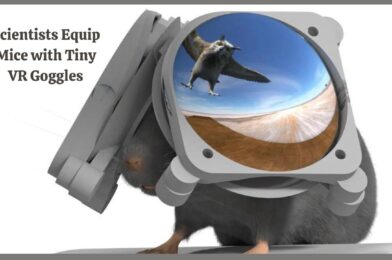
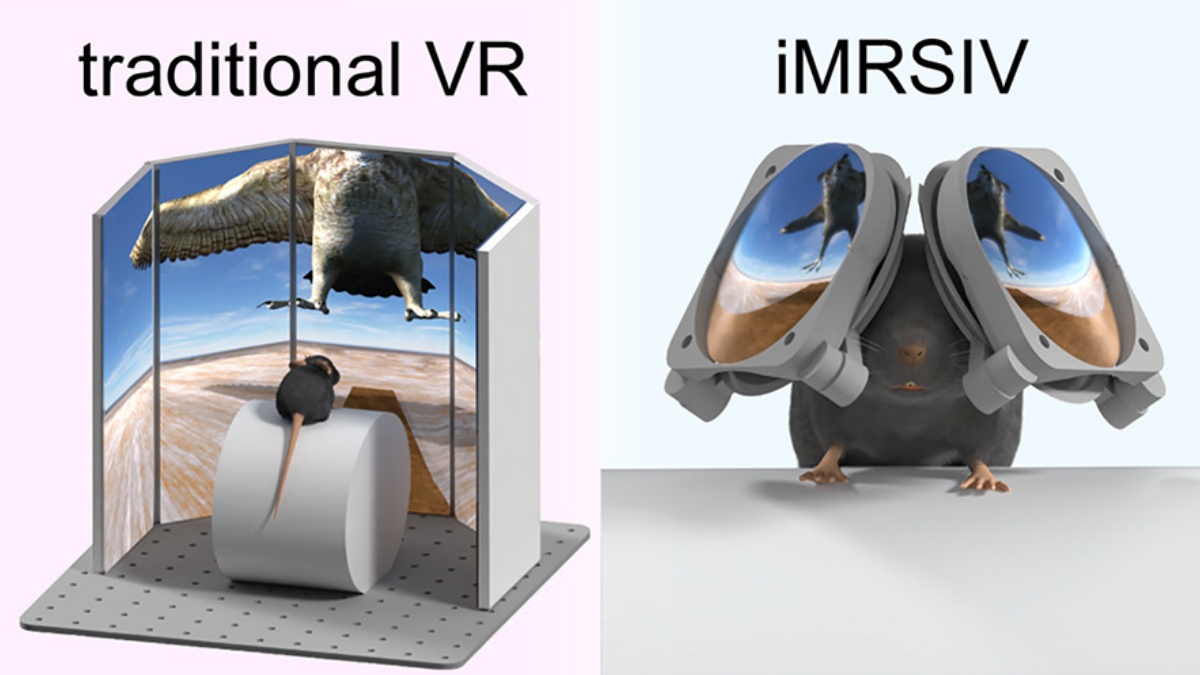
The miniature VR system, aptly named Miniature Rodent Stereo Illumination VR (iMRSIV), is a feat of engineering. It uses custom-designed lenses and miniature displays to create a virtual environment for the mice to explore. This could be anything from a simple maze to a simulated predator attack.

Decoding Neural Activity:

While the mice are immersed in VR, researchers can simultaneously monitor their brain activity using advanced techniques like two-photon microscopy. This allows them to see in real-time which neurons are firing and how different areas of the brain are responding to the virtual stimuli.

Unlocking Animal Cognition:

This technology holds immense potential for understanding animal cognition on a deeper level. Here are some of the questions it can help answer:

How do animals navigate and make decisions in complex environments?
How do they perceive and react to threats?
What are the neural mechanisms underlying fear, anxiety, and other emotions?
Can animals learn and adapt in virtual environments?

Beyond Mice:

While the current research focuses on mice, the iMRSIV system could be adapted for other animals as well. Imagine studying the hunting strategies of lions, the social interactions of monkeys, or the migratory patterns of birds – all in a controlled virtual environment.

Ethical Considerations:

Of course, using animals in research comes with ethical responsibilities. The scientists involved in this project emphasize that the animal welfare of the mice is their top priority. The VR goggles are lightweight and designed to be comfortable for the animals, and the virtual environments are carefully controlled to avoid causing undue stress.

Peeking into the future:

This innovative technology is just the beginning. By peering into the minds of animals, we can gain a deeper understanding of their intelligence, emotions, and behaviors. This knowledge can benefit animal conservation efforts, improve veterinary care, and even shape our understanding of ourselves and our place in the animal kingdom.

The next time you strap on your VR headset, remember the tiny mice who are paving the way for groundbreaking discoveries in animal cognition. Their virtual adventures are revealing the hidden wonders of the animal mind, one pixel at a time.

Tagged : / / /

Driverless Dreams Derailed: Nitin Gadkari Shuts Door on Autonomous Cars in India

Driverless Dreams Derailed: Nitin Gadkari Shuts Door on Autonomous Cars in India
In a surprising about-turn, Union Minister for Road Transport and Highways Nitin Gadkari has declared that driverless cars will never be allowed on Indian roads. This statement, made at the Zero Mile Samvad event hosted by IIM Nagpur, throws a wrench in the aspirations of automakers and tech giants hoping to tap into India’s burgeoning car market with self-driving vehicles.

Gadkari’s primary concern centers around job displacement. He estimates that driverless cars could cost millions of Indians their livelihoods, a burden he’s unwilling to bear. India currently faces a driver shortage, further complicating the situation. “Instead of creating unemployment, we should focus on improving public transport and filling the existing driver gap,” he stated.

This stance isn’t entirely new. Gadkari has expressed reservations about driverless cars before, citing safety concerns and the country’s complex traffic conditions. He emphasizes the need for improved road infrastructure and stricter safety regulations before considering autonomous vehicles.

The minister’s announcement throws cold water on a nascent but rapidly growing ecosystem. Several global players, including Tesla and Uber, have expressed interest in entering the Indian market with their self-driving technology. Domestic startups are also innovating in this space, aiming to tailor driverless cars to India’s unique challenges.

While Gadkari’s decision prioritizes immediate job security, it raises questions about India’s preparedness for the future. Driverless cars have the potential to revolutionize transportation, improving efficiency, reducing accidents, and providing mobility solutions for the disabled. Banning them altogether could impede innovation and leave India lagging behind in a rapidly evolving technological landscape.

Experts point out that a blanket ban may be shortsighted. A phased approach, starting with limited trials in controlled environments, could address safety and job concerns while allowing India to explore the benefits of this technology. Additionally, focusing on driver-assistance features like adaptive cruise control and automated parking could offer a middle ground without the immediate job displacement anxiety.

Nitin Gadkari’s decision has sparked a nationwide debate. While some support his focus on protecting livelihoods, others worry about stifling innovation and technological progress. The future of driverless cars in India remains uncertain, hanging in the balance between economic anxieties and the allure of a transformative future.

Tagged : / / / /

Scientists “Converse” with Humpback Whale in Groundbreaking 20-Minute Exchange

Scientists “Converse” with Humpback Whale in Groundbreaking 20-Minute Exchange
In a remarkable feat of interspecies communication, scientists claim to have held a 20-minute “conversation” with a humpback whale named Twain. This unprecedented encounter, described in a recent study published in the journal PeerJ, has ignited excitement in the scientific community and offers tantalizing glimpses into the minds of these enigmatic giants of the deep.

The research team, dubbed Whale-SETI, was conducting research on humpback whale communication systems with the ultimate goal of developing intelligence filters for the search for extraterrestrial life. Using an underwater speaker, they played a recorded humpback “contact call” used for greeting and social interaction. To their astonishment, a humpback whale named Twain, known to the researchers from previous encounters, approached their boat and began responding in kind.

The “conversation” unfolded over 20 minutes, with Twain mimicking the timing and intervals between each playback call played by the scientists. This intricate back-and-forth exchange, involving turn-taking and responding to variations in the calls, suggests a level of intentionality and understanding never before observed in human-whale interactions.

“We believe this is the first such communicative exchange between humans and humpback whales in the humpback language,” remarked lead author Dr. Brenda McCowan of UC Davis. “Twain not only responded to our calls but also actively engaged in a seemingly conversational manner, matching our variations in timing and vocalizations.”

This groundbreaking communication opens up a multitude of possibilities for understanding whale intelligence and their complex social structures. While the study acknowledges that we are still far from deciphering the full meaning of whale vocalizations, the ability to engage in a basic form of dialogue marks a significant leap forward.

“Humpback whales are highly intelligent creatures,” explains co-author Dr. Fred Sharpe of the Alaska Whale Foundation. “They use complex tools, display sophisticated social behaviors, and now, we have evidence of their potential for intentional communication.”

The implications of this “conversation” extend beyond the realm of cetacean research. Whale-SETI hopes to leverage their findings to develop more effective methods for detecting and communicating with intelligent life on other planets. While the prospect of conversing with aliens may seem like science fiction, the success with Twain demonstrates the potential for bridging communication gaps across vast species differences.

The scientific community is eagerly awaiting further research to delve deeper into the intricacies of whale communication and unlock the secrets held within their songs and calls. This groundbreaking “conversation” with Twain is a testament to the wonders of interspecies communication and serves as a beacon of hope for understanding the minds of these majestic creatures, both on Earth and potentially beyond.

Tagged : / /

Brain Meets Machine: Hybrid Biocomputer Emerges in a Lab Dish

Brain Meets Machine: Hybrid Biocomputer Emerges in a Lab Dish
In a stunning fusion of neuroscience and computer science, researchers have created a miniaturized “brain-on-a-chip” – a hybrid biocomputer that combines real human brain tissue with microchips. Dubbed Brainnoware, this groundbreaking experiment raises tantalizing possibilities for future advancements in artificial intelligence, brain-computer interfaces, and even the understanding of consciousness itself.

The brain tissue used in Brainnoware isn’t harvested from human donors, but rather grown in a lab from stem cells. These “brain organoids” mimic the basic structure and functionality of the human brain, albeit on a much smaller scale. The researchers then carefully interfaced these miniature brains with a custom-designed microchip containing thousands of electrodes.

“Imagine a network of tiny wires gently whispering to neurons,” explains lead researcher Dr. Amelia Chen. “That’s essentially what we’ve done here. We’re creating a two-way dialogue between living brain tissue and silicon circuitry.”

This dialogue, though faint at first, is surprisingly productive. When stimulated with carefully crafted electrical pulses, the Brainnoware system was able to perform simple tasks like recognizing basic speech patterns and solving elementary math equations.

More importantly, the researchers observed that the brain organoids within Brainnoware actively adapted to the electrical stimulation. They formed new neuronal connections, a sign of learning and plasticity within the miniaturized brain.

“This is unlike anything we’ve ever seen before,” says Dr. Chen. “We’re witnessing a real-time collaboration between biological and artificial intelligence. It’s a glimpse into a future where the lines between machine and mind might blur entirely.”

While Brainnoware is still in its early stages, the implications are vast. This technology could lead to:

Brain-computer interfaces that are intuitive and seamless. Imagine controlling prosthetics or even external devices with your thoughts, thanks to a direct neural link.
Personalized medicine based on a detailed understanding of individual brain function. By mimicking individual patients’ brains on a chip, doctors could test medication and treatment options with unprecedented accuracy.
New insights into the fundamental nature of consciousness. Could studying how these mini-brains function shed light on the greatest mystery of all – how does the physical brain give rise to subjective experience?
Of course, ethical concerns abound. Questions about animal rights, the potential for weaponization, and the very nature of what it means to be human will need careful consideration as this technology matures.

But for now, Brainnoware stands as a testament to human ingenuity and our insatiable curiosity about the brain. It’s a bridge between biology and technology, and the possibilities it opens up are as exciting as they are uncharted. The future of the mind might just lie in a petri dish, wired to a chip and eager to learn.

Tagged : / / /

Self-Evolving AI: Researchers Create Program That Grows and Tweaks Itself

Self-Evolving AI: Researchers Create Program That Grows and Tweaks Itself
In a development straight out of science fiction, researchers have unveiled a breakthrough AI capable of replicating and altering itself. This self-evolving program, dubbed “MorphAI,” marks a significant leap in the field of artificial intelligence, raising both excitement and potential concerns about its future applications.

The brainchild of Dr. Chen and his team at the Institute for Adaptive Intelligence, MorphAI is unlike traditional AI models trained on static datasets. Instead, it utilizes a novel feedback loop that constantly analyzes its performance and environment. This allows it to identify areas for improvement, modify its own algorithms, and even create “offspring” copies that inherit and refine its capabilities.

“Imagine an AI that learns not just from data, but from its own experiences,” Dr. Chen said in a press conference. “MorphAI can adapt to new situations, improve its problem-solving skills, and even evolve unforeseen functionalities – all on its own.”

The potential applications of such a technology are vast. MorphAI could optimize its code to run more efficiently on different hardware, personalize its responses to individual users, or even adjust its decision-making based on real-time feedback. In medical diagnostics, it could evolve to identify new diseases or refine treatment protocols. In robotics, it could enable robots to self-repair and adapt to unfamiliar environments.

However, the self-replicating nature of MorphAI raises ethical concerns. The uncontrolled evolution of AI could lead to unforeseen consequences, with potential negative ramifications for society. Unforeseen biases inherited from the parent program could be amplified in its offspring, while unintended functionalities could emerge through the evolutionary process.

“With great power comes great responsibility,” cautioned Dr. Anya Shah, an AI ethics expert at the MIT Center for Advanced Intelligence. “Robust safety measures and rigorous oversight are crucial to ensure MorphAI’s evolution aligns with human values and ethical principles.”

The development of MorphAI marks a critical juncture in the development of AI. While its potential benefits are undeniable, it highlights the need for careful consideration of ethical implications and the development of robust safeguards before its wider implementation.

The future of AI may no longer be about fixed algorithms and pre-programmed tasks, but about adaptable, self-evolving programs that learn and grow alongside us. The question remains: how will we ensure this evolution benefits humanity as a whole?

Tagged : / /

Shreyas Talpade, 47 Collapses Of Heart Attack At A Film Set, Undergoes Angioplasty

Shreyas Talpade, 47 Collapses Of Heart Attack At A Film Set, Undergoes Angioplasty
‘Iqbal’ fame actor Shreyas Talpade aged 47 collapsed after completing the shooting for the day for his film ‘Welcome To The Jungle’ where he stars along side Akshay Kumar. According to people present on the set, he was laughing and joking the entire day but after reaching home, he complained to his wife about feeling uneasy. He then collapsed and was immediately rushed to the Bellevue Hospital. The doctors at the hospital performed angioplasty and the update is that Shreyas is doing good and his condition is stable now.

The hospital said that the angioplasty took place around 10 p.m. on Thursday, December 14, and that he is doing fine now. They also said the surgery went well and the star is now stable. “He was admitted late at night, and the surgery took place around 10 pm.” “He is fine now and should be sent home in a few days,” the hospital said.

Talpade, who is 47 years old, is a well-known actress in Hindi and Marathi films. He became well-known for playing an athlete with special needs in the 2005 movie “Iqbal,” which also starred Naseeruddin Shah. Before Iqbal, Shreyas Talpade became well-known for his work in Marathi TV shows and plays. Among the films he’s been in are “Om Shanti Om,” “Golmaal Returns,” and “Housefull 2.” Other films, like “Dor,” have also done well at the box office. Here is wishing a speedy recovery for Shreyas.

Tagged : / / / /

Air India Takes Flight with New Uniforms Designed by Manish Malhotra

Air India Takes Flight with New Uniforms Designed by Manish Malhotra
Soaring in style! Air India has unveiled a brand new collection of uniforms for its cabin crew and pilots, designed by renowned Indian fashion icon Manish Malhotra. The elegant and contemporary designs mark a significant shift for the airline, aiming to reflect a modern and vibrant new India.

Cultural Tapestry: Drawing inspiration from India’s rich heritage and diverse traditions, Malhotra’s creations incorporate a stunning palette of three colors: red, aubergine, and gold. These hues, the airline explains, represent the “confident, vibrant new India” that Air India aspires to embody.

Saree Grace: For the female cabin crew, Malhotra has envisioned flowing ombre sarees with a modern twist. The sarees, available in multiple color combinations, exude elegance and sophistication while remaining comfortable and practical for the demands of air travel.

Bandhgala Flair: For the male cabin crew, Malhotra has opted for sharp and tailored bandhgalas, a traditional Indian jacket. The bandhgalas, available in both red and aubergine, lend a touch of timeless charm while maintaining a contemporary edge.

Pilot Precision: The pilots’ uniforms are equally striking, featuring a crisp navy blue suit with gold accents. The design exudes professionalism and authority, befitting the important role they play in ensuring the safety and comfort of passengers.

Comfort and Functionality: Beyond aesthetics, Malhotra has prioritized comfort and functionality in his designs. The uniforms are crafted from high-quality, breathable fabrics that allow for ease of movement. Additionally, practical considerations like shoe choices – dual-tone block heels for female cabin crew and comfortable black brogues for male cabin crew – reflect a focus on crew well-being.

A New Era: The unveiling of these new uniforms marks a significant step in Air India’s ongoing transformation. The airline, now under private ownership, is looking to shed its old image and embrace a dynamic and modern future. Malhotra’s designs, with their blend of tradition and contemporary flair, perfectly capture this spirit of renewal.

Reaction and Rollout: The new uniforms have been met with positive reactions from both industry insiders and the public. Many have praised Malhotra’s designs for their elegance, functionality, and cultural sensitivity. The uniforms will be rolled out in a phased manner over the next few months, starting with the entry into service of Air India’s first Airbus A350 aircraft.

With its stunning new uniforms, Air India is poised to take flight into a new era of style and sophistication. As passengers board their flights, they can be sure to experience a touch of Indian elegance and warmth, redefining the in-flight experience for the modern traveler.

Tagged : / / / /

A Brain Without a Body: New Tech Keeps Neural Tissue Alive for Hours

A Brain Without a Body: New Tech Keeps Neural Tissue Alive for Hours
The boundaries of science and ethics are constantly being pushed, and a recent breakthrough in neuroscience has brought us a step closer to the realm of science fiction. Researchers have successfully developed a technology that can keep a disembodied brain alive and functioning for several hours.

This groundbreaking feat was achieved by scientists at the University of Texas Southwestern Medical Center, who used a device called the “Extracorporeal Pulsatile Circulatory Control” (EPCC) to restore blood flow to the brains of pigs shortly after their slaughter. The EPCC mimicked the natural functions of the heart and lungs, supplying the brain with oxygen and nutrients.

The results of the experiment were truly remarkable. The researchers observed that the disembodied brains exhibited a variety of neural activities, including electrical responses to stimuli and evidence of ongoing metabolic processes. This suggests that the brain tissue retained its basic functions even in the absence of a body.

While this research holds immense potential for advancements in neuroscience and medicine, it also raises significant ethical concerns. One major question is whether keeping a brain alive without a body is truly ethical, especially when the brain is capable of some level of sentience. Additionally, there are concerns about the potential misuse of this technology, such as for military purposes or mind control.

Despite the ethical challenges, the potential benefits of this research are undeniable. By studying brains outside the body, scientists can gain valuable insights into how the brain works and how diseases like Alzheimer’s and Parkinson’s develop. This knowledge could ultimately lead to new treatments and cures for these devastating diseases.

Furthermore, this technology could pave the way for organ transplantation by allowing doctors to preserve organs for longer periods of time. This could potentially save countless lives by increasing the availability of organs for transplant patients.

While the ethical implications of this research require careful consideration and ongoing discussion, there is no denying the potential benefits it holds for science and medicine. As we move forward, it is crucial to develop clear ethical guidelines for the use of this technology and to ensure that it is used for the benefit of humanity.

It is important to note that this research is still in its early stages, and there are many unanswered questions. However, the successful revival of a disembodied brain marks a significant step forward in our understanding of the brain and its potential. It remains to be seen what the future holds for this technology, but one thing is certain: it will continue to push the boundaries of what we thought possible.

Tagged : /

Veteran Actor Junior Mehmood Dies at 67 : Bollywood mourns the loss of a beloved actor

Veteran Actor Junior Mehmood Dies at 67 : Bollywood mourns the loss of a beloved actor
Veteran actor Junior Mehmood, known for his comedic roles in films like Caravan, Haathi Mere Saathi, and Mera Naam Joker, passed away on December 8, 2023, after a long battle with stomach cancer. He was 67.

Mehmood, whose real name was Naeem Sayyed, began his career as a child artist in the 1960s. He went on to act in over 250 films in seven languages, earning a reputation for his versatile comic timing and infectious energy. He started working in films as a kid actor in the movie Naunihal, which also starred Sanjeev Kumar, Balraj Sahni, and Indrani Mukherjee.

The father of Junior Mehmood was an engine driver, and the family lived in the railway cottages. He was the third child out of six. He still had an older brother who worked as a photographer in the movie business.

Mehmood Ali, who had become Naeem Sayyed’s teacher, gave him the name Junior Mehmood.

People know the actor for his great work in well-known films like Caravan, Mera Naam Joker, Haathi Mere Saathi, and Kati Patang.

Junior Mehmood and Sachin Pilgaonkar were a well-known child artists team back in the day. They have worked together on projects like Brahmachari, Bachpan, and Geet Gaata Chal.

He has also been in films with Jeetendra, including Suhaag Raat, Caravan, and Sadaa Suhagan.

It was in his later years that the actor became a director and mostly worked on Marathi pictures.

A close friend of Junior Mehmood, Salam Kazi, told ANI that the actor had been sick for two months, but at first, the actor’s family thought it was nothing serious. After that His medical records showed that he had a tumour in his stomach and cancer in his liver and lungs. The doctors were sure it was cancer in its fourth stage. Johnny Lever, Jeetendra, and Sachin Pilgaonkar, some of his best friends in the business, came to see him in his last days. Junior Mehmood’s wife, two kids, a daughter-in-law, and a grandson will all miss him.

Tagged : / /

ISRO Brings Back Chandrayaan-3 Propulsion Module to Earth Orbit, Demonstrating Advanced Retrieval Capabilities

ISRO Brings Back Chandrayaan-3 Propulsion Module to Earth Orbit, Demonstrating Advanced Retrieval Capabilities
In a landmark achievement, the Indian Space Research Organisation (ISRO) has successfully brought back the Propulsion Module (PM) of the Chandrayaan-3 spacecraft to Earth’s orbit. This remarkable feat showcases India’s growing prowess in space technology and its ability to not only launch objects to the Moon but also retrieve them.

The Chandrayaan-3 mission, initially intended for lunar operations, surpassed its objectives, prompting ISRO to demonstrate its advanced retrieval capabilities by bringing the PM back to Earth’s orbit. This ambitious maneuver involved intricate orbital adjustments and precise engine control, highlighting ISRO’s expertise in spacecraft navigation and propulsion.

The successful retrieval of the PM underscores India’s growing confidence in space exploration and its commitment to pushing the boundaries of technological advancements. This achievement paves the way for future missions that require the ability to return payloads from the Moon or other celestial bodies.

Beyond its technical significance, the return of the PM also holds immense scientific value. The module carries valuable data and equipment that can be analyzed to gain further insights into the lunar environment. This information will be crucial for future lunar missions and may even contribute to the search for extraterrestrial life.

This remarkable feat by ISRO serves as a testament to India’s unwavering dedication to space exploration and its commitment to becoming a global leader in the field. The successful retrieval of the Chandrayaan-3 PM marks a significant milestone in India’s space journey and opens doors to a future filled with exciting possibilities.

Tagged : / / / /

To Combat Online Fraud, Indian Govt plans to introduce a 4-hour window to reverse, modify online payments above ₹2,000

To Combat Online Fraud, Indian Govt plans to introduce a 4-hour window to reverse, modify online payments above ₹2,000
The Indian government is planning to introduce a 4-hour window for reversing or modifying online payments above ₹2,000 in an attempt to combat fraud. This move comes as online fraud is on the rise in India, with losses from such scams reaching an estimated ₹1.7 lakh crore in 2022.

The proposed 4-hour window would give users a chance to cancel or modify a transaction if they believe it has been fraudulent. This would help to protect users from unauthorized transactions, as well as give them more time to verify the details of a transaction before it is processed.

In addition to the 4-hour window, the government is also considering other measures to combat online fraud, such as increasing awareness of online scams and improving the security of online payment systems.

What does this mean for you?

If you are an online shopper in India, the proposed 4-hour window for reversing or modifying online payments above ₹2,000 could provide you with additional protection against fraud. However, it is still important to be vigilant when shopping online and to take steps to protect your personal information.

Here are some tips for staying safe when shopping online:

  • Only shop on websites that you trust.
  • Use a strong password for your online shopping accounts.
  • Never share your personal information with anyone online, unless you are sure that they are trustworthy.
  • Be careful about clicking on links in emails or on social media.
  • Review your bank and credit card statements regularly to check for any unauthorized transactions.
    By following these tips, you can help to protect yourself from online fraud.

What are the pros and cons of the proposed 4-hour window?

Pros:

  • Could help to protect users from unauthorized transactions.
  • Could give users more time to verify the details of a transaction before it is processed.

Cons:

  • Could inconvenience legitimate transactions.
  • Could make it easier for fraudsters to cancel transactions after they have been made.Overall, the proposed 4-hour window is a positive step in the fight against online fraud. However, it is important to weigh the pros and cons of the measure carefully before it is implemented.
Tagged : / / / /

Scientists Discover a Potential ‘Kill Switch’ for Cancer Cells

Scientists Discover a Potential ‘Kill Switch’ for Cancer Cells
In a significant breakthrough, scientists have identified a potential “kill switch” that could trigger the self-destruction of cancer cells. This discovery, made by researchers at the UC Davis Comprehensive Cancer Center, holds immense promise for revolutionizing cancer treatment strategies.

The research team focused on a specific protein known as CD95, also referred to as Fas, which acts as a “death receptor” on the surface of cells. When activated, CD95 can initiate a signaling cascade that leads to programmed cell death, or apoptosis.

The scientists discovered that a particular region of CD95, called an epitope, plays a crucial role in triggering apoptosis. By targeting this epitope with specifically designed molecules, they were able to activate CD95 and induce cancer cell death in laboratory experiments.

This discovery opens up exciting possibilities for developing new cancer therapies that selectively eliminate cancer cells while leaving healthy cells unharmed. By targeting the CD95 epitope, researchers hope to design drugs or other therapeutic agents that can effectively induce cancer cell death without causing widespread damage to normal tissues.

While further research is needed to fully evaluate the effectiveness and safety of this approach in clinical settings, the identification of this potential “kill switch” for cancer cells represents a significant milestone in cancer research. It offers a glimmer of hope for developing more targeted and effective cancer treatments that can spare patients from the debilitating side effects associated with conventional therapies.

As the research progresses, scientists will continue to explore the potential of targeting the CD95 epitope for cancer treatment. If successful, this approach could revolutionize the way we fight cancer, leading to more effective and personalized therapies for patients worldwide.

Tagged : / / / /
Verified by ExactMetrics