‘Why Do Daughters Are Attached more to their fathers and sons to their mothers?

‘Why Do Daughters Are Attached more to their fathers and sons to their mothers?
The idea that daughters are more attached to their fathers and sons to their mothers is a popular belief, but is it actually true? The answer, like most things in life, isn’t black and white. While there may be some general tendencies, individual bonds and family dynamics play a much bigger role.

Early interactions:

In the early years, the primary caregiver often becomes the child’s main source of comfort and security. This is usually the mother, due to breastfeeding and traditional caregiving roles. However, fathers who actively participate in childcare can develop equally strong bonds with their sons and daughters.

Differing needs:

As children grow, their needs evolve. Daughters often seek emotional support and validation, which fathers can provide through acts of affirmation, encouragement, and playful interactions. This can create a special connection. Meanwhile, sons might gravitate towards mothers for nurturing and practical help, areas where mothers traditionally excel.

Gender roles:

Societal expectations can also play a part. Fathers are often seen as role models and disciplinarians, while mothers are viewed as nurturers and confidantes. This can lead to daughters seeking advice and emotional support from their fathers, while sons might turn to their mothers for comfort and understanding.

Individual personalities:

Ultimately, the strength of any relationship, including those between parents and children, comes down to individual personalities and shared experiences. Some children, regardless of gender, might naturally connect more with one parent than the other. Shared interests, communication styles, and emotional compatibility all contribute to creating unique bonds.

It’s important to remember that generalizations about parent-child relationships can be misleading. Every family is unique, and the strength of bonds between parents and children depends on a variety of factors. Some daughters might have the closest relationship with their mothers, while some sons might be incredibly close to their fathers. What matters most is that each child feels loved, supported, and understood by both parents.

So, the next time you hear someone say “daughters are daddy’s girls,” remember, the world of parent-child relationships is rich and diverse. Celebrate the unique connections within each family, and nurture the bonds that make your own family special.

Tagged : / / / / /

The Astrological Brain Trust: 5 Zodiac Signs with Razor-Sharp Intellects

The Astrological Brain Trust: 5 Zodiac Signs with Razor-Sharp Intellects
While all signs possess unique intelligence, some zodiac constellations seem to have a particular affinity for the brainy stuff. Let’s delve into the minds of five such signs, those renowned for their exceptional intellect, and discover what makes their neurons fire like fireworks.

1. Aquarius: The rebel intellectuals, Aquarians are natural-born problem solvers. Their minds hum with a symphony of unconventional ideas, and their thirst for knowledge is unquenchable. They’re the ones questioning everything, dissecting problems from bizarre angles, and coming up with solutions that leave everyone else scratching their heads (in awe, of course).

2. Virgo: Don’t underestimate the analytical prowess of a Virgo. These meticulous minds are like finely tuned instruments, dissecting information with laser-like precision. They’re masters of organization, effortlessly weaving together complex strands of data into a tapestry of understanding. Their critical thinking skills are legendary, making them invaluable assets in any brainstorming session.

3. Gemini: Two heads are better than one, and Geminis have two brilliant minds residing in one quick-witted package. Their dual nature allows them to see multiple perspectives, switch gears in the blink of an eye, and process information at lightning speed. Their minds are kaleidoscopes of ideas, bouncing from one brilliant thought to the next, keeping everyone around them intellectually entertained.

4. Scorpio: Scorpios possess a depth of intellectual curiosity that borders on obsession. They delve into the mysteries of the universe with the intensity of a black hole, devouring knowledge and dissecting it with their sharp, analytical minds. Their strategic thinking makes them chess masters of life, always three moves ahead, anticipating and manipulating circumstances with a brilliance that can be both intimidating and inspiring.

5. Capricorn: Capricorns are the architects of the intellectual world. Their minds are meticulous blueprints, meticulously planning every step towards their goals. They possess an ironclad work ethic and a laser focus, fueled by an insatiable ambition to learn and conquer. Their intellect is practical, applied, and always in service of their grand designs.

Remember, dear reader, this is just a glimpse into the astro-intellectual landscape. Every sign possesses its own unique brand of brilliance, waiting to be unleashed. So, embrace your own sign’s strengths, nurture your intellectual curiosity, and let your mind soar! Because when it comes to intelligence, the stars may point the way, but the real fireworks happen inside your own remarkable brain.

Tagged : / / / / /

Brain Meets Machine: Hybrid Biocomputer Emerges in a Lab Dish

Brain Meets Machine: Hybrid Biocomputer Emerges in a Lab Dish
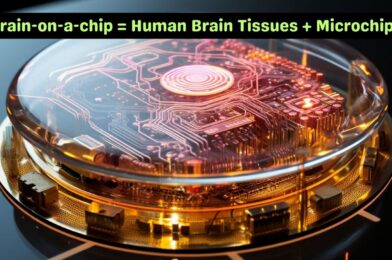
In a stunning fusion of neuroscience and computer science, researchers have created a miniaturized “brain-on-a-chip” – a hybrid biocomputer that combines real human brain tissue with microchips. Dubbed Brainnoware, this groundbreaking experiment raises tantalizing possibilities for future advancements in artificial intelligence, brain-computer interfaces, and even the understanding of consciousness itself.

The brain tissue used in Brainnoware isn’t harvested from human donors, but rather grown in a lab from stem cells. These “brain organoids” mimic the basic structure and functionality of the human brain, albeit on a much smaller scale. The researchers then carefully interfaced these miniature brains with a custom-designed microchip containing thousands of electrodes.

“Imagine a network of tiny wires gently whispering to neurons,” explains lead researcher Dr. Amelia Chen. “That’s essentially what we’ve done here. We’re creating a two-way dialogue between living brain tissue and silicon circuitry.”

This dialogue, though faint at first, is surprisingly productive. When stimulated with carefully crafted electrical pulses, the Brainnoware system was able to perform simple tasks like recognizing basic speech patterns and solving elementary math equations.

More importantly, the researchers observed that the brain organoids within Brainnoware actively adapted to the electrical stimulation. They formed new neuronal connections, a sign of learning and plasticity within the miniaturized brain.

“This is unlike anything we’ve ever seen before,” says Dr. Chen. “We’re witnessing a real-time collaboration between biological and artificial intelligence. It’s a glimpse into a future where the lines between machine and mind might blur entirely.”

While Brainnoware is still in its early stages, the implications are vast. This technology could lead to:

Brain-computer interfaces that are intuitive and seamless. Imagine controlling prosthetics or even external devices with your thoughts, thanks to a direct neural link.
Personalized medicine based on a detailed understanding of individual brain function. By mimicking individual patients’ brains on a chip, doctors could test medication and treatment options with unprecedented accuracy.
New insights into the fundamental nature of consciousness. Could studying how these mini-brains function shed light on the greatest mystery of all – how does the physical brain give rise to subjective experience?
Of course, ethical concerns abound. Questions about animal rights, the potential for weaponization, and the very nature of what it means to be human will need careful consideration as this technology matures.

But for now, Brainnoware stands as a testament to human ingenuity and our insatiable curiosity about the brain. It’s a bridge between biology and technology, and the possibilities it opens up are as exciting as they are uncharted. The future of the mind might just lie in a petri dish, wired to a chip and eager to learn.

Tagged : / / /

Diamond in the Rough: Scientists Craft an Ultra-Hard Material

Diamond in the Rough: Scientists Craft an Ultra-Hard Material
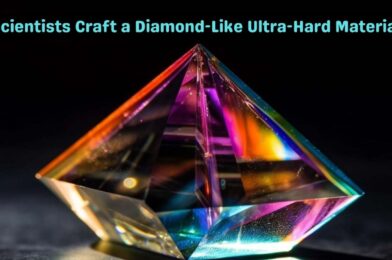
Move over, diamonds! A team of international scientists has synthesized a new material rivalling the legendary hardness of the most treasured gemstone. This breakthrough promises to revolutionize industries from aerospace to medicine, with its potential for creating lighter, stronger, and more scratch-resistant tools and materials.

This ultra-tough substance is a form of organic semiconductor carbon nitride, boasting a hardness on par with cubic boron nitride, second only to diamonds themselves. The research, a collaboration of scientists from Europe, Russia, and North America, has been decades in the making. The theoretical possibility of such a material existed since the 1980s, but creating it proved elusive.

But just like Mother Nature crafting diamonds under immense pressure and heat, the researchers mimicked this process. They subjected carbon and nitrogen atoms to extreme conditions – high temperatures and enormous pressures – mimicking the Earth’s mantle where diamonds form. This intense environment coaxed the atoms into a unique arrangement, resulting in the remarkably tough carbon nitride.

The possibilities for this diamond-rivaling material are as dazzling as its properties. Lighter and stronger than traditional materials, it could be used in spacecraft construction, reducing weight and fuel consumption. Imagine spacecraft shields that shrug off micrometeoroids with ease! On Earth, it could revolutionize tools and machinery, from razor-sharp surgical instruments to wear-resistant drill bits. The possibilities for scratch-resistant coatings for cars, phones, and even buildings are equally exciting.

But the applications don’t stop there. The unique electrical properties of the material make it a potential candidate for next-generation electronics and optoelectronics. Its ability to conduct heat efficiently could lead to advancements in heat sinks and thermal management systems. In short, this new material has the potential to touch numerous aspects of our lives, from the mundane to the cutting-edge.

However, it’s important to remember that this is still early days. Scaling up production and making the material commercially viable will require further research and development. Yet, this breakthrough marks a significant leap in materials science, pushing the boundaries of what we thought possible. It’s a testament to human ingenuity and collaboration, and opens a tantalizing door to a future where diamond-hard materials are not just a luxury, but a versatile tool for progress.

So, the next time you marvel at a sparkling diamond, remember that scientists are busy crafting materials that may soon outshine even the hardest gem. The future of materials science is looking as bright and hard as ever!

Tagged : / /

A Legacy of Genes: Traits Passed Down from Father to Child

A Legacy of Genes: Traits Passed Down from Father to Child
From eye color to personality quirks, children inherit a fascinating blend of traits from both parents. But when it comes to the paternal side, there’s a unique set of characteristics that can be traced back to Dad. Let’s delve into the world of genetics and explore some of the interesting traits children might inherit from their fathers.

Physical Features:

Facial features: Strong jawlines, prominent noses, and even dimples can be passed down from father to child. These traits are often determined by dominant genes, meaning one copy from Dad is enough for their expression.

Hair and eye color: The interplay of genes dictates the shade of your child’s locks and peepers. Brown and black hair colors are generally dominant, while blonde and red are recessive. Eye color follows a similar pattern, with brown being dominant over blue and green.

Height and body build: Dad’s genes play a significant role in determining a child’s height and overall physique. However, it’s important to remember that environmental factors like nutrition and exercise also have a significant impact.

Beyond the Physical:

Blood type: The ABO blood group system is another example of Mendelian inheritance. Children inherit one allele from each parent, and the combination determines their blood type. For instance, if Dad has type A blood and Mom has type B, their child could have type A, B, AB, or O.

Certain medical conditions: While not all diseases are purely genetic, some have a strong hereditary component. Conditions like color blindness, hemophilia, and cystic fibrosis can be passed from father to child, depending on the specific genes involved.

Personality traits: While personality is a complex interplay of genes and environment, some studies suggest that fathers may play a more significant role in shaping certain traits like risk-taking behavior and sociability.

It’s important to remember that genetics is not deterministic. Just because a child inherits a particular trait from their father doesn’t guarantee it will be expressed in the same way. The environment, lifestyle choices, and even chance can all play a role in shaping who a child becomes.

Understanding how traits are passed down from father to child can be a fascinating journey of self-discovery. It’s a testament to the incredible power of genetics and the unique blend of characteristics that make each individual who they are. So, the next time you catch yourself sharing a laugh or a physical feature with your dad, remember, it’s more than just coincidence – it’s the legacy of genes, passed down through generations, connecting you to your family history in a beautiful and intricate way.

Tagged : / / /
Verified by ExactMetrics