6 Upcoming Space Missions of ISRO That Every Indian Should Know About

6 Upcoming Space Missions of ISRO That Every Indian Should Know About
The Indian Space Research Organisation (ISRO) is gearing up for an exciting year in 2024, with a slew of ambitious missions planned for launch. These missions span a wide range of scientific and technological objectives, showcasing India’s growing prowess in the space domain. Here’s a look at six of the most notable upcoming ISRO missions in 2024:

1. NISAR (NASA-ISRO Synthetic Aperture Radar):

A collaborative mission between ISRO and NASA, NISAR will be a powerful Earth observation satellite equipped with a synthetic aperture radar (SAR) instrument. This radar will be able to image Earth’s surface through clouds and darkness, providing valuable data for applications like disaster management, agriculture, and forestry.

2. Gaganyaan 1:

This unmanned mission marks a significant step forward in India’s human spaceflight program. Gaganyaan 1 will carry a human-rated capsule into orbit and test critical technologies for future manned missions. The success of this mission will pave the way for India’s first human spaceflight, currently targeted for 2025.

3. Mangalyaan 2 (MOM 2):

Building on the success of the first Mars Orbiter Mission (MOM), Mangalyaan 2 will attempt a soft landing on the Martian surface. This ambitious mission will carry a rover equipped with scientific instruments to study the Martian environment.
4. Shukrayaan 1:

India’s first mission to Venus, Shukrayaan 1 will study the planet’s dense atmosphere and surface composition. Understanding Venus, Earth’s “twin” planet, can provide insights into Earth’s own climate and evolution.

5. X-ray Polarimeter Satellite (XPoSat):

This astronomy satellite will study the polarization of X-rays from celestial objects like black holes and neutron stars. XPoSat will help us understand the behavior of matter in extreme environments and shed light on the formation of galaxies and stars.

6. INSAT 3DS:

This advanced communication satellite will be part of the Indian National Satellite System (INSAT) and will provide broadband internet services, telephony, and television broadcasting across India. INSAT 3DS will significantly enhance communication infrastructure and bridge the digital divide in rural areas.

These are just a few of the many exciting missions planned by ISRO in the coming year. With its ambitious space program, India is rapidly establishing itself as a major player in the global space arena. These missions promise to not only advance scientific knowledge but also bring tangible benefits to people on Earth.

Tagged : / / / / /

Chandrayaan 4: How ISRO Aims to Bring Samples Back from the Moon

Chandrayaan 4: How ISRO Aims to Bring Samples Back from the Moon
India’s ambitious Chandrayaan 4 lunar mission aims to achieve a historic feat: bringing back lunar samples to Earth. This complex endeavor will showcase India’s advanced space technology and provide invaluable scientific data for understanding the Moon’s composition and history.

Here’s a breakdown of the proposed Moon-to-Earth sample return process:

1. Landing and Sample Collection:

The Chandrayaan 4 mission will involve a lander module equipped with a robotic arm designed to collect and store lunar soil and rock samples. The landing site is yet to be finalized, but it will likely be a scientifically interesting region with diverse geological features.

2. Ascent to Lunar Orbit:

Once the lander has collected the samples, it will ignite its engines and ascend to lunar orbit. This crucial maneuver requires precise control to ensure a successful rendezvous with the orbiting module.

3. Docking and Sample Transfer:

In lunar orbit, the lander will dock with the orbiting module, a spacecraft designed to carry the samples back to Earth. The collected lunar material will be carefully transferred to a specially designed container within the orbiting module.

4. Return Journey and Earth Re-entry:

After a successful docking and sample transfer, the orbiting module will detach from the lander and begin its journey back to Earth. This journey will involve complex maneuvers and precise calculations to achieve a safe re-entry into Earth’s atmosphere.

5. Sample Recovery and Analysis:

Upon re-entry, the orbiting module containing the lunar samples will descend to a pre-determined location, where it will be recovered by Indian Space Research Organisation (ISRO) teams. The collected samples will then undergo meticulous analysis in specialized laboratories, revealing valuable insights into the Moon’s formation, evolution, and potential resources.

Challenges and Expectations:

Returning lunar samples is a complex undertaking, requiring sophisticated technology and precise execution. ISRO faces several challenges, including:

  • Landing and sampling in a harsh environment: The Moon’s surface is a challenging environment with extreme temperatures and radiation.
  • Precise docking and sample transfer in lunar orbit: Successfully docking the lander and transferring the samples in the microgravity environment of space requires meticulous planning and technological prowess.
  • Safe re-entry and recovery of the samples: The orbiting module must withstand the scorching heat of re-entry and safely deliver the precious lunar material.

    Despite the challenges, ISRO’s Chandrayaan 4 mission holds immense potential for scientific discovery and technological advancement. If successful, it will be a historic moment for India and a significant contribution to global lunar exploration efforts. By bringing back lunar samples, ISRO aims to unlock secrets of the Moon and inspire future generations of scientists and space enthusiasts.

Tagged : / / / / / /

ISRO Brings Back Chandrayaan-3 Propulsion Module to Earth Orbit, Demonstrating Advanced Retrieval Capabilities

ISRO Brings Back Chandrayaan-3 Propulsion Module to Earth Orbit, Demonstrating Advanced Retrieval Capabilities
In a landmark achievement, the Indian Space Research Organisation (ISRO) has successfully brought back the Propulsion Module (PM) of the Chandrayaan-3 spacecraft to Earth’s orbit. This remarkable feat showcases India’s growing prowess in space technology and its ability to not only launch objects to the Moon but also retrieve them.

The Chandrayaan-3 mission, initially intended for lunar operations, surpassed its objectives, prompting ISRO to demonstrate its advanced retrieval capabilities by bringing the PM back to Earth’s orbit. This ambitious maneuver involved intricate orbital adjustments and precise engine control, highlighting ISRO’s expertise in spacecraft navigation and propulsion.

The successful retrieval of the PM underscores India’s growing confidence in space exploration and its commitment to pushing the boundaries of technological advancements. This achievement paves the way for future missions that require the ability to return payloads from the Moon or other celestial bodies.

Beyond its technical significance, the return of the PM also holds immense scientific value. The module carries valuable data and equipment that can be analyzed to gain further insights into the lunar environment. This information will be crucial for future lunar missions and may even contribute to the search for extraterrestrial life.

This remarkable feat by ISRO serves as a testament to India’s unwavering dedication to space exploration and its commitment to becoming a global leader in the field. The successful retrieval of the Chandrayaan-3 PM marks a significant milestone in India’s space journey and opens doors to a future filled with exciting possibilities.

Tagged : / / / /

ISRO’s Humanoid Vyommitra Is Now Better Than Before ! Gets The Gift Of The Grey Matter

ISRO’s Humanoid Vyommitra Is Now Better Than Before ! Gets The Gift Of The Grey Matter
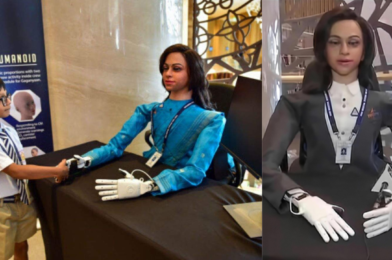
The Indian Space Research Organisation (ISRO) has successfully integrated a computer brain into its humanoid robot, Vyommitra. This will enable Vyommitra to read control panels, communicate with ground stations, and perform other tasks that would normally require a human astronaut.

Vyommitra is a half-humanoid robot that is designed to fly aboard spacecraft. It is about 5 feet tall and weighs about 120 pounds. It has a head, torso, arms, and hands, but it does not have legs. Vyommitra is powered by a battery and can operate for up to 8 hours on a single charge.

The computer brain that has been integrated into Vyommitra is called the “digital grey matter”. It is a powerful artificial intelligence system that can process information and make decisions. The digital grey matter enables Vyommitra to read control panels, communicate with ground stations, and perform other tasks that would normally require a human astronaut.

Vyommitra is still under development, but it is expected to play a major role in ISRO’s future space missions. It could be used to conduct experiments in space, to repair satellites, or to even explore other planets.

The development of Vyommitra is a significant milestone in the field of robotics. It shows that robots are becoming increasingly sophisticated and capable of performing tasks that were once thought to be the exclusive domain of humans. As robots continue to evolve, they are likely to play an increasingly important role in our lives.

Here are some of the potential applications of Vyommitra:

Space exploration: Vyommitra could be used to explore other planets, such as Mars. It could be used to collect samples, conduct experiments, and even build bases.

In-space manufacturing: Vyommitra could be used to manufacture parts and equipment in space. This would reduce the need to transport materials from Earth, which would save time and money.

Disaster relief: Vyommitra could be used to help with disaster relief efforts. It could be used to search for survivors, deliver supplies, and assess damage.

Medical care: Vyommitra could be used to provide medical care in remote areas. It could be used to diagnose and treat patients, and even perform surgery.

Manufacturing: Vyommitra could be used in manufacturing to automate tasks. This would improve efficiency and reduce costs.

The possibilities are endless. As Vyommitra continues to develop, it is likely to play an increasingly important role in our lives

Tagged : / / / / /

As Chandrayan 3 Reaches The Moon, What Will The Pragyaan Rover Do? Will Chandrayaan 3 Come Back to Earth?

As Chandrayan 3 Reaches The Moon, What Will The Pragyaan Rover Do? Will Chandrayaan 3 Come Back to Earth?
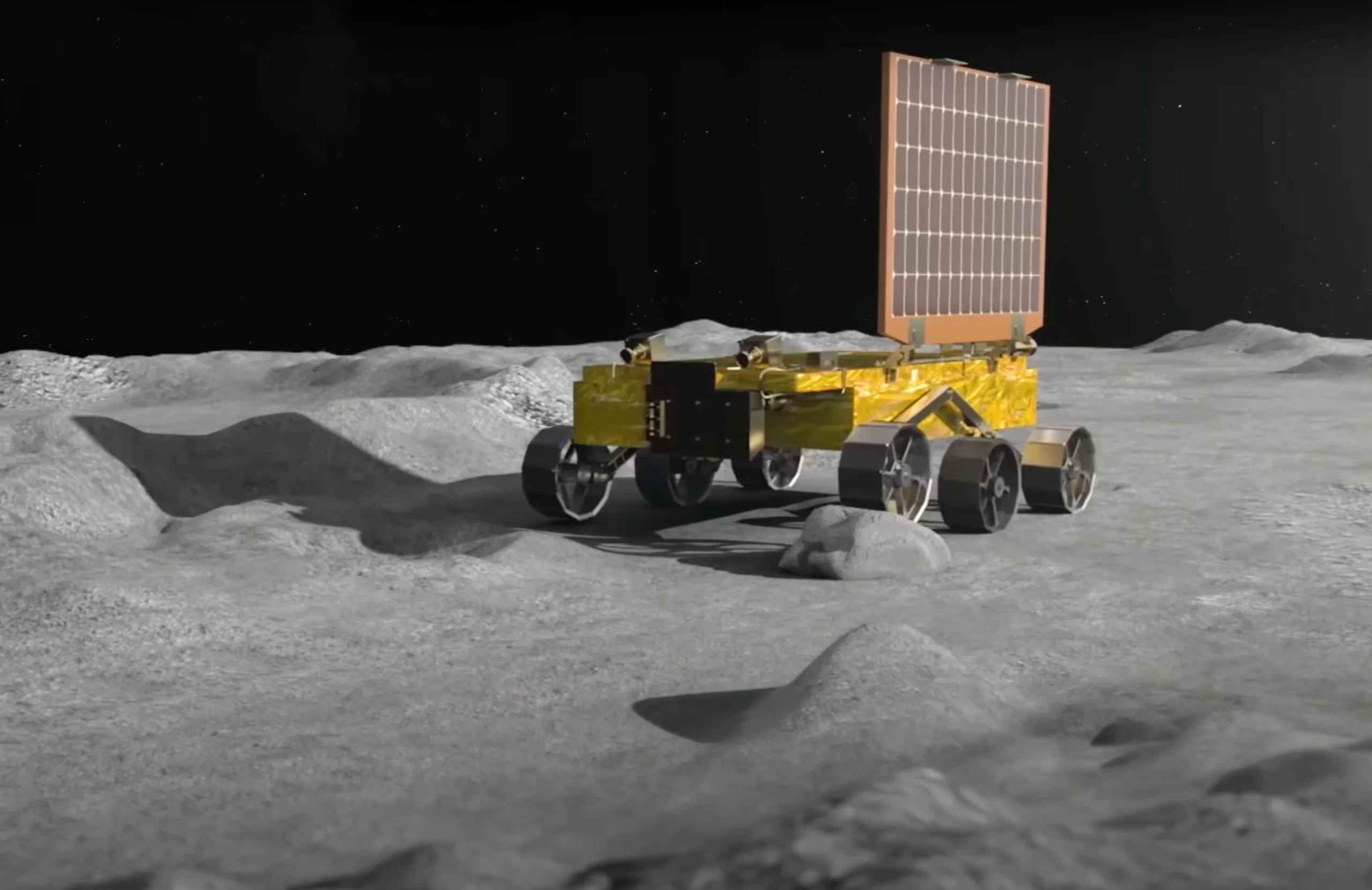
The Pragyaan rover has successfully rolled out of the Vikram lander and is now ready to begin its mission on the surface of the moon. The rover is named after the Sanskrit word for “wisdom” and is designed to explore the lunar south pole, a region that has never been visited by a rover before.

What will Pragyan Rover do?

The rover is equipped with six wheels and a variety of scientific instruments. ISRO claims that the lander and the Rover each have five research payloads that have been put inside of the Lander Module (LM) of the spacecraft.

1. The Alpha Particle X-Ray Spectrometer (APXS) aboard the Rover will be utilised to determine the chemical composition of the lunar surface and to infer the mineralogical composition in order to further expand our understanding of the lunar terrain.

2. The Laser Induced Breakdown Spectrometer (LIBS) will analyse the soil and rocks around the landing site on the Moon to identify their elemental make-up. ISRO has stated that the use of Rover to conduct scientific experiments on the moon in their natural environment would take lunar exploration to a whole new level.

3. The RAMBHA-LP (Langmuir Probe) that is part of the Lander Payloads will monitor the density of the plasma (ions and electrons) near the surface as well as how it varies over time.

4. ChaSTE Chandra’s Surface Thermo Physical Experiment will carry out the measurements of the thermal characteristics of the lunar surface in the vicinity of the polar area.

5. The Instrument for Lunar Seismic Activity, or ILSA, will be used to delineate the structure of the lunar crust and mantle as well as measure the seismic activity that is occurring close to the landing site.

Over the next 14 days, which is equivalent to one lunar day, the Pragyan rover will travel up to 500 meters from the lander and conduct a series of experiments to study the geology, mineralogy, and history of the lunar south pole. The rover will also look for signs of water ice, which is believed to be present in the permanently shadowed craters of the region.

The Pragyan rover is a major milestone for India’s space program and is expected to make significant contributions to our understanding of the moon. The rover’s mission is also a testament to the ingenuity and determination of the Indian scientists and engineers who made it possible.

What will happen to Chandrayaan 3 after 14 days?

Following the passage of 14 days, the moon will experience a nighttime phase that will also last for 14 days. Because Vikram and Pragyan can perform their jobs only when the sun is shining, they will become inactive after 14 days because the weather would be extremely chilly. In addition, both the lander and the rover have been built with a lifespan of fourteen days in mind. However, the researchers at ISRO have not ruled out the chance that Vikram and Pragyan would regain consciousness when the sun once more rises on the moon. If this is the case, then it will be a bonus benefit for India’s expedition to the moon.

Will Chandrayaan 3 come back to earth?
No, Vikram and Pragyan are not supposed to come back to the earth. They will remain on the moon.

Tagged : / / / / / / /

ISRO Chief’s Confidence : ‘Chandrayaan-3 Will Land Even If Everything Fails’

ISRO Chief’s Confidence : ‘Chandrayaan-3 Will Land Even If Everything Fails’
In a recent interview, Indian Space Research Organisation (ISRO) chairman S Somanath said that Chandrayaan-3 will be able to make a soft landing on the Moon’s surface even if all of its sensors and engines fail. This is a remarkable feat of engineering, and it speaks to the level of confidence that ISRO has in its Chandrayaan-3 mission.

Somanath explained that the Chandrayaan-3 lander, named Vikram, has been designed with a number of fail-safe mechanisms. For example, if one of the sensors fails, the lander will use another sensor to take its place. And if all of the sensors fail, the lander will use its onboard computer to make a landing based on its current position and velocity.

In addition, the Vikram lander has been designed to be able to withstand a number of different failure scenarios. For example, if one of the engines fails, the lander will be able to use the other engines to make a landing. And if all of the engines fail, the lander will be able to use its parachutes to slow down its descent and make a soft landing.

Of course, no mission is without risk, and there is always the possibility that something could go wrong with Chandrayaan-3. However, the level of redundancy and fail-safe mechanisms that have been built into the Vikram lander give ISRO a high degree of confidence that the mission will be successful.

The Chandrayaan-3 mission is a significant milestone for India’s space program. It will be the country’s third lunar mission, and it will be the first time that India has attempted a soft landing on the Moon’s surface since the Chandrayaan-2 mission in 2019. The success of Chandrayaan-3 would be a major achievement for India, and it would put the country in a strong position to lead future lunar exploration missions.

The Chandrayaan-3 launch was done on July 14, 2023. The lander is expected to make a soft landing on the Moon’s surface on August 23, 2023. ISRO will be closely monitoring the mission, and it will provide updates on its progress as it happens.

ISRO’s confidence in the Chandrayaan-3 mission is a testament to the hard work and dedication of the scientists and engineers who have been working on the project. It is also a sign of India’s growing capabilities in the field of space exploration. ISRO is a world leader in space technology, and the Chandrayaan-3 mission is a further demonstration of its expertise.

For every Indian, it is exciting to see the Chandrayaan-3 mission unfold. It has the potential to be a major success for India, and it will be a significant step forward for lunar exploration. Every Indian will be following the mission closely, and we too will be cheering on the ISRO team as they work to make history.

Tagged : / / / /

Why Chandrayaan-3 Will Take 40 Days to Reach the Moon While China’s “Change’2” Took Only Four?

Why Chandrayaan-3 Will Take 40 Days to Reach the Moon While China’s “Change’2” Took Only Four?
The Indian Space Research Organisation’s (ISRO) Chandrayaan-3 mission is scheduled to reach the Moon in over 40 days. This is in contrast to NASA’s Apollo 11 mission, which took only four days to reach the Moon and even China’s Change’2 which took 4 days just like the Apollo 11 mission.

There are a few reasons why Chandrayaan-3 will take longer to reach the Moon. First, ISRO does not have a rocket powerful enough to put Chandrayaan-3 on a direct path to the Moon. Instead, Chandrayaan-3 will be placed into a low Earth orbit first. From there, the spacecraft will use its onboard engines to gradually increase its speed and altitude. This process will take several weeks.

Second, Chandrayaan-3 is carrying a heavier payload than Apollo 11. This means that the spacecraft will need to travel at a slower speed in order to conserve fuel.

Finally, ISRO is taking a more cautious approach to Chandrayaan-3. The mission is designed to demonstrate India’s ability to soft-land a spacecraft on the Moon. As a result, ISRO is taking its time to ensure that the mission is successful.

The main objective of Chandrayaan-3 is to achieve a soft landing on the lunar surface. Once the spacecraft has landed, it will deploy a rover to explore the surface of the Moon. The rover will conduct scientific experiments to study the composition of the lunar soil and rocks.

The Chandrayaan-3 mission is a significant milestone for India’s space program. It is the country’s third lunar mission, and it will be the first time that India has soft-landed a spacecraft on the Moon. The success of Chandrayaan-3 will help to pave the way for future Indian space missions to the Moon and beyond.

Here are some additional details about the Chandrayaan-3 mission:

The spacecraft was launched on July 14, 2023, from the Satish Dhawan Space Centre in Sriharikota, India.
The spacecraft is carrying a lander, a rover, and an orbiter.
The lander will soft-land on the Moon’s south pole.
The rover will explore the lunar surface for up to 14 days.
The orbiter will study the Moon’s surface and atmosphere.
The Chandrayaan-3 mission is expected to last for one year. The spacecraft is scheduled to return to Earth in July 2024.

Tagged : / / / /

India’s Chandrayaan 3 Mission: A Countdown to History

India’s Chandrayaan 3 Mission: A Countdown to History
The countdown is on for India’s Chandrayaan 3 mission, which is scheduled to launch at 2.35 pm today ( Friday, July 14th 2023). The mission will attempt to soft-land a lander and rover on the lunar surface, and will also conduct a number of scientific experiments. Chandrayaan 3 is the third lunar mission by the Indian Space Research Organisation (ISRO), and is a follow-on to the Chandrayaan-1 and Chandrayaan-2 missions. The lander and rover on Chandrayaan 3 are similar to those used on Chandrayaan-2, but the mission will not have an orbiter.

The main objectives of Chandrayaan 3 are to:

1 Demonstrate safe and soft landing on the lunar surface.
2 Demonstrate rover roving on the moon.
3 Conduct in-situ scientific experiments.

The lander on Chandrayaan 3 is called Vikram, and the rover is called Pragyan. Vikram is equipped with a number of scientific instruments, including a camera, a magnetometer, and a seismometer. Pragyan is a robotic rover that will be able to travel up to 500 meters on the lunar surface.

The scientific experiments that will be conducted on Chandrayaan 3 will focus on the study of the moon’s surface, its composition, and its history. The mission will also look for signs of water on the moon. The launch of Chandrayaan 3 is a major milestone for India’s space program, and it is expected to make a significant contribution to our understanding of the moon. The mission is also a testament to the growing technological capabilities of India, and it is sure to inspire future generations of scientists and engineers.

The Launch

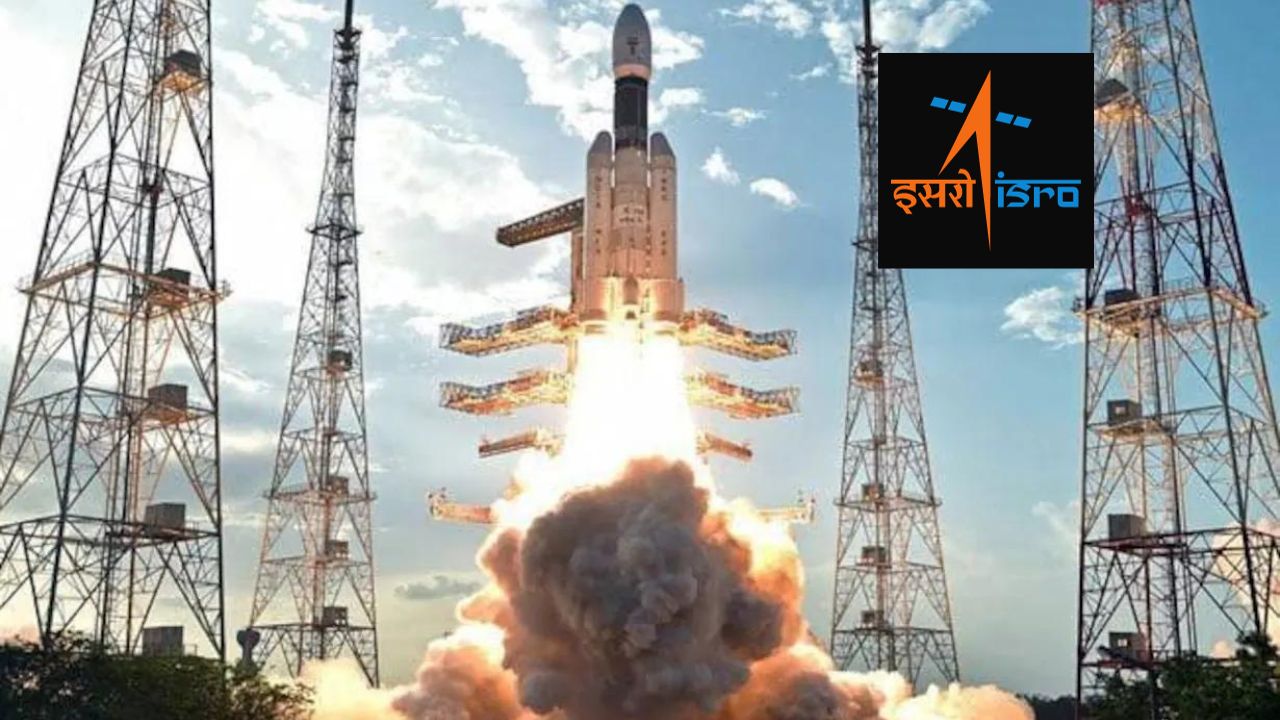
The Chandrayaan 3 mission is scheduled to launch on Friday, July 14, at 2:35 p.m. IST from the Satish Dhawan Space Centre in Sriharikota, India. The launch will be broadcast live on ISRO’s website and YouTube channel.

The mission will use a GSLV Mark 3 (LVM 3) heavy lift launch vehicle to place the lander and rover into orbit around the moon. The lander and rover will then separate from the launch vehicle and descend to the lunar surface.

The landing is scheduled to take place on August 23 or 24. If the landing is successful, Chandrayaan 3 will be the first Indian mission to soft-land on the moon since Chandrayaan-2 in 2019. In the Chndrayaan -2 mission Chandrayaan-2 spacecraft inserted into lunar orbit and then on September 2, 2019; Vikram Lander was separated while orbiting the moon in a 100kms lunar polar orbit, however, communication from the lander to the ground stations was lost at an altitude of 2.1 km from the surface of the moon.

The Significance of the Mission

The Chandrayaan 3 mission is a significant milestone for India’s space program. It is the third lunar mission by ISRO, and it is the first mission to attempt a soft-landing on the moon since Chandrayaan-2. The success of Chandrayaan 3 would be a major achievement for India, and it would boost the country’s reputation as a spacefaring nation. The mission would also help to advance our understanding of the moon, and it could lead to future missions to explore the lunar surface.

The Future of Space Exploration

The Chandrayaan 3 mission is a stepping stone to future space exploration missions. If the mission is successful, it could pave the way for future Indian missions to the moon, such as a human mission.The mission could also help to inspire future generations of scientists and engineers to pursue careers in space exploration. The success of Chandrayaan 3 would show that India is a leading nation in space exploration, and it would encourage other countries to pursue their own space exploration programs.

Conclusion

The Chandrayaan 3 mission is a major milestone for India’s space program, and it is sure to have a significant impact on the future of space exploration. The success of the mission would be a major achievement for India, and it would boost the country’s reputation as a spacefaring nation. The mission would also help to advance our understanding of the moon, and it could lead to future missions to explore the lunar surface.

Tagged : / / / / / /

India to Send Second Indian to Space in 2024!

India to Send Second Indian to Space in 2024!
Forty years after Rakesh Sharma became the first Indian in space, India is planning to send another astronaut into orbit in 2024. The Indian Space Research Organisation (ISRO) has partnered with NASA on the project, which will see three Indian astronauts spend three days in space.

The mission, known as Gaganyaan, will be the first human space flight mission by India. The astronauts will be launched into orbit on an Indian rocket and will return to Earth in a crew module that will splash down in the Indian Ocean.

The training for the Gaganyaan mission is already underway. The astronauts are undergoing rigorous physical and mental training, as well as training in spacewalks and other activities that will be required during the mission.

The Gaganyaan mission is a major milestone for India’s space program. It will demonstrate India’s ability to send humans into space and will pave the way for future human space missions by India.

When asked about why it took 40 years for India to put a human into space again, the legendary Rakesh Sharma replied : “There is a reason for that. ISRO was focused on a satellite program, so the manned program was not on the agenda. Their vision has been fulfilled. Now they are going to the next level.”

Here are some additional details about the Gaganyaan mission:

The mission is scheduled to launch in the fourth quarter of 2024.
The astronauts will spend three days in space.
They will be launched into orbit on an Indian GSLV Mk III rocket.
The crew module will splash down in the Indian Ocean.
The training for the mission is already underway.
The Gaganyaan mission is a significant achievement for India’s space program. It will demonstrate India’s ability to send humans into space and will pave the way for future human space missions by India.

Tagged : / / / / /
Verified by ExactMetrics