The Cosmic Hunger Games: Why Some Black Holes Rule the Galaxy

The Cosmic Hunger Games: Why Some Black Holes Rule the Galaxy
Black holes, those enigmatic beasts lurking in the cosmic shadows, captivate our imaginations with their insatiable appetite for everything, even light itself. But have you ever wondered why some black holes are absolute cosmic gluttons, dwarfing their less-hefty brethren? Fear not, intrepid spacefarers, for I, your friendly neighborhood astronomer, am here to shed light on this gravitational mystery.

Imagine a newborn black hole, a stellar runt formed from the death throes of a massive star. This cosmic pipsqueak might only be a few times the sun’s mass, a lightweight in the black hole arena. But here’s the thing: black holes are like celestial snowballs rolling down a cosmic hill. The steeper the hill, the faster they roll, and the more they pick up.

That “cosmic hill” comes in the form of gas and dust swirling around the black hole. The denser the surroundings, the stronger the gravitational pull, and the more material gets sucked in, fattening up the black hole. It’s like a cosmic buffet with bottomless refills! Galaxies, with their swirling arms of gas and dust, offer particularly sumptuous feasts, allowing black holes to grow into absolute behemoths, millions or even billions of times the sun’s mass.

But growth isn’t all about buffets. Black holes can also engage in a bit of cosmic cannibalism. When two black holes meet, they dance a gravitational tango, eventually merging into a single, larger entity. It’s a winner-takes-all battle in the realm of the dark lords, with the bigger black hole always emerging victorious.

However, there’s a limit to this cosmic feasting. As black holes grow, their gravity also intensifies, making it harder for new material to fall in. It’s like trying to shove a watermelon through a keyhole – eventually, even the hungriest black hole has to call it quits and settle for leftovers.

So, the next time you gaze up at the night sky, remember that those twinkling stars might be hiding colossal shadows, each with its own unique feeding history. Some might be solitary gluttons, feasting on galactic buffets, while others might be scarred veterans of countless cosmic mergers. The mysteries of black holes continue to entice us, reminding us that in the vastness of space, even the seemingly impossible can happen.

And who knows, maybe one day, with even more powerful telescopes and deeper understanding, we’ll be able to unlock the secrets of these ultimate cosmic vacuum cleaners and truly understand how they shape the dance of galaxies and the fate of stars. Until then, let the cosmic hunger games continue!

Tagged : / / / /

Could Tiny Black Holes End Our Future Energy Woes?

Could Tiny Black Holes End Our Future Energy Woes?
This blog explores the exciting possibility of harnessing the power of primordial black holes (PBHs) as a clean and sustainable energy source. We’ll delve into the science behind this concept, the challenges involved, and the potential rewards.

Primordial black holes are thought to have formed in the incredibly dense and hot conditions of the early universe. Unlike the large black holes found at the center of galaxies, PBHs are much smaller, with masses ranging from a few times the sun to mere grams.

Scientists have theorized that these tiny black holes or Primordial Black Holes (PBHs), could be used as a source of nuclear power. These black holes are thought to have formed in the very early universe and could be incredibly small, with masses just a few times that of the sun.

A new study by physicists at the University of California, Santa Barbara, suggests that these PBHs could be used to create miniature power plants. The researchers calculated that a PBH with a mass of just 10^15 grams could generate up to 10^24 watts of power, which is equivalent to the output of a large nuclear power plant.

The study’s authors say that their findings could lead to the development of a new generation of power plants that are much smaller and more efficient than existing technologies. However, they caution that there are still many challenges that need to be overcome before PBHs can be used as a practical source of energy.

One of the biggest challenges is that PBHs are very difficult to detect. They are so small and emit so little radiation that they are almost impossible to find. Even if a PBH were to be found, it would be very difficult to capture and contain it.

Another challenge is that PBHs are incredibly dangerous. If a PBH were to come into contact with Earth, it could cause a devastating explosion. For this reason, any attempt to harness the power of PBHs would need to be done with extreme caution.

Despite the challenges, the potential rewards of using PBHs as a source of energy are vast. If scientists can overcome the technical hurdles, PBHs could provide a clean and sustainable source of energy for centuries to come.

The study’s authors say that they are hopeful that their findings will inspire further research into the potential of PBHs. They believe that PBHs could one day revolutionize the way we generate power.

Tagged : / / /

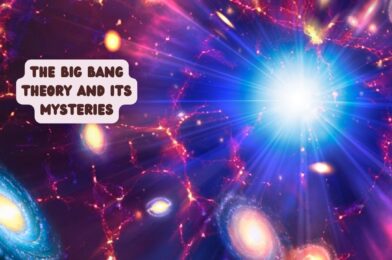
The Big Bang Theory Of The Universe And The Mysteries Associated With It!

The Big Bang Theory Of The Universe And The Mysteries Associated With It!
The Big Bang Theory is the prevailing cosmological model for the observable universe from the earliest known periods through its subsequent large-scale evolution. The model accounts for the fact that the universe expanded from a very high density and high temperature state, and offers a comprehensive explanation for a broad range of phenomena, including the abundance of light elements, the cosmic microwave background (CMB) radiation, large-scale structure, and Hubble’s law.

While the Big Bang Theory is widely accepted, there are still some mysteries that remain unsolved. Here are a few of the biggest mysteries of the Big Bang:

1. What happened before the Big Bang?

The Big Bang Theory describes the evolution of the universe from a very hot and dense state to the present day. However, it does not explain what caused the Big Bang to happen in the first place. Some scientists believe that the universe has always existed in some form, and that the Big Bang was simply a transition from one state to another. Others believe that the universe was created out of nothing in a single event.

2. What is dark matter?

Dark matter is a mysterious substance that makes up about 85% of the matter in the universe. It is invisible to telescopes, but its presence can be inferred from its gravitational effects on visible matter. Scientists still do not know what dark matter is made of, or how it formed.

3. What is dark energy?

Dark energy is an even more mysterious substance than dark matter. It is thought to be responsible for the accelerating expansion of the universe. Scientists know even less about dark energy than they do about dark matter.

4. What happened to the antimatter?

When matter and antimatter come into contact, they annihilate each other. However, the universe is made up mostly of matter, with very little antimatter. Scientists do not know why there is so much more matter than antimatter in the universe.

5. Are there other universes?

Some scientists believe that our universe is just one of many in a multiverse. A multiverse is a collection of universes, each with its own physical laws and constants. There is no direct evidence for a multiverse, but some scientists believe that it is the best way to explain some of the mysteries of our own universe.

These are just a few of the many mysteries of the Big Bang Theory. As scientists continue to study the universe, they hope to solve these mysteries and gain a better understanding of our cosmic origins.

Conclusion
The Big Bang Theory is a remarkable scientific achievement that has helped us to understand the universe in a whole new way. However, there are still many mysteries that remain unsolved. Scientists are working hard to solve these mysteries, and we can expect to learn even more about the Big Bang in the years to come.

Tagged : / / / /

No! Our Universe Was Never Empty, Not Even Before The Big Bang!

No! Our Universe Was Never Empty, Not Even Before The Big Bang!
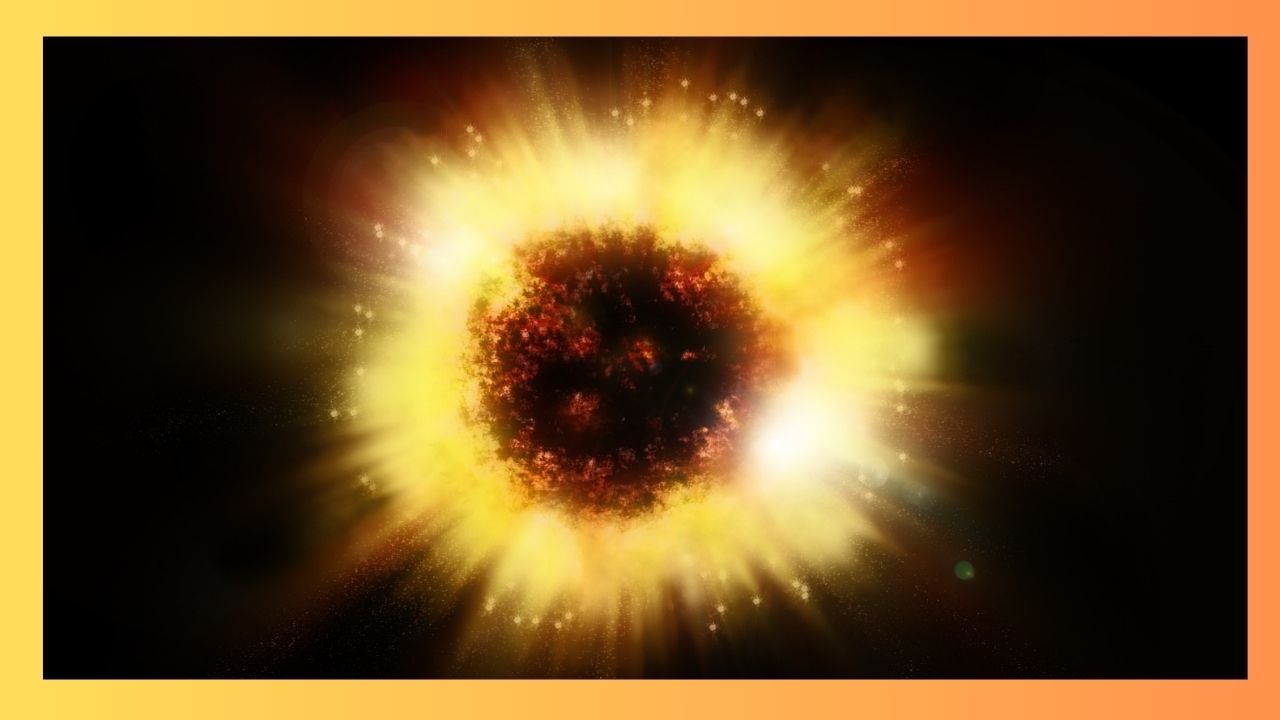
The Big Bang is the most widely accepted theory about the origin and evolution of the universe. It states that the universe began as an extremely hot and dense point about 13.8 billion years ago and has been expanding ever since.

But what happened before the Big Bang? Was the universe empty?

According to some scientists, the universe was not empty before the Big Bang. Instead, it was filled with a strange and exotic form of energy known as quantum vacuum energy.

Quantum vacuum energy is the energy of empty space. It is created by the constant creation and annihilation of virtual particles. Virtual particles are pairs of particles that are created and destroyed so quickly that they cannot be detected directly.

However, the energy of virtual particles is very real. It is responsible for a number of strange and unexpected phenomena, such as the Casimir effect, which is the attraction between two uncharged parallel plates.

Some scientists believe that quantum vacuum energy played a key role in the Big Bang. They believe that the energy of the vacuum was so great that it caused the universe to expand rapidly and exponentially. This rapid expansion is known as inflation.

Inflation can explain a number of puzzling observations about the universe, such as why the universe is so flat and why it is so homogeneous.

If quantum vacuum energy played a role in the Big Bang, then the universe must have existed before the Big Bang. However, the universe was very different before the Big Bang. It was incredibly hot and dense, and the laws of physics may have been very different from the laws of physics that we know today.

So what was the universe like before the Big Bang?

One possibility is that the universe was in a state of eternal inflation. This means that the universe was constantly expanding and contracting, and the Big Bang was just one of many cycles of expansion and contraction.

Another possibility is that the universe was created in a collision between two branes. Branes are higher-dimensional objects that exist in parallel universes.

It is also possible that the universe was created by a higher power.

Whatever the cause of the Big Bang, it is clear that the universe was not empty before the Big Bang. Instead, it was filled with a strange and exotic form of energy known as quantum vacuum energy.

Implications of a pre-Big Bang universe 

The idea that the universe existed before the Big Bang has a number of implications for our understanding of the universe.

First, it means that the universe may be infinite in size and time. If the universe has been expanding and contracting forever, then there is no beginning or end to the universe.

Second, it means that the laws of physics may be different in different parts of the universe. If the universe has been expanding and contracting forever, then different regions of the universe may have experienced different conditions. This could mean that the laws of physics are different in different parts of the universe.

Third, it means that the universe may be one of many universes. If the universe was created in a collision between two branes, or if it was created by a higher power, then there may be other universes out there.

The idea that the universe existed before the Big Bang is still a controversial one, but it is gaining acceptance among scientists. As we learn more about the universe, we may come to understand what happened before the Big Bang.

Tagged : / / / /

5 Unsolved Mysteries of Physics That Have Left Scientists Baffled!

5 Unsolved Mysteries of Physics That Have Left Scientists Baffled!
Physics is the study of matter and its interactions. It is one of the most fundamental sciences, and it has helped us to understand the universe around us in incredible ways. However, there are still many mysteries of physics that remain unsolved.

Here are five of the biggest unsolved mysteries of physics:

1. Dark matter

Dark matter is a mysterious substance that makes up about 85% of the matter in the universe. However, we have never been able to directly detect it. Dark matter is only known to exist because of its gravitational effects on visible matter.

Scientists are still trying to figure out what dark matter is made of and how it interacts with other matter. There are many different theories about dark matter, but none of them have been definitively proven.

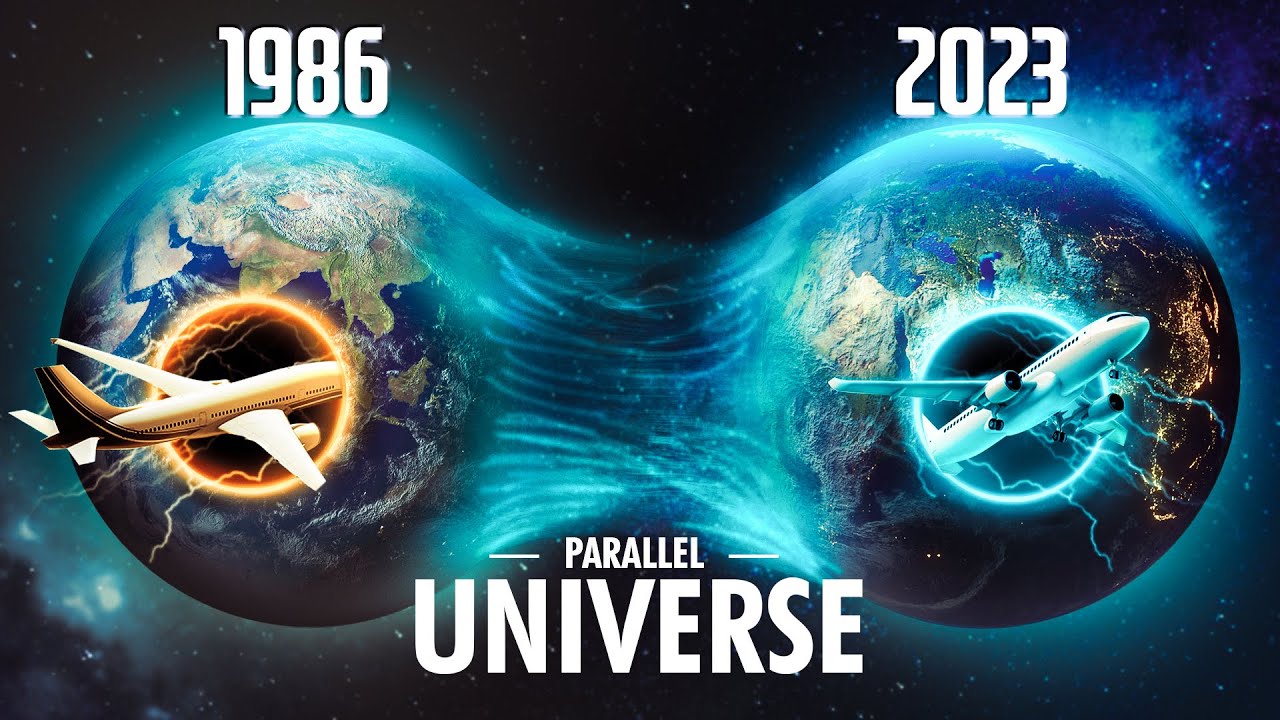
2. Parallel universes

The multiverse theory is the idea that there are many different universes, each with its own unique laws of physics and history. There is no scientific evidence to prove the existence of parallel universes, but many physicists believe that they are possible.

If parallel universes do exist, it raises many interesting questions. For example, is it possible to travel between parallel universes? And if so, what would happen if we did?

3. Inside of a black hole

Black holes are regions of space where gravity is so strong that nothing, not even light, can escape. Black holes are formed when massive stars collapse at the end of their lives.

We know very little about what happens inside of a black hole. Some scientists believe that black holes lead to other universes, while others believe that they destroy everything that falls into them.

4. Unified forces

The four fundamental forces of nature are gravity, electromagnetism, the strong nuclear force, and the weak nuclear force. Scientists are trying to develop a unified theory of physics that can explain all four forces as a single force.

A unified theory of physics would be a major breakthrough in our understanding of the universe. However, it is a very difficult problem to solve, and scientists have not yet been able to develop a successful unified theory.

5. The origin of time

Time is one of the most fundamental concepts in physics, but we still don’t fully understand what it is or how it began. Some physicists believe that time is an illusion, while others believe that it is a fundamental property of the universe.

The origin of time is one of the deepest mysteries of physics. It is a question that has puzzled philosophers and scientists for centuries.

These are just a few of the many unsolved mysteries of physics. While we have made great progress in our understanding of the universe, there is still much that we don’t know. Scientists are constantly working to solve these mysteries, and each new discovery brings us closer to a deeper understanding of the cosmos.

Conclusion

Physics is a fascinating and constantly evolving field. There are still many unsolved mysteries of physics, but scientists are making progress all the time. The study of physics helps us to understand the universe around us and our place in it.

If you are interested in learning more about physics, there are many resources available online and in libraries. You can also find many popular science books that discuss the latest discoveries in physics.

Tagged : / / / / / /

James Webb Space Telescope Spots Thousands of Milky Way-Like Galaxies in the Early Universe

James Webb Space Telescope Spots Thousands of Milky Way-Like Galaxies in the Early Universe
The James Webb Space Telescope (JWST) has made another incredible discovery, this time spotting thousands of Milky Way-like galaxies in the early universe. This discovery challenges our current understanding of how galaxies form and evolve.

The galaxies were found in a new image of the distant universe taken by JWST’s Near-Infrared Camera (NIRCam). The image shows a patch of sky that is only about one-twelfth the size of the full moon, but it is packed with thousands of galaxies.

Many of the galaxies in the image are spiral galaxies, similar to our own Milky Way galaxy. However, some of the galaxies are also elliptical galaxies, which are much rarer in the early universe.

The discovery of these galaxies is significant because it suggests that galaxies formed much earlier than previously thought. The galaxies in the image are so distant that their light has taken billions of years to reach us. This means that they were formed when the universe was just a few billion years old.

The discovery of these galaxies also challenges our current understanding of how galaxies form. According to the current theory, galaxies form slowly over time as smaller galaxies merge together. However, the discovery of so many Milky Way-like galaxies in the early universe suggests that galaxies can form much more quickly.

Astronomers are still trying to understand what this discovery means for our understanding of galaxy formation. However, it is clear that the JWST is revolutionizing our understanding of the early universe.

Here are some of the implications of this discovery:

  • It suggests that galaxies formed much earlier than previously thought.
  • It challenges our current understanding of how galaxies form.
  • It suggests that the early universe was much more crowded with galaxies than we thought.
  • It raises the possibility that there are many more galaxies in the universe than we previously thought.
  • This discovery is just the beginning. The JWST is expected to make many more groundbreaking discoveries in the years to come.
Tagged : / / / / /

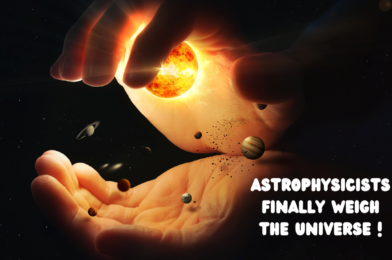
Astrophysicists Finally Weigh The Universe !

Astrophysicists Finally Weigh The Universe!
Astrophysicists have successfully measured the total amount of matter, dark matter, and dark energy in the universe for the second time. The study, published in The Astrophysical Journal, found that matter makes up 31% of the total amount of matter and energy in the universe, with the remainder consisting of dark energy.

To make the measurement, the team used a technique called weak gravitational lensing. Weak gravitational lensing is a phenomenon that occurs when light from distant galaxies is bent by the gravity of galaxies in the foreground. By measuring the amount of bending, scientists can calculate the mass of the foreground galaxies.

The team used data from the Dark Energy Survey (DES), a survey of over 400 million galaxies. The DES is one of the largest and deepest galaxy surveys ever conducted.

The team’s findings are consistent with other measurements of the composition of the universe. For example, the Cosmic Microwave Background (CMB), which is the leftover radiation from the Big Bang, suggests that dark energy makes up about 68% of the universe.

The new measurement of the total amount of matter and energy in the universe is a significant advance in our understanding of the cosmos. It provides further evidence for the existence of dark matter and dark energy, and it helps to constrain cosmological models.

What is dark matter?

Dark matter is a mysterious substance that makes up about 85% of the matter in the universe. We can’t see dark matter directly, but we know it’s there because of its gravitational effects on visible matter.

What is dark energy?

Dark energy is an even more mysterious substance than dark matter. It makes up about 68% of the universe and it’s causing the universe to expand at an accelerating rate. We don’t know what dark energy is or how it works, but it’s the most dominant form of energy in the universe.

Implications of the new measurement

The new measurement of the total amount of matter and energy in the universe has a number of implications. First, it confirms the existence of dark matter and dark energy. Second, it helps to constrain cosmological models. Cosmological models are used to describe the evolution of the universe from the Big Bang to the present day. The new measurement will help scientists to develop more accurate cosmological models.

The new measurement also has implications for our understanding of the future of the universe. Dark energy is causing the universe to expand at an accelerating rate. This means that the galaxies in the universe will eventually move so far apart that they will no longer be able to interact with each other. This will lead to a very cold and empty universe.

The new measurement of the total amount of matter and energy in the universe is a significant advance in our understanding of the cosmos. It provides further evidence for the existence of dark matter and dark energy, and it helps to constrain cosmological models.

Future research

Scientists are continuing to study dark matter and dark energy. They are developing new experiments to search for dark matter and to measure the properties of dark energy. Scientists are also using cosmological models to try to understand the origin and nature of dark matter and dark energy.

The study of dark matter and dark energy is one of the most exciting areas of research in physics and cosmology. It is a field that is full of mystery and promise.

Tagged : / / / / /
Verified by ExactMetrics