The Cosmic Hunger Games: Why Some Black Holes Rule the Galaxy

The Cosmic Hunger Games: Why Some Black Holes Rule the Galaxy
Black holes, those enigmatic beasts lurking in the cosmic shadows, captivate our imaginations with their insatiable appetite for everything, even light itself. But have you ever wondered why some black holes are absolute cosmic gluttons, dwarfing their less-hefty brethren? Fear not, intrepid spacefarers, for I, your friendly neighborhood astronomer, am here to shed light on this gravitational mystery.

Imagine a newborn black hole, a stellar runt formed from the death throes of a massive star. This cosmic pipsqueak might only be a few times the sun’s mass, a lightweight in the black hole arena. But here’s the thing: black holes are like celestial snowballs rolling down a cosmic hill. The steeper the hill, the faster they roll, and the more they pick up.

That “cosmic hill” comes in the form of gas and dust swirling around the black hole. The denser the surroundings, the stronger the gravitational pull, and the more material gets sucked in, fattening up the black hole. It’s like a cosmic buffet with bottomless refills! Galaxies, with their swirling arms of gas and dust, offer particularly sumptuous feasts, allowing black holes to grow into absolute behemoths, millions or even billions of times the sun’s mass.

But growth isn’t all about buffets. Black holes can also engage in a bit of cosmic cannibalism. When two black holes meet, they dance a gravitational tango, eventually merging into a single, larger entity. It’s a winner-takes-all battle in the realm of the dark lords, with the bigger black hole always emerging victorious.

However, there’s a limit to this cosmic feasting. As black holes grow, their gravity also intensifies, making it harder for new material to fall in. It’s like trying to shove a watermelon through a keyhole – eventually, even the hungriest black hole has to call it quits and settle for leftovers.

So, the next time you gaze up at the night sky, remember that those twinkling stars might be hiding colossal shadows, each with its own unique feeding history. Some might be solitary gluttons, feasting on galactic buffets, while others might be scarred veterans of countless cosmic mergers. The mysteries of black holes continue to entice us, reminding us that in the vastness of space, even the seemingly impossible can happen.

And who knows, maybe one day, with even more powerful telescopes and deeper understanding, we’ll be able to unlock the secrets of these ultimate cosmic vacuum cleaners and truly understand how they shape the dance of galaxies and the fate of stars. Until then, let the cosmic hunger games continue!
Tagged : / / / /

Psyche Mission : NASA To Launch Mission To An Asteroid Worth All The Gold On The Earth!

Psyche Mission : NASA To Launch Mission To An Asteroid Worth All The Gold On The Earth!
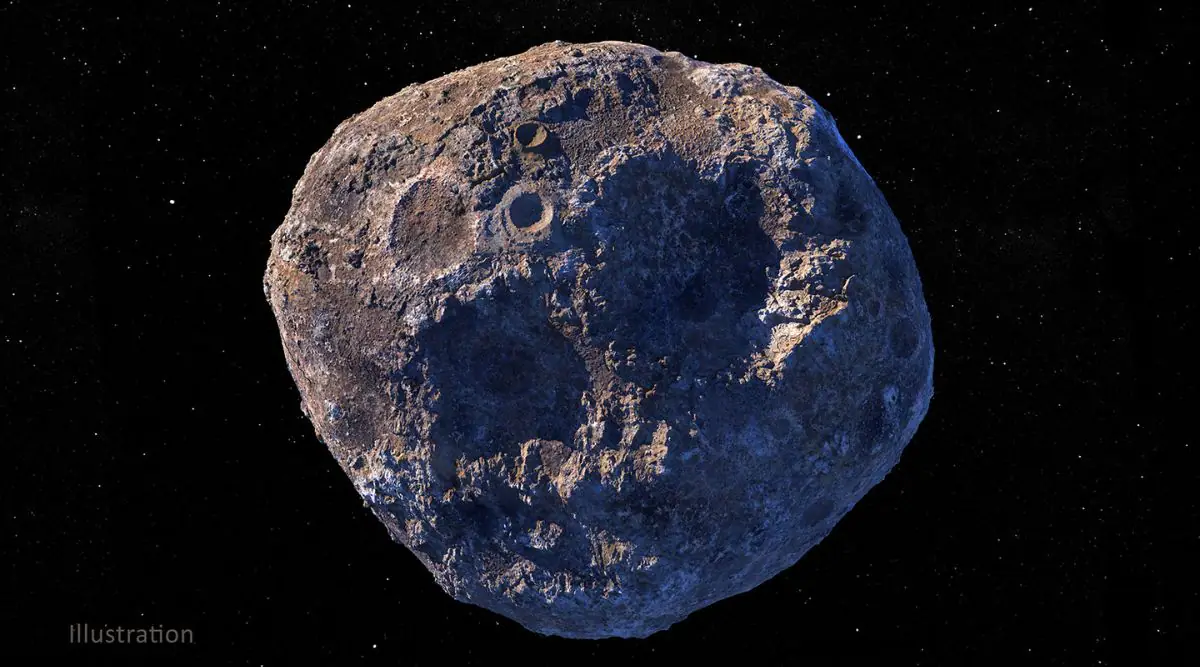
NASA is preparing to launch a mission to an asteroid worth more than all the gold on Earth. The asteroid, called Psyche, is located in the asteroid belt between Mars and Jupiter. It is thought to be made up of mostly iron and nickel, with a smaller amount of gold and other precious metals.

The Psyche mission is scheduled to launch on October 12, 2023. The spacecraft will travel to the asteroid and orbit it for two years. During that time, it will use a variety of instruments to study the asteroid’s composition, shape, and magnetic field.

Scientists are excited to study Psyche because it is thought to be the exposed core of a protoplanet, or a planet that never fully formed. By studying Psyche, scientists hope to learn more about how planets form and evolve.

The Psyche mission is also of interest to the mining industry. The asteroid is estimated to be worth $10 quintillion, which is more than the total value of all the gold that has ever been mined on Earth. However, it is still unclear whether it will be possible to mine Psyche in a cost-effective way.

The Psyche mission is a complex and ambitious undertaking. However, it has the potential to revolutionize our understanding of the solar system and to open up new possibilities for space mining.

What will the Psyche mission do?

The Psyche mission will use a variety of instruments to study the asteroid, including:

  • A magnetometer to measure the asteroid’s magnetic field
  • A gamma ray and neutron spectrometer to measure the asteroid’s composition
  • An infrared imaging spectrometer to map the asteroid’s surface temperature and mineralogy
  • A multispectral imager to take high-resolution images of the asteroid’s surface
  • The Psyche mission will also use solar electric propulsion, a type of propulsion that uses solar energy to power the spacecraft. This type of propulsion is very efficient, but it is also very slow. As a result, the Psyche mission will take four years to reach the asteroid.

What do scientists hope to learn from the Psyche mission?

Scientists are hoping to learn a lot about Psyche and about the formation of planets from the Psyche mission. Some of the questions that scientists hope to answer include:

What is Psyche’s composition?
How did Psyche form?
Does Psyche have a magnetic field?
Is Psyche the exposed core of a protoplanet?
What can Psyche teach us about the formation and evolution of planets?
The Psyche mission is a very exciting mission with the potential to revolutionize our understanding of the solar system.

What are the implications of the Psyche mission for space mining?

The Psyche mission is also of interest to the mining industry. The asteroid is estimated to be worth $10 quintillion, which is more than the total value of all the gold that has ever been mined on Earth. However, it is still unclear whether it will be possible to mine Psyche in a cost-effective way.

There are a number of challenges that would need to be overcome in order to mine Psyche. One challenge is the distance to the asteroid. Psyche is located in the asteroid belt, which is between Mars and Jupiter. This means that it is very far from Earth, which would make mining it very expensive.

Another challenge is the asteroid’s composition. Psyche is thought to be made up of mostly iron and nickel, with a smaller amount of gold and other precious metals. This means that the asteroid would need to be processed in order to extract the valuable metals. This processing would also be very expensive.

Despite the challenges, the Psyche mission is a sign that space mining is becoming a reality. As technology continues to improve, it is possible that we will be able to mine Psyche and other asteroids in the future.

Tagged : / / / / / /

Dark Photons: Could They Explain One of the Universe’s Greatest Mysteries?

Dark Photons: Could They Explain One of the Universe’s Greatest Mysteries?
Dark matter is one of the greatest mysteries of the universe. It makes up about 85% of the matter in the universe, but we don’t know what it is. Dark matter doesn’t interact with light, so we can’t see it directly. But we know it’s there because of its gravitational effects on visible matter.

One possible explanation for dark matter is that it’s made up of dark photons. Dark photons are hypothetical particles that are similar to photons, the particles of light, but they interact with ordinary matter much more weakly.

Dark photons could have been created in the early universe, when the universe was much hotter and denser. As the universe expanded and cooled, the dark photons would have become trapped in dark matter halos, which are large clouds of dark matter that surround galaxies.

Dark photons could explain a number of the observed properties of dark matter. For example, they could explain why dark matter doesn’t interact with light and why it’s so evenly distributed throughout the universe.

Scientists are searching for dark photons in a number of ways. One way is to look for them in particle accelerators. Another way is to look for them in the cosmic microwave background radiation, which is the leftover light from the Big Bang.

If dark photons are discovered, it would be a major breakthrough in our understanding of dark matter and the universe as a whole.

Here are some of the potential benefits of discovering dark photons:

1. A better understanding of dark matter: Dark photons could provide a new way to study dark matter and learn more about its properties.

2. A new window into the early universe: Dark photons could help us to understand how the universe formed and evolved in the early stages of its existence.

3. A new way to search for other dark matter candidates: If dark photons are discovered, they could help us to search for other dark matter candidates, such as weakly interacting massive particles (WIMPs).

The discovery of dark photons would be a major milestone in physics and cosmology. It would help us to better understand the universe and our place in it.

Here are some of the challenges of searching for dark photons:

  • Dark photons are very weakly interacting particles: This makes them very difficult to detect.
  • There are many different types of dark matter candidates: This makes it difficult to know which type of dark matter to search for.
  • Particle accelerators and other detectors are not very sensitive to dark photons: This makes it difficult to find dark photons, even if they exist.

    Despite the challenges, scientists are optimistic that dark photons will be discovered one day. The discovery of dark photons would be a major breakthrough in our understanding of the universe.

Tagged : / / / / /
Verified by ExactMetrics