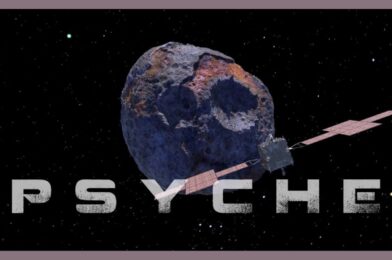
Psyche Mission : NASA To Launch Mission To An Asteroid Worth All The Gold On The Earth!
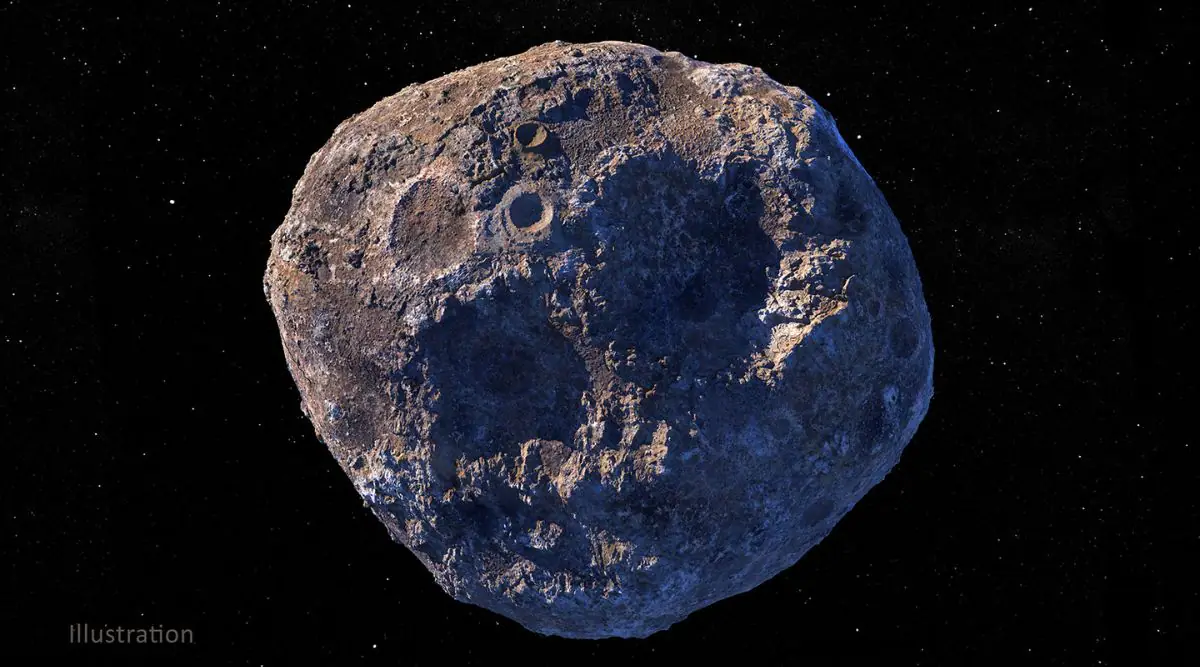
NASA is preparing to launch a mission to an asteroid worth more than all the gold on Earth. The asteroid, called Psyche, is located in the asteroid belt between Mars and Jupiter. It is thought to be made up of mostly iron and nickel, with a smaller amount of gold and other precious metals.
The Psyche mission is scheduled to launch on October 12, 2023. The spacecraft will travel to the asteroid and orbit it for two years. During that time, it will use a variety of instruments to study the asteroid’s composition, shape, and magnetic field.
Scientists are excited to study Psyche because it is thought to be the exposed core of a protoplanet, or a planet that never fully formed. By studying Psyche, scientists hope to learn more about how planets form and evolve.
The Psyche mission is also of interest to the mining industry. The asteroid is estimated to be worth $10 quintillion, which is more than the total value of all the gold that has ever been mined on Earth. However, it is still unclear whether it will be possible to mine Psyche in a cost-effective way.
The Psyche mission is a complex and ambitious undertaking. However, it has the potential to revolutionize our understanding of the solar system and to open up new possibilities for space mining.
What will the Psyche mission do?
The Psyche mission will use a variety of instruments to study the asteroid, including:
- A magnetometer to measure the asteroid’s magnetic field
- A gamma ray and neutron spectrometer to measure the asteroid’s composition
- An infrared imaging spectrometer to map the asteroid’s surface temperature and mineralogy
- A multispectral imager to take high-resolution images of the asteroid’s surface
- The Psyche mission will also use solar electric propulsion, a type of propulsion that uses solar energy to power the spacecraft. This type of propulsion is very efficient, but it is also very slow. As a result, the Psyche mission will take four years to reach the asteroid.
What do scientists hope to learn from the Psyche mission?
Scientists are hoping to learn a lot about Psyche and about the formation of planets from the Psyche mission. Some of the questions that scientists hope to answer include:
What is Psyche’s composition?
How did Psyche form?
Does Psyche have a magnetic field?
Is Psyche the exposed core of a protoplanet?
What can Psyche teach us about the formation and evolution of planets?
The Psyche mission is a very exciting mission with the potential to revolutionize our understanding of the solar system.
What are the implications of the Psyche mission for space mining?
The Psyche mission is also of interest to the mining industry. The asteroid is estimated to be worth $10 quintillion, which is more than the total value of all the gold that has ever been mined on Earth. However, it is still unclear whether it will be possible to mine Psyche in a cost-effective way.
There are a number of challenges that would need to be overcome in order to mine Psyche. One challenge is the distance to the asteroid. Psyche is located in the asteroid belt, which is between Mars and Jupiter. This means that it is very far from Earth, which would make mining it very expensive.
Another challenge is the asteroid’s composition. Psyche is thought to be made up of mostly iron and nickel, with a smaller amount of gold and other precious metals. This means that the asteroid would need to be processed in order to extract the valuable metals. This processing would also be very expensive.
Despite the challenges, the Psyche mission is a sign that space mining is becoming a reality. As technology continues to improve, it is possible that we will be able to mine Psyche and other asteroids in the future.