3 Simple Ways to Keep Your Ankles Soft and Smooth

3 Simple Ways to Keep Your Ankles Soft and Smooth
Your ankles are a delicate part of your body that can easily become dry and rough. This can be due to a number of factors, such as wearing tight shoes, not moisturizing enough, or simply not exfoliating regularly.

If you want to keep your ankles soft and smooth, there are a few simple things you can do:

1. Soothe with a warm water soak
Soaking your ankles in warm water for 10-15 minutes can help to soften the skin and remove dead cells. You can add a few drops of essential oil to the water for an extra boost of hydration and moisture.

2. Exfoliate regularly
Exfoliating helps to remove dead skin cells and reveal the soft, smooth skin underneath. You can use a pumice stone, a body scrub, or even a washcloth to exfoliate your ankles.

3. Moisturize daily
Moisturizing is essential for keeping your ankles soft and smooth. Choose a moisturizer that is specifically designed for the feet and ankles, and apply it daily after showering or bathing.

In addition to these tips, there are a few other things you can do to keep your ankles soft and smooth:

  • Avoid wearing tight shoes that restrict circulation.
  • Wear socks made of natural fibers, such as cotton or wool.
  • Keep your ankles cool and dry.
  • Avoid rubbing or scratching your ankles.
    By following these simple tips, you can keep your ankles soft and smooth all year long.

Here are some additional tips that you may find helpful:

  • Use a gentle soap when washing your ankles. Harsh soaps can dry out the skin.
  • Avoid using harsh chemicals on your ankles, such as those found in some foot powders and sprays.
  • If your ankles are particularly dry or rough, you may want to see a doctor or dermatologist. They may be able to recommend additional treatments to help improve the condition of your skin.
    With a little care and attention, you can keep your ankles soft and smooth for years to come.

Tagged : / / /

Google and Cameyo Launch New Service to Eliminate Virtual Desktops

Google and Cameyo Launch New Service to Eliminate Virtual Desktops
Google and Cameyo have announced a new service that aims to help organizations eliminate the need for virtual desktops. The new service, called ChromeOS Virtual App Delivery with Cameyo, allows organizations to run Windows applications on ChromeOS devices. This can help organizations save money on hardware and software costs, as well as improve security and productivity.

Virtual desktops are a popular way for organizations to provide employees with access to a range of applications and data. However, they can be expensive to set up and maintain, and they can also be a security risk. ChromeOS Virtual App Delivery with Cameyo eliminates these challenges by providing a more secure and cost-effective way to deliver Windows applications to users.

With ChromeOS Virtual App Delivery with Cameyo, organizations can:

  • Save up to 54% on the total cost of ownership compared to virtual desktops.
  • Improve security by eliminating the need to manage and secure virtual machines.
  • Improve productivity by giving users a simpler and more secure way to access the applications they need.
  • The service is still in beta, but it is available now for organizations to try. To learn more, visit the Cameyo website.

Here are some additional benefits of ChromeOS Virtual App Delivery with Cameyo:

  • It is easy to use. Users can simply open a web browser and access their Windows applications.
  • It is scalable. Organizations can easily add or remove users as needed.
  • It is secure. Cameyo uses a variety of security features to protect applications and data.
  • If your organization is looking for a more secure and cost-effective way to deliver Windows applications to users, then ChromeOS Virtual App Delivery with Cameyo is a good option to consider.

Here are some examples of how organizations can use ChromeOS Virtual App Delivery with Cameyo:

A financial services company can use it to give its employees access to legacy Windows applications that are not available on ChromeOS.
A healthcare organization can use it to give its doctors and nurses access to medical imaging software that is only available on Windows.
A manufacturing company can use it to give its factory workers access to design software that is used to create new products.

ChromeOS Virtual App Delivery with Cameyo is a powerful new tool that can help organizations save money, improve security, and increase productivity. If you are looking for a more modern and secure way to deliver Windows applications to your users, then this service is worth considering.

Tagged : / /

7 Reasons Why This Google Techie in Bengaluru Is Not Moving to the US

7 Reasons Why This Google Techie in Bengaluru Is Not Moving to the US
The tech industry in the United States is known for its high salaries, cutting-edge innovation, and global opportunities. As a result, it is a common dream for many Indian tech workers to move to the US. However, not everyone is convinced that the grass is always greener on the other side.

Aanshul Sadaria, a software engineer at Google in Bengaluru, is one such person. In a series of tweets, he listed 7 reasons why he is not moving to the US.

1. He wants to stay close to his family and friends.

Sadaria’s family and friends are all in India. He says that he values his relationships with them and does not want to move away.

2. He is comfortable with the cost of living in India.

The cost of living in India is much lower than in the US. Sadaria says that he can live comfortably on his salary in India and does not need to worry about the high cost of housing, healthcare, and education in the US.

3. He enjoys the culture and lifestyle in India.

Sadaria loves the food, music, and festivals in India. He says that he would miss these things if he moved to the US.

4. He is confident in the future of the Indian tech industry.

The Indian tech industry is growing rapidly. Sadaria believes that there are many opportunities for him to grow and succeed in India because India is growing at a very fast pace.

5. He is not interested in the rat race of the US tech industry.

Sadaria says that he does not want to be part of the rat race in the US tech industry. He prefers to work in a more relaxed and laid-back environment.

6. He is proud to be an Indian.

Sadaria is proud of his Indian heritage and culture. He does not want to give up these things by moving to the US.

7. A few years in US is ok for him but not life

Sadaria says that he is open to the possibility of moving to the US in the future but that too for a limited period of time. he is not in a hurry to make the move. He is happy with his life in India and is not sure if he would be happier in the US.

Sadaria’s decision not to move to the US is not without its challenges. He will likely have to forego higher salaries and more opportunities in the US tech industry. However, he is confident that he can make a good life for himself in India.

His decision is a reminder that there is no one-size-fits-all answer to the question of whether to move to the US. The best decision for you will depend on your individual circumstances and preferences.

Tagged : /

Google to Make eSIM Transfers Easier with QR Code Feature

Google to Make eSIM Transfers Easier with QR Code Feature
eSIMs, or embedded SIMs, are a newer type of SIM card that are built into the device instead of being a physical card that you can remove. eSIMs offer a number of advantages over traditional SIM cards, including the ability to switch carriers more easily and the ability to use multiple eSIMs on the same device.

Currently, transferring an eSIM from one device to another can be a bit of a hassle. In most cases, you need to contact your carrier and request a new eSIM activation code. This can be a time-consuming process, especially if you are switching carriers.

Google is working on a new feature that will make it easier to transfer eSIMs between devices. The feature will use QR codes to transfer the eSIM data from one device to another. To use the feature, you will simply scan the QR code on the old device with the new device. The new device will then automatically download and install the eSIM.

Google has not yet announced a release date for the eSIM transfer feature. However, it is expected to be released in the coming months.

The eSIM transfer feature is a welcome addition to Android. It will make it much easier for users to switch carriers and devices without having to worry about transferring their eSIM data. The QR code-based transfer process is also very convenient and easy to use.

In addition to making eSIM transfers easier, the new feature could also help to promote the adoption of eSIMs. ESIMs are still not as widely adopted as traditional SIM cards, but the convenience of the new transfer feature could make them more appealing to users.

Overall, Google’s new eSIM transfer feature is a positive development for Android users. It will make it easier to switch carriers and devices, and it could help to promote the adoption of eSIMs.

Here are some of the benefits of using Google’s new eSIM transfer feature:

  • It is easy to use. Simply scan the QR code on the old device with the new device and the eSIM will be transferred automatically.
  • It is convenient. You do not need to contact your carrier or go through a lengthy activation process.
  • It is fast. The transfer process takes just a few seconds.
  • It is secure. The transfer is done over a secure connection.
    If you are an Android user, you can expect to see the eSIM transfer feature in a future update to your device. In the meantime, you can learn more about eSIMs and how to use them on Google’s website.
Tagged : / /

5 Yoga Poses to Lower Hypertension Naturally

5 Yoga Poses to Lower Hypertension Naturally
Hypertension, or high blood pressure, is a common health concern that affects millions of people worldwide. It is a major risk factor for heart disease, stroke, and other serious health problems.

There are many different ways to lower hypertension, including medication, diet, and exercise. Yoga is a natural and effective way to lower blood pressure, and it can also help to improve your overall health and well-being.

Here are 6 yoga poses that can help to lower hypertension:

1. Shavasana (Corpse Pose)

This pose is a great way to relax and reduce stress, which can both contribute to high blood pressure. Lie on your back with your legs extended and your arms at your sides. Close your eyes and breathe deeply for 5-10 minutes.

2. Viparita Karani (Legs Up the Wall Pose)


This pose helps to improve circulation and reduce stress. Lie on your back with your legs up the wall, keeping your hips and knees at a right angle. Hold for 5-10 minutes.

3. Sukhasana (Easy Pose)


This pose is a simple and relaxing pose that can help to improve your posture and reduce stress. Sit cross-legged with your back straight. Close your eyes and breathe deeply for 5-10 minutes.

4. Baddha Konasana (Butterfly Pose)


This pose helps to stretch the inner thighs and hips, which can help to improve circulation and reduce stress. Sit on the floor with your legs extended in front of you. Bend your knees and bring the soles of your feet together. Hold for 5-10 breaths.

5. Balasana (Child’s Pose)


This pose is a gentle and relaxing pose that can help to calm the mind and reduce stress. Kneel on the floor with your big toes touching. Sit back on your heels and bring your forehead to the ground. Hold for 5-10 breaths.

If you are new to yoga, it is important to start slowly and gradually increase the duration of your practice. It is also important to talk to your doctor before starting any new exercise program, especially if you have any health conditions.

Yoga is a safe and effective way to lower hypertension and improve your overall health and well-being. By incorporating these poses into your regular practice, you can help to reduce your risk of heart disease, stroke, and other chronic health problems.

Tagged : / / / /

Guinness World Records Shares The Bizarre Incident Of 11-Year-Old Boy Sleepwalking for 160 km

Guinness World Records Shares The Bizarre Incident Of 11-Year-Old Boy Sleepwalking for 160 km
Sleepwalking is a disorder that causes a person to walk while they are in a sleep-like state, as the name of the condition suggests. According to the Guinness World Records, there was a strange incident in which a little youngster sleepwalked almost 100 miles (160 kilometres) away from his home.

On Tuesday, GWR stated that the incident occurred 36 years ago, when Michael Dixon was discovered walking down a railway track near Peru, Indiana, in the United States. This location is in the United States. He had no shoes on and was only wearing his pyjamas when I saw him.

A member of the train crew saw the 11-year-old youngster around 2:45 in the morning on April 6, 1987, and they reported to the authorities that the boy was in an unusual state. Dixon told the police that he was from Danville, Illinois, in response to their question on his residence.

By joining a goods train from a station that was located close to his residence, Dixon was able to travel such a significant distance in the middle of the night. After some time had passed, he related his story to a social worker working for the Miami County Welfare Department. He stated that he did not recall getting on or off the train. A nurse attended to his injured feet, but other than that, he was completely undamaged. His feet had cuts all over because he was not wearing any footwear.

Soon after, Dixon’s mother was notified about her son’s whereabouts, and she hurried over to get him as soon as she could. According to an article that was published in The Ball State Daily News, Michael’s mother stated that the last time she saw her son was at ten o’clock at night, while he was still in his bed. She stated that he would sleepwalk, but he was never expected to leave the house because of this behaviour.

According to the Cleveland Clinic, sleepwalking is a common childhood disorder that, in most cases, resolves on its own by the time a child enters puberty.

Tagged : / / / /

Why 23rd August Was Chosen As The Date Of Landing For Chandrayaan -3? What Is So Special About This Date?

Why 23rd August Was Chosen As The Date Of Landing For Chandrayaan -3? What Is So Special About This Date?
The Indian Space Research Organisation (ISRO) successfully landed the Chandrayaan-3 lander and rover on the lunar south pole on August 23, 2023. The landing was a major milestone for India’s space program and a testament to the ingenuity and determination of the Indian scientists and engineers who made it possible.

This is to note that the lunar south pole is a region that has never been visited by a spacecraft before. This made it a challenging but also an exciting target for the Chandrayaan-3 mission. The landing date was chosen to coincide with the beginning of the lunar day at the landing site. The timing of the landing was chosen taking into account the amount of local sunshine. On August 23, the sun will rise over the landing location, and it will set two weeks later. As the Vikram lander is solar-powered, these 14 sunlight days are crucial for Thermal, seismic, and mineralogical observations and Vikram lander and rover using a variety of equipment. A spectrometer investigation of the lunar surface’s mineral makeup is part of this. This would ensure that the lander and rover would have access to sunlight, which is needed to power their systems.

The landing date was also chosen to avoid the lunar eclipse season. Lunar eclipses can interfere with communications between the spacecraft and the ground, so it was important to avoid this during the landing. The successful landing of Chandrayaan-3 is a major achievement for India’s space program and a stepping stone to future missions to the moon. The Pragyaan rover, which is deployed from the lander, will now spend the next two weeks exploring the lunar south pole and searching for signs of water ice. The findings of the Pragyaan rover will help us to better understand the moon and its potential as a resource for future human exploration.

In addition to the factors mentioned above, there were also some technical considerations that influenced the choice of August 23 as the landing date. For example, the lander and rover needed to be in a specific position relative to the sun in order to land safely. The landing date was also chosen to ensure that the lander and rover would have enough time to complete their mission before the lunar day ended.

Overall, the choice of August 23 as the landing date was a careful and deliberate one. It was a date that met the scientific, technical, and operational requirements of the Chandrayaan-3 mission. The successful landing of Chandrayaan-3 is a testament to the hard work and dedication of the ISRO team. It is a proud moment for India and a significant step forward in our exploration of the moon.

Tagged : / / / /

As Chandrayan 3 Reaches The Moon, What Will The Pragyaan Rover Do? Will Chandrayaan 3 Come Back to Earth?

As Chandrayan 3 Reaches The Moon, What Will The Pragyaan Rover Do? Will Chandrayaan 3 Come Back to Earth?
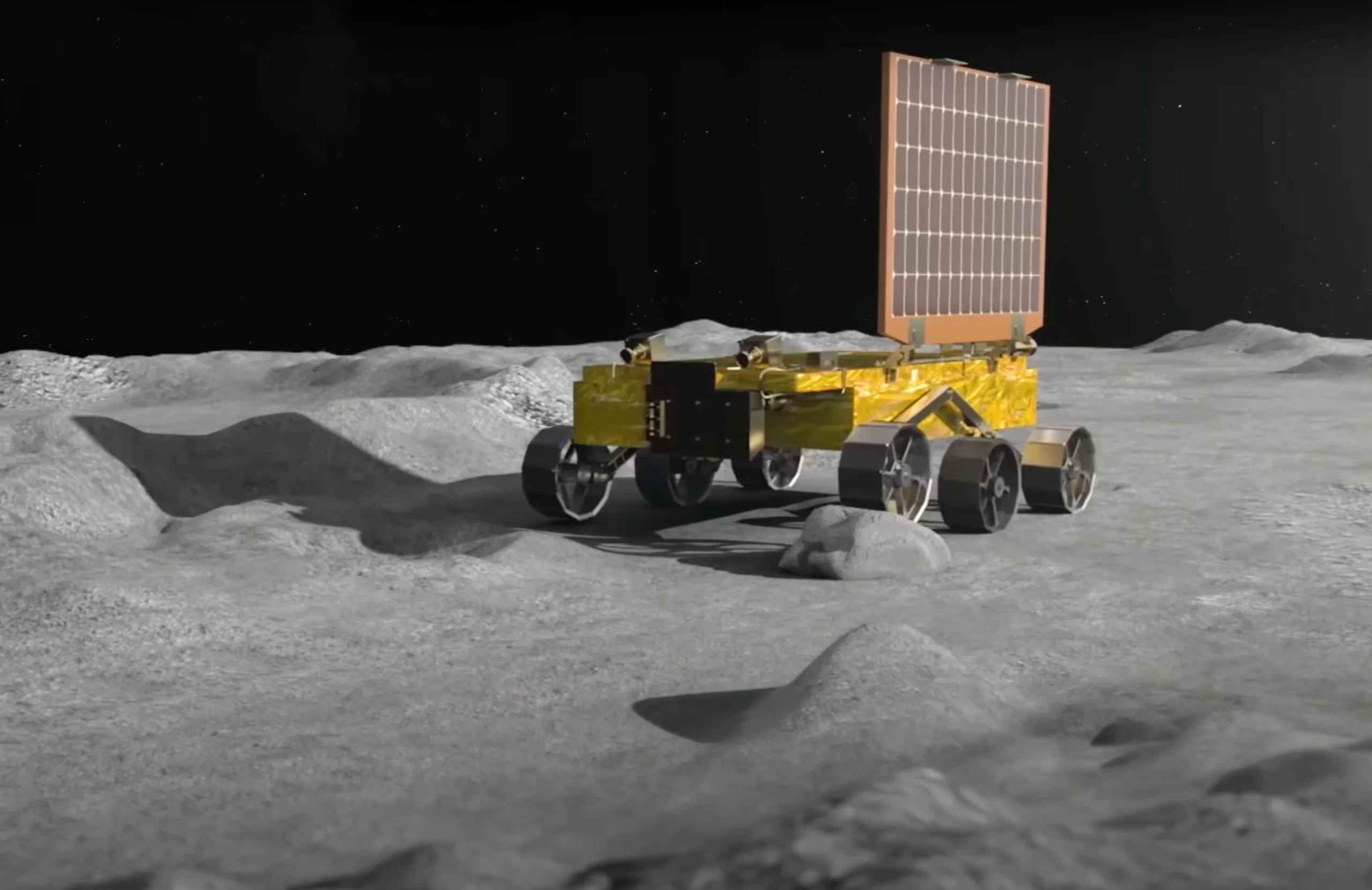
The Pragyaan rover has successfully rolled out of the Vikram lander and is now ready to begin its mission on the surface of the moon. The rover is named after the Sanskrit word for “wisdom” and is designed to explore the lunar south pole, a region that has never been visited by a rover before.

What will Pragyan Rover do?

The rover is equipped with six wheels and a variety of scientific instruments. ISRO claims that the lander and the Rover each have five research payloads that have been put inside of the Lander Module (LM) of the spacecraft.

1. The Alpha Particle X-Ray Spectrometer (APXS) aboard the Rover will be utilised to determine the chemical composition of the lunar surface and to infer the mineralogical composition in order to further expand our understanding of the lunar terrain.

2. The Laser Induced Breakdown Spectrometer (LIBS) will analyse the soil and rocks around the landing site on the Moon to identify their elemental make-up. ISRO has stated that the use of Rover to conduct scientific experiments on the moon in their natural environment would take lunar exploration to a whole new level.

3. The RAMBHA-LP (Langmuir Probe) that is part of the Lander Payloads will monitor the density of the plasma (ions and electrons) near the surface as well as how it varies over time.

4. ChaSTE Chandra’s Surface Thermo Physical Experiment will carry out the measurements of the thermal characteristics of the lunar surface in the vicinity of the polar area.

5. The Instrument for Lunar Seismic Activity, or ILSA, will be used to delineate the structure of the lunar crust and mantle as well as measure the seismic activity that is occurring close to the landing site.

Over the next 14 days, which is equivalent to one lunar day, the Pragyan rover will travel up to 500 meters from the lander and conduct a series of experiments to study the geology, mineralogy, and history of the lunar south pole. The rover will also look for signs of water ice, which is believed to be present in the permanently shadowed craters of the region.

The Pragyan rover is a major milestone for India’s space program and is expected to make significant contributions to our understanding of the moon. The rover’s mission is also a testament to the ingenuity and determination of the Indian scientists and engineers who made it possible.

What will happen to Chandrayaan 3 after 14 days?

Following the passage of 14 days, the moon will experience a nighttime phase that will also last for 14 days. Because Vikram and Pragyan can perform their jobs only when the sun is shining, they will become inactive after 14 days because the weather would be extremely chilly. In addition, both the lander and the rover have been built with a lifespan of fourteen days in mind. However, the researchers at ISRO have not ruled out the chance that Vikram and Pragyan would regain consciousness when the sun once more rises on the moon. If this is the case, then it will be a bonus benefit for India’s expedition to the moon.

Will Chandrayaan 3 come back to earth?
No, Vikram and Pragyan are not supposed to come back to the earth. They will remain on the moon.

Tagged : / / / / / / /
Verified by ExactMetrics