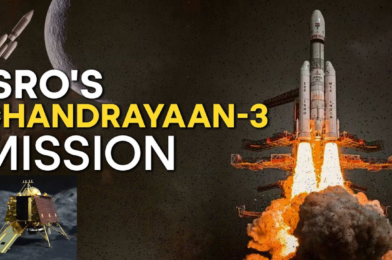
ISRO Chief’s Confidence : ‘Chandrayaan-3 Will Land Even If Everything Fails’

ISRO Chief’s Confidence : ‘Chandrayaan-3 Will Land Even If Everything Fails’
In a recent interview, Indian Space Research Organisation (ISRO) chairman S Somanath said that Chandrayaan-3 will be able to make a soft landing on the Moon’s surface even if all of its sensors and engines fail. This is a remarkable feat of engineering, and it speaks to the level of confidence that ISRO has in its Chandrayaan-3 mission.

Somanath explained that the Chandrayaan-3 lander, named Vikram, has been designed with a number of fail-safe mechanisms. For example, if one of the sensors fails, the lander will use another sensor to take its place. And if all of the sensors fail, the lander will use its onboard computer to make a landing based on its current position and velocity.

In addition, the Vikram lander has been designed to be able to withstand a number of different failure scenarios. For example, if one of the engines fails, the lander will be able to use the other engines to make a landing. And if all of the engines fail, the lander will be able to use its parachutes to slow down its descent and make a soft landing.

Of course, no mission is without risk, and there is always the possibility that something could go wrong with Chandrayaan-3. However, the level of redundancy and fail-safe mechanisms that have been built into the Vikram lander give ISRO a high degree of confidence that the mission will be successful.

The Chandrayaan-3 mission is a significant milestone for India’s space program. It will be the country’s third lunar mission, and it will be the first time that India has attempted a soft landing on the Moon’s surface since the Chandrayaan-2 mission in 2019. The success of Chandrayaan-3 would be a major achievement for India, and it would put the country in a strong position to lead future lunar exploration missions.

The Chandrayaan-3 launch was done on July 14, 2023. The lander is expected to make a soft landing on the Moon’s surface on August 23, 2023. ISRO will be closely monitoring the mission, and it will provide updates on its progress as it happens.

ISRO’s confidence in the Chandrayaan-3 mission is a testament to the hard work and dedication of the scientists and engineers who have been working on the project. It is also a sign of India’s growing capabilities in the field of space exploration. ISRO is a world leader in space technology, and the Chandrayaan-3 mission is a further demonstration of its expertise.

For every Indian, it is exciting to see the Chandrayaan-3 mission unfold. It has the potential to be a major success for India, and it will be a significant step forward for lunar exploration. Every Indian will be following the mission closely, and we too will be cheering on the ISRO team as they work to make history.
Tagged : / / / /

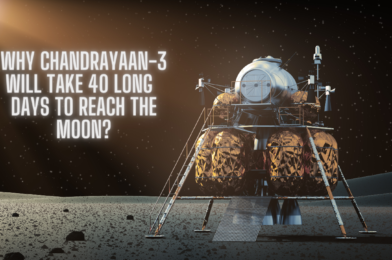
Why Chandrayaan-3 Will Take 40 Days to Reach the Moon While China’s “Change’2” Took Only Four?

Why Chandrayaan-3 Will Take 40 Days to Reach the Moon While China’s “Change’2” Took Only Four?
The Indian Space Research Organisation’s (ISRO) Chandrayaan-3 mission is scheduled to reach the Moon in over 40 days. This is in contrast to NASA’s Apollo 11 mission, which took only four days to reach the Moon and even China’s Change’2 which took 4 days just like the Apollo 11 mission.

There are a few reasons why Chandrayaan-3 will take longer to reach the Moon. First, ISRO does not have a rocket powerful enough to put Chandrayaan-3 on a direct path to the Moon. Instead, Chandrayaan-3 will be placed into a low Earth orbit first. From there, the spacecraft will use its onboard engines to gradually increase its speed and altitude. This process will take several weeks.

Second, Chandrayaan-3 is carrying a heavier payload than Apollo 11. This means that the spacecraft will need to travel at a slower speed in order to conserve fuel.

Finally, ISRO is taking a more cautious approach to Chandrayaan-3. The mission is designed to demonstrate India’s ability to soft-land a spacecraft on the Moon. As a result, ISRO is taking its time to ensure that the mission is successful.

The main objective of Chandrayaan-3 is to achieve a soft landing on the lunar surface. Once the spacecraft has landed, it will deploy a rover to explore the surface of the Moon. The rover will conduct scientific experiments to study the composition of the lunar soil and rocks.

The Chandrayaan-3 mission is a significant milestone for India’s space program. It is the country’s third lunar mission, and it will be the first time that India has soft-landed a spacecraft on the Moon. The success of Chandrayaan-3 will help to pave the way for future Indian space missions to the Moon and beyond.

Here are some additional details about the Chandrayaan-3 mission:

The spacecraft was launched on July 14, 2023, from the Satish Dhawan Space Centre in Sriharikota, India.
The spacecraft is carrying a lander, a rover, and an orbiter.
The lander will soft-land on the Moon’s south pole.
The rover will explore the lunar surface for up to 14 days.
The orbiter will study the Moon’s surface and atmosphere.
The Chandrayaan-3 mission is expected to last for one year. The spacecraft is scheduled to return to Earth in July 2024.

Tagged : / / / /

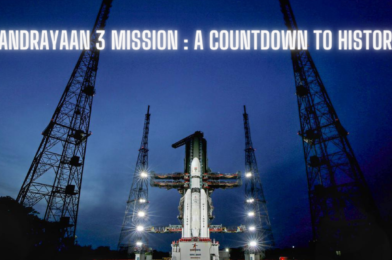
India’s Chandrayaan 3 Mission: A Countdown to History

India’s Chandrayaan 3 Mission: A Countdown to History
The countdown is on for India’s Chandrayaan 3 mission, which is scheduled to launch at 2.35 pm today ( Friday, July 14th 2023). The mission will attempt to soft-land a lander and rover on the lunar surface, and will also conduct a number of scientific experiments. Chandrayaan 3 is the third lunar mission by the Indian Space Research Organisation (ISRO), and is a follow-on to the Chandrayaan-1 and Chandrayaan-2 missions. The lander and rover on Chandrayaan 3 are similar to those used on Chandrayaan-2, but the mission will not have an orbiter.

The main objectives of Chandrayaan 3 are to:

1 Demonstrate safe and soft landing on the lunar surface.
2 Demonstrate rover roving on the moon.
3 Conduct in-situ scientific experiments.

The lander on Chandrayaan 3 is called Vikram, and the rover is called Pragyan. Vikram is equipped with a number of scientific instruments, including a camera, a magnetometer, and a seismometer. Pragyan is a robotic rover that will be able to travel up to 500 meters on the lunar surface.

The scientific experiments that will be conducted on Chandrayaan 3 will focus on the study of the moon’s surface, its composition, and its history. The mission will also look for signs of water on the moon. The launch of Chandrayaan 3 is a major milestone for India’s space program, and it is expected to make a significant contribution to our understanding of the moon. The mission is also a testament to the growing technological capabilities of India, and it is sure to inspire future generations of scientists and engineers.

The Launch

The Chandrayaan 3 mission is scheduled to launch on Friday, July 14, at 2:35 p.m. IST from the Satish Dhawan Space Centre in Sriharikota, India. The launch will be broadcast live on ISRO’s website and YouTube channel.

The mission will use a GSLV Mark 3 (LVM 3) heavy lift launch vehicle to place the lander and rover into orbit around the moon. The lander and rover will then separate from the launch vehicle and descend to the lunar surface.

The landing is scheduled to take place on August 23 or 24. If the landing is successful, Chandrayaan 3 will be the first Indian mission to soft-land on the moon since Chandrayaan-2 in 2019. In the Chndrayaan -2 mission Chandrayaan-2 spacecraft inserted into lunar orbit and then on September 2, 2019; Vikram Lander was separated while orbiting the moon in a 100kms lunar polar orbit, however, communication from the lander to the ground stations was lost at an altitude of 2.1 km from the surface of the moon.

The Significance of the Mission

The Chandrayaan 3 mission is a significant milestone for India’s space program. It is the third lunar mission by ISRO, and it is the first mission to attempt a soft-landing on the moon since Chandrayaan-2. The success of Chandrayaan 3 would be a major achievement for India, and it would boost the country’s reputation as a spacefaring nation. The mission would also help to advance our understanding of the moon, and it could lead to future missions to explore the lunar surface.

The Future of Space Exploration

The Chandrayaan 3 mission is a stepping stone to future space exploration missions. If the mission is successful, it could pave the way for future Indian missions to the moon, such as a human mission.The mission could also help to inspire future generations of scientists and engineers to pursue careers in space exploration. The success of Chandrayaan 3 would show that India is a leading nation in space exploration, and it would encourage other countries to pursue their own space exploration programs.

Conclusion

The Chandrayaan 3 mission is a major milestone for India’s space program, and it is sure to have a significant impact on the future of space exploration. The success of the mission would be a major achievement for India, and it would boost the country’s reputation as a spacefaring nation. The mission would also help to advance our understanding of the moon, and it could lead to future missions to explore the lunar surface.

Tagged : / / / / / /
Verified by ExactMetrics