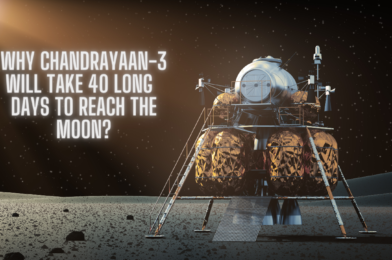
Why Chandrayaan-3 Will Take 40 Days to Reach the Moon While China’s “Change’2” Took Only Four?

Why Chandrayaan-3 Will Take 40 Days to Reach the Moon While China’s “Change’2” Took Only Four?
The Indian Space Research Organisation’s (ISRO) Chandrayaan-3 mission is scheduled to reach the Moon in over 40 days. This is in contrast to NASA’s Apollo 11 mission, which took only four days to reach the Moon and even China’s Change’2 which took 4 days just like the Apollo 11 mission.

There are a few reasons why Chandrayaan-3 will take longer to reach the Moon. First, ISRO does not have a rocket powerful enough to put Chandrayaan-3 on a direct path to the Moon. Instead, Chandrayaan-3 will be placed into a low Earth orbit first. From there, the spacecraft will use its onboard engines to gradually increase its speed and altitude. This process will take several weeks.

Second, Chandrayaan-3 is carrying a heavier payload than Apollo 11. This means that the spacecraft will need to travel at a slower speed in order to conserve fuel.

Finally, ISRO is taking a more cautious approach to Chandrayaan-3. The mission is designed to demonstrate India’s ability to soft-land a spacecraft on the Moon. As a result, ISRO is taking its time to ensure that the mission is successful.

The main objective of Chandrayaan-3 is to achieve a soft landing on the lunar surface. Once the spacecraft has landed, it will deploy a rover to explore the surface of the Moon. The rover will conduct scientific experiments to study the composition of the lunar soil and rocks.

The Chandrayaan-3 mission is a significant milestone for India’s space program. It is the country’s third lunar mission, and it will be the first time that India has soft-landed a spacecraft on the Moon. The success of Chandrayaan-3 will help to pave the way for future Indian space missions to the Moon and beyond.

Here are some additional details about the Chandrayaan-3 mission:

The spacecraft was launched on July 14, 2023, from the Satish Dhawan Space Centre in Sriharikota, India.
The spacecraft is carrying a lander, a rover, and an orbiter.
The lander will soft-land on the Moon’s south pole.
The rover will explore the lunar surface for up to 14 days.
The orbiter will study the Moon’s surface and atmosphere.
The Chandrayaan-3 mission is expected to last for one year. The spacecraft is scheduled to return to Earth in July 2024.

Tagged : / / / /

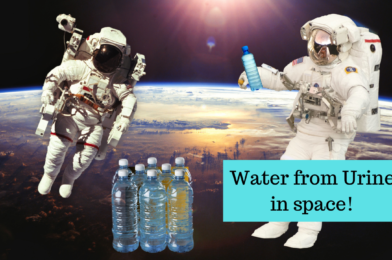
NASA recovers water from urine : A new milestone to help in space exploration missions!

NASA recovers water from urine : A new milestone to help in space exploration missions!
NASA has achieved a new milestone in water recovery on the International Space Station (ISS). The space agency has announced that it has successfully recovered 98% of the water used by astronauts on the ISS, including urine and sweat. This is a significant improvement over previous water recovery rates, which were only around 80%.

The water recovery system on the ISS is called the Urine Processing Assembly (UPA). The UPA first distills the urine and sweat, separating the water from the solids. The water is then further purified using a process called reverse osmosis. Reverse osmosis is a process that uses pressure to force water molecules through a semi-permeable membrane. The membrane allows the water molecules to pass through, but it blocks the passage of the solids.

The purified water is then stored in tanks and can be used by the astronauts for drinking, cooking, and bathing. The UPA can recover up to 98% of the water used by astronauts on the ISS. This means that for every 100 gallons of water used by the astronauts, only 2 gallons need to be brought up from Earth. This is a significant savings, as it reduces the amount of cargo that needs to be transported to the ISS.

The UPA is a critical part of the ISS’s life support system. It helps to ensure that the astronauts have a sustainable supply of water, even on long-duration missions. The UPA also helps to reduce the amount of waste that needs to be disposed of on the ISS.

The successful recovery of 98% of the water used on the ISS is a major achievement for NASA. It is a testament to the ingenuity and hard work of the engineers and scientists who designed and built the UPA. The UPA is a critical technology that will help to support future long-duration missions in space.

Jill Williamson, ECLSS water subsystems manager said : “the drinking water has been reclaimed, filtered and cleaned such that it is cleaner than what we drink here on Earth.”

Tagged : / / /

The Future Technology : Google’s Eye Scan Technology to Replace MRI, CT Scan, and X-Ray

The Future Technology : Google’s Eye Scan Technology to Replace MRI, CT Scan, and X-Ray
Google is developing new eye scan technology that could revolutionize the way we diagnose medical conditions. The technology, which is still in the early stages of development, uses a combination of artificial intelligence and machine learning to create detailed images of the inside of the eye. These images can then be used to detect a wide range of diseases, including cancer, heart disease, and stroke.

The potential benefits of Google’s eye scan technology are enormous. MRI, CT scans, and X-rays are all invasive procedures that can be uncomfortable and even dangerous. Eye scans, on the other hand, are non-invasive and painless. This means that they could be used to screen for diseases in people who are at high risk, without exposing them to any unnecessary radiation or other risks.

In addition, eye scans are much more affordable than other imaging technologies. This means that they could make it possible for people in developing countries to access life-saving medical care that would otherwise be out of reach.

Google is not the only company working on eye scan technology. Other companies, such as Optos and Heidelberg Engineering, are also developing similar technologies. However, Google’s technology is one of the most advanced and promising.

If Google is successful in developing its eye scan technology, it could have a major impact on the way we diagnose medical conditions. Eye scans could become the standard way to screen for diseases, and they could also be used to monitor the progress of diseases and to track the effectiveness of treatments.

Here are some additional details about Google’s eye scan technology:

  • The technology uses a combination of infrared light and machine learning to create detailed images of the inside of the eye.
  • The images can be used to detect a wide range of diseases, including cancer, heart disease, and stroke.
  • Eye scans are non-invasive and painless.
  • Eye scans are more affordable than other imaging technologies.
  • The potential benefits of Google’s eye scan technology are enormous.

This technology would be a major breakthrough, and it would make it possible for people to get the medical care they need earlier and more easily. It would also help to reduce the cost of healthcare, and it would make healthcare more accessible to people in developing countries.

Tagged : / / / /
Verified by ExactMetrics