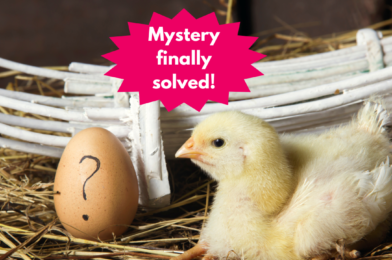
The age old puzzle of the chicken and egg is finally solved!
The question of which came first, the chicken or the egg, has puzzled people for centuries. Now, a new study suggests that scientists may finally have the answer.
The study, published in the journal Nature, looked at the earliest ancestors of modern-day reptiles, birds, and mammals. These animals, which lived around 320 million years ago, were not yet laying eggs. Instead, they gave birth to live young. This conclusion is based on the analysis of 51 fossil species and 29 living species, which can be categorized as oviparous (laying eggs) or viviparous (giving birth to live young). While oviparous species are known for laying hard or soft-shelled eggs, viviparous species give birth to live young. These new findings have been published in the journal Nature Ecology & Evolution.
The study’s authors believe that the amniotic egg, which is the hard-shelled egg that is characteristic of birds, evolved over time from a type of sac that surrounded the developing embryo in live-bearing animals. This sac, called the amnion, helped to protect the embryo from drying out, which allowed animals to live on land.
The authors of the study say that their findings suggest that the chicken did not come first. Instead, they believe that the amniotic egg evolved first, and that the first chickens hatched from these eggs.
This finding is significant because it helps to answer one of the oldest questions in biology. It also provides insights into the evolution of birds and other amniotes.
Implications for the Future
The findings of this study have a number of implications for the future. First, they suggest that the amniotic egg was a key innovation that allowed animals to live on land. This innovation had a profound impact on the evolution of life on Earth, and it is likely that the amniotic egg played a role in the rise of the dinosaurs and other land-dwelling animals.
Second, the findings of this study suggest that the chicken did not evolve in a single step. Instead, it is likely that the chicken’s ancestors gradually evolved from live-bearing animals to egg-laying animals. This process of evolution took millions of years, and it is likely that there were many different types of animals that existed in between the live-bearing animals and the first chickens.
Conclusion
The findings of this study provide new insights into the evolution of birds and other amniotes. They also help to answer one of the oldest questions in biology: which came first, the chicken or the egg? The answer, it seems, is the egg.