“The Horse” to turn food waste into energy

We humans love eating… and we don’t just eat to satiate our appetite… we eat to satiate our taste buds too. Eating is a celebration for us. As per the old belief we work so that we earn something to fill our bellies with food. So, practically everything comes back to food. But do you know, of all the food produced in the US, around 40 percent gets wasted? A huge amount of effort, time and energy is put into producing food but a good 40 percent of it is sent to landfill each year.

HORSE-impact-bioenergy.jpg.662x0_q70_crop-scale

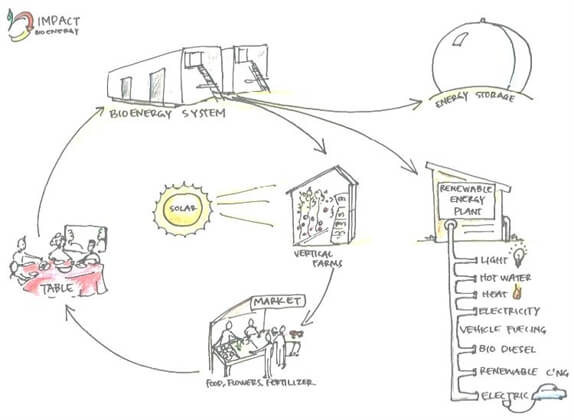
Isn’t it equivalent to wasting the resources? Trying to find an answer to this question, Seattle based upstart Impact Bioenergy has been developing a new revolutionary biodigester machine which the company has christened as The Horse. This biodigester takes in raw food waste and other biodegradable things and converts it into electricity and fertilizer. Working at full capacity (135 pounds of waste), the machine is capable of producing 360,000 BTUs of gross energy per day — including 125 kilowatts of electricity.

The technology that the biodigester uses is age old: Anaerobic breakdown of the garbage. Though exact details of its working are not yet out but considering that it converts biodegradable waste into energy, it can be safely assumed that it works like any other biodigester where any biodegradable waste consisting of food waste, dining room scrapes, paper products, grass clippings, meat, grease, oil, egg shells, bones or even small sticks of wood are fed into the machine’s digestion chamber where it is mixed thoroughly.

The next step is taken over by the bacteria present in the digester chamber that eat away the food waste and produce methane gas which in turn is used by The Horse to produce electricity. The leftover material after the production of methane is used as fertilizer in the fields.
horse

Though the technology used by the machine is age old, what really makes it different is, it is portable and easy to use and these same things according to Impact Bioenergy will make bioenergy more accessible and may help in reducing curbside garbage pickup as well as the carbon emissions associated with the hauling of waste to the landfills.

[adinserter block=”7″]

Author: Technology Blog
You can now have a “99.7% sound-proof room”

Thanks to the researchers at Hong Kong University of Science and Technology, a 100 percent sound-proofing is no more a dream. The team of researchers has discovered a method, by which they can filter out almost all the noise in a given confined space, entirely independent of the loudness and quietness of it.

prsqisyn3gvum4noilu7

Most sound proofing systems work on the principle of sound absorption, i.e. different materials that absorb sounds at different wavelengths are used in different situations depending on what kind of sound they are trying to absorb. For absorbing sounds that may contain multiple wavelengths, a combination of materials is used.

But it is not possible to build a multi layer combination of such materials that absorb ALL the sound wavelengths. There would always be some of the acoustic waves that do not get absorbed and hence bounce off the barrier material.

Considering this, the Hong Kong University researcher team applied a different approach to sound proofing. Instead of absorbing sound, they devised a system that cancels out all the acoustic waves in the environment by using a pair of impedance matched resonators that work in tandem to deaden all kind of sounds in a room. The first resonator in the system removes the majority of the incoming sound waves but since 100 percent efficiency can’t be achieved by a single device, the second resonator comes into picture.

navy-sound_1024

It is tuned to the same frequency as the first resonator and hence it cancels out the sound waves scattered from the first resonator, using destructive interference. With the help of these two resonators, the system achieves a sound proofing of 99.7 percent. This is a one of a kind single layer system that achieves near perfect sound absorption. So it is time to say Shhhhhhhhhhhhhhh!

[adinserter block=”7″]

Author: Technology Blog
3D printed scaffolds to aid in nerve regeneration

Nerve damage is often a painful and long lasting experience for patients and if things go quite wrong it can be a paralysing one too! The reason for this is: the nerves take very long time to regenerate and that too very slowly assuming that they regenerate at all. To find ways to help the nerves regenerate faster a team of researchers has devised a way to 3 D print customized scaffolding that can help nerves regenerate.

implanted_guide

Presently grafting is the most common method of repairing damaged nerves because regenerating nerves takes quite a long time. In grafting, nerves taken from some other healthy portion of the body are positioned around the damaged nerves to take their place. But since this procedure needs two surgeries, causes pain at the donor site and sometimes results in complete rejection of the grafted nerve; it is not an ideal one! In a more recent development researchers have experimented with nerve guidance channels, which are cylinders, made of bio-compatible materials that encourage nerve growth. Though these have more flexibility than nerve grafts, their limitation is that they can only help nerves grow only in a straight line, which in turn doesn’t help nerves damaged in large, geometrically complex injuries.

3D

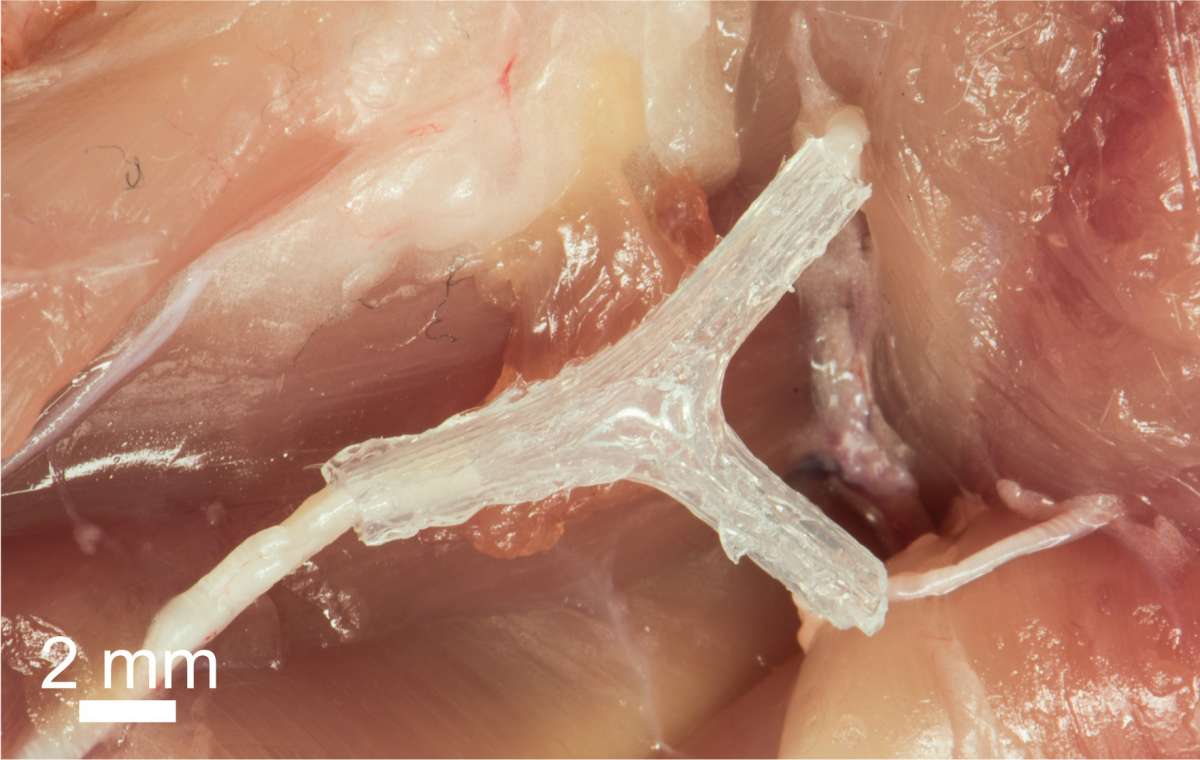
So when the researchers moved on to this new idea of 3D scaffolds, the researchers focussed on the nerves that split into two different nerves that extend to different places in the body and are more complex than typical linear nerves. To conduct the experiment with the 3D scaffolds, the researchers took a scan of a nerve exposed by an incision using a structured light 3D scanner. Using that information, they created geometrically complex nerve guidance channels. These nerves work as a bridge to connect the two ends of regenerating nerves together.

The channels were made such that they would fit a specific area of the body; 3D printing was then used to print the perfect fit. The scaffold encourages the right kind of nerve growth because of its physical shape as well as the chemical composition of each branch of the channel.

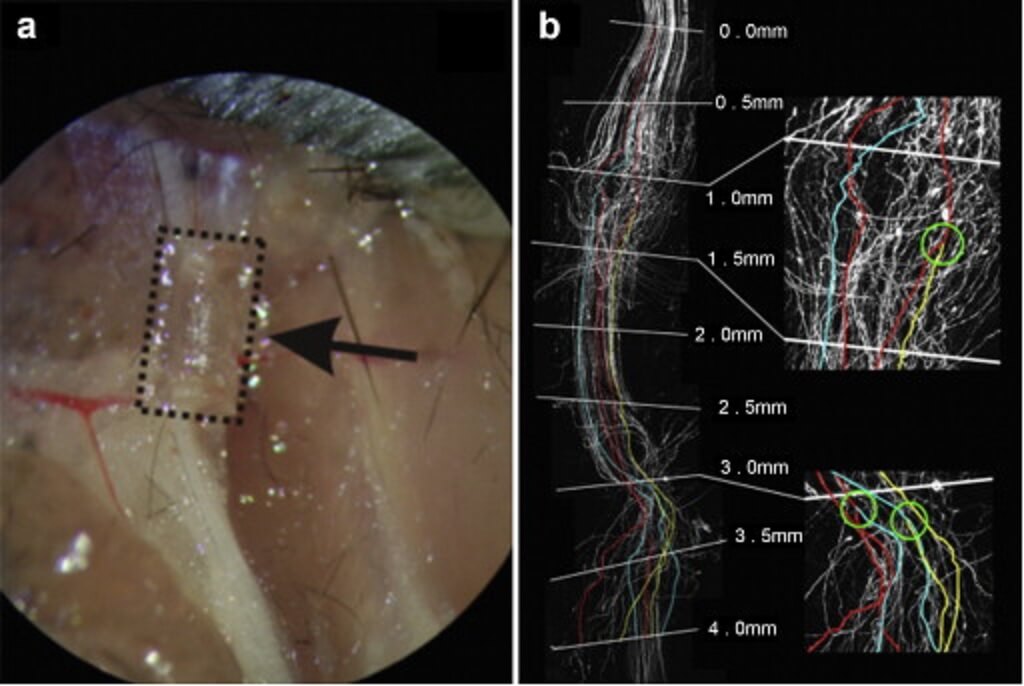
After this, the researchers took scans of nerves in living patients, printed the scaffolds with silicone and special proteins mixed in, and tested their strength in a petri dish. The channels held up well—though not perfectly—and the proteins gradually released over three weeks to encourage nerve growth. They found similar results when they tested the scaffolds in mice.

3d_nerve_scaffolds

Though this is just a proof of concept study, the researchers opine that it may be a breakthrough in nerve regeneration, if everything goes well.

[adinserter block=”7″]

Author: Technology Blog

Test Nail Paints Out in Virtual Reality before Buying

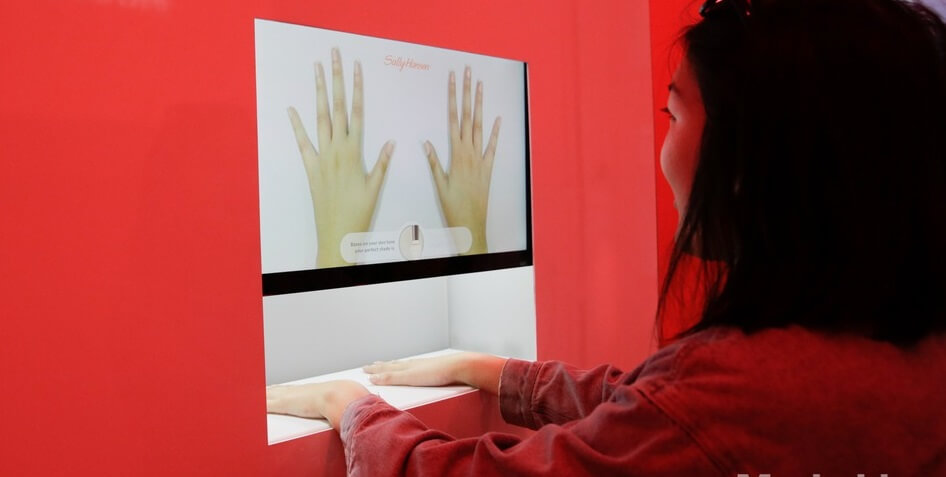
Eliminate the anguish and despair at picking up the wrong shade of nail colour at the store. The nail gurus at Sally Hansen launched ManiMatch, an app that lets you paint on nail polish virtually. All you have to do is start the app and place your hands below your phone’s camera. The app takes in the shape of your hands and nails and then paints over the nails-on the screen- with the selected shade.

Sephora-s-new-3D-mirror-leads-the-way-in-try-before-you-buy-beauty

“Everyone of course has different undertones and contrasts with the colors, so it’s important to be able to try it on,” Madeline Poole, Sally Hansen’s global color ambassador and trend expert, said. “You might try on a shirt. It looks amazing on a rack, but when you try it on, it washes you out, or it doesn’t bring out the color of your eyes or your hair or whatever, so it’s the same kind of concept.”

The app recommends shades to be tried on based on your skin tone. You can choose from the suggested shades, or go solo and wild with 200 different shades to choose from.  Once you’ve chosen a color, you can purchase the product directly in the app. What’s even better is that your choices of shades and brands are not only narrowed down to Sally Hansen’s line. You can scan the barcode of the desired shade of nail paint at a shop and then try it on in the app. The app is iPhone only for now but the company says an Android version is scheduled to roll out in the next few months.

nails-7

There is an upcoming exciting feature in the app which would make it near perfect- the option to try on nail art. I say near perfect as the app does have a few glitches that should soon be ironed out. For example, if you didn’t align your hand accurately with the outline on the screen, the nail polish blobs would scatter across the screen landing everywhere except the nails and then there is no back button to undo the process. The app has to be restarted and the process has to be redone.

[adinserter block=”7″]

Author: Technology Blog
Black Hole May Suck Stuff in Forever, But the Information Bounces Out

Nobel laureate Gerard ’t Hooft of Utrecht University in the Netherlands, was responding to Stephen Hawking’s 25 August announcement of a new solution to the information paradox-  edge of a black hole might be a brick wall against which information about in-falling stuff bounces back like a tennis ball.

BH

The paradox that has torn scientists for nearly four decades being that if any object, be it an iPhone or an elephant, ventures into a black hole, it stays there. From the outside, we will never be able to learn about any of its characteristics; information about it disappears behind the black curtain.

Then in 1974, Hawking managed to discover radiations emitting in the form of photons from the edge of the black hole, subsequently named Hawking radiations. These radiations supposedly over time, make the black hole lose mass and evaporate, snuffing out all the information. The new concern that arose with this revelation was about the contradicted law of quantum mechanics that says that the information can neither be created nor destroyed. Where does it go then?

“The answer is that matter going into the hole has an effect on outgoing Hawking particles,” says ’t Hooft. “Hawking did not believe that at first, but gradually he is revising that opinion.”

‘t Hooft claims that when the elephant slips into the black hole, it leaves a holographic imprint on the edge of the hole which is then picked up by the outgoing radiations that carry out the information on the elephant. ‘t Hooft speculates that gravity could be the answer to this problem: As the elephant slips over the black hole’s boundary, the animal’s gravitational field changes. When outgoing Hawking radiation passes through that gravitational field, its path is altered, and can convey information.

“Even though we describe modes of in-falling matter that ‘bounce back against the horizon’, these bounces only refer to the information our particles are carrying, while the particles will continue their way falling inwards,” ’t Hooft writes in the paper.

Both these ideas have a common problem- information overload. Quantum mechanics doesn’t allow duplication. Their solutions might actually make a second copy of the information, thus creating information instead of destroying it.

cygnus x1

It’s also unclear how a gravity-only information transfer meshes with quantum mechanics. “The devil is in those details,” says theoretical physicist Steven Giddings of the University of California, Santa Barbara.

[adinserter block=”7″]

Author: Technology Blog
New stealth fighter in China’s kitty

China is known to be emerging as a super power gradually and what better field than defense to prove this point? The seventh upgraded Chinese stealth fighter prototype is ready to take its maiden flight. This week, Chengdu Aircraft Corporation, one of China’s top air manufacturers, rolled out “2016,” the seventh J-20 prototype/pre-production fighter since 2011.

People's Liberation Army Air Force (PLAAF) Shenyang J-11 Chinese 歼击机-11歼-11 JianJiJi-11Jian-11 Flanker B+ Sukhoi Su-27 J-11A b bs bh J-16 strike J-17 stealthier internal weapons b

Fifth generation fighters, like the American F-22 and F-35, Chinese J-20 and Russian PAK-FA, blend together supersonic endurance, stealth and sensor fusion as force multipliers against older fighters like the F-15 and Su-27. Flying seven fighters has put the J-20 ahead of the five PAK-FA fighters, the only other non-US flying fifth generation fighter.

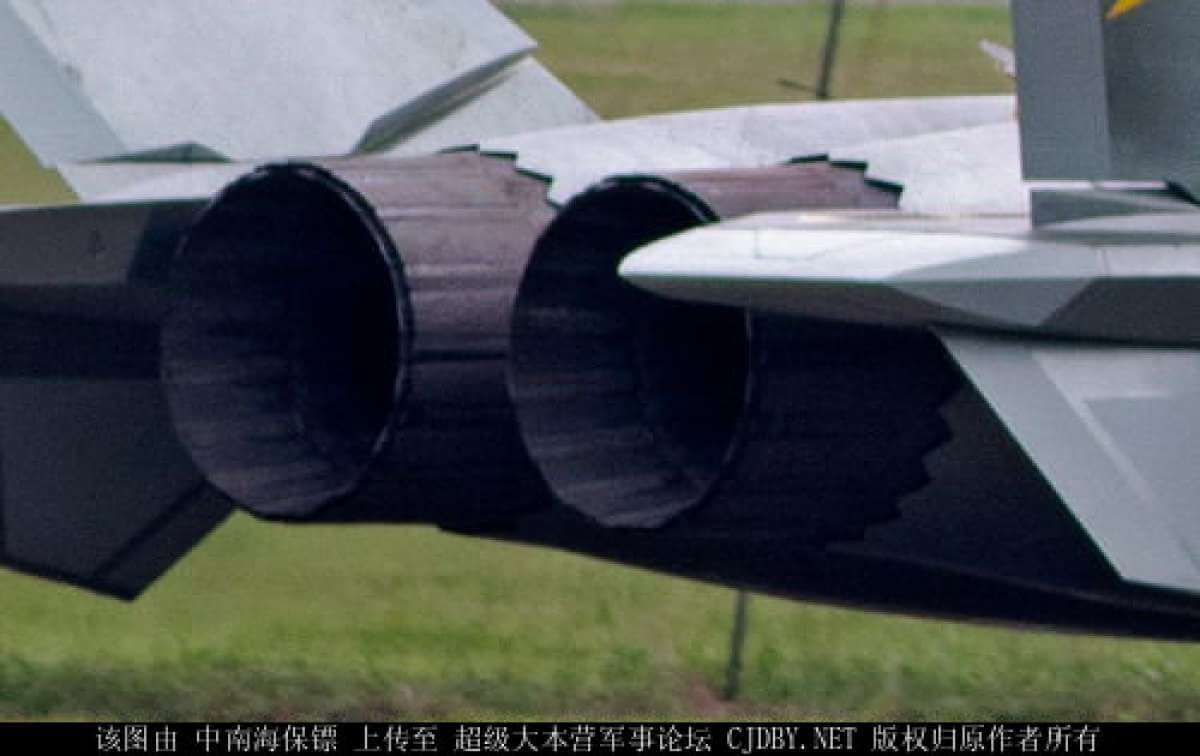
The runway pictures of the prototype show that the Chinese programme of advancing and updating its J-20s is running at a really good pace as there are several key differences compared to the older J-20s. Compared to its “2014” and “2015” predecessors, the J-20’s fuselage contains more of engine’s surface area inside the stealthy fuselage, which would provide greater rearwards stealth for the J-20 against enemy radar.

The Diverterless Supersonic Intake (DSI) on the inner side of air intake has also been changed, and it is now apparently larger. Altering the shape of the DSI suggests that “2016” may have more powerful engines than its predecessors, likely to be an advanced 14 ton thrust derivative of the Russian AL-31 or Chinese WS-10 turbofan engines (though by 2020 the J-20 is planned to use the 18-19 ton WS-15 engine, enabling extended supersonic flight without using fuel hungry afterburners). “2016”‘s flight booms around the engines have been enlarged, probably in a bid to accommodate rearwards facing radars or electronic jamming equipment.

j20-2016-_side

These advancements are in sharp contrast to the parallel US 5th generation jet fighter programs that have pushed off most upgrades to the future, in order to try to keep initial costs down. So it won’t come as a surprise if China’s generals start boasting about their fleet which now has a new generation of air combat mean machines like the J-20.

[adinserter block=”7″]

Author: Technology Blog
EnChroma’s Lenses Adds Color to Colorblind Vision

EnChroma announced a partnership with Frameri to make lenses that will help colorblind people see different shades of color again. Colour Vision Deficiency makes greens and reds look the same, and about one in 12 men are affected. With these lenses, Christmas will never look monochromic again and your wardrobe choices will improve.

03-20-15-1-EnChroma-980x420

Colour blindness, usually genetic, is caused by an increased spectral overlap of the red and green photopigments (the light absorbing molecules in the retinal cone cells of the eye). Human eye contains three classes of cones (L-cones, M-cones and S-cones), each handling green, red and blue light respectively. In case of red-green colourblindness, out class of cones is out of sync with the other two and malfunctioning. It absorbs more of another class’ light. EnChroma’s lenses work by filtering cone signals with a multi-notch filter, thus separating the overlapping signals for proper distinction of shades.

width="623" height="623" allowfullscreen="allowfullscreen">

Unfortunately, external lenses like so, can’t correct the vision of those with complete colour blindness. But for the ones that are 80% colourblind, these work spot on. The vision of a normal seeing person can also be enhanced with these lenses.

Dr. Don McPherson, the company’s Chief Science Officer came up with the idea for EnChroma. He later teamed up with Andy Schmeder out of Berkeley. With Schmeder’s mathematics, perceptual-psychology, and computer-modeling expertise combined with McPherson’s glass-science experience, 10 years of research and development later, EnChroma was made.

width="565" height="565" allowfullscreen="allowfullscreen">

EnChroma is far more advanced than other such lenses made till date. There are three versions of EnChroma CX (color-correction) lenses: the standard sunglass (CX-14), the medium lens (CX-25), and the indoor, night-time, or computer lenses (CX-65). CX-65sports a bluish tint that doesn’t mix well with Protan sight deficiencies (difficulties seeing red). The others lenses however are indistinguishable from regular lenses at sight.

24BC10C700000578-0-image-m-3_1421354508858

Lastly Frameri, a young company that launched in 2014, comes in for the finishing touch. It makes beautiful boutique frames with interchangeable lenses from a Mazzucchelli cellulose acetate (a natural plastic), made in Italy. Aerial, Tidal, Terra, and the newly released Prose are the four collections by Frameri. EnChroma can be made into a stylish and elegant wear with these interchangeable frames. Frameri glasses with one set of non-prescription EnChroma lenses starts at $425.

[adinserter block=”7″]

Author: Technology Blog

Disguised as RBCs, nanoparticles help fight microbes

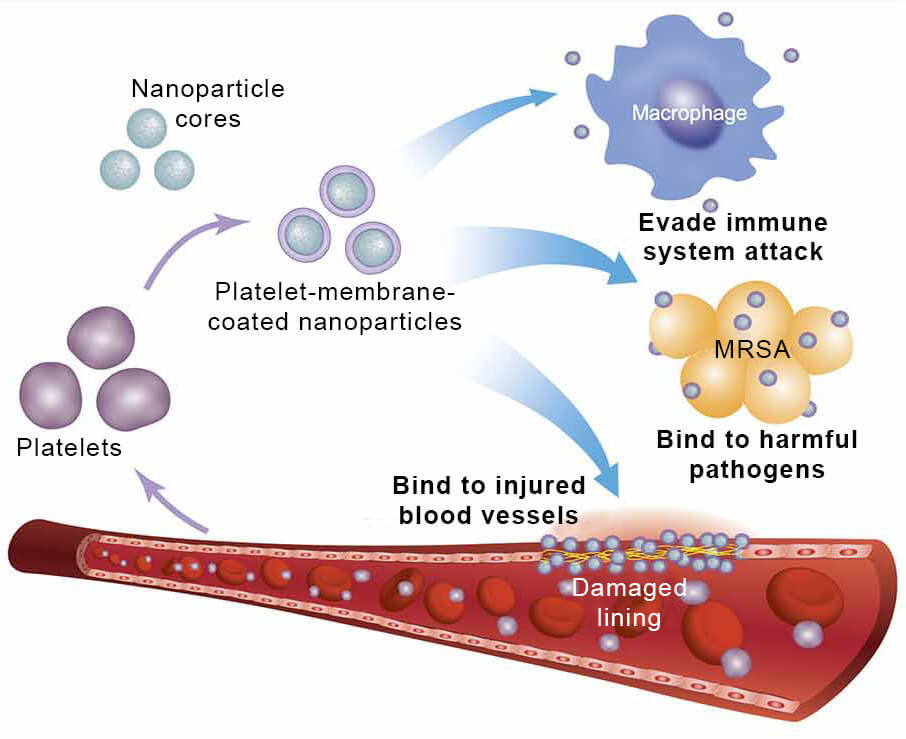
The secret behind the potency to killing microbes by sending out drugged nanoparticles into the body has been long cracked. But the big problem that continues to pose in this regard till date is that the patients’ immune systems would kill them off, before the particles even made it to the intended location. Now, a team of California-based researchers have discovered a way to disguise these nanoparticles so they can easily get past the immune system.

nano1

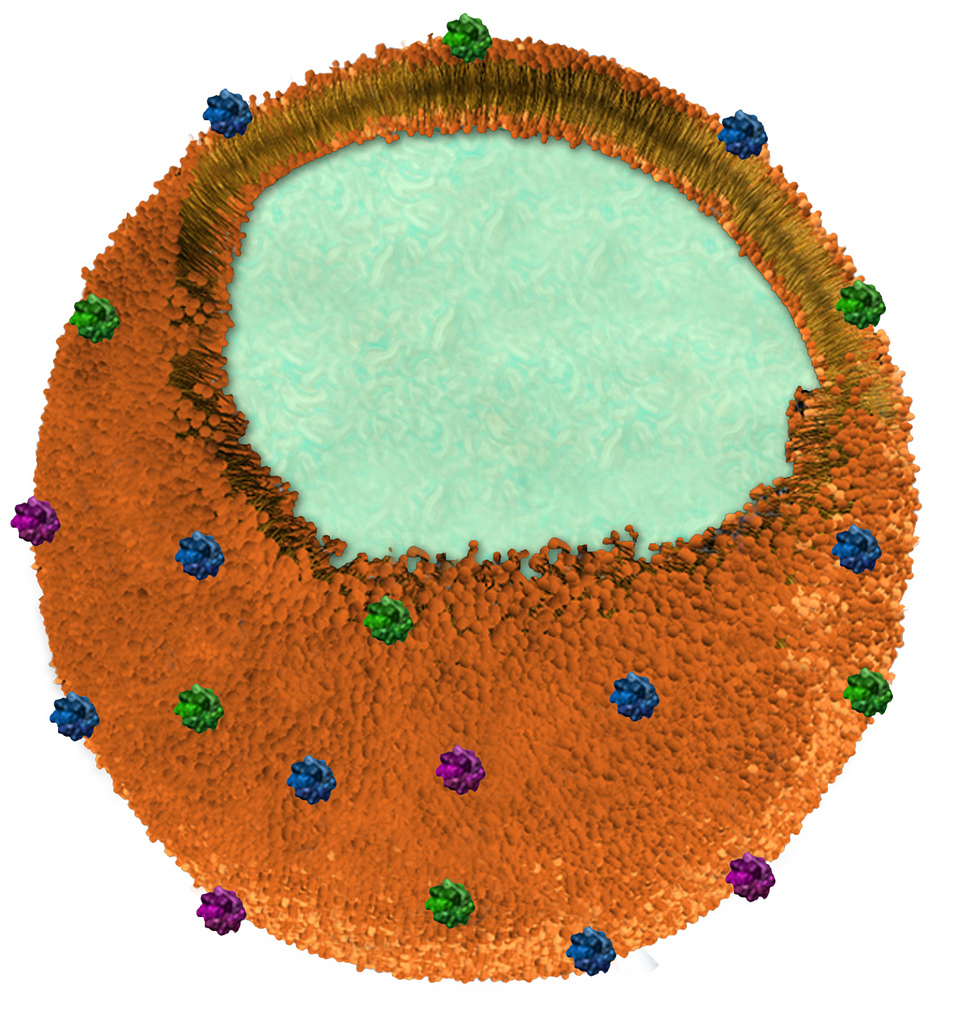
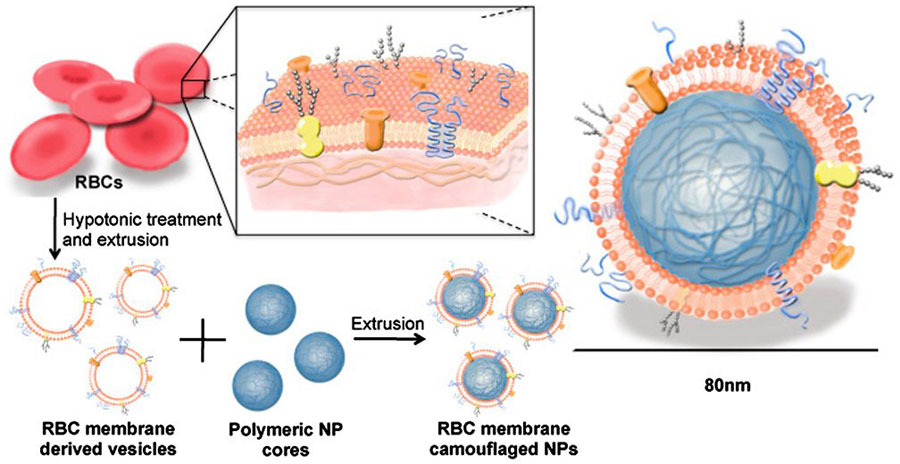
The traditional materials are metal or plastic for making nanoparticles. These materials set off the “intruder alert” in the immune system at high. Thus these nanoparticles can be coated with cell membranes removed from actual human platelets, which are disk-shaped cell fragments found in the blood. The membranes of these cells contain various proteins that shield the nanoparticles to pass as our blood cells.

When the same exercise was performed in a study with mice infected with MRSA, the mice treated with nanoparticles saw a 1,000-fold reduction in the number of bacteria living in their spleens and livers compared to the mice that received conventional antibiotics, and at one-sixth of the dose.

Other attempts were also made to effectively deliver the chemotherapy drug docetaxel that prevents artery walls from growing back too thick after surgery.

untitled

Still doubts have emerged while presenting the papers. Some were impressed by the idea, while others pointed to the fact that most of the particles ended up in the liver and the spleen, and not necessarily concentrated at sites of disease. Some researchers aren’t sure that they actually are sneaking past the immune system undetected.

[adinserter block=”7″]

Author: Technology Blog
Asteroid! Hands up or we will shoot!

An asteroid is heading towards our Mother Earth to cause annihilation, but the timely intervention by the hero who is generally a super intelligent scientist saves the world by using some amazing space gun deflecting the asteroid. Reminds you of any sci-fi movie? Well this may become reality very soon. That’s because NASA’s Asteroid Redirect Mission wants to send a robot to an asteroid. NASA wants to retrieve a boulder of appropriate strength from asteroids to study it and take it to the moon.

battlecruiser-attack-laser-deep-space-fighter-strike-forceA video release shows how a shotgun attached to the robot would learn about the asteroid by shooting at it. First, the vehicle would survey the surface of the asteroid. Then it would target the shotgun at the asteroid. Once on target, the shotgun will fire a projectile, which could do one of the three things. One is to fire a shell that cracks open when met with certain strength, thereby revealing just how hard the asteroid is. Second is to bounce a ball off the surface of the asteroid, then track its rebound velocity to determine the strength of that asteroid. And the third and last option is to shoot at it and make a crater, and then measure the size of that crater to determine that asteroid’s strength and density.

1442512027576393The mission is facing criticism both from inside and outside NASA but reiterating the importance of this mission NASA says: “The robotic mission also will demonstrate planetary defense techniques to deflect dangerous asteroids and protect Earth if needed in the future.” What would become of the mission is still unknown, but anything that tries to deflect hostile asteroids off our backs is welcome!

width="536" height="536" allowfullscreen="allowfullscreen">

[adinserter block=”7″]

Author: Technology Blog

Ozone to help treat Ebola?

Up until now, Ozone for us was that protective layer above the earth’s atmosphere that saves the many life forms on earth from the ill effects of Ultra Violet radiations, but after reading a study published in the 2016 issue of the African Journal of the Infectious Diseases, our ideas may change. According to this study, ozone is said to be helpful in inactivating the dreaded Ebola virus. Ozone basically is an unstable version of an oxygen molecule. The stable oxygen molecule is made up of two atoms while ozone has three.

ozone_iv_therapy_ama_skincare

It is to be noted that this is not the first time when ozone has been used for clinical purpose. For over a century, it has been used in the field of medicine. Though toxic at high concentrations, ozone at low concentrations is thought to increase the number of antioxidants in the blood. It was used in World War I to disinfect wounds. But it has both opponents and proponents.

Today its proponents claim that ozone is an effective treatment for arthritis, AIDS, Parkinson’s, cancer, heart disease, and diabetes while its opponents claim that it comes with significant and sometimes lethal side-effects. There have been studies that found the ozone therapy speeding up the progression of some degenerative diseases. And as far as the Food and Drug Administration is concerned, the regulating body doesn’t consider it an effective treatment but still practices control on the amount of ozone that can be used in clinics.

The new study however is presented by the proponents of Ozone therapy. Some doctors tried this therapy on four healthcare workers in Liberia with Ebola symptoms (three tested positive for the disease, the other had been exposed to the virus but that patient’s tests had still come back negative). For ten days, the researchers gave the patients ozone by infusing it into their blood through their veins, passing it into their rectums, and giving them ozonized water to drink. The researchers found that the patients’ symptoms abated after just a few days, and none died–which surprised the researchers, since the survival rate of healthcare workers infected with Ebola was just 40 percent.

ozone-vs-ebola-pic-blog

The therapy hasn’t yet been tested in a lab but researchers believe that there is a possibility that ozone damages the surface of the virus so that it can’t infect the cells of its host. Another positive aspect of the therapy is that it just costs $10 a day. While the proponents are smiling on the basis of the findings, the opponents are not yet fully convinced because of extremely small sample size (only four patients) of the study. So in order to give a substantial proof that Ozone therapy is useful or not useful both opponents and proponents will have to delve deeper in their research. And may be one of the two groups would be able to find something really positive and encouraging.

[adinserter block=”7″]

Author: Technology Blog

There are No Blind Spots with This Helmet for F-35 fighter pilots

The F-35 Lightning II, also known as the Joint Strike Fighter, is rapidly improving to soon be the military’s top fighter jet. The feature which supports this amazing development is the advanced pilot helmet.

Capt. Brad Matherne views the flightline inside an F-35A Lightning II before a training mission April 4, 2013, at Nellis Air Force Base, Nev. The 422nd Test and Evaluation Squadron will design the tactics for the F-35A and determine how to integrate the F-35A with other aircraft in the Air Force inventory. Matherne is a pilot assigned to the 422nd TES. (U.S. Air Force photo/Senior Airman Brett Clashman)

Built by defense contractor Rockwell Collins over the past five years, the new F-35 Gen III Helmet Mounted Display System takes the cockpit’s heads-up display (HUD) and moves it inside the helmet. The HUD displays all the critical information inside the visor in front of the pilot’s eyes. Information such as the as airspeed, weaponry status, and altitude is displayed at just the blink of an eye. What’s more, the pilot is capable of aim missiles with just their eye, thanks of Integrated Eye Tracking.

Now for the most unnerving part, this helmet will allow the pilot to practically see through the aircraft. When our pilot looks down, not the cockpit but the world beneath the plane would be visible. This is facilitated by an intensive system of six cameras outside the jet, providing a 360-degree view of the environment around the plane and detection of the pilot’s head movement to send appropriate video feed to the HUD. Night vision is also enabled in this system.

1515725_-_main

These helmets will be built uniquely for each pilot to ensure their comfort, even for those wearing glasses. In the two-day fitting process, each of these carbon fiber helmet weighing roughly five pounds will be custom fit to each pilot. During this process, each pilot undergoes measurements of optical parameters such as eye spacing, pupil alignment, and more.

width="581" height="581" allowfullscreen="allowfullscreen">

Even though the new Gen III Helmet was originally designed exclusively for the F-35, its applications might to extended to other fields where its feature to see beyond walls would be invaluable, such as firefighting.

[adinserter block=”7″]

Author: Technology Blog

Why Do Bats Host a Different Immune System from Other Mammals- The Mystery Continues

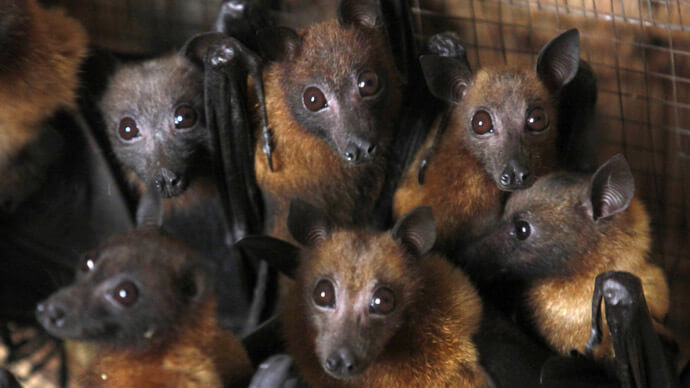
Bats are infamous transmitters of various deadly pathogens including rabies, maybe even Ebola. But they themselves seldom get sick. Is this part of an elaborate immune system stronger than of all us? Scientists look on to find out.

ebola-medicine-bats-virus

In this study, the researchers tested the immune response of the Pallas’s mastiff bats, which live in Panama. They held a total of 34 bats in captivity and dosed them with a harmless compound found in the membranes of infectious pathogens called lipopolysaccharide (LPS). Researchers involved expected the bats to show symptoms of contamination, but they remained mysteriously free. The only notable change was a slight drop in body weight that served as an indicator to their immune systems were occupied.

All scientists can now do is speculate on the possible causes that might have protected them. The most valid of this, is the drastic temperature change the body of the bat undergoes daily.

Come day, when the bats sleep, their temperature drops significantly which would explain the slowing down of pathogen spread. At night however, their temperatures rise to over a 100 degrees Fahrenheit. This is influence the working of certain immune cells which normally function during fever.

fruitbat

Further intensive studies are required in this regard and to explain whether the bats use the same immune cells as us, or completely different ones to fend for themselves. Solutions of these queries, might solve the existing problem of White Nose Syndrome that has been wiping off bat communities.

[adinserter block=”7″]

Author: Technology Blog

Harry Potter’s Invisibility Cloak Comes to Life

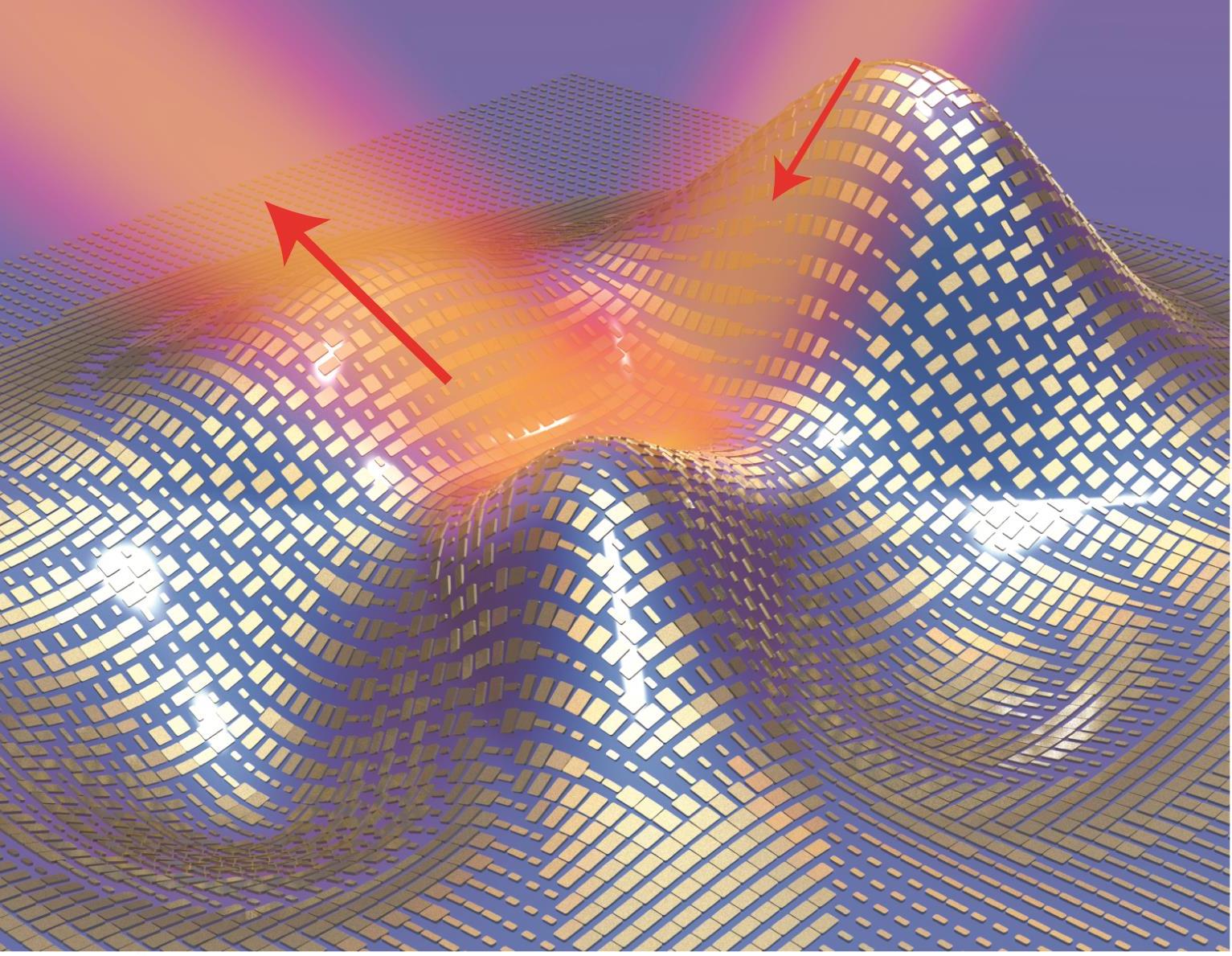
A team of researchers at the US Department of Energy’s Lawrence Berkeley National Laboratory and the University of California at Berkeley have created what they call “an ultra-thin invisibility ‘skin’ cloak” that can be wrapped around a three-dimensional object to render it optically undetectable.

a31431991ab52762800x800ar

Concepts like so have already been explored to some extent. Take for example, the “Rochester Cloak” that can make an area invisible when you look through a set of lenses at it or other metamaterials (artificial nanostructures engineered with electromagnetic properties not found in nature) that hide objects. The existing gizmos tend to be bulky and carpet-like. But, this new cloak is unique, one of a kind, much like Harry’s famous cloak. It is ultra-thin and is significantly thinner than skin at just 80 nanometers.

“This is the first time a 3D object of arbitrary shape has been cloaked from visible light,” Xiang Zhang, director of the Berkeley National Lab’s Materials Sciences Division, said in a statement. “Our ultra-thin cloak now looks like a coat. It is easy to design and implement, and is potentially scalable for hiding macroscopic objects.”

Right now, the cloak is microscopic and capable of hiding objects very tiny, but Zhang says the ultrathin design should be able to scale up to much larger sizes far more easily than the earlier, carpet-like cloaks. Its surface is meta-engineered to route light waves in such a way that the object is rendered invisible when the cloak is activated. The scientists say the result is identical to light being reflected off a flat mirror.

Xiang-Zhang-image-for-cloak

The only real difference between this cloak and J.K Rowling’s creation is that it will now be used for in optical microscopes, speedy optical computers, security encryption and in 3D displays, rather than being used to sneak around a huge castle eavesdropping on people.

[adinserter block=”7″]

Author: Technology Blog

Responsive ventilated sports-wear may be the next big thing for sportspersons

Sports are something that involve rigorous work-outs, ample running, and huge amounts of heat and sweating. A sportsperson can easily associate him/her with all these things. But what if their sportswear could adjust itself with the changing needs of their body? To test the potential of Curie module of Intel, the company teamed up with architectural sportswear designer Chromat to produce two responsive garments – a dress and a bra. These responsive garments change shape responding to the wearer’s body temperature, adrenaline or stress levels.

intel-chromat-6

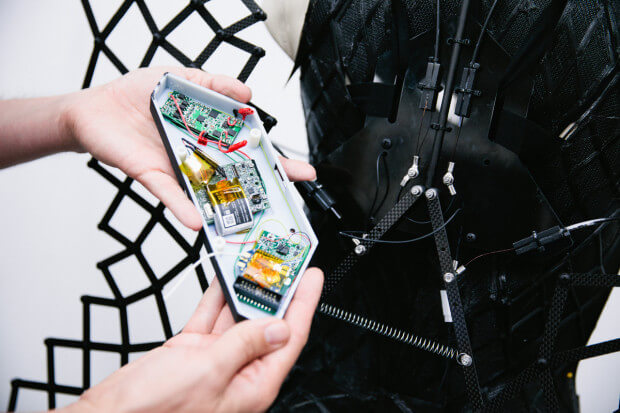
The first one The Chromat Adrenaline Dress is a black number made of neoprene stretched over 3D-printed panels with a carbon fibre framework attached to the back. When an adrenaline rush indicated by an increase in sweating and breathing rate is detected, the carbon fibre framework activated by a shape memory alloy will expand into a stylized hourglass shape.

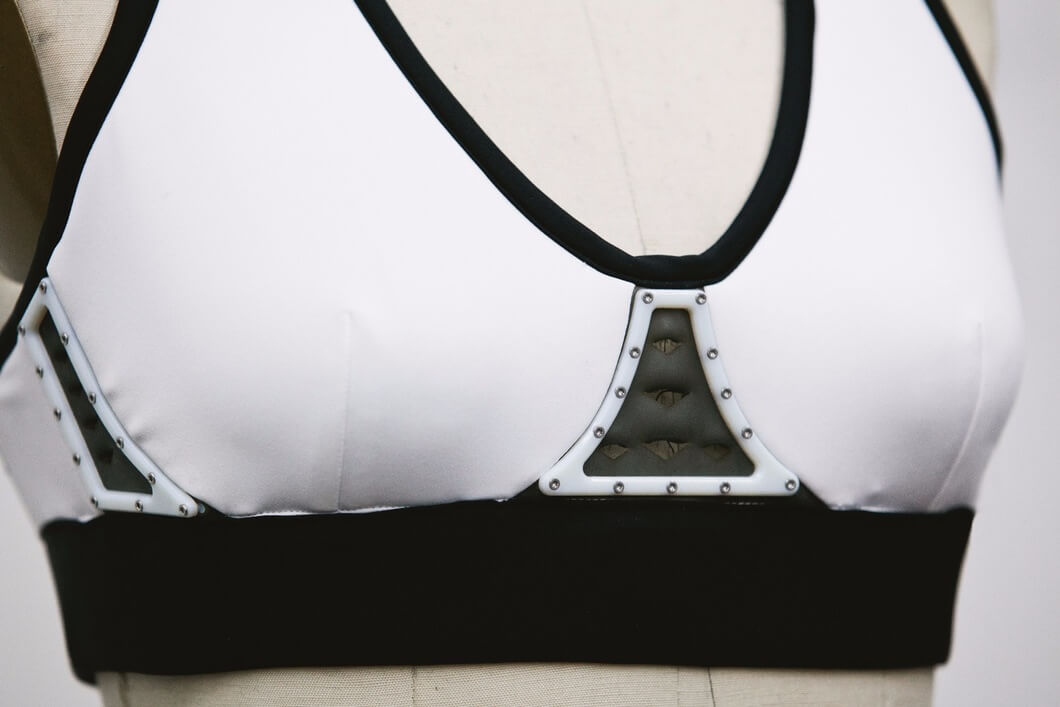
The second one, Chromat Aeros Sports Bra consisting of Lycra, mesh, neoprene and 3-D printed frames also integrates shape memory alloy just like the dress, but uses it to open vents in the bra to provide a cooling air flow when it detects changes in the wearer’s perspiration, breathing and body temperature. When things cool down, it also shuts off the vents.

It is to be noted that Intel Curie is actually a button-sized module that packs a low-power, 32-bit Intel Quark microcontroller, six-axis motion sensor with accelerometer and gyroscope, integrated digital signal processing (DSP) sensor hub and pattern matching technology, Bluetooth Low Energy and 384 kB of flash memory and 80 kB of RAM. Intended for embedding in wearable devices aimed at a range of applications, such as health and wellbeing, social networking and fitness, the module is power efficient and supported by a software platform developed specifically for the unit.

Responsive-sports-bra-opens-up

A number of companies are sampling this module and Chromat was one such company to incorporate it in its sportswear. The dress and bra are still not available in the market as Intel Curie is yet to receive the required authorization from the FCC.

[adinserter block=”7″]

Author: Technology Blog
Now pregnancy won’t be just a dream for women in 40’s and 50’s

Motherhood is one of the most beautiful things in this entire world. It changes a woman from inside out. But the passage of time and the changing roles of women in society has pushed the age of mothers to late 20’s and 30’s. Completing their education, settling in their careers and then settling in matrimony has changed the game of numbers for a woman’s age to get pregnant.

pregnant-belly

And it is a widely known fact that a woman’s fertility does get affected with advancing age. If a woman is past the age of 35, it becomes even more difficult. Now a biotech company Ovascience has become a beacon of hope for such women. The company has created a treatment called OvaPrime, which would intervene with a woman’s fertility long before an egg has matured.

It is to be noted that in the past 20 years, thousands of women have sought the help of IVF (in vitro fertilization) technique to become blessed with a child. In this technique, doctors collect eggs and sperm from the potential parents, fertilize the eggs in the lab, and then implant several embryos into the woman’s uterus. But the sad part is that among all the women who undergo IVF only 20 to 35 percent conceive, owing to the low quality eggs or sperm or the inability of embryos to implant in the uterine lining. The procedures are expensive as well as emotionally draining for the parents-to-be.

For decades, it was believed that women are born with all the eggs that they will produce in a lifetime but a research in 2004 discovered egg precursor cells in mice, which are actually stem cells in ovaries that become fertile eggs. The OvaPrime treatment is based on this fact only. The OvaPrime treatment removes a woman’s egg precursor cells and places them in a different part of the ovary in which they can mature into healthy cells.

18wzhzqjnqvpyjpg

As stem cells are the youngest cells in the body they haven’t been damaged by the biological changes that can cause eggs to develop mutations and become less healthy. Doctors can then remove those healthy eggs and perform a typical IVF procedure, theoretically yielding a higher success rate. But one thing is to be kept in mind that OvaPrime can’t help women after they reach menopause. Presently there are no numbers available to compare it with a normal IVF technique and hence the results but if OvaPrime really does what it claims to do, then future is really bright for women in their 30’s and 40’s and even 50’s.

[adinserter block=”7″]

Author: Technology Blog

Verified by ExactMetrics