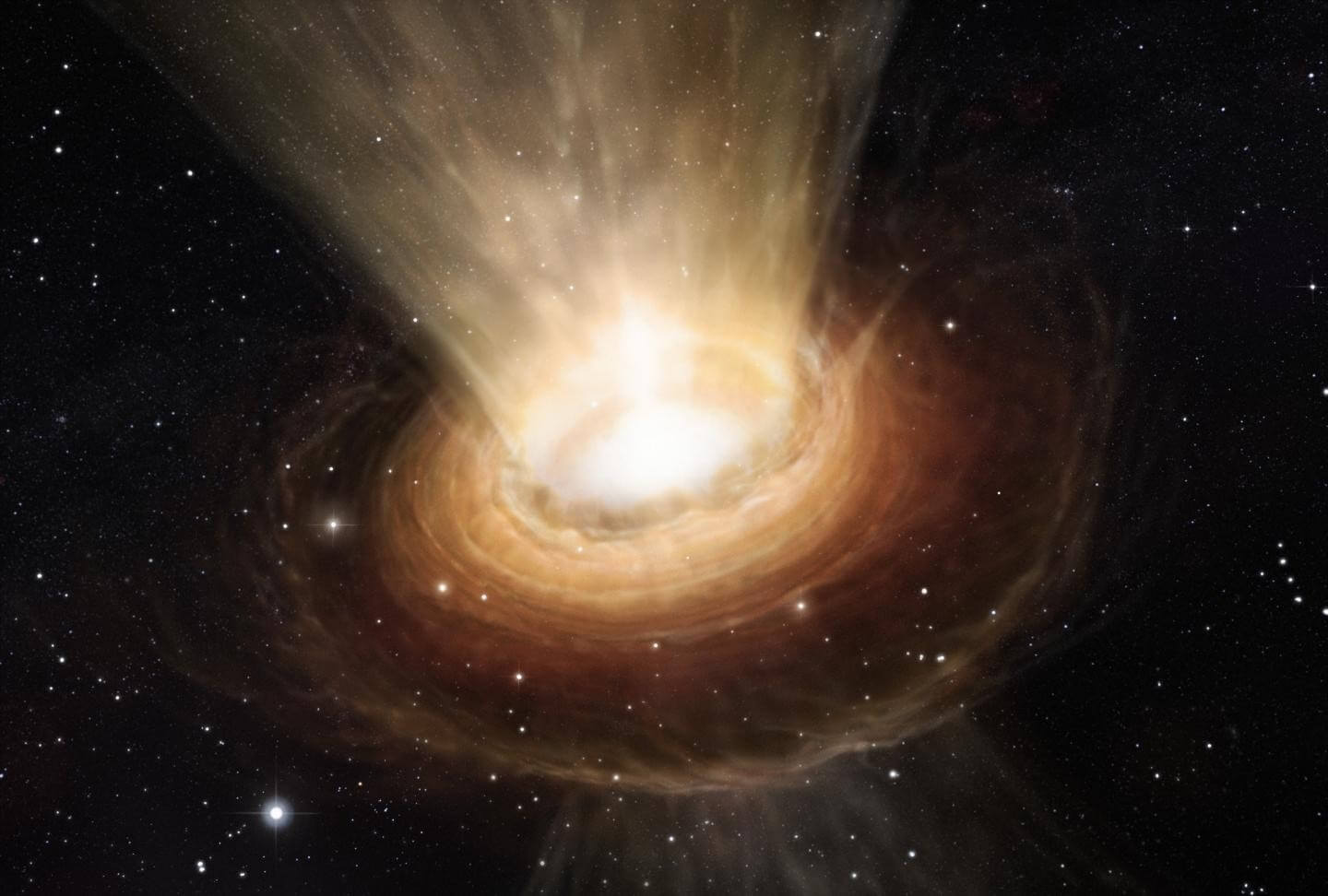
Nobel laureate Gerard ’t Hooft of Utrecht University in the Netherlands, was responding to Stephen Hawking’s 25 August announcement of a new solution to the information paradox- edge of a black hole might be a brick wall against which information about in-falling stuff bounces back like a tennis ball.
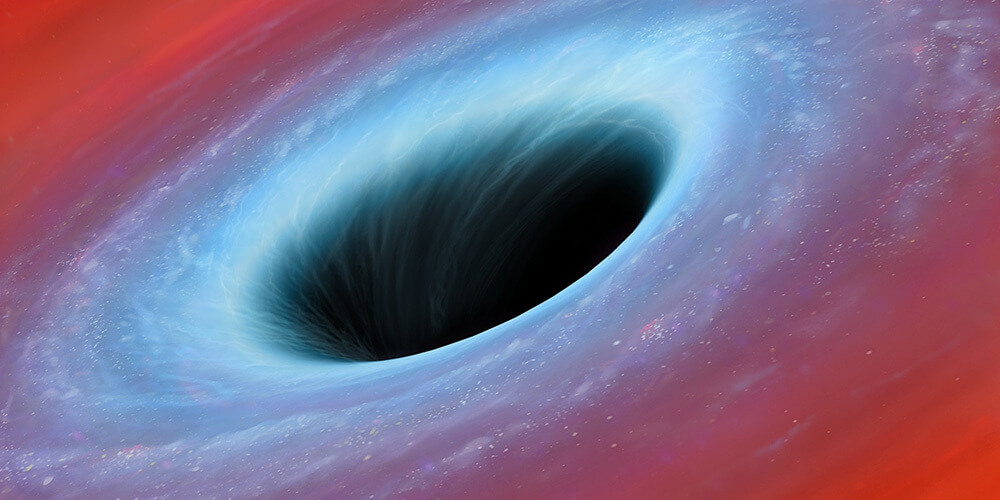
The paradox that has torn scientists for nearly four decades being that if any object, be it an iPhone or an elephant, ventures into a black hole, it stays there. From the outside, we will never be able to learn about any of its characteristics; information about it disappears behind the black curtain.
Then in 1974, Hawking managed to discover radiations emitting in the form of photons from the edge of the black hole, subsequently named Hawking radiations. These radiations supposedly over time, make the black hole lose mass and evaporate, snuffing out all the information. The new concern that arose with this revelation was about the contradicted law of quantum mechanics that says that the information can neither be created nor destroyed. Where does it go then?
“The answer is that matter going into the hole has an effect on outgoing Hawking particles,” says ’t Hooft. “Hawking did not believe that at first, but gradually he is revising that opinion.”
‘t Hooft claims that when the elephant slips into the black hole, it leaves a holographic imprint on the edge of the hole which is then picked up by the outgoing radiations that carry out the information on the elephant. ‘t Hooft speculates that gravity could be the answer to this problem: As the elephant slips over the black hole’s boundary, the animal’s gravitational field changes. When outgoing Hawking radiation passes through that gravitational field, its path is altered, and can convey information.
“Even though we describe modes of in-falling matter that ‘bounce back against the horizon’, these bounces only refer to the information our particles are carrying, while the particles will continue their way falling inwards,” ’t Hooft writes in the paper.
Both these ideas have a common problem- information overload. Quantum mechanics doesn’t allow duplication. Their solutions might actually make a second copy of the information, thus creating information instead of destroying it.
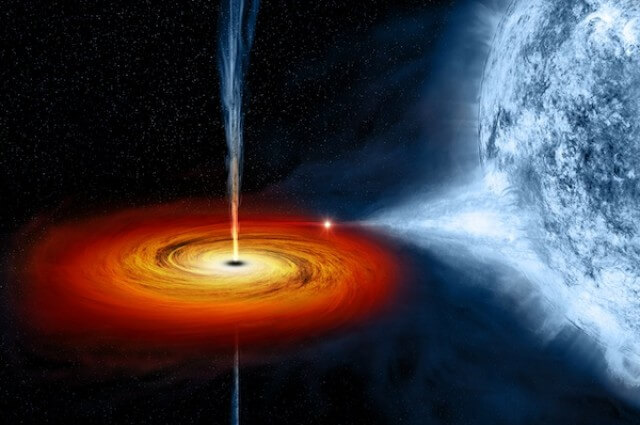
It’s also unclear how a gravity-only information transfer meshes with quantum mechanics. “The devil is in those details,” says theoretical physicist Steven Giddings of the University of California, Santa Barbara.
[adinserter block=”7″]
Author: Technology Blog

