New stealth fighter in China’s kitty

China is known to be emerging as a super power gradually and what better field than defense to prove this point? The seventh upgraded Chinese stealth fighter prototype is ready to take its maiden flight. This week, Chengdu Aircraft Corporation, one of China’s top air manufacturers, rolled out “2016,” the seventh J-20 prototype/pre-production fighter since 2011.

People's Liberation Army Air Force (PLAAF) Shenyang J-11 Chinese 歼击机-11歼-11 JianJiJi-11Jian-11 Flanker B+ Sukhoi Su-27 J-11A b bs bh J-16 strike J-17 stealthier internal weapons b

Fifth generation fighters, like the American F-22 and F-35, Chinese J-20 and Russian PAK-FA, blend together supersonic endurance, stealth and sensor fusion as force multipliers against older fighters like the F-15 and Su-27. Flying seven fighters has put the J-20 ahead of the five PAK-FA fighters, the only other non-US flying fifth generation fighter.

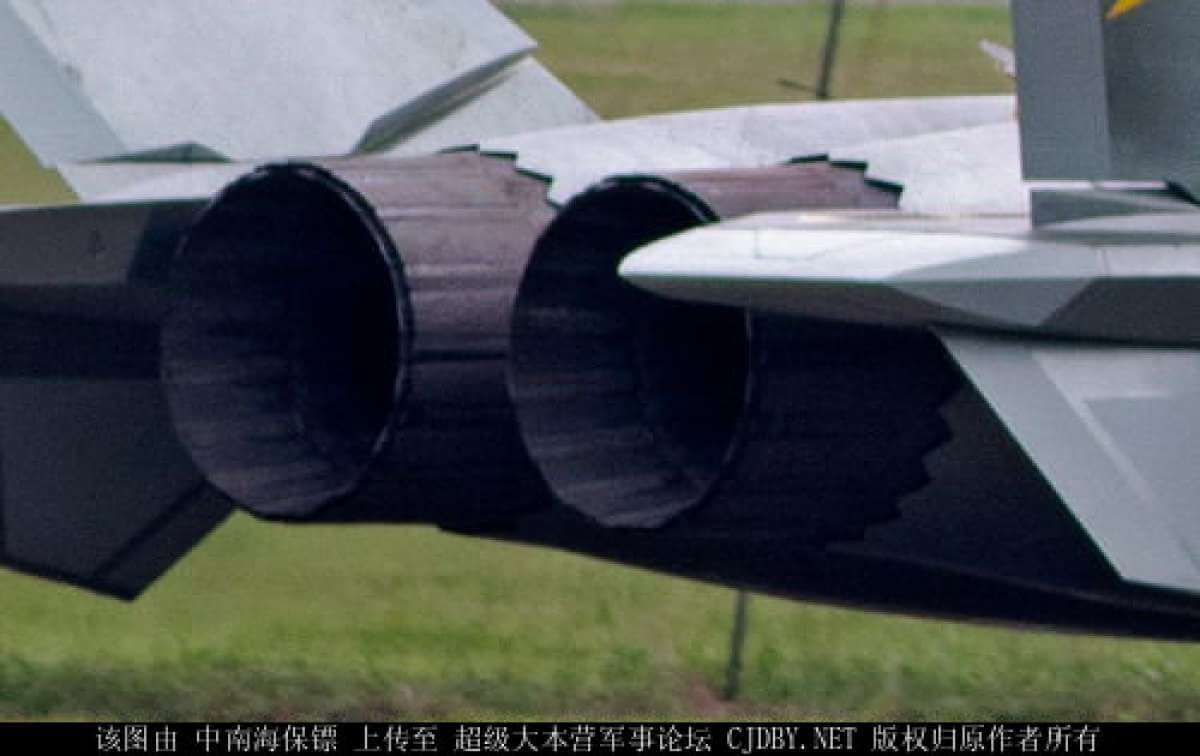
The runway pictures of the prototype show that the Chinese programme of advancing and updating its J-20s is running at a really good pace as there are several key differences compared to the older J-20s. Compared to its “2014” and “2015” predecessors, the J-20’s fuselage contains more of engine’s surface area inside the stealthy fuselage, which would provide greater rearwards stealth for the J-20 against enemy radar.

The Diverterless Supersonic Intake (DSI) on the inner side of air intake has also been changed, and it is now apparently larger. Altering the shape of the DSI suggests that “2016” may have more powerful engines than its predecessors, likely to be an advanced 14 ton thrust derivative of the Russian AL-31 or Chinese WS-10 turbofan engines (though by 2020 the J-20 is planned to use the 18-19 ton WS-15 engine, enabling extended supersonic flight without using fuel hungry afterburners). “2016”‘s flight booms around the engines have been enlarged, probably in a bid to accommodate rearwards facing radars or electronic jamming equipment.

j20-2016-_side

These advancements are in sharp contrast to the parallel US 5th generation jet fighter programs that have pushed off most upgrades to the future, in order to try to keep initial costs down. So it won’t come as a surprise if China’s generals start boasting about their fleet which now has a new generation of air combat mean machines like the J-20.

[adinserter block=”7″]

Author: Technology Blog

EnChroma’s Lenses Adds Color to Colorblind Vision

EnChroma announced a partnership with Frameri to make lenses that will help colorblind people see different shades of color again. Colour Vision Deficiency makes greens and reds look the same, and about one in 12 men are affected. With these lenses, Christmas will never look monochromic again and your wardrobe choices will improve.

03-20-15-1-EnChroma-980x420

Colour blindness, usually genetic, is caused by an increased spectral overlap of the red and green photopigments (the light absorbing molecules in the retinal cone cells of the eye). Human eye contains three classes of cones (L-cones, M-cones and S-cones), each handling green, red and blue light respectively. In case of red-green colourblindness, out class of cones is out of sync with the other two and malfunctioning. It absorbs more of another class’ light. EnChroma’s lenses work by filtering cone signals with a multi-notch filter, thus separating the overlapping signals for proper distinction of shades.

width="623" height="623" allowfullscreen="allowfullscreen">

Unfortunately, external lenses like so, can’t correct the vision of those with complete colour blindness. But for the ones that are 80% colourblind, these work spot on. The vision of a normal seeing person can also be enhanced with these lenses.

Dr. Don McPherson, the company’s Chief Science Officer came up with the idea for EnChroma. He later teamed up with Andy Schmeder out of Berkeley. With Schmeder’s mathematics, perceptual-psychology, and computer-modeling expertise combined with McPherson’s glass-science experience, 10 years of research and development later, EnChroma was made.

width="565" height="565" allowfullscreen="allowfullscreen">

EnChroma is far more advanced than other such lenses made till date. There are three versions of EnChroma CX (color-correction) lenses: the standard sunglass (CX-14), the medium lens (CX-25), and the indoor, night-time, or computer lenses (CX-65). CX-65sports a bluish tint that doesn’t mix well with Protan sight deficiencies (difficulties seeing red). The others lenses however are indistinguishable from regular lenses at sight.

24BC10C700000578-0-image-m-3_1421354508858

Lastly Frameri, a young company that launched in 2014, comes in for the finishing touch. It makes beautiful boutique frames with interchangeable lenses from a Mazzucchelli cellulose acetate (a natural plastic), made in Italy. Aerial, Tidal, Terra, and the newly released Prose are the four collections by Frameri. EnChroma can be made into a stylish and elegant wear with these interchangeable frames. Frameri glasses with one set of non-prescription EnChroma lenses starts at $425.

[adinserter block=”7″]

Author: Technology Blog

Disguised as RBCs, nanoparticles help fight microbes

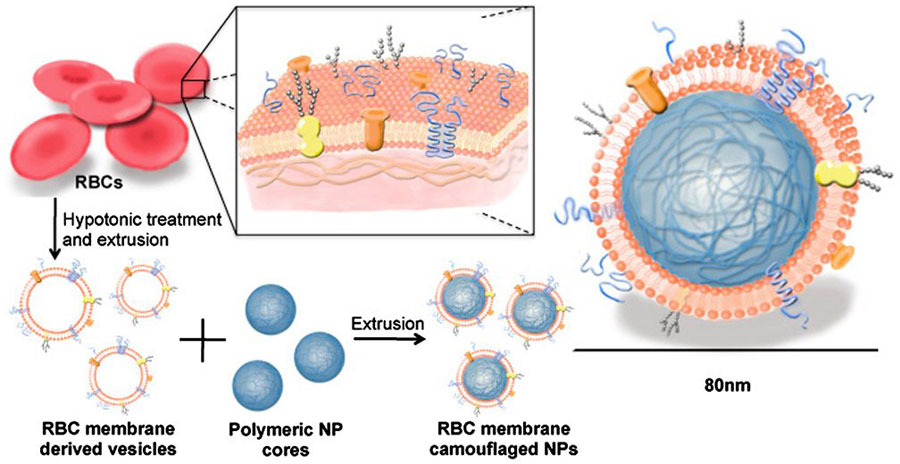
The secret behind the potency to killing microbes by sending out drugged nanoparticles into the body has been long cracked. But the big problem that continues to pose in this regard till date is that the patients’ immune systems would kill them off, before the particles even made it to the intended location. Now, a team of California-based researchers have discovered a way to disguise these nanoparticles so they can easily get past the immune system.

nano1

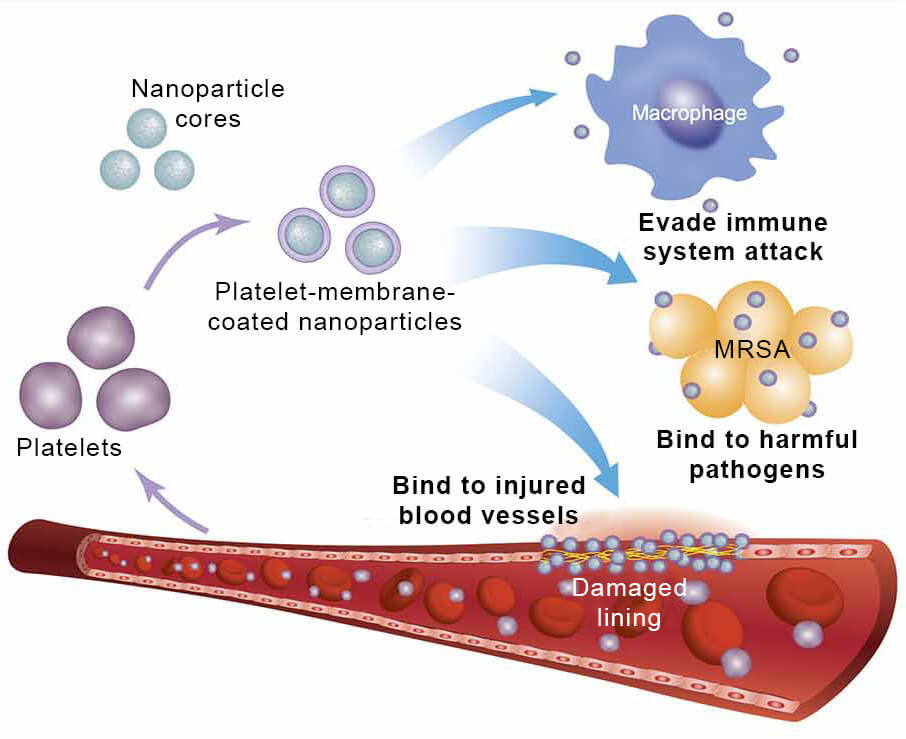
The traditional materials are metal or plastic for making nanoparticles. These materials set off the “intruder alert” in the immune system at high. Thus these nanoparticles can be coated with cell membranes removed from actual human platelets, which are disk-shaped cell fragments found in the blood. The membranes of these cells contain various proteins that shield the nanoparticles to pass as our blood cells.

When the same exercise was performed in a study with mice infected with MRSA, the mice treated with nanoparticles saw a 1,000-fold reduction in the number of bacteria living in their spleens and livers compared to the mice that received conventional antibiotics, and at one-sixth of the dose.

Other attempts were also made to effectively deliver the chemotherapy drug docetaxel that prevents artery walls from growing back too thick after surgery.

untitled

Still doubts have emerged while presenting the papers. Some were impressed by the idea, while others pointed to the fact that most of the particles ended up in the liver and the spleen, and not necessarily concentrated at sites of disease. Some researchers aren’t sure that they actually are sneaking past the immune system undetected.

[adinserter block=”7″]

Author: Technology Blog

Verified by ExactMetrics