Organic Computing With DNA Could Process Data within Human Bodies

Since Leonard Adleman in 1994 demonstrated DNA computing by encoding and solving the travelling salesman problem, a math problem to find the most efficient route for a salesman to take between hypothetical cities, entirely in DNA, DNA-based “circuits” have been proposed that implement computational methods such as Boolean logic, arithmetical formulas, and neural network computation.
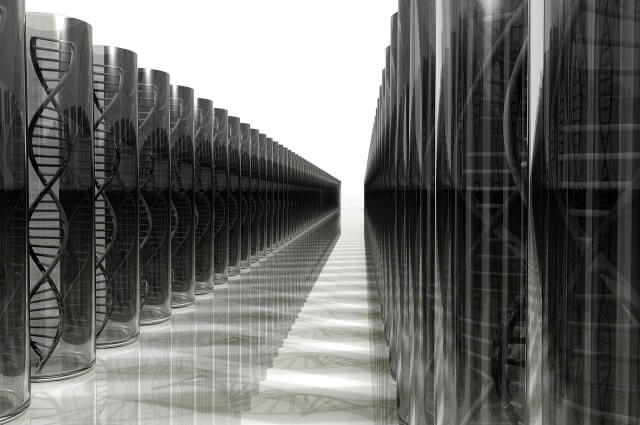
medicine-163707_1280

This approach called molecular programming performs the same concepts and designs of computing in a nano scale for work on DNA. The reason of selection of DNA over our conventional silicon chips is its size (2nm width), programmability and high storage capacity versatility, cheapness and ease in synthesising, not to mention, computing with DNA requires much less energy than electric powered silicon processors.

Working with DNA does have a number of drawbacks though, such as its extremely slow speed compared to a computer and single-use circuits which have to be recreated to run the same composition again.

DNA programs have already been written for a variety of medical applications, such as diagnosing tuberculosis, a Nano-biological “program” by Ehud Shapiro of the Weizmann Institute of Science in Israel, termed the “doctor in the cell” that targets cancer molecules and another DNA program which targets lymphocytes (a type of white blood cell), which are defined by the presence or absence of certain cell markers and so can be naturally detected with true/false Boolean logic.
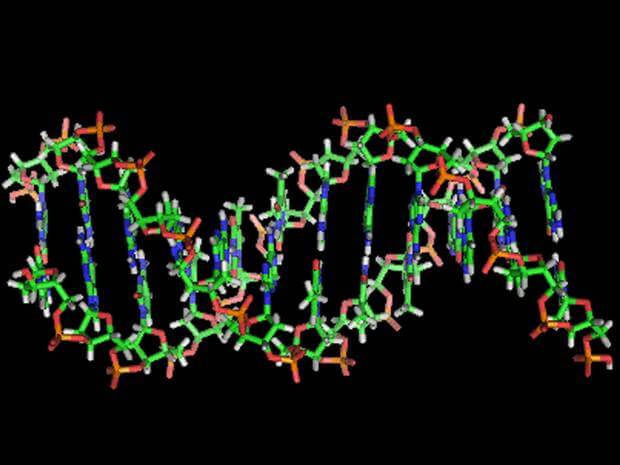
v2-human-DNA

The main goal of creating this organic computing is to administer smart drugs into the body with the help of these DNA programs. The reliability of the DNA walkers, the robustness of DNA self-assembly, and improving drug delivery, are some of the challenges that have still to be overcome.

[adinserter block=”7″]

Author: Technology Blog
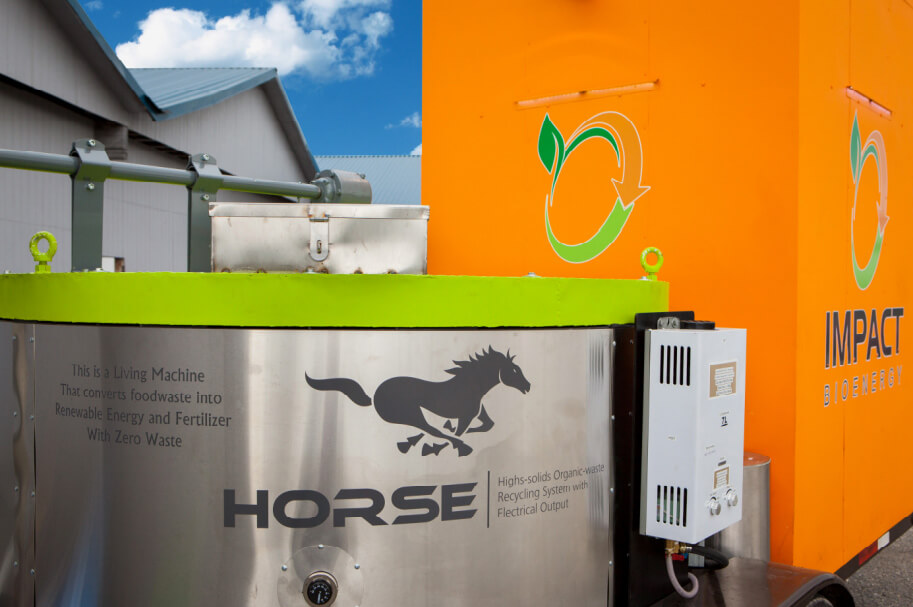
“The Horse” to turn food waste into energy

We humans love eating… and we don’t just eat to satiate our appetite… we eat to satiate our taste buds too. Eating is a celebration for us. As per the old belief we work so that we earn something to fill our bellies with food. So, practically everything comes back to food. But do you know, of all the food produced in the US, around 40 percent gets wasted? A huge amount of effort, time and energy is put into producing food but a good 40 percent of it is sent to landfill each year.

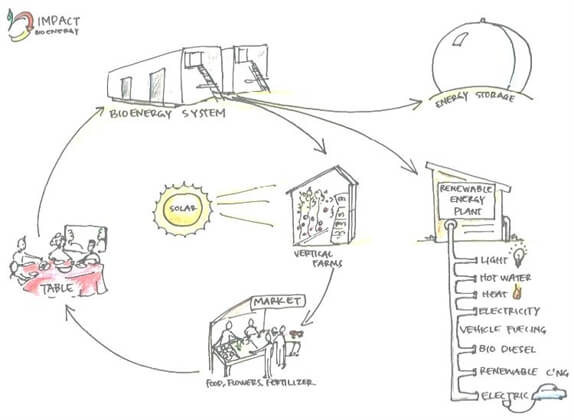
HORSE-impact-bioenergy.jpg.662x0_q70_crop-scale

Isn’t it equivalent to wasting the resources? Trying to find an answer to this question, Seattle based upstart Impact Bioenergy has been developing a new revolutionary biodigester machine which the company has christened as The Horse. This biodigester takes in raw food waste and other biodegradable things and converts it into electricity and fertilizer. Working at full capacity (135 pounds of waste), the machine is capable of producing 360,000 BTUs of gross energy per day — including 125 kilowatts of electricity.

The technology that the biodigester uses is age old: Anaerobic breakdown of the garbage. Though exact details of its working are not yet out but considering that it converts biodegradable waste into energy, it can be safely assumed that it works like any other biodigester where any biodegradable waste consisting of food waste, dining room scrapes, paper products, grass clippings, meat, grease, oil, egg shells, bones or even small sticks of wood are fed into the machine’s digestion chamber where it is mixed thoroughly.

The next step is taken over by the bacteria present in the digester chamber that eat away the food waste and produce methane gas which in turn is used by The Horse to produce electricity. The leftover material after the production of methane is used as fertilizer in the fields.

horse

Though the technology used by the machine is age old, what really makes it different is, it is portable and easy to use and these same things according to Impact Bioenergy will make bioenergy more accessible and may help in reducing curbside garbage pickup as well as the carbon emissions associated with the hauling of waste to the landfills.

[adinserter block=”7″]

Author: Technology Blog

You can now have a “99.7% sound-proof room”

Thanks to the researchers at Hong Kong University of Science and Technology, a 100 percent sound-proofing is no more a dream. The team of researchers has discovered a method, by which they can filter out almost all the noise in a given confined space, entirely independent of the loudness and quietness of it.

prsqisyn3gvum4noilu7

Most sound proofing systems work on the principle of sound absorption, i.e. different materials that absorb sounds at different wavelengths are used in different situations depending on what kind of sound they are trying to absorb. For absorbing sounds that may contain multiple wavelengths, a combination of materials is used.

But it is not possible to build a multi layer combination of such materials that absorb ALL the sound wavelengths. There would always be some of the acoustic waves that do not get absorbed and hence bounce off the barrier material.

Considering this, the Hong Kong University researcher team applied a different approach to sound proofing. Instead of absorbing sound, they devised a system that cancels out all the acoustic waves in the environment by using a pair of impedance matched resonators that work in tandem to deaden all kind of sounds in a room. The first resonator in the system removes the majority of the incoming sound waves but since 100 percent efficiency can’t be achieved by a single device, the second resonator comes into picture.

navy-sound_1024

It is tuned to the same frequency as the first resonator and hence it cancels out the sound waves scattered from the first resonator, using destructive interference. With the help of these two resonators, the system achieves a sound proofing of 99.7 percent. This is a one of a kind single layer system that achieves near perfect sound absorption. So it is time to say Shhhhhhhhhhhhhhh!

[adinserter block=”7″]

Author: Technology Blog
Verified by ExactMetrics