
Since Leonard Adleman in 1994 demonstrated DNA computing by encoding and solving the travelling salesman problem, a math problem to find the most efficient route for a salesman to take between hypothetical cities, entirely in DNA, DNA-based “circuits” have been proposed that implement computational methods such as Boolean logic, arithmetical formulas, and neural network computation.
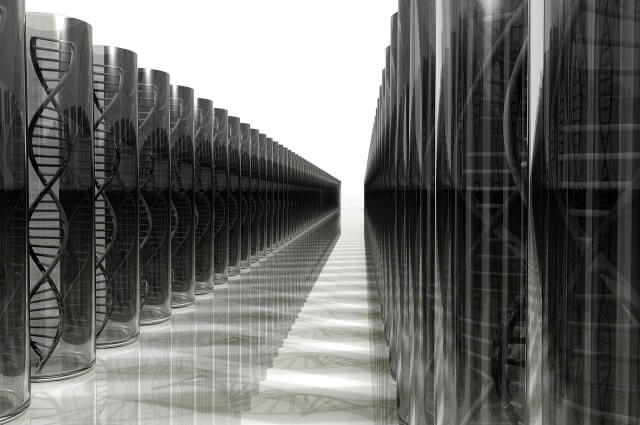
This approach called molecular programming performs the same concepts and designs of computing in a nano scale for work on DNA. The reason of selection of DNA over our conventional silicon chips is its size (2nm width), programmability and high storage capacity versatility, cheapness and ease in synthesising, not to mention, computing with DNA requires much less energy than electric powered silicon processors.
Working with DNA does have a number of drawbacks though, such as its extremely slow speed compared to a computer and single-use circuits which have to be recreated to run the same composition again.
DNA programs have already been written for a variety of medical applications, such as diagnosing tuberculosis, a Nano-biological “program” by Ehud Shapiro of the Weizmann Institute of Science in Israel, termed the “doctor in the cell” that targets cancer molecules and another DNA program which targets lymphocytes (a type of white blood cell), which are defined by the presence or absence of certain cell markers and so can be naturally detected with true/false Boolean logic.
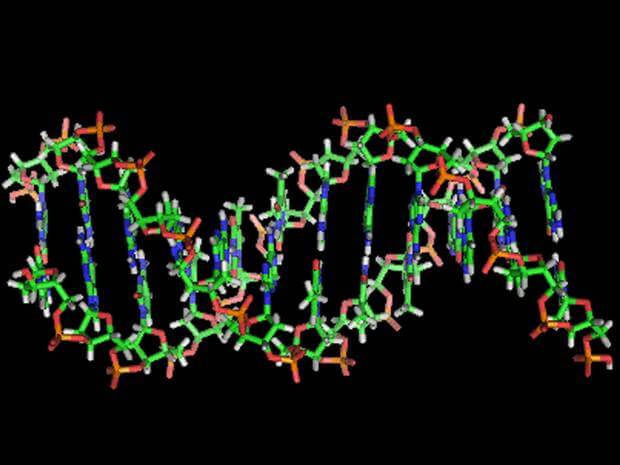
The main goal of creating this organic computing is to administer smart drugs into the body with the help of these DNA programs. The reliability of the DNA walkers, the robustness of DNA self-assembly, and improving drug delivery, are some of the challenges that have still to be overcome.
[adinserter block=”7″]
Author: Technology Blog

