There are No Blind Spots with This Helmet for F-35 fighter pilots

The F-35 Lightning II, also known as the Joint Strike Fighter, is rapidly improving to soon be the military’s top fighter jet. The feature which supports this amazing development is the advanced pilot helmet.

Capt. Brad Matherne views the flightline inside an F-35A Lightning II before a training mission April 4, 2013, at Nellis Air Force Base, Nev. The 422nd Test and Evaluation Squadron will design the tactics for the F-35A and determine how to integrate the F-35A with other aircraft in the Air Force inventory. Matherne is a pilot assigned to the 422nd TES. (U.S. Air Force photo/Senior Airman Brett Clashman)

Built by defense contractor Rockwell Collins over the past five years, the new F-35 Gen III Helmet Mounted Display System takes the cockpit’s heads-up display (HUD) and moves it inside the helmet. The HUD displays all the critical information inside the visor in front of the pilot’s eyes. Information such as the as airspeed, weaponry status, and altitude is displayed at just the blink of an eye. What’s more, the pilot is capable of aim missiles with just their eye, thanks of Integrated Eye Tracking.

Now for the most unnerving part, this helmet will allow the pilot to practically see through the aircraft. When our pilot looks down, not the cockpit but the world beneath the plane would be visible. This is facilitated by an intensive system of six cameras outside the jet, providing a 360-degree view of the environment around the plane and detection of the pilot’s head movement to send appropriate video feed to the HUD. Night vision is also enabled in this system.

1515725_-_main

These helmets will be built uniquely for each pilot to ensure their comfort, even for those wearing glasses. In the two-day fitting process, each of these carbon fiber helmet weighing roughly five pounds will be custom fit to each pilot. During this process, each pilot undergoes measurements of optical parameters such as eye spacing, pupil alignment, and more.

width="581" height="581" allowfullscreen="allowfullscreen">

Even though the new Gen III Helmet was originally designed exclusively for the F-35, its applications might to extended to other fields where its feature to see beyond walls would be invaluable, such as firefighting.

[adinserter block=”7″]

Author: Technology Blog
Why Do Bats Host a Different Immune System from Other Mammals- The Mystery Continues

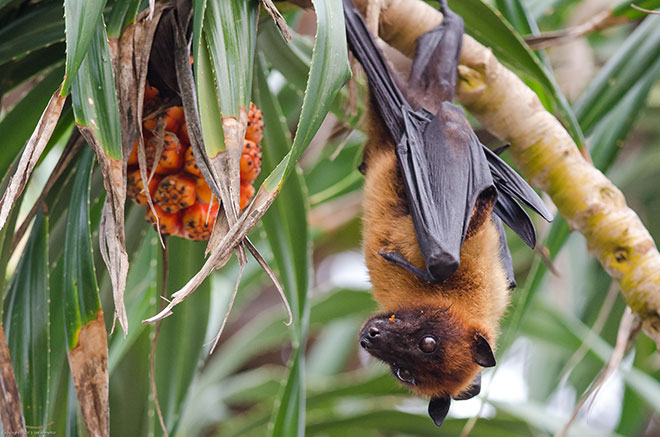
Bats are infamous transmitters of various deadly pathogens including rabies, maybe even Ebola. But they themselves seldom get sick. Is this part of an elaborate immune system stronger than of all us? Scientists look on to find out.

ebola-medicine-bats-virus

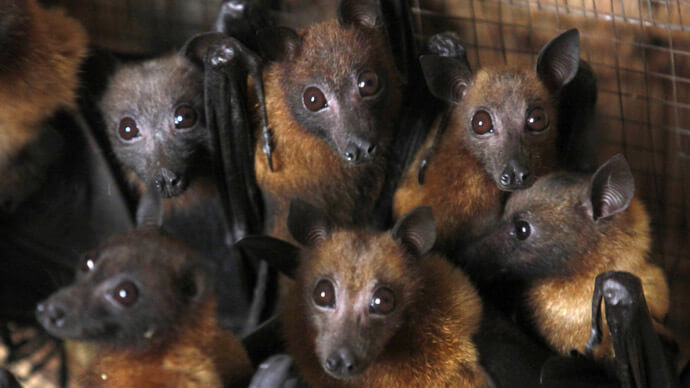
In this study, the researchers tested the immune response of the Pallas’s mastiff bats, which live in Panama. They held a total of 34 bats in captivity and dosed them with a harmless compound found in the membranes of infectious pathogens called lipopolysaccharide (LPS). Researchers involved expected the bats to show symptoms of contamination, but they remained mysteriously free. The only notable change was a slight drop in body weight that served as an indicator to their immune systems were occupied.

All scientists can now do is speculate on the possible causes that might have protected them. The most valid of this, is the drastic temperature change the body of the bat undergoes daily.

Come day, when the bats sleep, their temperature drops significantly which would explain the slowing down of pathogen spread. At night however, their temperatures rise to over a 100 degrees Fahrenheit. This is influence the working of certain immune cells which normally function during fever.

fruitbat

Further intensive studies are required in this regard and to explain whether the bats use the same immune cells as us, or completely different ones to fend for themselves. Solutions of these queries, might solve the existing problem of White Nose Syndrome that has been wiping off bat communities.

[adinserter block=”7″]

Author: Technology Blog
Harry Potter’s Invisibility Cloak Comes to Life

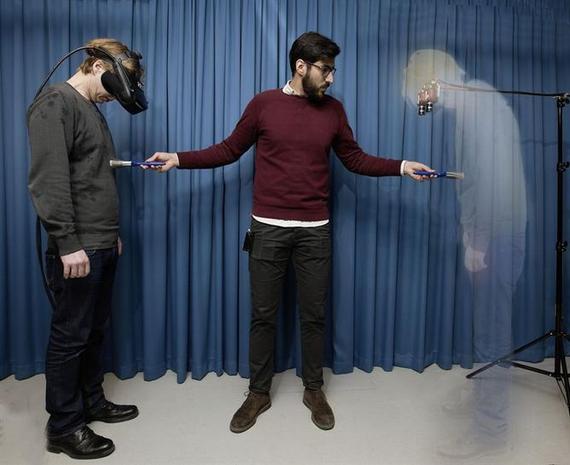
A team of researchers at the US Department of Energy’s Lawrence Berkeley National Laboratory and the University of California at Berkeley have created what they call “an ultra-thin invisibility ‘skin’ cloak” that can be wrapped around a three-dimensional object to render it optically undetectable.

a31431991ab52762800x800ar

Concepts like so have already been explored to some extent. Take for example, the “Rochester Cloak” that can make an area invisible when you look through a set of lenses at it or other metamaterials (artificial nanostructures engineered with electromagnetic properties not found in nature) that hide objects. The existing gizmos tend to be bulky and carpet-like. But, this new cloak is unique, one of a kind, much like Harry’s famous cloak. It is ultra-thin and is significantly thinner than skin at just 80 nanometers.

“This is the first time a 3D object of arbitrary shape has been cloaked from visible light,” Xiang Zhang, director of the Berkeley National Lab’s Materials Sciences Division, said in a statement. “Our ultra-thin cloak now looks like a coat. It is easy to design and implement, and is potentially scalable for hiding macroscopic objects.”

Right now, the cloak is microscopic and capable of hiding objects very tiny, but Zhang says the ultrathin design should be able to scale up to much larger sizes far more easily than the earlier, carpet-like cloaks. Its surface is meta-engineered to route light waves in such a way that the object is rendered invisible when the cloak is activated. The scientists say the result is identical to light being reflected off a flat mirror.

Xiang-Zhang-image-for-cloak

The only real difference between this cloak and J.K Rowling’s creation is that it will now be used for in optical microscopes, speedy optical computers, security encryption and in 3D displays, rather than being used to sneak around a huge castle eavesdropping on people.

[adinserter block=”7″]

Author: Technology Blog

Verified by ExactMetrics