Responsive ventilated sports-wear may be the next big thing for sportspersons

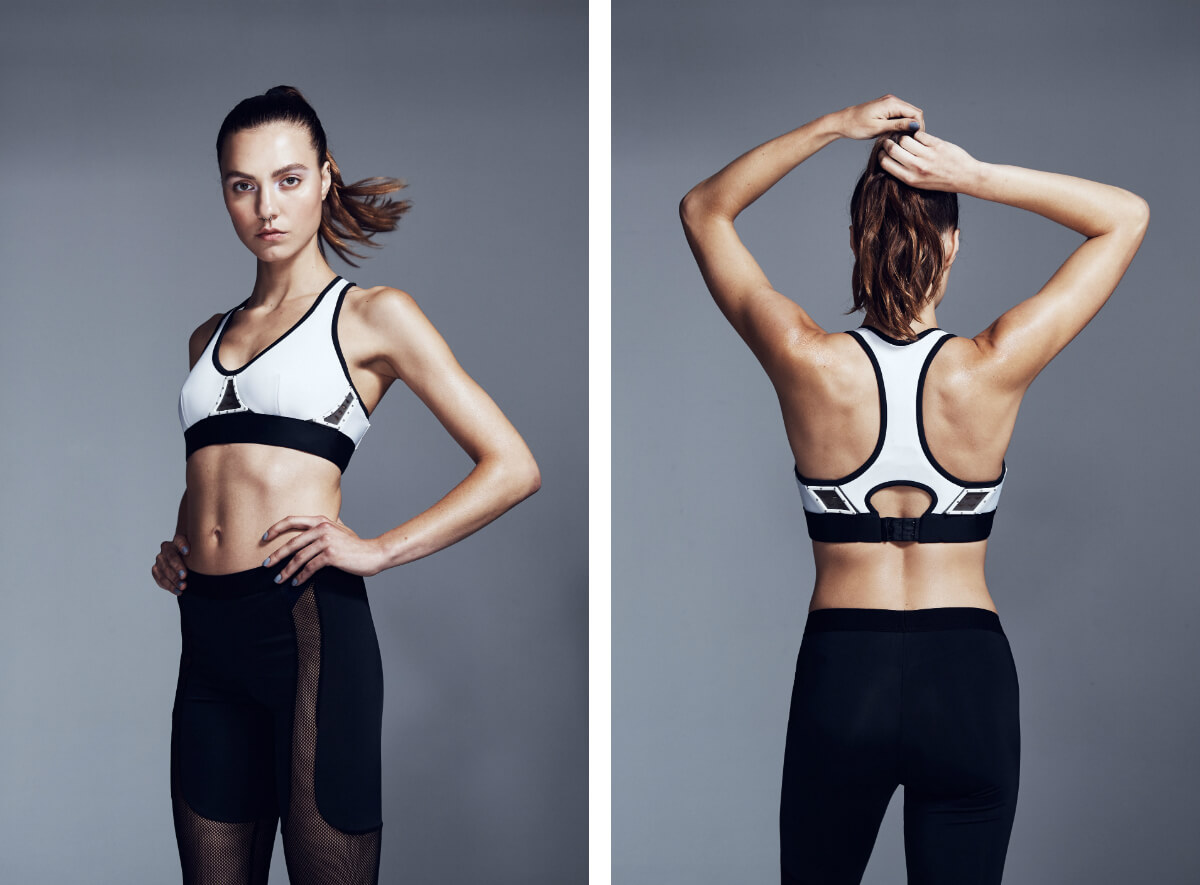
Sports are something that involve rigorous work-outs, ample running, and huge amounts of heat and sweating. A sportsperson can easily associate him/her with all these things. But what if their sportswear could adjust itself with the changing needs of their body? To test the potential of Curie module of Intel, the company teamed up with architectural sportswear designer Chromat to produce two responsive garments – a dress and a bra. These responsive garments change shape responding to the wearer’s body temperature, adrenaline or stress levels.
intel-chromat-6

The first one The Chromat Adrenaline Dress is a black number made of neoprene stretched over 3D-printed panels with a carbon fibre framework attached to the back. When an adrenaline rush indicated by an increase in sweating and breathing rate is detected, the carbon fibre framework activated by a shape memory alloy will expand into a stylized hourglass shape.

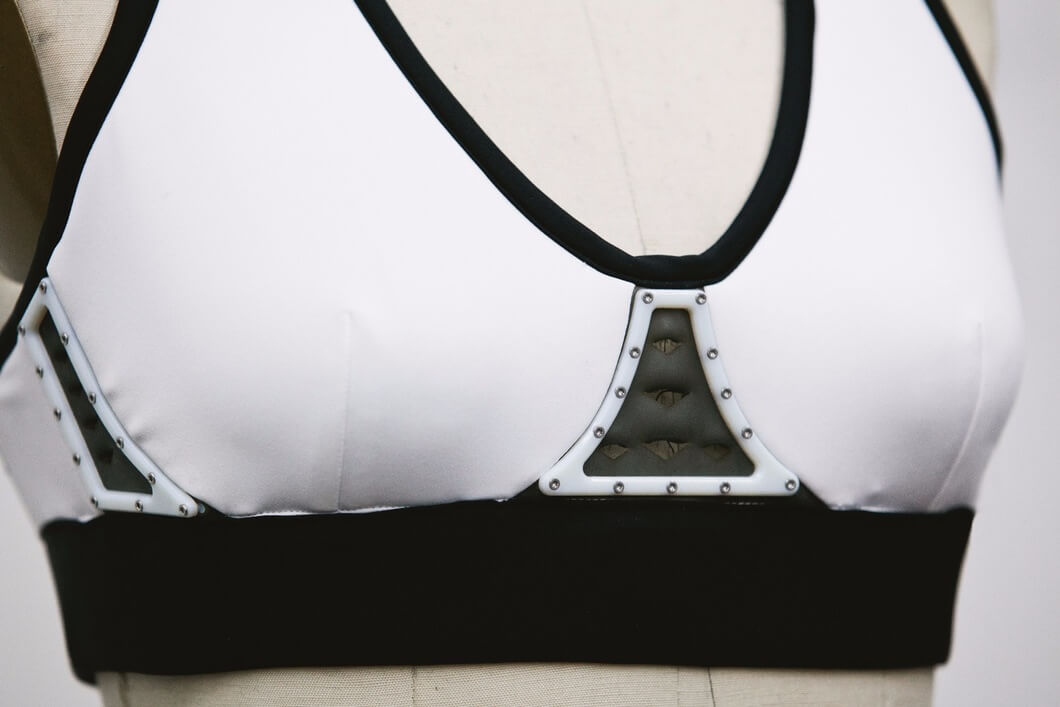
The second one, Chromat Aeros Sports Bra consisting of Lycra, mesh, neoprene and 3-D printed frames also integrates shape memory alloy just like the dress, but uses it to open vents in the bra to provide a cooling air flow when it detects changes in the wearer’s perspiration, breathing and body temperature. When things cool down, it also shuts off the vents.

It is to be noted that Intel Curie is actually a button-sized module that packs a low-power, 32-bit Intel Quark microcontroller, six-axis motion sensor with accelerometer and gyroscope, integrated digital signal processing (DSP) sensor hub and pattern matching technology, Bluetooth Low Energy and 384 kB of flash memory and 80 kB of RAM. Intended for embedding in wearable devices aimed at a range of applications, such as health and wellbeing, social networking and fitness, the module is power efficient and supported by a software platform developed specifically for the unit.

Responsive-sports-bra-opens-up

A number of companies are sampling this module and Chromat was one such company to incorporate it in its sportswear. The dress and bra are still not available in the market as Intel Curie is yet to receive the required authorization from the FCC.

[adinserter block=”7″]

Author: Technology Blog

Now pregnancy won’t be just a dream for women in 40’s and 50’s

Motherhood is one of the most beautiful things in this entire world. It changes a woman from inside out. But the passage of time and the changing roles of women in society has pushed the age of mothers to late 20’s and 30’s. Completing their education, settling in their careers and then settling in matrimony has changed the game of numbers for a woman’s age to get pregnant.

pregnant-belly

And it is a widely known fact that a woman’s fertility does get affected with advancing age. If a woman is past the age of 35, it becomes even more difficult. Now a biotech company Ovascience has become a beacon of hope for such women. The company has created a treatment called OvaPrime, which would intervene with a woman’s fertility long before an egg has matured.

It is to be noted that in the past 20 years, thousands of women have sought the help of IVF (in vitro fertilization) technique to become blessed with a child. In this technique, doctors collect eggs and sperm from the potential parents, fertilize the eggs in the lab, and then implant several embryos into the woman’s uterus. But the sad part is that among all the women who undergo IVF only 20 to 35 percent conceive, owing to the low quality eggs or sperm or the inability of embryos to implant in the uterine lining. The procedures are expensive as well as emotionally draining for the parents-to-be.

For decades, it was believed that women are born with all the eggs that they will produce in a lifetime but a research in 2004 discovered egg precursor cells in mice, which are actually stem cells in ovaries that become fertile eggs. The OvaPrime treatment is based on this fact only. The OvaPrime treatment removes a woman’s egg precursor cells and places them in a different part of the ovary in which they can mature into healthy cells.

18wzhzqjnqvpyjpg

As stem cells are the youngest cells in the body they haven’t been damaged by the biological changes that can cause eggs to develop mutations and become less healthy. Doctors can then remove those healthy eggs and perform a typical IVF procedure, theoretically yielding a higher success rate. But one thing is to be kept in mind that OvaPrime can’t help women after they reach menopause. Presently there are no numbers available to compare it with a normal IVF technique and hence the results but if OvaPrime really does what it claims to do, then future is really bright for women in their 30’s and 40’s and even 50’s.

[adinserter block=”7″]

Author: Technology Blog

Bubble Homes on Mars- Would NASA Look Into It?

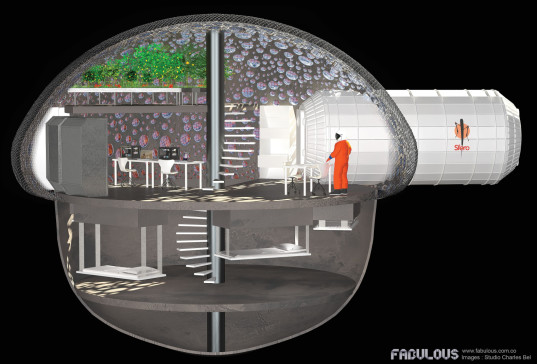
There is a great hype on relocating to another planet and establishing mankind in different environments. Thus, to fuel this idea and brainstorm, NASA devised an open challenge last May which tasked American-based design firms with developing plans for 3D-printed habitats fit to sustain life on Mars. Though only companies in the US were allowed to participate, the French company named Fabulous decided to forgo this stipulation and arguably just submitted one of the contest’s most intriguing ideas.

Fabulous-3D-Martian-Bubble-House-Concept1

Although it is not clear yet if NASA has taken this idea into consideration, the proposed design and structure look very promising. The goal is to construct homes which are completely compatible to face the harshest of climates. Fabulous has proposed NASA with a design of multi-level bubble home that’s fully 3D-printed using only Martian soil as the raw material. Mars’ iron-oxide rich soil is being used to make it back in time and it resists the atmospheric low presence and intensity. Fabulous requires planet’s abundance of permafrost to create an exterior water pocket that will defend the structure from solar radiation.

Construction of Fabulous’ bubble home will the main drilling into Mars’ surface to place a large central pillars having two robotic arms. The robotic arms will then set out to harvest the necessary iron oxide and permafrost for assembling of the structure.

Fabulous intends the printer to build a two-story structure with a laser 3D printing the top floor serving as a workspace and indoor garden, while the bottom floor contains a future crew’s sleeping quarters.

fabulous2

Hawaii and the Mojave Desert in California having same soil composition and texture will be travelled to by Fabulous in an attempt to test out the design. If successful, Mars’ Gale crater is undoubtedly the best possible spot to construct the habitat given the area’s richness of iron oxide and likely presence of water.

[adinserter block=”7″]

Author: Technology Blog

Verified by ExactMetrics