Asteroid! Hands up or we will shoot!

An asteroid is heading towards our Mother Earth to cause annihilation, but the timely intervention by the hero who is generally a super intelligent scientist saves the world by using some amazing space gun deflecting the asteroid. Reminds you of any sci-fi movie? Well this may become reality very soon. That’s because NASA’s Asteroid Redirect Mission wants to send a robot to an asteroid. NASA wants to retrieve a boulder of appropriate strength from asteroids to study it and take it to the moon.

battlecruiser-attack-laser-deep-space-fighter-strike-forceA video release shows how a shotgun attached to the robot would learn about the asteroid by shooting at it. First, the vehicle would survey the surface of the asteroid. Then it would target the shotgun at the asteroid. Once on target, the shotgun will fire a projectile, which could do one of the three things. One is to fire a shell that cracks open when met with certain strength, thereby revealing just how hard the asteroid is. Second is to bounce a ball off the surface of the asteroid, then track its rebound velocity to determine the strength of that asteroid. And the third and last option is to shoot at it and make a crater, and then measure the size of that crater to determine that asteroid’s strength and density.

1442512027576393The mission is facing criticism both from inside and outside NASA but reiterating the importance of this mission NASA says: “The robotic mission also will demonstrate planetary defense techniques to deflect dangerous asteroids and protect Earth if needed in the future.” What would become of the mission is still unknown, but anything that tries to deflect hostile asteroids off our backs is welcome!

width="536" height="536" allowfullscreen="allowfullscreen">

[adinserter block=”7″]

Author: Technology Blog

Ozone to help treat Ebola?

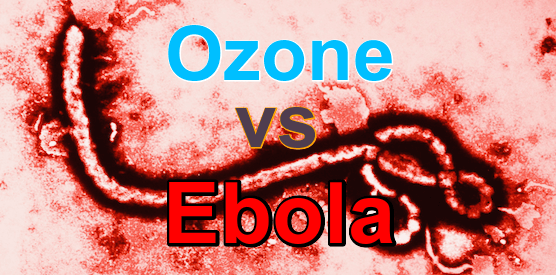
Up until now, Ozone for us was that protective layer above the earth’s atmosphere that saves the many life forms on earth from the ill effects of Ultra Violet radiations, but after reading a study published in the 2016 issue of the African Journal of the Infectious Diseases, our ideas may change. According to this study, ozone is said to be helpful in inactivating the dreaded Ebola virus. Ozone basically is an unstable version of an oxygen molecule. The stable oxygen molecule is made up of two atoms while ozone has three.

ozone_iv_therapy_ama_skincare

It is to be noted that this is not the first time when ozone has been used for clinical purpose. For over a century, it has been used in the field of medicine. Though toxic at high concentrations, ozone at low concentrations is thought to increase the number of antioxidants in the blood. It was used in World War I to disinfect wounds. But it has both opponents and proponents.

Today its proponents claim that ozone is an effective treatment for arthritis, AIDS, Parkinson’s, cancer, heart disease, and diabetes while its opponents claim that it comes with significant and sometimes lethal side-effects. There have been studies that found the ozone therapy speeding up the progression of some degenerative diseases. And as far as the Food and Drug Administration is concerned, the regulating body doesn’t consider it an effective treatment but still practices control on the amount of ozone that can be used in clinics.

The new study however is presented by the proponents of Ozone therapy. Some doctors tried this therapy on four healthcare workers in Liberia with Ebola symptoms (three tested positive for the disease, the other had been exposed to the virus but that patient’s tests had still come back negative). For ten days, the researchers gave the patients ozone by infusing it into their blood through their veins, passing it into their rectums, and giving them ozonized water to drink. The researchers found that the patients’ symptoms abated after just a few days, and none died–which surprised the researchers, since the survival rate of healthcare workers infected with Ebola was just 40 percent.

ozone-vs-ebola-pic-blog

The therapy hasn’t yet been tested in a lab but researchers believe that there is a possibility that ozone damages the surface of the virus so that it can’t infect the cells of its host. Another positive aspect of the therapy is that it just costs $10 a day. While the proponents are smiling on the basis of the findings, the opponents are not yet fully convinced because of extremely small sample size (only four patients) of the study. So in order to give a substantial proof that Ozone therapy is useful or not useful both opponents and proponents will have to delve deeper in their research. And may be one of the two groups would be able to find something really positive and encouraging.

[adinserter block=”7″]

Author: Technology Blog

Verified by ExactMetrics