Google’s low-end Pixel 2B might be the next hit in the mobile phone market

It has only been a few months since Google launched its first smartphone with the company’s name on the back, and according to a recent report by 9to5Google, the Mountain View giant will be working on improving the camera of the Pixel 2, giving special emphasis to low-light photography and waterproofing.

The camera might not be coming with a higher mega-pixel number, but is instead expected to dazzle with new features. Google Pixel 2 is also expected to see a bump in RAM, going up from 4GB to 6GB; while also getting an upgrade in screen resolution.

Apart from the Pixel 2, 9to5Google’s source has also mentioned that Google has been testing lower-end Pixel smartphones, which will feature lower specs and also a much lower price tag – dubbed as Pixel 2B. Pixel 2B smartphones will be launched after the launch of the Pixel 2, and will be aiming at budget smartphone markets. Google is already testing its smartphones with multiple chipset makers like Qualcomm, Intel and even MediaTek. Google Pixel 2 devices are rumoured to be $50 (approx Rs 3,500) more expensive than the current generation.

Google might already be testing the budget smartphone market, and is rumoured to launch its ‘Android One’ phone is the US market sometime in the middle of 2017.

As a technology lover you may like our daily important technology news series. It’s a playlist and you can retrieve the total day-wise videos. Please consider subscribing our YouTube channel:

Author: Technology Vista
Tagged : /

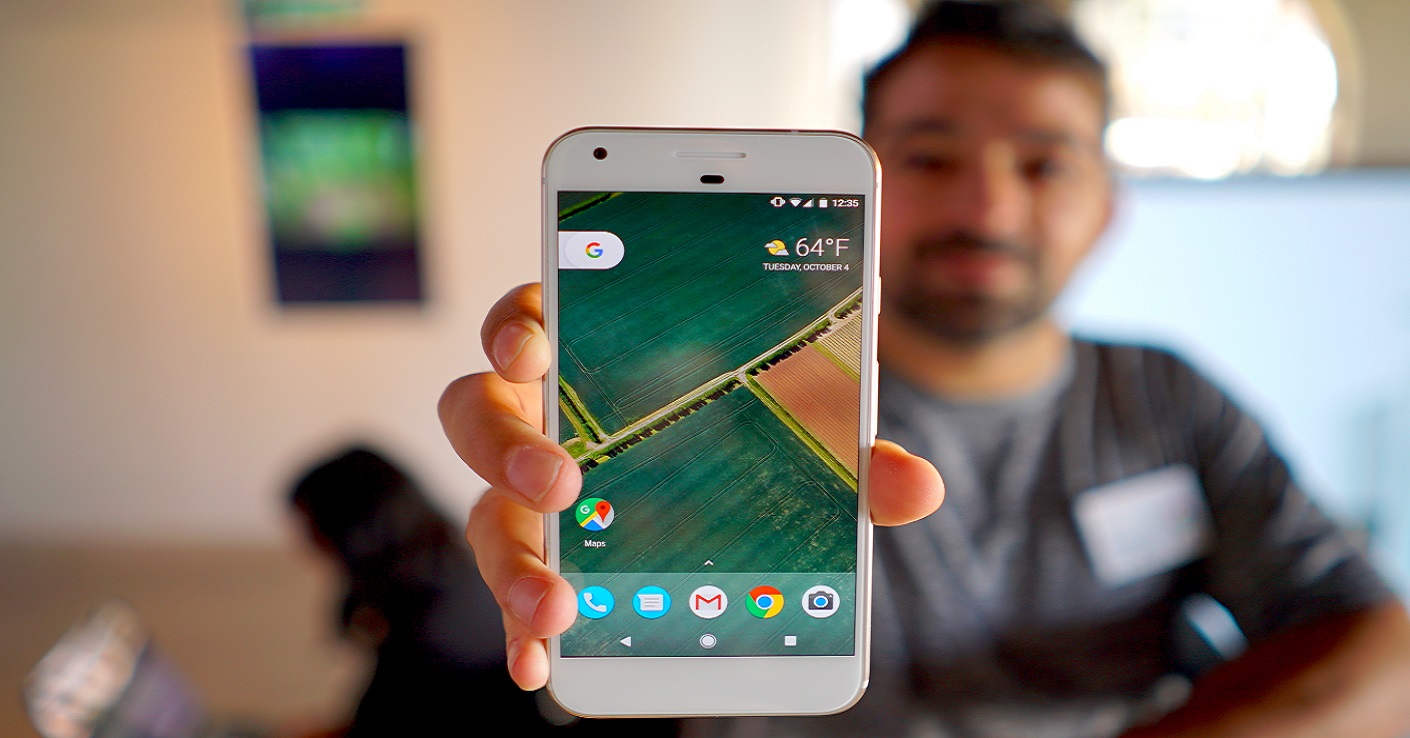
Now, you don’t have to buy a Google Pixel phone to avail most of its best features on your phone! Here is how!

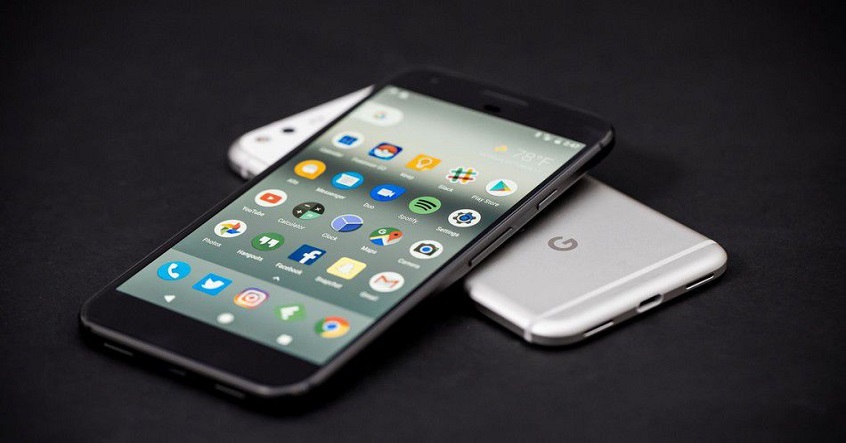
The Google Pixel and Pixel XL have been extremely popular but, you might be hesitant to shell out bugs for it. Thankfully, you don’t necessarily have to shill out hundreds of dollars to get a Pixel-esque feel on your handset. Quite a few of the Pixel’s features can be added to any Android phone, and here’s how it’s done.

Nova Launcher has added a Pixel skin, complete with Pixel-style search bar and the swipe-to-open dock action. This should take care of most of the outward appearances of your phone and give it the basic look of the Pixel.

If you’re completely new to the world of launchers, they wrap your Android phone in a completely new software skin, covering icons, menus, wallpaper and more. Getting the old look back is just a question of uninstalling the launcher again, though, so don’t be afraid to do some experimenting. You obviously won’t be able to transform the physical shape of your current Android phone, but you can definitely mimic the look of the software.

With Nova Launcher on your phone, open the Nova Settings app to configure it. You can get the Pixel look for the search bar by choosing Desktop then Search bar style, for example. Developer Kevin Barry has some extra tips for stylizing the Nova Launcher interface so it copies the Pixel as closely as possible. To get the Pixel wallpapers used on Google’s flagships, simply install the official Wallpapers app from Google. This is the same app that ships on the Pixel so you can dig out any of the backgrounds you want.

There’s Google Assistant, a Pixel exclusive which you can’t yet get on any other Android phone. If you’re comfortable flashing or rooting your phone then you can trick Android into thinking it’s a Pixel XL

To emulate the Pixel’s rather nifty fingerprint button scrolling feature — which lets you scroll through screens by moving your finger across the sensor on the back of the phone — you need Fingerprint Gestures. Once it’s installed, you can configure the button to work in a variety of ways, just like the Pixel. You can also use Action Launcher for the same job, and it’s actually even easier. Open the launcher’s Settings app, then tap Looking for Pixel Launcher features for instructions — you will need to upgrade to the Pro version of the app, though. Neither launcher gives you an exact duplicate of the Pixel interface (you may need to play around with some icon packs) but both of them come very close.

If you don’t want to go down to that level of system tweaking, your only other option here is to install Google Allo, which lets you set up a separate chat stream with the Assistant. The integration isn’t as tight as it is with the Pixel, but it’s as close as you’ll get for now without doing any rooting or flashing.

As a technology lover you may like our daily important technology news series. It’s a playlist and you can retrieve the total day-wise videos. Please consider subscribing our YouTube channel:

Author: Technology Vista

Tagged : /

High Up, The Earth’s Atmosphere Could Hold Alien Life

Life has been found in very impossible nook and cranny- even in high-temperature vents deep undersea and high in the air. Researchers are now pondering about these “extremophiles” and how well can life reproduce in these environments.

Could microbes of this type also be found on other worlds?

In March, a group of University of Houston students will fly a high-altitude experiment from Alaska to see what microbes are in the high atmosphere, between 18 km and 50 km (11 miles and 31 miles) from the ground. The instrument, which looks almost like a small laundry hamper, pops open to collect what’s in the atmosphere. Then, as the balloon descends, it shuts closed for researchers to analyze. It’s the first time this has been used it, so isn’t sure how well it will function.

Jamie Lehnen, a fourth-year student on the team, says this system could be less open to contamination than pumps and other complicated mechanisms that require servicing on Earth.

“A lot of times, these microbes when they go up there, they shut down. They are not replicating and they are not metabolically active,” she said. “I’m interested in how their stress response is similar to those [microbes] back on Earth’s surface.”

That said, microorganism research in the upper atmosphere has been active since the 1930s at least. One of the earliest flights involved Charles Lindbergh, a pilot best known for piloting the Atlantic solo in 1927. Accompanied with his wife, Lindbergh periodically passed the monoplane controls over to her to take samples from the atmosphere around them. The research team found spores of fungi and pollen grains, among other specimens.

Planes still require a substantial amount of atmosphere to fly, so it’s with high-altitude balloons and rockets that we can get even higher — to the stratosphere and the mesosphere. Some of the earliest high-altitude microorganism experiments did not involve air travel at all — Charles Darwin picked up African dust on his ship while crossing the Atlantic Ocean, while Louis Pasteur made measurements on top of alpine glaciers. Both found microorganisms.

NASA microbial researcher David Smith and his team will fly with the team from NASA ABoVE (Arctic-Boreal Vulnerability Experiment), which uses a Gulfstream III jet to monitor how climate change affects animals, plants, the environment and infrastructure. In the spring, a vast airstream on the Pacific Ocean moves millions of tons of dust across the ocean, mostly from Asia. Smith’s team will use a cascade sampler for collection, which passes air through progressively finer impact plates with holes in them, he said. As the air moves through, dust and any microorganisms impact the surface of those plates. A portion of them stick to the surface, allowing researchers to analyze what is there afterwards.

Next Page For More 

Tagged : /

Europa, Jupiter’s Moon Could Be Hiding Alien Life, Scientists Suspect

Humans have always looked for alien life with fascination, awe and unbridled excitement. But, as the Curiosity Rover is scouring the barren surface of Mars, it becomes even clearer that there is little possibility of intelligent life there. But are we close to giving up? Absolutely not!

Life thrives in the most extreme conditions. Bacteria and unicellular life thrive even in the geothermal vents where the temperatures can soar to hundreds of temperature. Bacteria have been detected in the extremely rarefied atmosphere even at a height of 100 kilometers. This has enthused scientists to look for life at the most unlikely places. Most recently, Europa, a moon of Jupiter.

Scientists predict that there is liquid water under Europa’s icy surface which could harbor primitive life. The possibility of life on the moons of Jupiter and Saturn are very high. It is for this reason that NASA has decided to crash one of the spacecraft orbiting the giant outer planets deliberately into Saturn to prevent any contamination of the Moons which could be harboring life.

Radio signals have in the past been thought to be some kind of alien communications from far off galaxies. However, most of these have been later found to be false calls and they were the byproducts of some cosmic activity during the formation of new stars or old neutron stars.

Scientists also hope that with the Cassini mission coming to a close this year it could throw up some incredible discovery of alien life in one of the cosmic bodies. Fingers crossed, UFO buffs? Although, Stephen Hawking certainly doesn’t seem to think this might be the best idea.

width="560" height="314" allowfullscreen="allowfullscreen">

As a technology lover you may like our daily important technology news series. It’s a playlist and you can retrieve the total day-wise videos. Please consider subscribing our YouTube channel:

Author: Technology Vista

Tagged : / /

Why Does the Same Video or Joke Keep Coming Back on WhatsApp?

With 160 million users in India, the Facebook-owned mobile messaging app has become a top choice among marketers, social influencers and certain groups to reach them via jokes, videos and GIFs whenever there is a breaking news, a major announcement, a tongue-in-cheek celebrity statement or even a festival, say experts. Similarly, with 150 million active users in India, Facebook is the second-most used social media platform and can also act as a catalyst for proliferation of viral content due to a broader sharing and a greater engagement with the content.

In India, WhatsApp has the highest penetration among any “social-centric” web/app platform available on the nearly 260 million active smartphone users.

“However, Facebook is quite curated and controlled via an algorithm according to a person’s social graph and Facebook’s advertising engine and, hence, potentially less viral than Whatsapp,” Neil Shah, Research Director (Devices & Ecosystems) at the market research firm Counterpoint Research, told IANS.

“WhatsApp is emerging as a highly susceptible channel for propaganda, misinformation, fake news as well as highly influenceable from the targeted marketing message or advertisement perspective, i.e., digital word-of-mouth.”

“Several marketers are leveraging an infantry of smart or influential folks to develop and spread targeted and viral-natured content. I believe the viral messages developed and spread are not by a single source but many individuals and firms working on this behind the scenes,” Shah added.

Facebook’s third property, Instagram, is also quickly rising to become a popular platform from the perspective of social media influencers to drive rich content for marketers and mainly target millennials. But according to Shah, among several social media platforms, WhatsApp has a clear edge because of its user-friendly approach which has put the platform in a strong (as well as vulnerable position) for flow of both good and bad news or information or any content across the platform.

Next Page For More

Tagged : / /

2018: Foldable Displays by Google, Apple and Microsoft, you can to Look Forward to

We have had flip phones and sliders, round phones and rectangular ones, small ones barely bigger than your thumb and large ones that covered the palm of your hand. We even have had phones designed specifically for gamers or music enthusiasts.

But, since the advent of the smartphone, we’ve pretty much been stuck with the traditional candy bar shape. Time to spice things up a bit.

South Korean IT news site ET News has just reported that LG Display will not only be producing foldable displays for smartphones come 2018, they’ll also be supplying that technology to Apple, Google, and Microsoft. This implies that the technology will hit the market soon, possibly as early as 2018, and that some of the biggest names in the smartphone industry will be competing to introduce their own version of it.

As far back as December 2015, however, Samsung had already filed for patents for what can presumably be an upcoming fully foldable flagship product. They have pushed the boundaries of recent smartphone design with their EDGE technology, a minimal design edit that sees the smartphone screen curving around the edge of the phone for some added functionality.

Apple also happens to have a flexible device in the works — the company has been awarded a patent for carbon nanotube circuits that would allow for flexible electronic devices.

The talk of foldable smartphone technology isn’t exactly new, but seeing it finally hit the market would be. This would allow for more durable, adaptable devices. Semiconductor Energy Laboratory had long before demonstrated the first consumer-grade display that could be folded in three without breaking!

As a technology lover you may like our daily important technology news series. It’s a playlist and you can retrieve the total day-wise videos. Please consider subscribing our YouTube channel:

Author: Technology Vista

Tagged : / /

Nowhere To Hide! This Is How Facebook Know What You’re Up To, Even When You Are Offline!

Facebook is great, right? It does amazing social service and builds connections- all for free. In return, Facebook collects information about you—your profile information, articles or pages that you “like,” videos you watch, and so on—and uses that to sell ads.

The thing is, Facebook has made a show of being transparent with how it collects users’ information and what categories of interest it assigns to users. Anyone who wants to can look this information up on Facebook’s site. But it’s not that simple.

As an ongoing investigation by ProPublica has shown, Facebook is going beyond the tacit agreement that it provides a free service in exchange for online personal information. It has contracts with several data brokers that provide Facebook with information about your offline life—things like how much money you make, where you like to eat out, and how many credit cards you keep. It is using that data to flesh out its advertising profile of you, and it isn’t telling you about it.

The social network has an extraordinarily large user base, but what really turns advertisers on is that it lets marketers narrowly define the subset of users who will see an ad based on all sorts of parameters, including users’ shared interests, political leanings, age, and mobile devices.

Facebook’s advertising operation is a remarkable machine. This kind of microtargeting is incredibly valuable—and what better way to augment it than to buy up offline data sets that can then be matched to Facebook’s users?

As part of its investigation, ProPublica built a tool to help users with this—and encouraged them to share what they found. Since September, the publication has gathered over 52,000 categories of interest in this way ranging from, as they say, “Pretending to Text in Awkward Situations” to “Breastfeeding in Public.”

But when ProPublica went into Facebook’s advertising platform to see what parameters ad buyers could use to target an ad, it found close to 600 categories that were described as “provided by a third party.”

Most of those had to do with users’ financial attributes, and none of them showed up in the crowdsourced list that users sent in. Turns out, Facebook’s transparency has its limits.

But still, it’s far better than simply knowing that someone clicked “like” on the Food Network’s page, and instead knowing how much money they make each year, or whether they shop at low- or high-end retail stores.

As a technology lover you may like our daily important technology news series. It’s a playlist and you can retrieve the total day-wise videos. Please consider subscribing our YouTube channel:

Author: Technology Vista

Tagged : / /

This New Phone Powered By Android Packs A Punch With Massive 7,000mAh Battery And Dual-Curved Display!

A luxury smartphone is not about the usual features and benefits you expect to reap from an average smartphone within a reasonable price-range. Instead, these devices — like the new Gionee M2017 — are about excess, style, and raw power. The M2017, which is limited to the Chinese market as of now, see to all these desires of the user.

It comes with a 7,000mAh battery at a time when most phones can barely break 3,000mAh. (The phone actually just uses two 3,500mAh batteries placed next to one another.) The device also comes with a Snapdragon 653 processor and 6GB of RAM. For that kind of battery and processing power, you’ll be forking over the Chinese Yuan equivalent of about $1,000.

As of the design, it follows in the footsteps of pricier luxury phone makers like Vertu with a jewelry-style aesthetic aiming to make the smartphone as tactile and pleasing an object as a fine watch or wallet. That style comes through on the M2017’s gold edges, gold back camera plate, and all-gold software icons. The phone also features a dual-curved display, similar to that of the Samsung Galaxy S7 Edge.

As it stands now, the M2017 ships with the company’s custom “Amigo” UI version 3.5, according to 9to5Google, which sits atop Google’s year-old Android Marshma

It’s not clear when this phone will ever make its way out of China. It’s also unclear what kind of software support or Android updates Gionee will provide.

As a technology lover you may like our daily important technology news series. It’s a playlist and you can retrieve the total day-wise videos. Please consider subscribing our YouTube channel:

Author: Technology Vista

Tagged : /

It’s Self-Propelled and Defies Newton’s Third law! NASA’s EM Drive Paper Has Finally Been Published after rigorous testing!

The paper shows that the ‘impossible’ propulsion system really does appear to work, and that is surprising as it defies Newton’s third law, which states that everything must have an equal and opposite reaction. Yet in test after test it continues to work. Last year, NASA’s Eagleworks Laboratory team got their hands on an EM Drive to try to figure out once and for all what was going on.

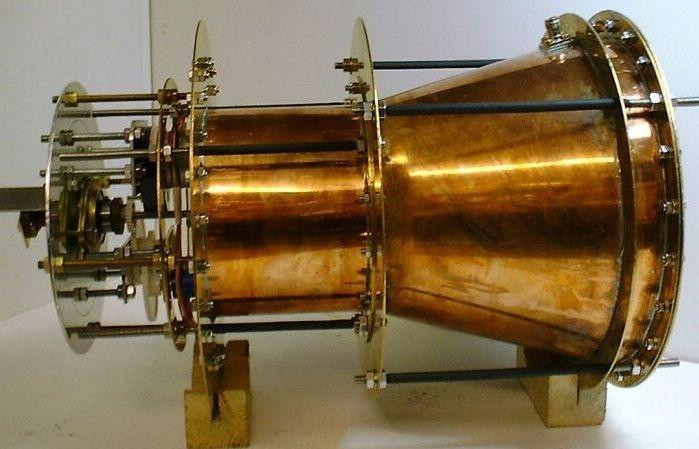
In case you’ve missed the hype, the EM Drive, or Electromagnetic Drive, is a propulsion system first proposed by British inventor Roger Shawyer back in 1999. Instead of using heavy, inefficient rocket fuel, it bounces microwaves back and forth inside a cone-shaped metal cavity to generate thrust. According to Shawyer’s calculations, the EM Drive could be so efficient that it could power us to Mars in just 70 days.

But, according to Newton’s Third law, for a system to produce thrust, it has to push something out the other way. The EM Drive doesn’t do this.

The new peer-reviewed paper is titled “Measurement of Impulsive Thrust from a Closed Radio-Frequency Cavity in Vacuum“, and has been published online as an open access ‘article in advance’ in the American Institute of Aeronautics and Astronautics (AIAA)’s Journal of Propulsion and Power. It’s very similar to the paper that was leaked online earlier this month and, most notably, shows that the drive does indeed produce 1.2 millinewtons per kilowatt of thrust in a vacuum:

“Thrust data from forward, reverse, and null suggested that the system was consistently performing at 1.2 ± 0.1 mN/kW, which was very close to the average impulsive performance measured in air. A number of error sources were considered and discussed.”

Next Page For More

Tagged : / /

This Self Healing Material Will Remind You of Wolverine!

Scientists have developed a transparent, self-healing, highly stretchable conductive material that can be electrically activated to power artificial muscles and used to improve batteries, electronic devices and robots.

“Creating a material with all these properties has been a puzzle for years. We did that and now are just beginning to explore the applications,” said Chao Wang, assistant professor at University of California.

The material could give robots the ability to self-heal after mechanical failure; extend the lifetime of lithium ion batteries used in electronics and electric cars and improve biosensors used in the medical field and environmental monitoring.

The low-cost, easy to produce soft rubber-like material can stretch 50 times its original length, researchers said. After being cut, it can completely re-attach, or heal, in 24 hours at room temperature. In fact, after only five minutes of healing the material can be stretched two times its original length, they said.

Ionic conductors are a class of materials with key roles in energy storage, solar energy conversion, sensors and electronic devices. Conventionally, self-healing polymers make use of non-covalent bonds, which creates a problem because those bonds are affected by electrochemical reactions that degrade the performance of the materials.

Wang helped solve that problem by using a mechanism called ion-dipole interactions, which are forces between charged ions and polar molecules that are highly stable under electrochemical conditions. He combined a polar, stretchable polymer with a mobile, high-ionic-strength salt to create the material with the properties the researchers were seeking.

Self-healing materials repair damage caused by wear and extend the lifetime, and lower the cost, of materials and devices. Wang was inspired by Wolverine, the comic book character who has the ability to self-heal.

Researchers at the University of Colorado, Boulder in the US demonstrated that the material could be used to power a so-called artificial muscle, also called dielectric elastomer actuator.

As a technology lover you may like our daily important technology news series. It’s a playlist and you can retrieve the total day-wise videos. Please consider subscribing our YouTube channel:

Author: Technology Vista

Tagged : / /

In A First Ever, China Aims To Land On The Farthest Side of the Moon

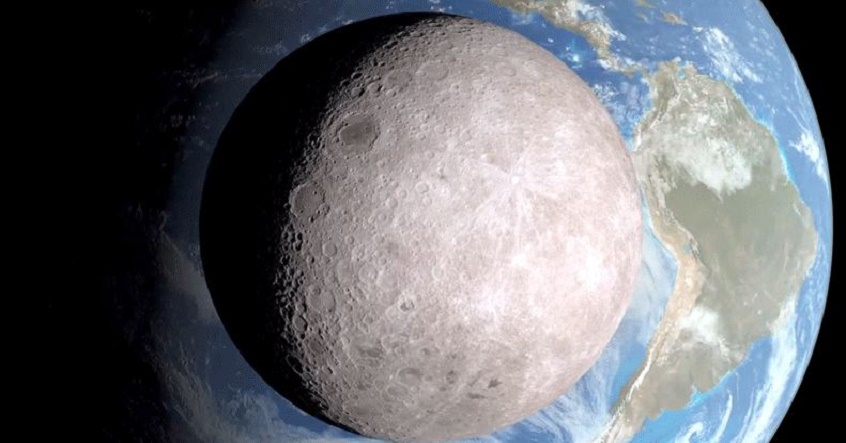
In the next five years, China will continue to enhance the basic capacities of its space industry, and strengthen research into key and cutting-edge technologies. As of the 27th of December, China announced that it will launch a lunar probe in 2018 to achieve the world’s first soft landing on the far side of the moon to showcase its ambitious space programme.

China has already landed a rover on the moon in the past but wants to explore the dark side of the lunar surface to carve out a niche for itself as it has not been done by other countries.

China will continue its lunar exploration project in the next five years, and strive to attain the automated extra-terrestrial sampling and returning technology by space explorers, a White Paper titled ‘China’s Space Activities in 2016’ released said.

“The lunar probe Chang’e-4 will conduct in situ and roving detection and relay communications at earth-moon L2 point,” the white paper said.

The probe plans to fulfil the three strategic steps of “orbiting, landing and returning” for the lunar exploration project by launching the Chang’e-5 lunar probe by the end of 2017 and realising regional soft landing, sampling and return, it said.

“Geological survey and research as well as low-frequency radio astronomy observation and research will be carried out targeting the landing area on the far side of the moon for a better understanding of the formation and evolution of the moon,” it added.

As a technology lover you may like our daily important technology news series. It’s a playlist and you can retrieve the total day-wise videos. Please consider subscribing our YouTube channel:

Author: Technology Vista

Tagged : / /

Nokia C1 Leak Suggests Dual Rear Cameras and 4GB RAM

The Finnish smartphone maker, Nokia is expected to showcase its first products at Mobile World Congress in February, making its return to the smartphone industry with two new flagships smartphones.

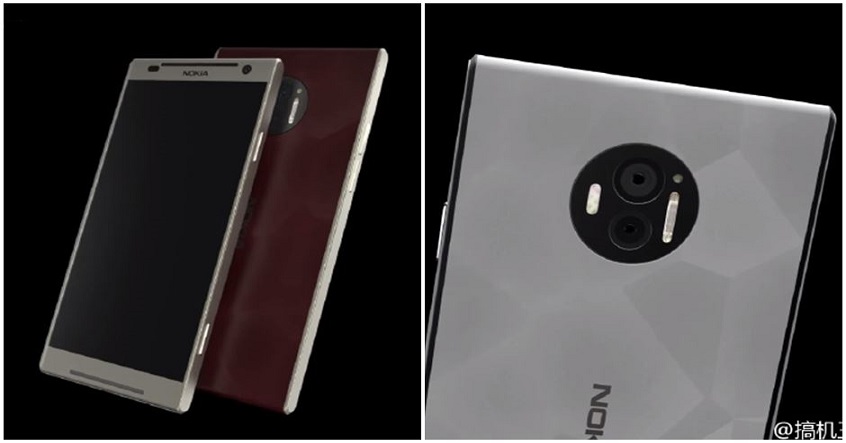
Nokia C1 renders have now appeared on Weibo and offers a rather unusual design. The renders show Nokia C1 to feature metal unibody design with the screen dominating the front. The smartphone also seem to drop the physical home button with front camera and another sensor tucked in between a large speaker grille. There is a similar speaker layout at the bottom edge of the screen as well.

The leaked images also reveal that the smartphone will be powered by Qualcomm Snapdragon 830 processor aided by 4GB DDR4 RAM and option of 32/64/128GB storage.  The smartphone houses a 3210mAh battery and runs Android 7.1 Nougat.

The smartphone seems to have buttons placed at the right hand side of the device. It is unclear whether these button are physical or capacitive ones. Interestingly, the render hints at the device adopting dual rear camera mechanism with LED flash placed at either side of the camera.

It sports a combination of 16 + 12MP rear camera setup with Xenon flash and triple LED flash aiding for low light photography. However, the front camera is a modest 5MP one.

Nokia C1 uses USB-C port for data and charging while there also seems to be a 3.5mm audio jack. If these leaks are true, we are looking at a hot selling product of 2017.

As a technology lover you may like our daily important technology news series. It’s a playlist and you can retrieve the total day-wise videos. Please consider subscribing our YouTube channel:

Author: Technology Vista
Tagged : / /

Test Yourself: Which Direction Is This Dancer Spinning In?

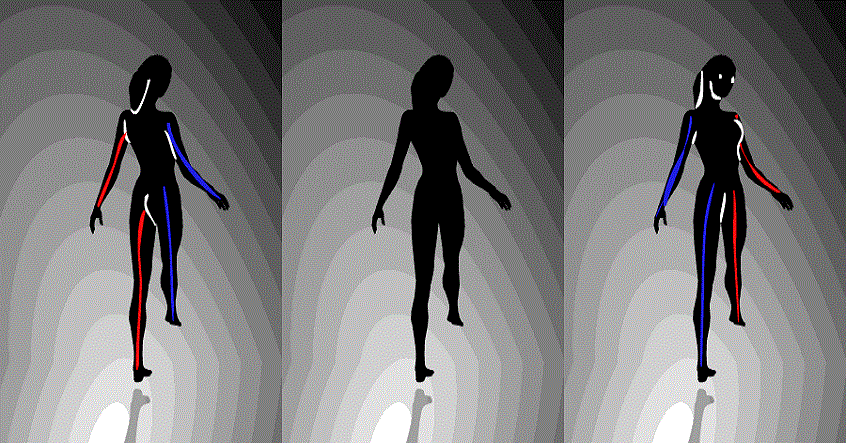
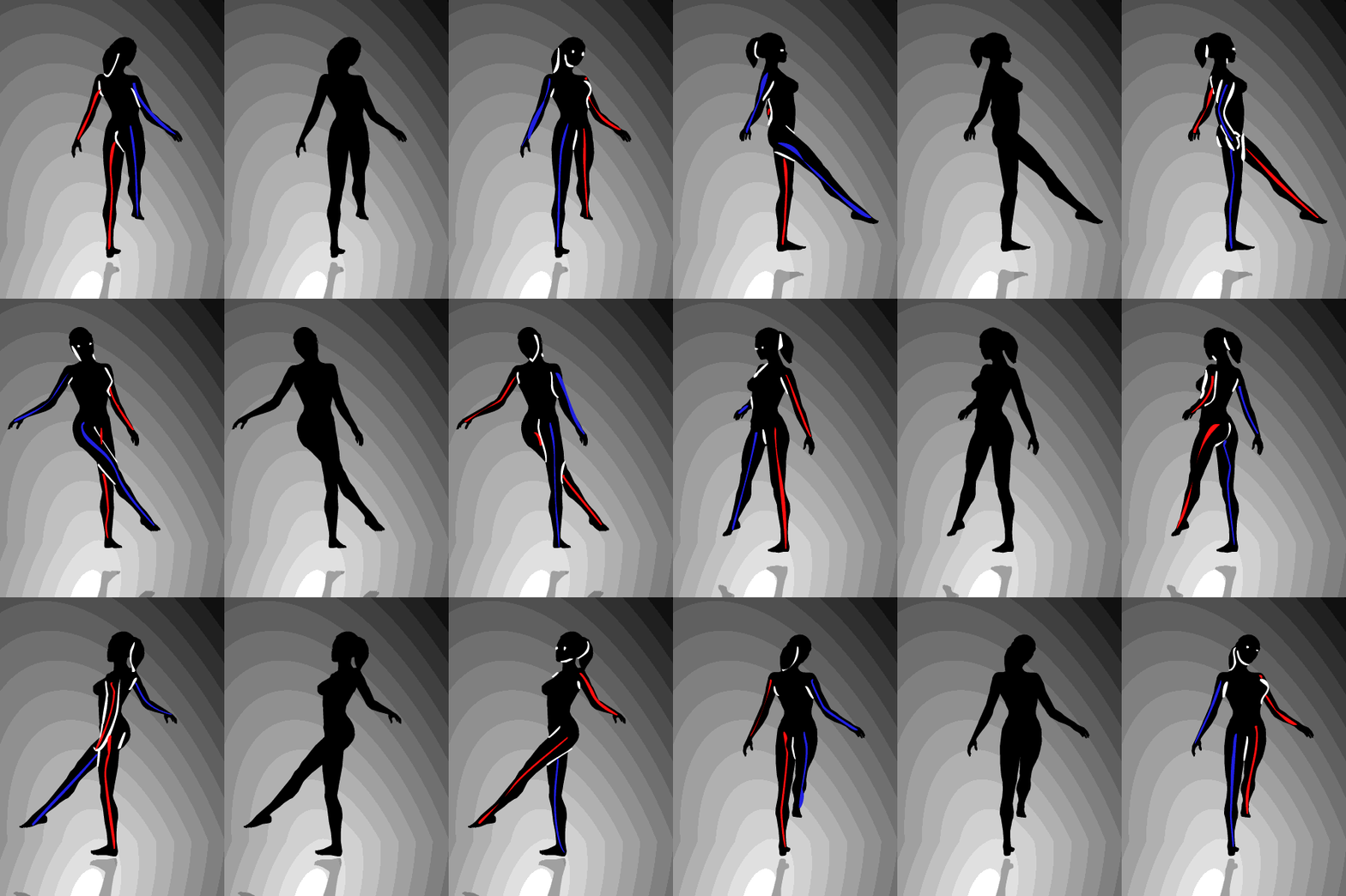
This is not a simple video of a spinning dancer, but an unique optical illusion that plays with your brain’s visual perception – some see her spinning clockwise, counterclockwise or even switching between the two.

The optical illusion was created by the Japanese Flash designer Nobuyuki Kayahara in 2003 and for many years, was used to determine whether people are right-brain (creative) or left-brain (logical) dominant. And apparently, people with high IQs can see the figure spinning in both directions. But recent studies and opinions indicate otherwise:

Paul Spencer with Tonic contacted Arthur Shapiro and Niko Troje, a pair of scientists who dissect Kayahara’s spinning girl in the forthcoming Oxford Compendium of Visual Illusions, to understand the truth behind this theory.

‘That’s just gibberish,’ Shapiro, a computer science professor at American University in Washington D.C. and creator of the color wagon wheel illusion, told Spencer.

He explains that there is are much more complex reasons behind why we see her spinning in different directions. The duo explains that this ballerina is deemed a reversible image in the class of optical illusions, meaning, even though she spins, she displays ‘similarities to other static illusions’ – like the Necker cube. Just like the spinning dancer, the Necker cube can be viewed in two ways: either the lower right panel is in the front or people see it placed in the back.

Reversible images like the cube and dancer change at a moment’s notice because they can be viewed in more than one way, explained Troje, director for BioMotion Lab at Queens University. And the reason for the uncertainty is because these kinds of optical illusions do not reveal any clues about the image’s depth to help us make sense of it.

Simply put, When images aren’t clear, your brain takes the initiative to fill in the gaps where information is missing.

Next Page For More

Tagged : /

We are probably in an accelerated path towards getting an Apple Car!

Alexander Hitzinger is the latest auto specialist to be recruited by technology giant Apple as it explores building its own car. In case you’re confused, he’s the guy who helped engineer the sports car company’s (Porsche’s)  victorious return to the Le Mans endurance race. Hitzinger helped hire and build a development team and organisational structure at Porsche, expanding from ten staff to over 150 employees. He also helped them return to endurance racing and to develop the 919 hybrid sports car from scratch. Hitzinger’s LinkedIn profile states he left Porsche in March and joined a ‘Technology Company’ located in the San Francisco Bay Area as an engineering executive in April.

Apple was recently been awarded a patent that suggests it’s much rumoured ‘Project Titan’ car project is getting closer to being revealed. The document describes technology for a collision avoidance system that is designed for robots, or self-driving cars. It is the first public patent granted for the project – although the firm last week revealed its ‘interest’ in the area in a government filing.

The patent, filed on June 7, 2015, is entitled ‘Collision Avoidance Of Arbitrary Polygonal Obstacles’. A new patent describes technology that could be the key to self-driving cars – a system that can operate in both 2D and 3D area, which computer visions systems have had difficulty doing. It describes a technique capable of avoiding collisions and navigating through unfamiliar areas by calculating distances and shapes.

The system is described as having a memory, display unit ‘and one or more processors coupled to the memory and the display unit and configured to execute program code stored in the memory to cause the one or more processors to,’ reads the patent.

If the technology detects that the edges of the object are not in its path, the vehicle will keep driving in the same motion. But if it a potential collision is predicted, ‘the system selects the edge vector closest to the vehicle’s current position and calculates the force needed to avoid the obstacle,’ reports Mikey Campbell with Apple Insider.

width="560" height="314" allowfullscreen="allowfullscreen">

As a technology lover you may like our daily important technology news series. It’s a playlist and you can retrieve the total day-wise videos. Please consider subscribing our YouTube channel:

Author: Technology Vista

Tagged : / /

There is a high probability that the Earth crashes with a Dino-Killing like Asteroid! NASA Warns

Dr Nuth, speaking at Nasa’s Goddard Space Flight Centre in San Francisco, said that if a potentially dangerous object was on a crash-course with our planet “there’s not a hell of a lot we can do about it at the moment”, according to The Guardian.

Earth had a “close encounter” with a comet in 1996 and again in 2014, when one passed “within cosmic spitting distance of Mars”, he said. Scientists had only 22 months’ warning time for the second pass, less than half the time currently needed to get a craft capable of deflecting such an object into space, Dr Nuth said. He said he had recommended Nasa build an interceptor craft and keep it in storage in order to cut down on the time it takes to organize such a mission.

He said: “They are the extinction-level events, things like dinosaur killers, they’re 50 to 60 million years apart, essentially. You could say, of course, we’re due.”

On the other hand, Dr Cathy Plesko, of Los Alamos National Laboratory, told the Guardian that humans could deflect an Earth-bound asteroid or comet with either a nuclear warhead or a “kinetic impactor, which is basically a giant cannonball”.

Large objects from outer space that could cause mass extinctions have tended to hit Earth about 50 to 60 million years apart. The dinosaurs were wiped out 66 million years ago by an asteroid that struck what is now the Gulf of Mexico. The planet is overdue for an extinction-level event involving a giant space object – such as an asteroid or comet – following a number of close encounters over the last 20 years, is what Dr Joseph Nuth.

As a technology lover you may like our daily important technology news series. It’s a playlist and you can retrieve the total day-wise videos. Please consider subscribing our YouTube channel:

Author: Technology Vista
Tagged : /
Verified by ExactMetrics