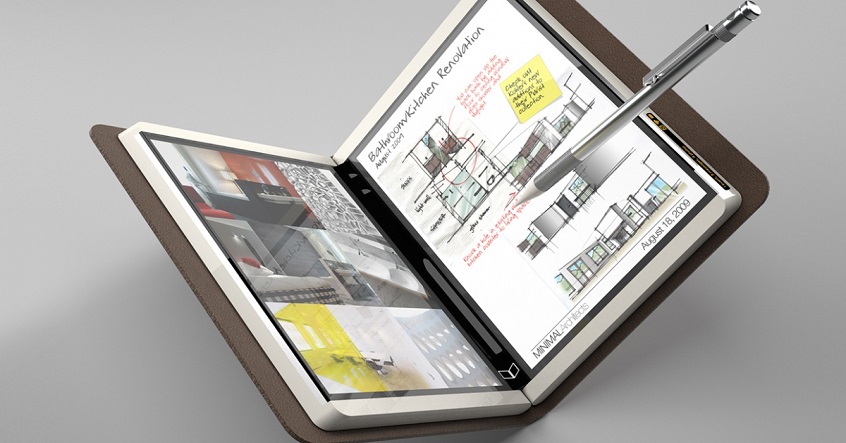
It’s not the first time we’re hearing about LG’s endeavors in the foldable display space. It’s actually been years since the company showed prototype units, so mass production can’t be that far ahead.
A report out of South Korea states that LG’s Display subsidiary has partnered up with Apple, Google, and Microsoft for the task of creating foldable display panels. The report doesn’t say much on when to expect actual consumer devices with foldable displays, though it does hint at a flexible OLED panel for the 2017 iPhone. But ‘flexible’ in this sense might just mean ‘curved’, and not actually foldable, not to mention that rumor has it it will be Samsung that will be delivering the bulk of those displays to Apple.
Samsung might be the pioneer in the field. It won’t be alone, though, that’s for sure, as LG Display is developing foldable OLED panels itself, with some heavyweight device manufacturers joining its team. Still, analysts speculate that Samsung might have more experience when it comes to mass producing flexible displays and thus have the upper hand.
As a technology lover you may like our daily important technology news series. It’s a playlist and you can retrieve the total day-wise videos. Please consider subscribing our YouTube channel:
Dubbed the ‘Sea Hunter’, the 132ft ship is designed to travel thousands of miles out at sea without a single crew member on board. It marks the first step toward sending unmanned cargo vessels between countries, according to military officials, who showed off the ship in San Diego today before it was put in the water. The Pentagon’s research arm, the Defense Advanced Research Projects Agency (Darpa) developed the ship along with Virginia-based Leidos. When it enters service, Sea Hunter will operate for around 30 to 90 days at sea without a crew, and will leave and return to port on its own. In initial testing of Sea Hunter’s autonomy capability, the ship successfully executed a multi-waypoint mission with no person directing course or speed changes.
Leidos also completed a test of the Remote Supervisory Control Station (RSCS), which allows remote supervisory control of the vessel and enables new mission tasking from a remote location, either afloat or ashore. Testing of the Sea Hunter autonomy system in a variety of mission scenarios is scheduled to continue through fall 2017 as part of a two-year test program jointly funded by DARPA and the Office of Naval Research (ONR).
Experts say the vessel has the potential to revolutionise not only the military’s maritime service but also commercial shipping. Testing in upcoming months is scheduled to include testing of sensors, the vessel’s autonomy suite, compliance with maritime collision regulations, and proof-of-concept demonstrations for a variety of U.S. Navy missions.
‘Sea Hunter is at the forefront of new autonomy technologies for the U.S. military,’ said Mike Chagnon, president of the Leidos Advanced Solutions Group.
‘The operational testing is designed to showcase the unprecedented capabilities that this type of unmanned vessel could offer our military forces.’
The world’s smallest radio receiver-whose building blocks are the size of two atoms – can withstand extremely harsh environments and is biocompatible, meaning it could work anywhere from a probe on Venus to a pacemaker in a human heart. It is made up of an assembly of atomic-scale defects in pink diamonds.
The radio uses tiny imperfections in diamonds called nitrogen-vacancy (NV) centres. To make NV centres, researchers replace one carbon atom in a diamond crystal with a nitrogen atom and remove a neighbouring atom – creating a system that is essentially a nitrogen atom with a hole next to it.
The research was led by Marko Loncar, the Tiantsai Lin Professor of Electrical Engineering at the Harvard John A Paulson School of Engineering and Applied Sciences (SEAS), and his graduate student Linbo Shao and has been published in Physical Review Applied.
The radio is extremely resilient, thanks to the inherent strength of diamond, and the team successfully played music at 350 degrees Celsius.
More about the science behind it, NV centres can be used to emit single photons or detect very weak magnetic fields. They have photoluminescent properties, meaning they can convert information into light, making them powerful and promising systems for quantum computing, phontonics and sensing. In the Harvard device, electrons in diamond NV centres are powered, or pumped, by green light emitted from a laser. These electrons are sensitive to electromagnetic fields, including the waves used in FM radio, for example.
“Diamonds have these unique properties,” said Loncar. “This radio would be able to operate in space, in harsh environments and even the human body, as diamonds are biocompatible.
Like any other radio. This one has five basic components – a power source, a receiver, a transducer to convert the high-frequency electromagnetic signal in the air to a low-frequency current, speaker or headphones to convert the current to sound and a tuner.
When NV centre receives radio waves it converts them and emits the audio signal as red light.
A common photodiode converts that light into a current, which is then converted to sound through a simple speaker or headphone. An electromagnet creates a strong magnetic field around the diamond, which can be used to change the radio station, tuning the receiving frequency of the NV centres.
Shao and Loncar used billions of NV centres in order to boost the signal, but the radio works with a single NV centre, emitting one photon at a time, rather than a stream of light.
As a technology lover you may like our daily important technology news series. It’s a playlist and you can retrieve the total day-wise videos. Please consider subscribing our YouTube channel:
A year ago, a briefcase was discovered by a local hermit bearing the emblem of a secret Nazi organization called the Ahnenerbe along with a German full-colour map of the region. And now two mysterious skulls have been uncovered in a cave in Mount Bolshoi Tjach in Russia by a team of explorers led by the renowned scientist, Vladimir Melikov. Vladimir Melikov has said that he was completely startled by the discovery of the skulls which he did not believe were like anything previously discovered by human beings. He said that while the facial features resembled that of a human, the eye sockets were particularly large and there were no cranial vaults or jaws. He said that he believed that he was dealing with the skull of an alien creature.
These elongated skulls seem to form part of a mystery concerning another peculiar find in this particular region of the Caucuses. It is known that the Nazis had a particular interest in this area of the Caucuses which is known for its high levels of natural radioactivity. It is believed that one section of the Nazis found this area particularly fascinating, the Ahnenerbe – the group dedicated to the study and research of supernatural phenomenon.
Perhaps it is the case that the discovery of these alien skulls strongly suggests that this clandestine Nazi order were successful in their quest to discover extraterrestrial life. This group traveled all around the world looking for evidence of lost Aryan mythical artifacts under the auspices of one of the leading figures in the Nazi Party, Heinrich Himmler. He also had the individuals under his command investigate claims of occult powers and extraterrestrial life. It is believed that the search for aliens took the Ahnenerbe to this region of Russia.
However, others who have examined the skulls have suggested that it is actually more likely that these were demons raised by the occultist Nazi researchers.
As a technology lover you may like our daily important technology news series. It’s a playlist and you can retrieve the total day-wise videos. Please consider subscribing our YouTube channel:
Dogs understand both the meaning of words and the intonation used to speak them, so say scientists in Hungary, who have published a groundbreaking study that shows they process language using the same regions of the brain as people.
Put simply: Even if you use a very excited tone of voice to tell the dog he’s going to the vet, he’ll probably see through you and be bummed about going.
It had already been established that dogs respond to human voices better than their wolf brethren, are able to match hundreds of objects to words and learn elements of grammar, and can be directed by human speech. To determine how the canine brain works while processing the words, Attila Andics and colleagues at Eötvös Loránd University in Budapest recruited 13 family dogs — mostly golden retrievers and border collies — and trained them to sit totally still for seven minutes in an fMRI scanner that measured their brain activity.
The pups were not restrained, and they “could leave the scanner at any time,” the authors assured. A female trainer familiar to the dogs then spoke words of praise that all their owners said they used — “that’s it,” “clever,” and “well done” — and neutral, common words such as “yet” and “if,” which the researchers believed were meaningless to the animals. Each dog heard each word in both a neutral tone and a happy, atta-boy tone.
Turns out, we aren’t as special as we like to think, at least when it comes to how our brains deal with language. What makes words uniquely human, Andics said, is that we came up with using them. Using the brain activity images, the researchers saw that the dogs processed the familiar words regardless of intonation, and they did so using the left hemisphere, just like humans. Tone, or the emotion behind the word, on the other hand, was analyzed in the auditory regions of the right hemisphere — just as it is in people, the study said.
2017 is an important year for brand Nokia and HMD Global in the smartphone game. In a few months we’ll find out what the two companies have been working on. Many of us have started out our smartphone journey with a Nokia device and so our hopes remain high for a successful comeback. Let’s explore what all Nokia will have to hit the spot off to do so.
HMD Global officially announced its entry into the mobile market, with Nokia-branded Android phones set to release in first half of 2017. For months now there have been a number of rumours and benchmark listings of various Nokia-branded Android phones, the most popular one codenamed Nokia D1C. It is likely that HMD Global will unveil its upcoming Nokia-branded Android smartphone at the MWC 2017 in February.
Whatever Nokia comes out with, for starters, will have to be wildly creative. The worst thing to do here is to be the same as everyone else. Whether it is a new, quirky design or an eye-catching new feature in hardware, a risky play could just be a breath of fresh air.
Even at the height of its popularity, the company often took risks to keep its lineup fresh, some of which worked, others, not so much. Remember the Nokia Lumia 1020 with its crazy 41-megapixel camera? A device that has yet to be matched on that front even today. Or the Nokia 3650 with a circular keypad. Or the dual-sliding N96. If one thinks about it, Nokia has done it all. The company has produced phones in all shapes and sizes and while there have been a misses, many ended up gaining an iconic standing.
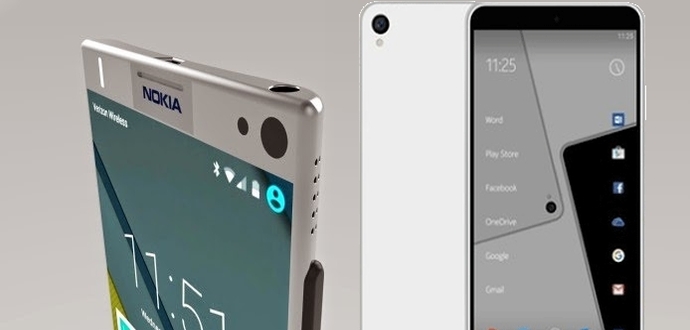
HMD Global has been very secretive regarding the design of the upcoming Nokia Android smartphone. A Weibo leak of the rumoured Nokia D1C in November revealed a pretty standard smartphone design language that hardly screams out ‘Nokia’, but hopefully the final product will be more in line with what Nokia fans have come to expect from the company.
Now, if they have succeeded in attracting people to their product, the second factor to focus on is the price. Over the past few months there have been rumours of multiple Nokia-branded devices, both low-end and high.
Devices like the Pixel and D1C have been spotted on sites like GeekBench. They are rumoured to be entry-level devices while an unnamed smartphone recently reported is rumoured to be HMD’s high-end Nokia-branded offering with a Snapdragon 820 or 821 processor. Additionally, the high-end device is also rumoured to feature Zeiss lens for the primary camera, something seen in previous Lumia phones.
The D1C is rumoured to come with a Snapdragon 430 processor with Adreno 505 GPU and running Android 7.0 Nougat, though there have been plenty of conflicting leaks on the subject. And the most recent rumour suggests that the entry-level device, which is tentatively called Pixel (not to be confused with the Google Pixel), will run Android 7.0.1 Nougat, powered by a Snapdragon 800 SoC, according to the Geekbench listing.
During a talk at Oxford Union debating society this week, Stephen Hawking, the renowned theoretical physicist said that humanity probably only has about 1,000 years left before we go extinct. He has also previously warned that the development of artificial intelligence could end mankind.
In his 74 years, Hawking has spoken several times about our doomed fate, with the risk of things like nuclear war increasing as well as the oncoming threat of global warming. Our only hope of escaping these dangers, says Hawking, is by finding another habitable planet.
NASA launched its Kepler spacecraft in 2009, whose mission is to do just that. It was designed to search the nearby region of our galaxy for Earth-sized planets orbiting in the habitable zone of stars similar to our sun. This zone is also called the “Goldilocks zone” because it is the range where pressure and temperature are “just right” for liquid water to exist on a planet’s surface.
“We must also continue to go into space for the future of humanity,” he said. “I don’t think we will survive another 1,000 years without escaping beyond our fragile planet,” Hawking said.
Hawking’s speech ended with him encouraging the students to stay curious and told them to remember to “look up to the stars and not down at your feet.”
This year, the astronomers were excited by the discovery of Proxima B, which is an Earth-size planet orbiting in the star Proxima Centauri’s habitable zone. It also lies just 4.2 light-years away from us, which in space terms is pretty close. So far, Proxima B looks like our best chance of escape.
As a technology lover you may like our daily important technology news series. It’s a playlist and you can retrieve the total day-wise videos. Please consider subscribing our YouTube channel:
Some spacecrafts have instruments capable of capturing radio emissions. And what you are about to hear is the result of scientists’ conversion of these radio emissions to sound waves from planetary environments.
Instruments on NASA’s Voyager, INJUN 1, ISEE 1 and HAWKEYE space probes were used to record the vibrations of different objects in our solar system. The recorded sounds are the complex interactions of charged electromagnetic particles from the solar wind, ionosphere, and planetary magnetosphere.
Note that nothing was added or tweaked. These are just the beautiful sounds which emanate from that mysterious world above and beyond.
As a technology lover you may like our daily important technology news series. It’s a playlist and you can retrieve the total day-wise videos. Please consider subscribing our YouTube channel:
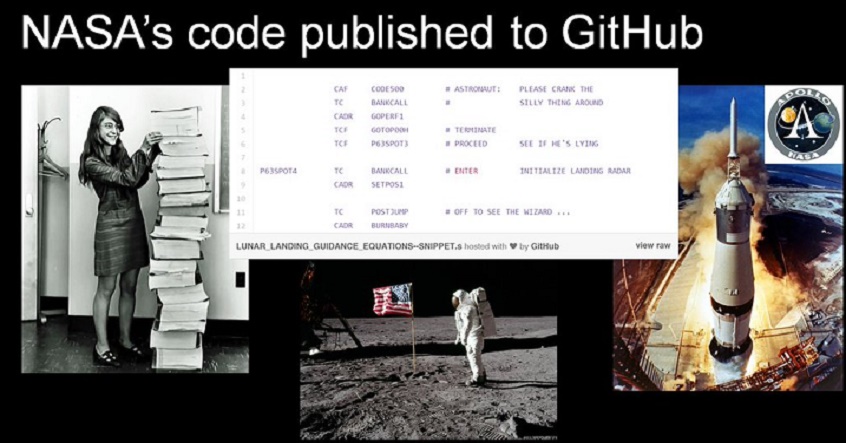
In the mid-1960s, the necessary technology to create the flight software for the Apollo 11 space program did not exist. Programmers at the MIT Instrumentation Laboratory had painstakingly invent it- line by line.
Assembly itself is obscure to many of today’s programmers—it’s very difficult to read, intended to be easily understood by computers, not humans. For the Apollo Guidance Computer (AGC), MIT programmers wrote thousands of lines of that esoteric code. They came up with a new way to store computer programs, called “rope memory,” and created a special version of the assembly programming language.
Margaret Hamilton, director of software engineering for the project, took a black-and-white picture standing next to a stack of paper containing the software to commemorate their success. And let’s just say she saw eye-to-eye it with!
The AGC code has been available to the public for quite a while–it was first uploaded by tech researcher Ron Burkey in 2003, after he’d transcribed it from scanned images of the original hardcopies MIT had put online. That is, he manually typed out each line, one by one.
“It was scanned by a airplane pilot named Gary Neff in Colorado,” Burkey said in an email. “MIT got hold of the scans and put them online in the form of page images, which unfortunately had been mutilated in the process to the point of being unreadable in places.” Burkey reconstructed the unreadable parts, he said, using his engineering skills to fill in the blanks.
“Quite a bit later, I managed to get some replacement scans from Gary Neff for the unreadable parts and fortunately found out that the parts I filled in were 100% correct!” he said.
However, the code itself remained somewhat obscure to many of today’s software developers. That was until last Thursday (July 7), when former NASA intern Chris Garry uploaded the software in its entirety to GitHub, the code-sharing site where millions of programmers hang out these days.
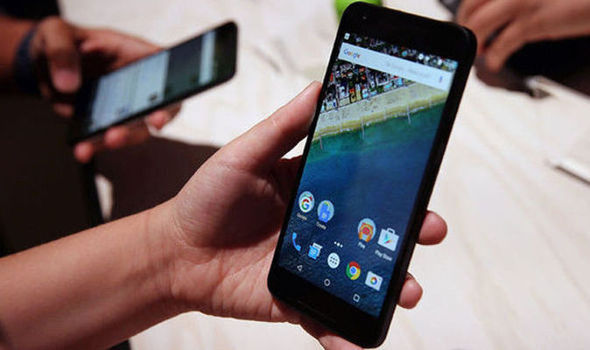
After using Google’s Pixel XL smartphone for a few weeks, it has highlighted the iPhone’s glaringly lacking key features. Woah, woah there. iPhone supporters, hear me out. You’ll have plenty to defend your smartphone of choice down in the comments section.
The iPhone has great features that the Pixel doesn’t have, and the Apple ecosystem is in a league of its own, of course. But the Pixel is something worth talking about.
To start with, the grip and the weight. Focusing on the comfort of your hand, iPhone 6s Plus’ weight (192 grams) never bothered me until I picked up the Google Pixel XL (168 grams). The Pixel’s lighter weight has no ill effect on its reliability, and it’s easier to manage in your hands. Speaking of which, the Pixel has a clever way to add grip.
As nice as the iPhone’s metal back and edges are, they don’t offer any grip, and I’ve dropped and dented my iPhone a couple times as a result. It needs a case.
On the other hand, the glass inlay on the Pixel’s back doesn’t look particularly nice (it looks better on the white model), but it’s actually a great grip for your index finger, which makes the Pixel feel more secure in your hands as you hold it.
SuperSaf TV, a tech YouTube channel, tested the charging times of the Pixel XL, iPhone 7 Plus, and Galaxy S7 Edge with the chargers included in each phone’s packaging. After two hours of charging, the Pixel XL is nearly 100 percent charged while the iPhone 7 Plus is dragging its feet at 72 percent. Meanwhile, the Galaxy S7 wiped the floor with the other two, having charged to 100 percent after an amazing one hour, 29 minutes.
Fast charging is actually a huge deal, isn’t it? The Pixel’s USB-C fast charging is faster than the iPhone’s comparatively slow charging, and it’s one of the harder things to adjust to while switching back to the iPhone.
The Pixel’s design is more utilitarian than it is beautiful, but its sharper AMOLED screen outshines the iPhone’s Retina display. The iPhone 7 Plus has a 1080p screen that’s fine and sharp enough, but the Pixel’s 1440p screen is sharper. And more importantly, the Pixel’s AMOLED screen makes everything it displays look better than on the iPhone’s LCD display. Pictures, videos, and apps pop with inky blacks and vibrant (but not oversaturated) colors on the Pixel, which makes for a more premium and modern look overall.
NASA’s Kepler’s K2 mission journey uncovered a new planet called the K2-3d. It was found to be 1.5 times bigger than the Earth, while it orbits a star just half the sun in size. One revolution lasts 45 days.
The National Astronomical Observatory of Japan found that it was about 150 million light-years away from the Earth and the Space.com says that the K2-3d planet shares man similarities with the Earth, which might harbor and maintain life. The characteristics include a warm and tolerable atmosphere, quite similar to the earth. It also appears to be hosting water as well as a star orbiting nearby. Hence, the possibility of life on this planet is very high.
NASA will launch the Hubble Telescope in the coming year in order to go for a “more in-depth examination” of the likely planet. The objective of NASA scientists would be to find two important characteristics that would confirm its ability to host life: clouds and hydrogenic atmosphere. The attempt and hope is to discover “a hydrogen-rich atmosphere, or a blanket of clouds,” says Dr Björn Benneke at the California Institute of Technology.
But, as of now, there is no way of confirming these speculations, such studies take a longer time to prove than other space-related studies. The theories are most likely to be confirmed in the coming year.
As a technology lover you may like our daily important technology news series. It’s a playlist and you can retrieve the total day-wise videos. Please consider subscribing our YouTube channel:
The company already made quite the buzz with confirmed debut of new handsets at Mobile World Congress in February. Nokia CEO has already promised to deliver the trademark design and build quality we come to associate with the brand. However, Nokia won’t be building its own smartphones rather will be outsourcing it to HMD Global, a Finnish hardware startup run by former Nokia employees.
Nokia’s two-year non-compete deal with Microsoft ends this year and HMD Global holds the right to license Nokia’s brand for the next 10 years. The company will further license the manufacturing part to Foxconn and use Nokia’s diverse set of design and telecom patents. Nokia is reported to make its smartphone comeback with three new devices. Nokia has already made significant strides in the world of virtual reality and its OZO VR camera is already helping in the production of world-class VR content.
Initially rumours indicated that Nokia’s comeback devices will be powered by Qualcomm’s Snapdragon 820 processor. But other rumours indicate that Nokia will announce two flagship devices and another mid-range smartphone at MWC in February 2017 and the company might jump to Snapdragon 821 or the latest Snapdragon 835 ahead of the launch in order to better compete with Google’s Pixel and Pixel XL range in the flagship segment.
Not to forget, is Nokia’s promise to deliver the latest Android operating system. The large part of play here is the use of company’s very own Z-launcher based UI instead of stock one. Nokia’s Z launcher is a fun third party launcher that adapts itself according to use. Users can access their favourite apps quickly and there is even an option to scribble to reach apps.
Scientists from the University of Oxford decided to go ahead and conduct a study researching the suspected correlation between big booties and the corresponding intelligence of the woman. And guess what? Chances are, you are going to like the results!
The research revealed that women with more weight in their thighs and behinds, often have a higher level of intelligence. The study analyzed data from 16,000 women. Women with larger behinds tend to produce more Omega 3 fats. Omega 3 fats help to catalyze brain development. Additionally, the study states that big-bootied mothers tend to give birth to smarter children.
Aside from brain power, having a larger behind, is associated with a slew of other health benefits. Yes, benefits! No more of those obesity and fat warnings. Big-bootied women tend to have lower cholesterol. They also produce sugar metabolizing hormones that help to prevent diabetes, as well as heart problems. Additionally, larger-bottomed women tend to have higher levels of leptin. Leptin is a hormone responsible for regulating weight.
And the benefits don’t stop there! The tissues present in the backside, also trap harmful fatty particles, which helps to prevent cardiovascular disease. Other booty studies, have also discovered that big-bottomed women may simply live an overall longer, healthier life.
Now, everyone envy those well-endowed ladies even more! Unfortunately, this study and its discovered benefits, does not include fake booties.
As a technology lover you may like our daily important technology news series. It’s a playlist and you can retrieve the total day-wise videos. Please consider subscribing our YouTube channel:
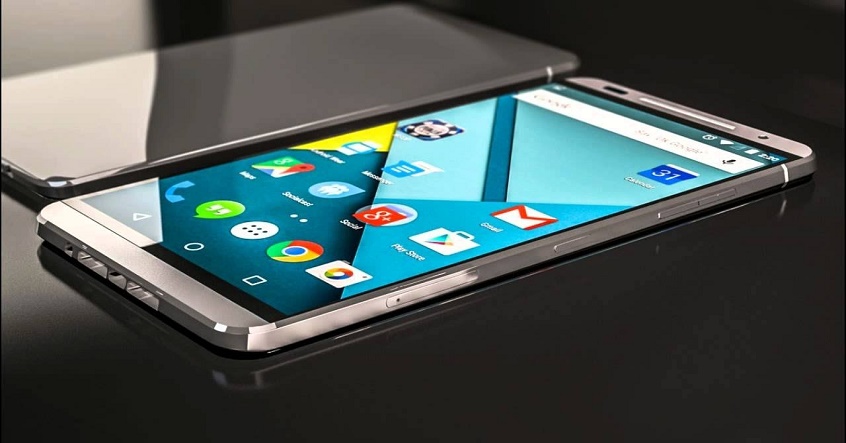
Once the leading mobile phone manufacturer in the world, Nokia failed to tackle the smartphone era well, with several wrong decisions like embracing Windows Phone and shunning Android. But now it’s coming back, and that too with Android in tow. In the Mobile World Congress 2017, the new details of Nokia’s upcoming Android smartphone will be announced.
The latest leak points to the flagship handset having a 5.2-inch or a 5.5-inch QuadHD display (2K). The smartphone is also said to come with Zeiss branded optics as seen on earlier Nokia devices. Taking Nokia’s history with imaging into account, the camera is sure to be a highlight of the device. Additionally, the device is set to be powered by the Snapdragon 820 processor which is a bit disappointing considering that the world has moved on to the Snapdragon 821. In fact, Qualcomm has just announced the Snapdragon 835 which the Samsung Galaxy S8 is tipped to come with.
Taking Nokia’s history with imaging into account, the camera is sure to be a highlight of the device. The Nokia D1C has also been out for awhile. The D1C is set to come with rounded metal edges, with capacitive buttons at the front and volume and power buttons on the right. It will also come with a 64-bit Qualcomm Snapdragon 430 octa-core processor, 3GB of RAM, 32GB of internal storage, a fullHD screen (display size uncertain) and the Adreno 505 GPU. What is interesting is that the Gold color variant of the device is expected to come with a fingerprint scanner embedded in the Home button, while the other color variants (White and Black) will lack this feature. Leaks and rumours point to the flagship device sporting a price tag of around Rs 30,000, while the D1C (the mid-range device) is expected to be priced south of Rs 20,000.
While not confirmed, the device could come with a 13MP front and 8MP rear camera, with Android 7.0 Nougat on board. On the connectivity side, the device is set to support 4G LTE, Wi-Fi Bluetooth 4.0 as well as GPS/A-GPS.
As a technology lover you may like our daily important technology news series. It’s a playlist and you can retrieve the total day-wise videos. Please consider subscribing our YouTube channel:
According to the reports from India Today, visiting torrent sites and another website that is blocked by the government could land you in prison for 3 years along with Rs three lakhs ($4468) as fine. So, if you’re still browsing those torrent sites for free access of video games, movies… and other pirated material, you have been warned.
The Indian government has already blocked numerous websites with the help of Internet service Providers (ISP) but people do visit those blocked websites using various techniques like changing the IP Address or using VPN. Earlier most websites were banned in India using DNS-filtering which was actually easy to bypass using any third-party DNS services. However, Government has taken help of big companies like Tata Communications and Airtel in order to attain their “Blocking” Goal.
Visiting a blocked site without VPN displays the message, “This website/URL has been blocked under instructions of the Competent Government Authority or in compliance with the orders of Hon’ble Court.”
In its entirety, the message reads something like this:
“This URL has been blocked under the instructions of the Competent Government Authority or in compliance with the orders of a Court of competent jurisdiction. Viewing, downloading, exhibiting or duplicating an illicit copy of the contents under this URL is punishable as an offence under the laws of India, including but not limited to under Sections 63, 63-A, 65 and 65-A of the Copyright Act, 1957 which prescribe imprisonment for 3 years and also fine of upto Rs. 3,00,000/-. Any person aggrieved by any such blocking of this URL may contact at urlblock@tatacommunications.com who will, within 48 hours, provide you the details of relevant proceedings under which you can approach the relevant High Court or Authority for redressal of your grievance.”
Browse the web wisely, people of India.
As a technology lover you may like our daily important technology news series. It’s a playlist and you can retrieve the total day-wise videos. Please consider subscribing our YouTube channel: