This New Phone Powered By Android Packs A Punch With Massive 7,000mAh Battery And Dual-Curved Display!

A luxury smartphone is not about the usual features and benefits you expect to reap from an average smartphone within a reasonable price-range. Instead, these devices — like the new Gionee M2017 — are about excess, style, and raw power. The M2017, which is limited to the Chinese market as of now, see to all these desires of the user.

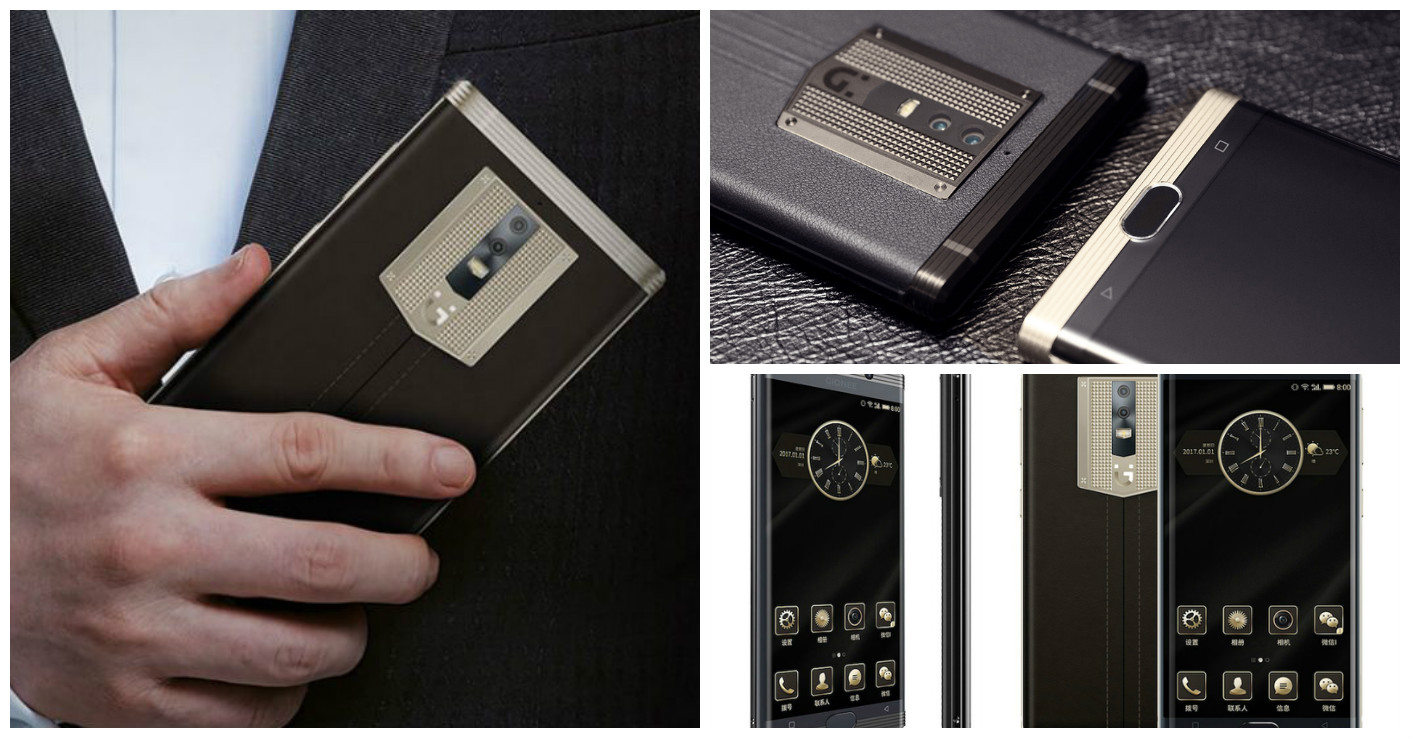
It comes with a 7,000mAh battery at a time when most phones can barely break 3,000mAh. (The phone actually just uses two 3,500mAh batteries placed next to one another.) The device also comes with a Snapdragon 653 processor and 6GB of RAM. For that kind of battery and processing power, you’ll be forking over the Chinese Yuan equivalent of about $1,000.

As of the design, it follows in the footsteps of pricier luxury phone makers like Vertu with a jewelry-style aesthetic aiming to make the smartphone as tactile and pleasing an object as a fine watch or wallet. That style comes through on the M2017’s gold edges, gold back camera plate, and all-gold software icons. The phone also features a dual-curved display, similar to that of the Samsung Galaxy S7 Edge.

As it stands now, the M2017 ships with the company’s custom “Amigo” UI version 3.5, according to 9to5Google, which sits atop Google’s year-old Android Marshma

It’s not clear when this phone will ever make its way out of China. It’s also unclear what kind of software support or Android updates Gionee will provide.

As a technology lover you may like our daily important technology news series. It’s a playlist and you can retrieve the total day-wise videos. Please consider subscribing our YouTube channel:

Author: Technology Vista

Tagged : /

It’s Self-Propelled and Defies Newton’s Third law! NASA’s EM Drive Paper Has Finally Been Published after rigorous testing!

The paper shows that the ‘impossible’ propulsion system really does appear to work, and that is surprising as it defies Newton’s third law, which states that everything must have an equal and opposite reaction. Yet in test after test it continues to work. Last year, NASA’s Eagleworks Laboratory team got their hands on an EM Drive to try to figure out once and for all what was going on.

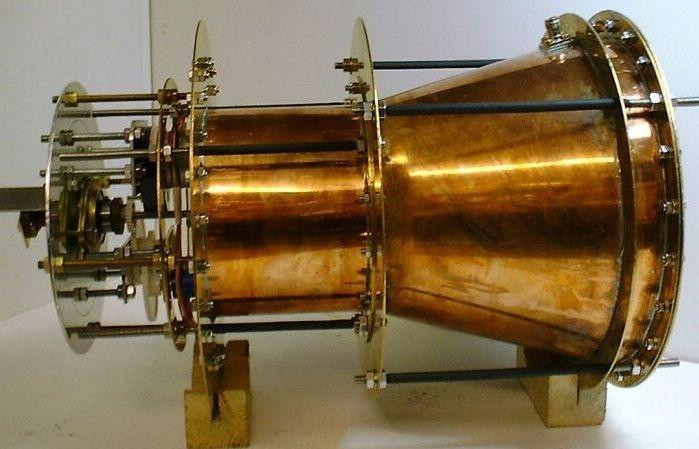
In case you’ve missed the hype, the EM Drive, or Electromagnetic Drive, is a propulsion system first proposed by British inventor Roger Shawyer back in 1999. Instead of using heavy, inefficient rocket fuel, it bounces microwaves back and forth inside a cone-shaped metal cavity to generate thrust. According to Shawyer’s calculations, the EM Drive could be so efficient that it could power us to Mars in just 70 days.

But, according to Newton’s Third law, for a system to produce thrust, it has to push something out the other way. The EM Drive doesn’t do this.

The new peer-reviewed paper is titled “Measurement of Impulsive Thrust from a Closed Radio-Frequency Cavity in Vacuum“, and has been published online as an open access ‘article in advance’ in the American Institute of Aeronautics and Astronautics (AIAA)’s Journal of Propulsion and Power. It’s very similar to the paper that was leaked online earlier this month and, most notably, shows that the drive does indeed produce 1.2 millinewtons per kilowatt of thrust in a vacuum:

“Thrust data from forward, reverse, and null suggested that the system was consistently performing at 1.2 ± 0.1 mN/kW, which was very close to the average impulsive performance measured in air. A number of error sources were considered and discussed.”

Next Page For More

Tagged : / /
Verified by ExactMetrics