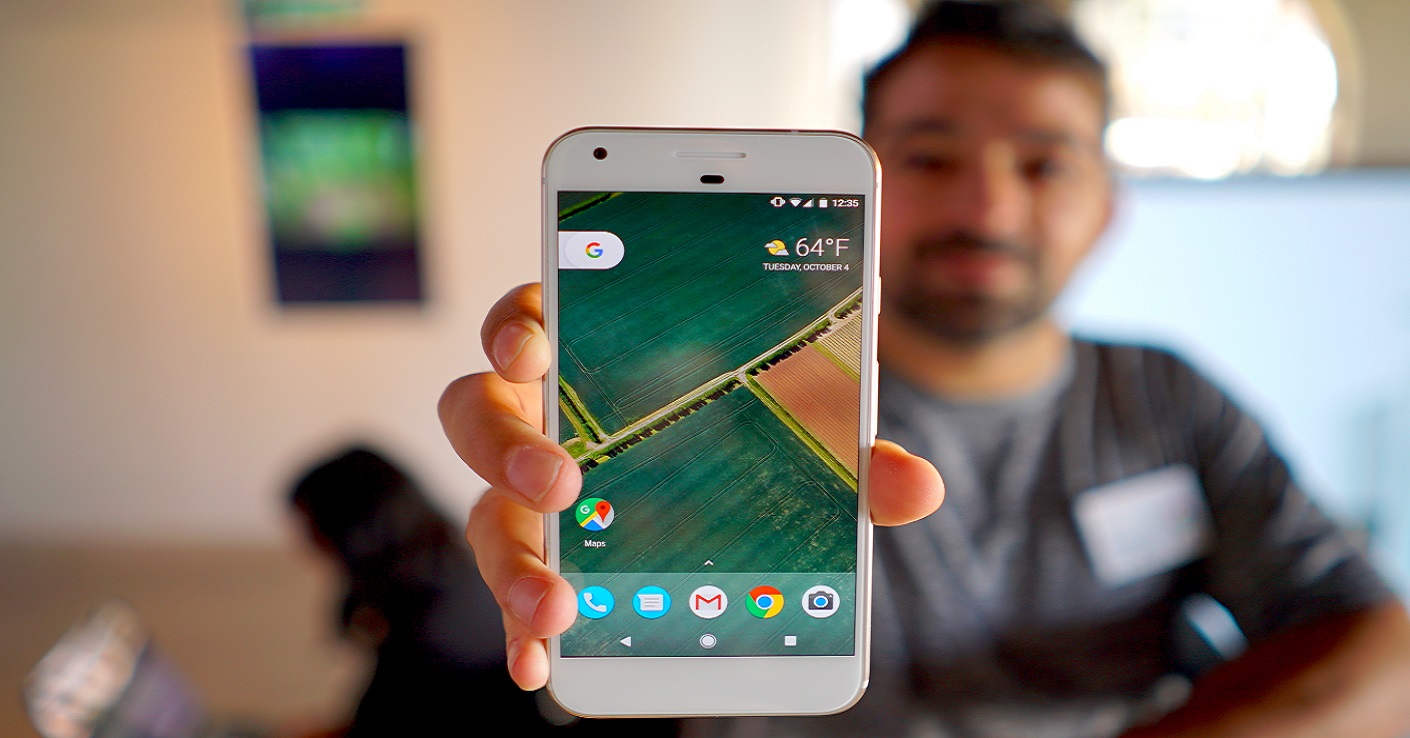
Now, you don’t have to buy a Google Pixel phone to avail most of its best features on your phone! Here is how!

The Google Pixel and Pixel XL have been extremely popular but, you might be hesitant to shell out bugs for it. Thankfully, you don’t necessarily have to shill out hundreds of dollars to get a Pixel-esque feel on your handset. Quite a few of the Pixel’s features can be added to any Android phone, and here’s how it’s done.

Nova Launcher has added a Pixel skin, complete with Pixel-style search bar and the swipe-to-open dock action. This should take care of most of the outward appearances of your phone and give it the basic look of the Pixel.

If you’re completely new to the world of launchers, they wrap your Android phone in a completely new software skin, covering icons, menus, wallpaper and more. Getting the old look back is just a question of uninstalling the launcher again, though, so don’t be afraid to do some experimenting. You obviously won’t be able to transform the physical shape of your current Android phone, but you can definitely mimic the look of the software.

With Nova Launcher on your phone, open the Nova Settings app to configure it. You can get the Pixel look for the search bar by choosing Desktop then Search bar style, for example. Developer Kevin Barry has some extra tips for stylizing the Nova Launcher interface so it copies the Pixel as closely as possible. To get the Pixel wallpapers used on Google’s flagships, simply install the official Wallpapers app from Google. This is the same app that ships on the Pixel so you can dig out any of the backgrounds you want.

There’s Google Assistant, a Pixel exclusive which you can’t yet get on any other Android phone. If you’re comfortable flashing or rooting your phone then you can trick Android into thinking it’s a Pixel XL

To emulate the Pixel’s rather nifty fingerprint button scrolling feature — which lets you scroll through screens by moving your finger across the sensor on the back of the phone — you need Fingerprint Gestures. Once it’s installed, you can configure the button to work in a variety of ways, just like the Pixel. You can also use Action Launcher for the same job, and it’s actually even easier. Open the launcher’s Settings app, then tap Looking for Pixel Launcher features for instructions — you will need to upgrade to the Pro version of the app, though. Neither launcher gives you an exact duplicate of the Pixel interface (you may need to play around with some icon packs) but both of them come very close.

If you don’t want to go down to that level of system tweaking, your only other option here is to install Google Allo, which lets you set up a separate chat stream with the Assistant. The integration isn’t as tight as it is with the Pixel, but it’s as close as you’ll get for now without doing any rooting or flashing.

As a technology lover you may like our daily important technology news series. It’s a playlist and you can retrieve the total day-wise videos. Please consider subscribing our YouTube channel:

Author: Technology Vista

Tagged : /

High Up, The Earth’s Atmosphere Could Hold Alien Life

Life has been found in very impossible nook and cranny- even in high-temperature vents deep undersea and high in the air. Researchers are now pondering about these “extremophiles” and how well can life reproduce in these environments.

Could microbes of this type also be found on other worlds?

In March, a group of University of Houston students will fly a high-altitude experiment from Alaska to see what microbes are in the high atmosphere, between 18 km and 50 km (11 miles and 31 miles) from the ground. The instrument, which looks almost like a small laundry hamper, pops open to collect what’s in the atmosphere. Then, as the balloon descends, it shuts closed for researchers to analyze. It’s the first time this has been used it, so isn’t sure how well it will function.

Jamie Lehnen, a fourth-year student on the team, says this system could be less open to contamination than pumps and other complicated mechanisms that require servicing on Earth.

“A lot of times, these microbes when they go up there, they shut down. They are not replicating and they are not metabolically active,” she said. “I’m interested in how their stress response is similar to those [microbes] back on Earth’s surface.”

That said, microorganism research in the upper atmosphere has been active since the 1930s at least. One of the earliest flights involved Charles Lindbergh, a pilot best known for piloting the Atlantic solo in 1927. Accompanied with his wife, Lindbergh periodically passed the monoplane controls over to her to take samples from the atmosphere around them. The research team found spores of fungi and pollen grains, among other specimens.

Planes still require a substantial amount of atmosphere to fly, so it’s with high-altitude balloons and rockets that we can get even higher — to the stratosphere and the mesosphere. Some of the earliest high-altitude microorganism experiments did not involve air travel at all — Charles Darwin picked up African dust on his ship while crossing the Atlantic Ocean, while Louis Pasteur made measurements on top of alpine glaciers. Both found microorganisms.

NASA microbial researcher David Smith and his team will fly with the team from NASA ABoVE (Arctic-Boreal Vulnerability Experiment), which uses a Gulfstream III jet to monitor how climate change affects animals, plants, the environment and infrastructure. In the spring, a vast airstream on the Pacific Ocean moves millions of tons of dust across the ocean, mostly from Asia. Smith’s team will use a cascade sampler for collection, which passes air through progressively finer impact plates with holes in them, he said. As the air moves through, dust and any microorganisms impact the surface of those plates. A portion of them stick to the surface, allowing researchers to analyze what is there afterwards.

Next Page For More 

Tagged : /
Verified by ExactMetrics