
2018: Foldable Displays by Google, Apple and Microsoft, you can to Look Forward to

We have had flip phones and sliders, round phones and rectangular ones, small ones barely bigger than your thumb and large ones that covered the palm of your hand. We even have had phones designed specifically for gamers or music enthusiasts.

But, since the advent of the smartphone, we’ve pretty much been stuck with the traditional candy bar shape. Time to spice things up a bit.

South Korean IT news site ET News has just reported that LG Display will not only be producing foldable displays for smartphones come 2018, they’ll also be supplying that technology to Apple, Google, and Microsoft. This implies that the technology will hit the market soon, possibly as early as 2018, and that some of the biggest names in the smartphone industry will be competing to introduce their own version of it.

As far back as December 2015, however, Samsung had already filed for patents for what can presumably be an upcoming fully foldable flagship product. They have pushed the boundaries of recent smartphone design with their EDGE technology, a minimal design edit that sees the smartphone screen curving around the edge of the phone for some added functionality.

Apple also happens to have a flexible device in the works — the company has been awarded a patent for carbon nanotube circuits that would allow for flexible electronic devices.

The talk of foldable smartphone technology isn’t exactly new, but seeing it finally hit the market would be. This would allow for more durable, adaptable devices. Semiconductor Energy Laboratory had long before demonstrated the first consumer-grade display that could be folded in three without breaking!

As a technology lover you may like our daily important technology news series. It’s a playlist and you can retrieve the total day-wise videos. Please consider subscribing our YouTube channel:

Author: Technology Vista
Tagged : / /

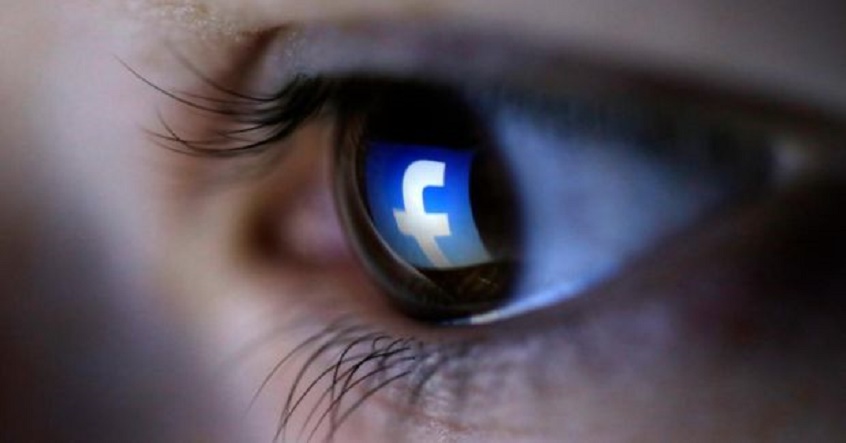
Nowhere To Hide! This Is How Facebook Know What You’re Up To, Even When You Are Offline!

Facebook is great, right? It does amazing social service and builds connections- all for free. In return, Facebook collects information about you—your profile information, articles or pages that you “like,” videos you watch, and so on—and uses that to sell ads.

The thing is, Facebook has made a show of being transparent with how it collects users’ information and what categories of interest it assigns to users. Anyone who wants to can look this information up on Facebook’s site. But it’s not that simple.

As an ongoing investigation by ProPublica has shown, Facebook is going beyond the tacit agreement that it provides a free service in exchange for online personal information. It has contracts with several data brokers that provide Facebook with information about your offline life—things like how much money you make, where you like to eat out, and how many credit cards you keep. It is using that data to flesh out its advertising profile of you, and it isn’t telling you about it.

The social network has an extraordinarily large user base, but what really turns advertisers on is that it lets marketers narrowly define the subset of users who will see an ad based on all sorts of parameters, including users’ shared interests, political leanings, age, and mobile devices.

Facebook’s advertising operation is a remarkable machine. This kind of microtargeting is incredibly valuable—and what better way to augment it than to buy up offline data sets that can then be matched to Facebook’s users?

As part of its investigation, ProPublica built a tool to help users with this—and encouraged them to share what they found. Since September, the publication has gathered over 52,000 categories of interest in this way ranging from, as they say, “Pretending to Text in Awkward Situations” to “Breastfeeding in Public.”

But when ProPublica went into Facebook’s advertising platform to see what parameters ad buyers could use to target an ad, it found close to 600 categories that were described as “provided by a third party.”

Most of those had to do with users’ financial attributes, and none of them showed up in the crowdsourced list that users sent in. Turns out, Facebook’s transparency has its limits.

But still, it’s far better than simply knowing that someone clicked “like” on the Food Network’s page, and instead knowing how much money they make each year, or whether they shop at low- or high-end retail stores.

As a technology lover you may like our daily important technology news series. It’s a playlist and you can retrieve the total day-wise videos. Please consider subscribing our YouTube channel:

Author: Technology Vista

Tagged : / /
Verified by ExactMetrics