Want a termite style home ventilation system?

All of us love are our homes and when that tiny devil ‘termite’ attacks it and makes it to crumble in places where it shouldn’t, we curse the little monster. While they don’t spare a thought while damaging ours, they are a brainy thing when it comes to building their own home. Some researchers have found that some of their mounds boast of solar-powered ventilation systems.

termiteskyscraper

Though this doesn’t mean that they have solar panels installed over their mounds! Actually they use sun’s heat and position to ventilate their mounds inhabited by thousands of termites. It is to be noted that termites are only a few millimetres long but as a colony they build mounds that are three to six feet tall (and more than that in some cases).

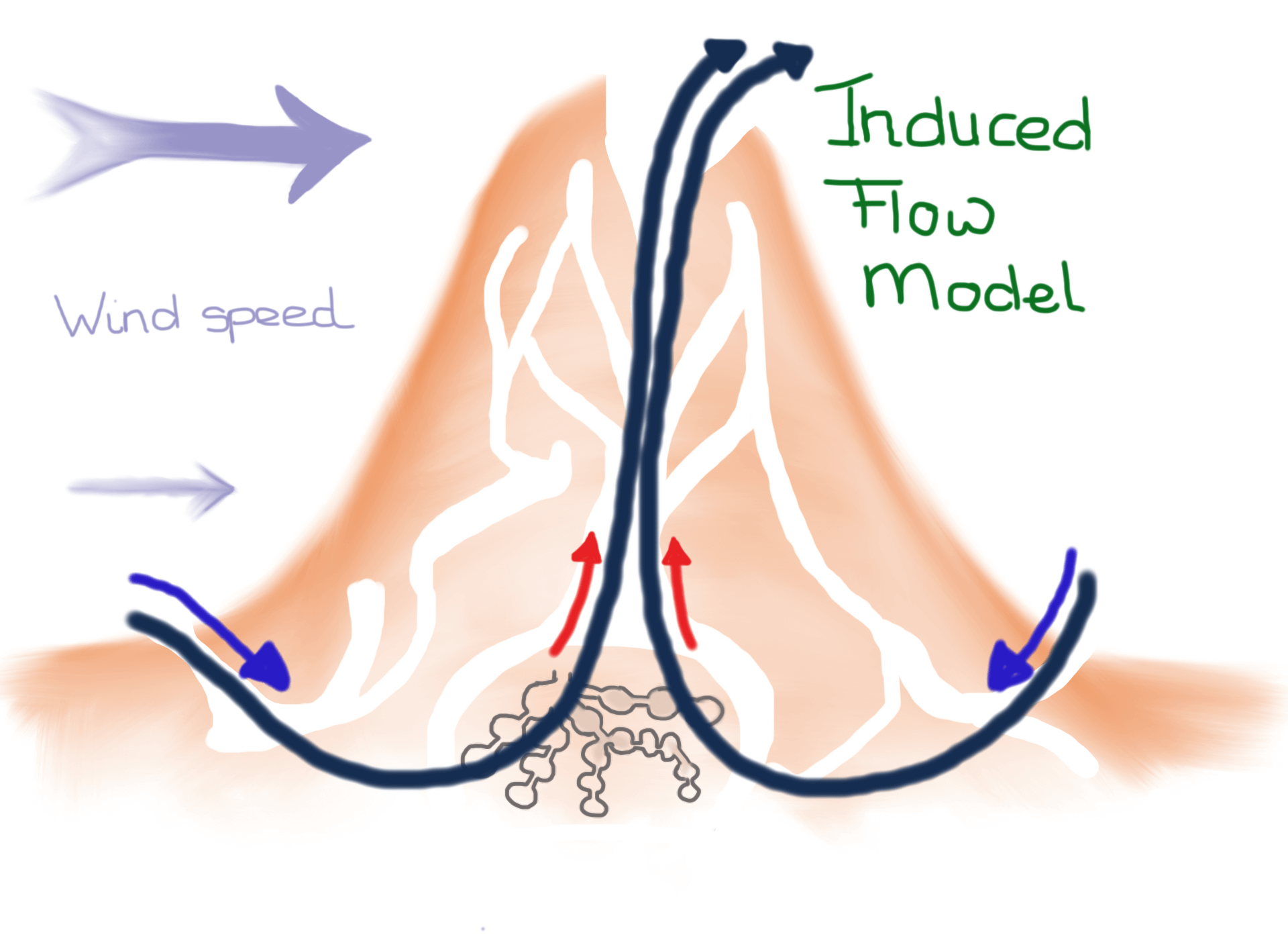
In a mound, there are a huge number of termites that build and maintain it. Ventilation is a need for this structure as there are thousands of termites down there in a small place along with the fungus gardens that some termite colonies tend. All these factors can lead to stale air but in practicality they don’t. That means these termites have such a ventilation system that keeps stale air at bay. When researchers observed closely, that as opposed to their early theory about wind and air pressure being the basis of their ventilation systems; it is actually the temperature fluctuations around the day that is the basis of the ventilation system in a mound. They observed that inside the mounds of many species of termites including Odontotermes obesus, the species involved in this study, there is a hole in the centre that works like an atrium or chimney.
2013-09-04-08-40-20

Several smaller tubes are connected to this central atrium or chimney. During the day time when the sun’s rays are beating down, air warms in the smaller tubes and rises up whereas cools and sinks down in the larger tube. At night, the process is reversed, and so air in the smaller tubes cools faster than the air in the chimney. This airflow pattern that keeps running throughout the day around the year keeps the mound well ventilated. These termite mounds are really a marvel of architecture as they can be as old as 2,000 years old (a mound recently found in Africa is above 2,000 years old).

So dear little termites, salute to you but please maintain the distance when it comes to our house!

[adinserter block=”7″]

Author: Technology Blog
Breath Signals to Help Paralyzed Speak

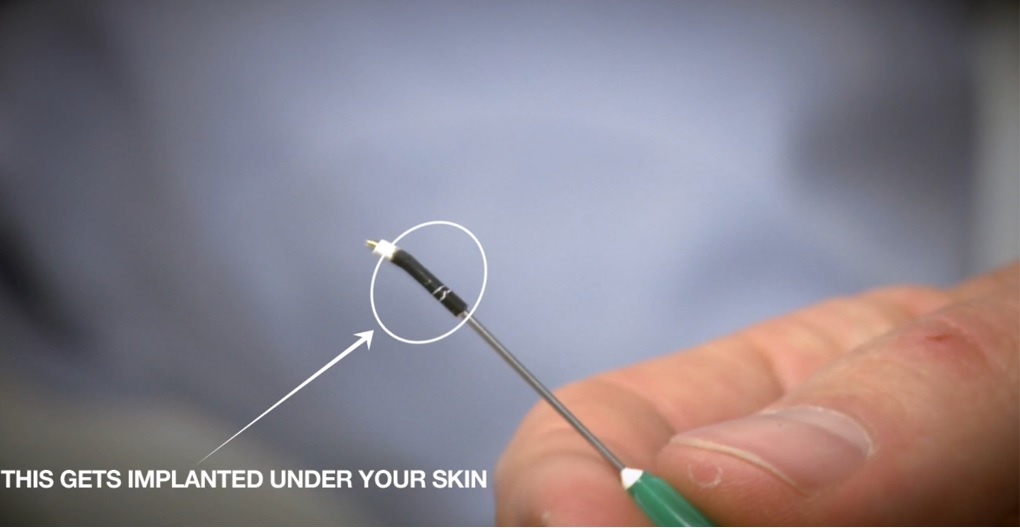
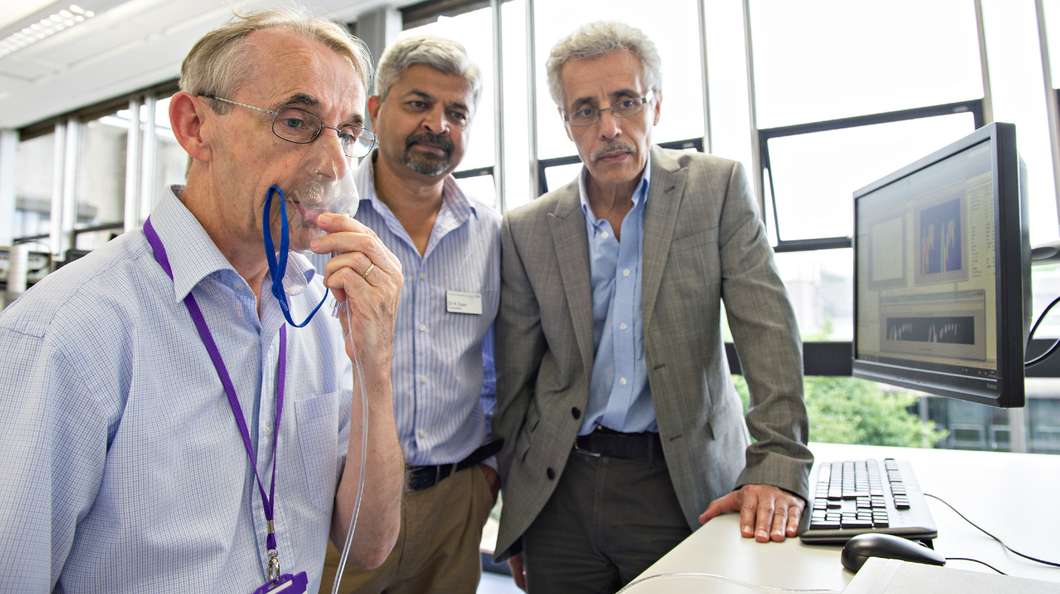
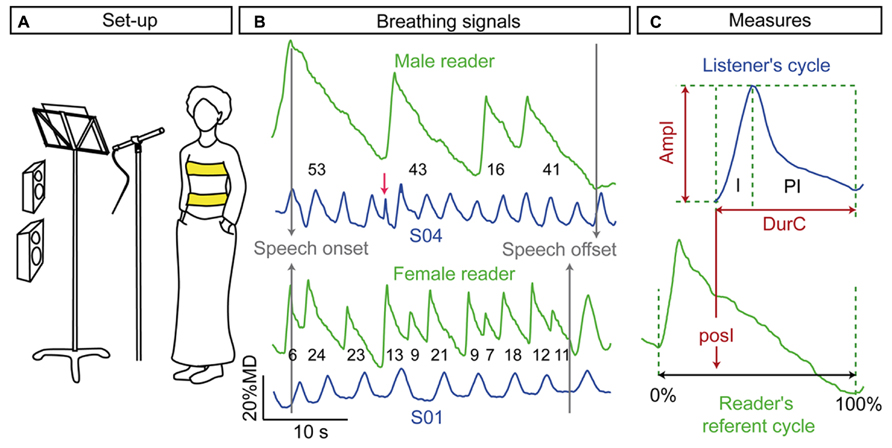
Much of the technology that exists to facilitate paralysis patients to communicate, are based on subtle signals, such as eye movements. But completely paralyzed patients might have trouble accomplishing even that. Some researchers at Britain’s Loughborough University have come up with a device that enable the breathing patterns of the patient to be formulated into pre-decided words or phrases.

voice5

Known as the Augmentative and Alternate Communication (AAC) device, it consists of a nose/mouth mask linked by a hose to a computer, and uses a custom software converting analog-to-digital-signals. 97.5 percent success rate has been observed in the comprehension ability of this instrument.

“This device could transform the way people with severe muscular weakness or other speech disorders communicate,” says Dr. Atul Gaur, a consultant anesthetist who is collaborating with the Loughborough team.

fpsyg-04-00906-g001

“In an intensive care setting, the technology has the potential to be used to make an early diagnosis of locked-in syndrome (LIS), by allowing patients, including those on ventilators, to communicate effectively for the first time by breathing – an almost effortless act which requires no speech, limb or facial movements.”

[adinserter block=”7″]

Author: Technology Blog

Switzerland now has the world’s longest tunnel in its kitty

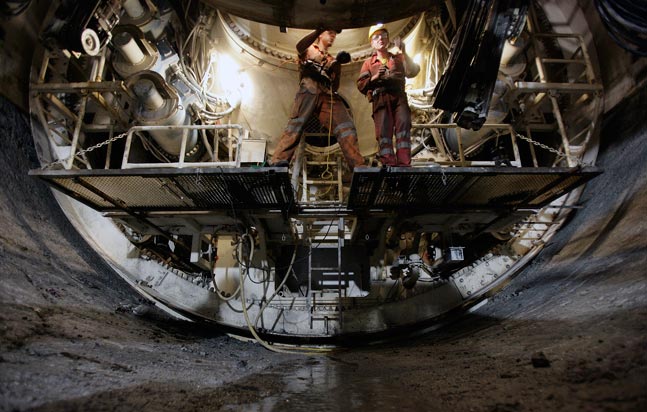
The Guinness Book of World Records has a new entry under the heading “Longest tunnel in the world” and the entrant is 35 mile long Gotthard Base Tunnel running through those beautiful Swiss mountains.

the_longest_tunnel_in_the_world_02

After spending $10.3 billion and two decades on this tunnel, the economic centres like Zurich, Turin and Milan are now well connected. The construction of the tunnel is complete and full-scale testing is set to begin on October 1st. After the conclusion of testing the tunnel will receive the stamp of the Federal Office of Transport.

The building of this tunnel was never a cakewalk. Starting from 1999, 2000 workers worked with all their heart excavating nearly 31 million tons of earth. The Gotthard Base tunnel is a good sixteen and half miles longer than the previous record holder, Japan’s Seikan Tunnel. Switzerland also receiving loads of appreciation in regards to the tunnel’s ability to reduce harmful emissions capable of destroying the Alps’ environment.

WorldslongestrailwaytunnelSwitzerlandSt.GotthardTunnel2

It is hoped that passenger and freight trains will start running in this tunnel from June 2016 once testing and safety inspections are done with. The tunnel’s flat and straight terrain will enable each train to run at sustained speeds of 150 miles an hour. To celebrate the opening of this one-of-a-kind tunnel Switzerland authorities are planning to organise a huge festival where a lucky group of 1,000 people will have the honor of being the first non-workers to travel through this amazing tunnel. So, get ready and start planning a trip to Switzerland after June 2016.

[adinserter block=”7″]

Author: Technology Blog
No Bedwetting after This Treatment

A recent treatment for bedwetting has been developed by team, led by Eman Khedr and colleagues at Assiut University Hospital in Egypt which involves the magnetic stimulation on the lower back.

bed-wetting

Transcranial magnetic stimulation has been around for quite a while and has been attempted to cure a myriad of ailments with. What started out as holding a device that generates a magnetic field over someone’s head, now has been modified to be held over the lower back of the bedwetting patient.

Two groups of children aged 10-18 years of age suffering from the issue of late bedwetting in spite of taking drugs for the problem, were selected at random. One group was given the full package of TMS treatment, while the other group was placed under placebo category where the paddle was tilted so the magnetic field was directed away from the back.

At first, both the groups dropped the frequency from six times/week to just once. A month later, however, only the children receiving the authentic treatment continued to show the progress, the others reverted back to the original frequency of bedwetting.

Childrens-Bed-Wetting-1

“TMS does seem to cause long-term changes to nerves,” says Nick Davis of the University of Swansea, UK. “But it could also be affecting the muscles involved in bladder control.”

[adinserter block=”7″]

Author: Technology Blog
Heart Tissue-Velcro Helps Repairing Damaged Organs

The problem with synthetic heart tissue was that the final shape of the output was pretty unpredictable, balancing of the newly arranged layers was tricky and different layers of the tissue couldn’t be separated out.

heart-surgery

Now, why do the researchers have to peel off the layers anyway? Turns out, this is important to coat the layer with protective molecules to prevent breakdown and malfunction. Tests to determine influencing factors of the tissue’s durability such as, time, location, and different coating molecules, could be conducted by separating out layers, according to Milica Radisic, a chemical engineer at the University of Toronto and one of the study authors.

Radisic’s Tissue-Velcro is the solution researchers have come up with. This works much like the actual Velcro; one side of each layer has an array of loops made of the biodegradable polymer, and the other has T-shaped hooks of the same material. These sides attach perfectly, and can be separated without disturbing the working of the rest of the organ, or the polymer and molecules used in the layer.

Tests on neonatal mice have proved highly successful, as the Tissue-Velcro fits perfectly over the hole in the heart tissue of the mice. Removal of a few layers, doesn’t affect the structural integrity of the set-up. The layers were coated with epithelial cells that protect the polymers and molecules and prevent inflammation of the heart.

screen-shot-2015-08-28-at-10-52-39-am-png

The current use of Tissue-Velcro is for study and research, and less in actual surgeries. Effect of death and individual cell survival are being researched.

[adinserter block=”7″]

Author: Technology Blog

Living Space Increased with Convertible Spaces Apartments

Space savers are the win-win apartments people have been hunting for lately. New Convertible Spaces apartments in Melbourne, Australia, are got this fact down to boot as they use this concept, with a design to increase the living space by 70%. These apartments take help of movable walls, among other things, to accomplish this feat. An adjustable kitchen/living area, a pull-down bed and several mobile units work as the charms of this project.

051746-e9a7ccf8-2222-11e5-a000-2ed7e4b5ace9

Other existing apartments, like the recently announced Yo! Home and the Zoku Loft, also use moving elements to change the format of the space. But, Convertible Spaces stands out among this lot as it targets young professionals who want premium-quality apartments and locations, with just 1BHK. In other words, Convertible Spaces aims at luxury living.

With high-end fixtures and fittings used throughout, an area of 19,588-sq m (210,843-sq ft), and AU$415,000 (US$297,000) to AU$455,000 (US$325,000) price, Convertible Spaces is quite the catch.

“By including a fold-down bed and moveable wall we add several meters to the apartment and offer occupiers an enormous amount of flexibility,” says principal of Rothelowman Chris Hayton. “When the bed is hidden away and the wall moved across into the bedroom area, the result is a 70 percent increase in living area.”

051798-e36ffc98-2222-11e5-a000-2ed7e4b5ace9

Other facilities the residents at the Sanctuary on the River development are benefited with are, a “hotel-inspired” and “light-filled” lobby and bar, a rooftop dining space, a lounge and a cinema. An on-site health and wellbeing retreat, meanwhile, boasts a pool and spa, a gym, a sauna and massage and beauty rooms.

[adinserter block=”7″]

Author: Technology Blog

Nevada will have the world’s first lead battery recycling plant in 2016

With increasing stress on green solutions and sustainability of various industrial units, AquaRefinery brings a fresh whiff of air. On August 23, Aqua Metals broke ground on its new battery recycling facility called “AquaRefinery” in McCarran, Nevada. Chairman and CEO of Aqua Metals, Dr. Stephen Clarke said: “This next step toward commercial operations is an important milestone in our mission to build an environmentally sustainable lead recycling company and we believe we have chosen an ideal location.”

lead-battery-440x292-c

This new facility will boast of a 125,000 square foot recycling plant. Basically, AquaRefining is a modular electrochemical process designed to produce ultra-pure lead from used lead-acid batteries. The clean, trademarked method produces almost no emissions and consumes less total energy, therefore making it more cost-effective than traditional lead smelting.

The company expects to begin production in the second quarter of 2016. Aqua Metals is aiming to hit an output of 80 metric tons of lead by fourth quarter 2016, their maximum output.

Aqua-Metals-AquaRefinery-CEO

At its very core, the aquarefining technology aims to improve the refining process by reducing costs and by cutting down toxic waste produced during conventional lead-acid battery recycling. This concept ensures a better product with a higher lead yield. And all of this is done in a smelting plant which is less expensive and less harmful for the environment as well.

[adinserter block=”7″]

Author: Technology Blog

A smart toothbrush that gives data about your pearlies!

Getting late for work or for school or college? Then there is a hundred percent possibility, you cut down your brushing time by just giving a stroke or two of your brush on those molars. Most of us don’t brush our teeth for the recommended two minutes. What if your toothbrush could take care of that… that is telling you if you are not being careful enough in taking care of your lovely white pearlies.

Beam-Smart-Toothbrush-Dental-Insurance

Beam technologies have come up with a smart version of electric toothbrush that actually tracks your oral hygiene statistics and not only that, it alsouses that information to support a dental insurance plan. With the plan, you get coverage for your x-rays, fillings, orthodontia, toothpaste and floss shipped to your door. Beam has over 100,000 dentists in its network.

Beam sends you notices and encouragement if your brushing habits are falling short, and hopes this will result in improved dental hygiene — and reduced premiums. The company’s insurance plan gives away a toothbrush to each member, and hopes to reduce the cost of premiums by up to 25 percent. This $49 toothbrush can be connected to iPhone devices via Bluetooth. Like other electric toothbrushes, it’s battery-operated, has auto-shutoff, and buzzes when it’s time to move from the back of your teeth to the front.

beam-brush-screenshot

A forthcoming software update will help give you advice about how you could be brushing better, based on your pressure and duration of brushing. The plan is in its testing phase since last couple of months and presently it is too early to infer if having the data from all those connected toothbrushes is allowing premiums to be lowered, said CEO Alex Frommeyer. Though the best part about this toothbrush is it keeps your stats anonymous so you don’t have privacy issues with this technology.

[adinserter block=”7″]

Author: Technology Blog

New material to impart the quality of self healing to spacecrafts

Our body is created by god in such a way that whenever we have a cut or a little wound the body tries to cover it by developing a protective layer over it, gradually. That is our body tries to heal itself on its own. What if the hi-tech spacecrafts costing millions of dollars could do the same?

composition03

We have seen in lots of sci-fi movies, how a spaceship engine stops working suddenly, how its computer develops a glitch that forces it to shoot downwards, how celestial bodies collide with them and damage them. All these things scare us. Don’t they? May be there is no need of being scared in the future! A team from the University of Michigan and NASA might have a solution in the form of a self-healing material.

The material is made up of thiol-ene-trialkylborane liquid resin, sandwiched between two polymer panels. As long as the resin is contained in the airtight space between the panels, it stays in its liquid form. But whenever the material is pierced by any impact, the resin leaks out of the hole and polymerizes upon contact with the air in the ship. Consequently, it instantly forms a solid airtight plug in the hole.

16cbb8cbced7be2f529dde9472e39529_ls_lt

A paper on the research was recently published in the journal ACS Macro Letters and a hope was expressed in the paper that it is possible that the technology could be applied to those areas inside the hulls of spacecraft or space stations which are more vulnerable as compared to other areas. Also, since the resin and panels, both are transparent, their combination can also be used on the windows of the spacecrafts.

[adinserter block=”7″]

Author: Technology Blog

A new record-high-temperature superconductor knocks at your doors

Superconductors are an important innovation and are used in variety of things in today’s age. For ex. they are utilised in important technologies like MRI scanners and nuclear fusion reactors. But the greatest limitation associated with superconductors is that most of the superconductors work at temperatures below -234º C (-389º F). With their zero electrical resistance and remarkable magnetic and thermal conductive properties, superconductors have the potential to change the face of numerous technologies if only we could find a way to make them work at room temperature.

superconductor-record@2x

Aiming for this, researchers from the Max Planck Institute for Chemistry and the Johannes Gutenberg University Mainz have developed a new record-high-temperature superconductor which starts superconducting at a temperature of -70 º C and at a pressure of 1.5 megabars. Though this is not anywhere near to the room temperature, it still is an achievement, as until now, the best available have been copper oxide ceramics or cuprates that superconduct at -140º C (-220º F) at normal pressure and -109º C (-164º F) at high pressures.

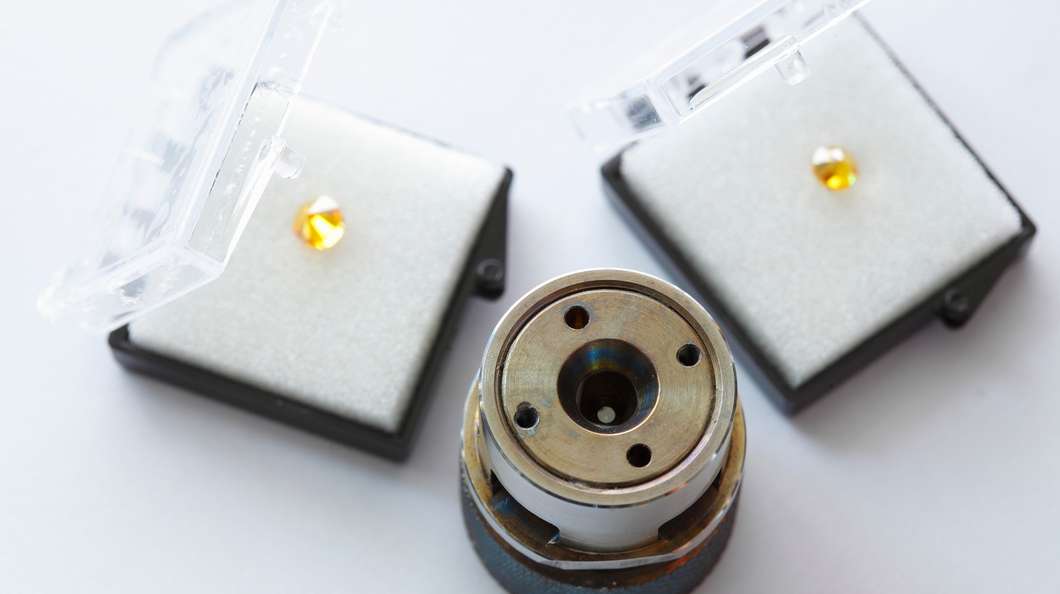
The new conductor developed by the team is hydrogen sulfide (H₂S) – yes the gas with the characteristic smell of rotten eggs. The researchers caused the compound to superconduct by cooling it and subjecting it to high pressures using a diamond anvil (which is a super high-pressure chamber made of two flat-faced diamonds). Super-cooled liquid hydrogen sulfide was placed in a one-cubic centimeter cryogenic cell between the diamonds and pressure was applied. As the diamonds squeezed together, the mixture was subjected to a pressure of 1.5 megabars (which is half the pressure found at the Earth’s core) at which point it started to superconduct at a record new high temperature of -70º C (-94º F). The cryogenic cell was equipped with electrodes to measure electrical resistance.

Another chamber was equipped with magnetic sensors. With the gradually increasing pressure and gradually decreasing temperatures, the two chambers were able to accurately measure the exact point where the changes in magnetism and conductivity showed the transition to superconductivity.

high-temperature-superconductor-0@2x

After this success, the team is now trying to better its own record by developing superconductors that can work at even higher temperatures and for that they will need to use some other compound other than hydrogen sulphide, probably hydrogen using twice the pressure used in the case of hydrogen sulphide. Mikhael Eremets, head of the working group said: “There is theoretically no limit for the transition temperature of conventional superconductors, and our experiments give reason to hope that superconductivity can even occur at room temperature.”

[adinserter block=”7″]

Author: Technology Blog

The Pentagon waves goodbye to the good old Humvee!

Everything that is born has to die and that applies to war combat vehicles too. Humvee, the iconic vehicle that entered service in 1985, is on its way to retirement and the one that will take its place is the Oshkosh Light Combat Tactical All-Terrain Vehicle. The Pentagon declared Oshkosh Defence as the winner of the Joint Light Tactical Vehicle (JLTV), after nine years of competition. Oshkosh beat AM General and Lockheed Martin. Humvee belonged to AM General. The JLTV program is a joint U.S. Army/Marines initiative to develop a replacement for the Humvee that began in 2006.

SONY DSC
SONY DSC

The conditions for the JLTV vehicle were that it could be easily maintained, reliable and able to be transported easily. In addition to all these the main requisite was that it should be able to perform in all types of terrain. Under the JLTV programme, two types of vehicles will be produced; a four-passenger Combat Tactical Vehicle (CTV) and a two-passenger Combat Support Vehicle (CSV).

The Pentagon’s initial contract is for $6.7 Billion and 17,000 vehicles, which is expected to continue after the first production run is completed. Foxtrot Alpha notes the JLTV contract is expected to be worth $30 Billion with over 54,000 vehicles produced over the next few decades. Over 280,000 Humvees have been built to date, so it’ll be quite some time before the Oshkosh L-ATV fully replaces them.

Regarding the reasons for this change, Humvee ofcourse provided reliable services for quite a long time but it lagged behind in speed and safety. In addition, the nature of war has changed drastically over the past 20 years, requiring a new kind of Light Tactical Vehicle. The Oshkosh people highlighted their strengths in a press release as: “Our JLTV has been extensively tested and is proven to provide the ballistic protection of a light tank, the underbody protection of an MRAP-class vehicle, and the off-road mobility of a Baja racer.

maxresdefault

The Oshkosh JLTV allows troops to travel over rugged terrain at speeds 70% faster than today’s gold standard, which is our Oshkosh M-ATV. Looking to future battlefields, we know that our troops will face a myriad of threats. Soldiers and Marines can be assured that the highly capable Oshkosh JLTV will perform the mission.”

[adinserter block=”7″]

Author: Technology Blog

Monitoring Honeybees with New Tracking Technology

About 70% of our foodstuffs are pollinated by bees. To be frank, the help we get from these tiny creatures every day, for free, is indispensable. But as all species seem to be endangered as of date, honeybees numbers have been declining drastically too, the factors contributing to their decline, though remain unknown. Thus, a research team lead by Australia’s national science agency, CSIRO, is working with the Global Initiative for Honey Bee Health (GIHH) in a new study designed to identify factors that may be harming the global bee population.

Honeybee-Fullsize

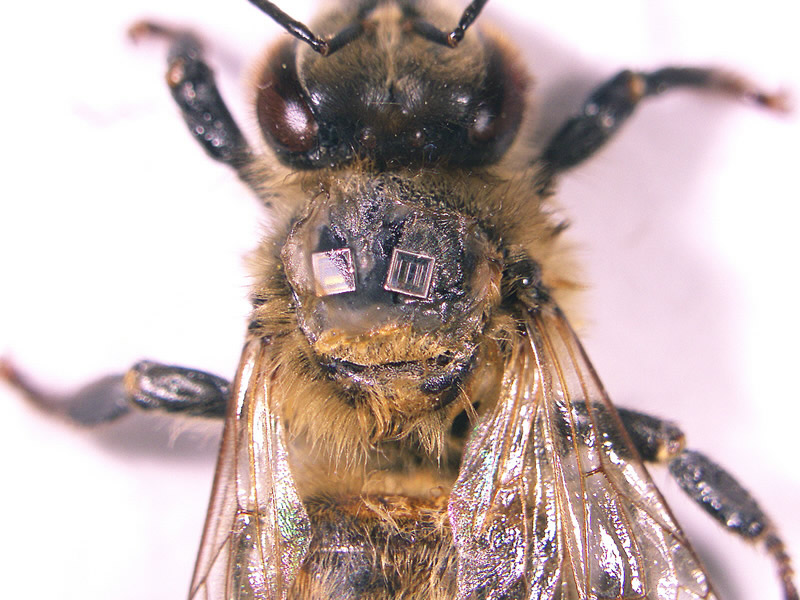
This steady dwindling of bees had been noticed in the late 1990s by the beekeepers. As number of factor could be at fault here, including but not limited to, chemical changes, pathogens or pesticides. The latest technology is RFID micro-sensors that are attached to individual bees using tweezers and super glue. Each sensor confers a unique identity to each bee by designating it a specific code and license plate.

Using these sensors and other solar-powered Intel Edison boards inside the hive and receivers placed in the vicinity of the hive, the researchers can study can study their behavior and monitor their movement throughout each bee’s lifetime. The sensor doesn’t interfere with the bee’s activity in any way.

“The tiny technology allows researchers to analyze the effects of stress factors including disease, pesticides, air pollution, water contamination, diet and extreme weather on the movements of bees and their ability to pollinate,” Professor Paulo de Souza, CSIRO Science Leader, said. “We’re also investigating what key factors, or combination of factors, lead to bee deaths on mass.”

bee_tagged_b

These sensors will be deployed on thousands of bees in Australia to start with, and further goals of this project are to extend the monitored area to a 1000 hives and 2.5 million bees.

[adinserter block=”7″]

Author: Technology Blog

Future may see conversion of sunlight to energy with minimal losses

Sun is that big ball of fire and energy that has been part of our lives from the time immemorial and we have had various attempts at harnessing its energy to convert it in various forms. We have succeeded of course, from conversion to electricity via photovoltaic (PV) panels, concentrated heat to drive steam turbines, and even hydrogen generation via artificial photosynthesis  but the losses related to these transmissions have always been huge. What if we could utilise all of the sunlight that we get without any losses?

nanofiber-light-transport@2x

It would be a revolutionary thing in the field of energy transmission. Now scientists working at the University of Bayreuth claim that they have created a super-efficient light-energy transport conduit that exhibits almost zero loss. They have used specifically generated nanofibres at the core of this conduit or system.

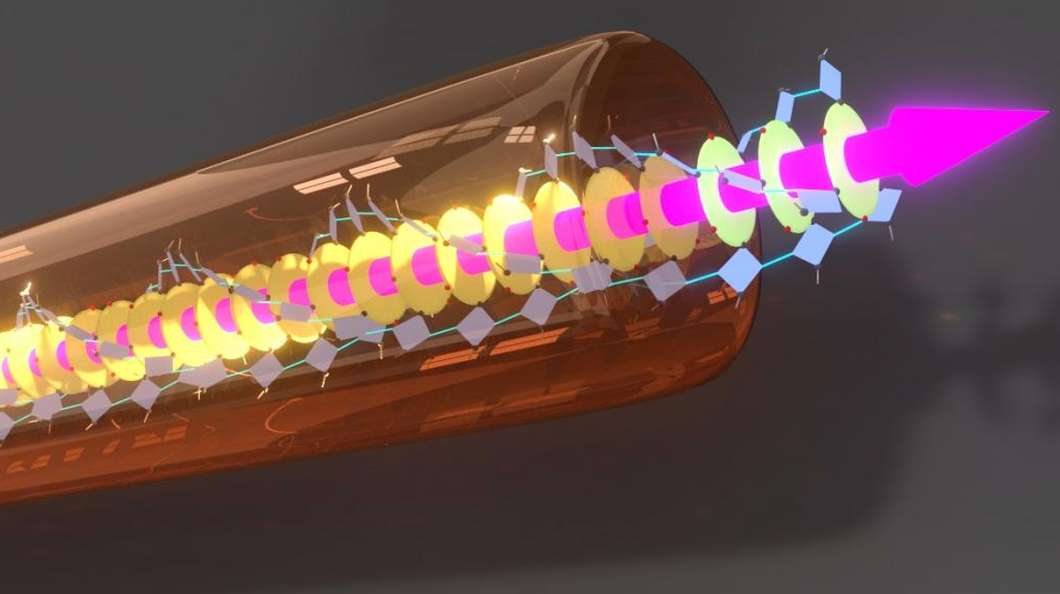
The scientists have based their conduit on Quantum coherence. Quantum coherence is the phenomenon where subatomic waves are closely interlinked via shared electromagnetic fields. As they travel in phase together, these quantum coherent waves start to act as one very large synchronous wave propagating across a medium. In the case of conduit created by University of Bayreuth these coherent waves of energy travel across the molecular building blocks from which the nanofibers are made, passing from block to block and moving as one continuous energy wave would in unbound free space. According to the scientists, this is exactly the effect which is driving the super-low energy loss capabilities of their device.

It is to be noted that the nanofibres used in the core of the conduit are specifically-prepared supramolecular strands and are manufactured from a chemically customized combination of carbonyl-bridged (molecularly connected) triarylamine (an organic compound) combined with three naphthalimide bithiophene chromophores (copolymer molecules that absorb and reflect specific wavelengths of light).  When brought together under particular conditions, these elements spontaneously self-assemble into 4 micrometer long, 0.005 micrometer diameter nanofibers made up of more than 10,000 identical chemical building blocks.

PVPanels

Let’s hope the revolution of converting sunlight into various forms of energy without losses happens soon!

[adinserter block=”7″]

Author: Technology Blog

Carbon nanotube implants to help peek into the human body and diagnose serious ailments

Human body is a marvellous machine and just like any other machine, it requires repair and maintenance in case of any defect. In humans, these defects can be serious and critical ailments like cancer. From a very long time, scientists have been trying to find out ways by which diseases affecting the health condition of a human body can be identified at an early stage or as soon as possible. Working in this direction, a team of researchers has developed implantable carbon nanotubes.

Biochip-845x321

These nanotubes are designed as miniscule cylinders made of grapheme and coated with another type of polymer. These are flexible and easy to modify for different purposes. To use these nanotubes in diagnosing diseases, the researchers designed special polymers that give response to a molecule which they are interested in. Once this is done, a special sensor in the nanotube sends the signal back to a computer for further processing.

As reported in Nature News, the researchers as part of their presentation gave details about the experiments conducted with mice using these nanotubes. In the case of mice, the nanotubes were designed to detect insulin (for diagnosing diabetes); fibrinogen (an indicator of liver disease and a protein necessary for blood clot formation) and nitric oxide (a molecule the body produces in case of cancer). They then engineered the polymers to sense a particular molecule. After this, they tested the carbon nanotubes in blood samples outside the mice, and then implanted the devices inside the mice. The nanotubes transmitted a continuous signal and, when inside the body, didn’t break down or cause a reaction for 400 days. The nitric oxide sensors in particular worked well, as they were injected into the bloodstream and were even able to pass through the tiny capillaries in the lungs.

web1.18219-ALAMY-E1A17K

Since the cost of these nanotubes is quite high, people will naturally opt for blood tests for the diagnosis in the foreseeable future. But if these tubes show the same success story in humans, then these can surely be used for continuous monitoring of patients in unstable conditions.

[adinserter block=”7″]

Author: Technology Blog

Bloom Foam from Algae

Many hidden benefits of algae have been emerging in the recent years- to produce oxygen, purify wastewater, provide light, source of biofuel and most recently, making flexible foam. bioplastics firm Algix and clean tech company Effekt have worked to create this incredible transformation, from algae to soft, pliable foam.

85399481

Algal blooms in excess are a menace as they float over the surface of the water bodies and consume the oxygen before it dissolves in the water. Thus, they starve the aquatic beings and continue to spread widely, giving the water the infamous dense green cover cover on top. The collection of this ill-placed algae could actually help the environment.

SeaFoam

The harvested algae is drained and dried before being turned into pellets and polymerised with other substances, to give the finished product. The yoga mats, sporting goods and toys made from this foam could contain 15-60% of algae as their constituent, depending upon the composition.

The Bloom Foam seems no different than the traditional petroleum-derived foam. Its sale should begin early next year in US and Asia.

[adinserter block=”7″]

Author: Technology Blog

Verified by ExactMetrics