EmDrive: The Physics-defying technology of space propulsion

You may not be one of those people interested in any news related to space propulsion, you still might have heard about EmDrive from a friend or a friend of friend or some unknown geek talking to some other person in the tube. EmDrive is taking the space propulsion world by a storm.
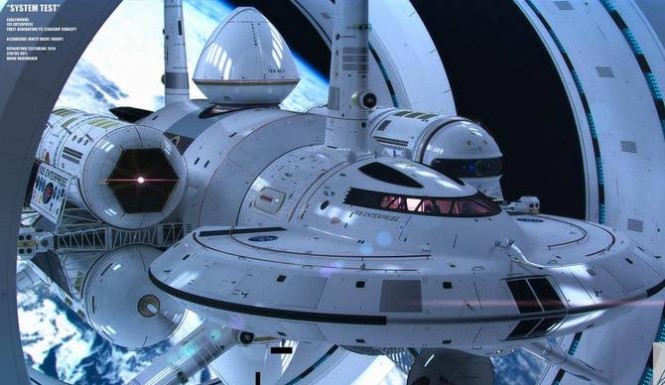
Starship-670-665x385Tall claims have been made about it being a historic technology that even defies the laws of Newton and that it can change the face of space propulsion entirely. It has also been claimed that reaching far off stars, planets and celestial bodies would become much faster once this technology is used in space propulsion.

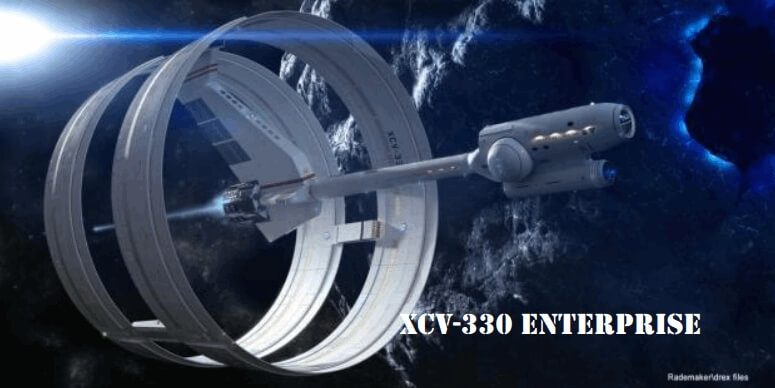
Now what exactly is EmDrive? A mystery in itself. An aerospace engineer, Roger Shawyer had first designed this in 2001.According to Shawyer, this technology is a propellant-less propulsion system, that is the engine doesn’t use fuel to cause a reaction. This hypothetical drive removes the need for fuel leading to substantially lighter and cheaper spacecrafts.

Also this hypothetical drive is able to attain extremely high speeds. So where is the problem? The problem actually is its inconsistency with Newton’s law of conservation of momentum, according to which within a closed system, linear and angular momentum remain constant regardless of any changes that take place within said system that is, unless an outside force is applied, an object will not move.
1232381396342191717

It is actually a reaction-less device that is; it is proposing propulsion without any reaction (that is burning of fuel). An action (in this case propulsion of spacecraft) taking place without a reaction (in this case ignition of fuel and expulsion of mass) should be entirely impossible. And for such a thing to take place; we need to find a scientific ground which hasn’t been found as yet.

[adinserter block=”7″]

Author: Technology Blog
Astronaut on ISS would control robot on earth

Ever heard about force feedback in the case of robots? Well it is actually a technology by which a robot’s movements can be controlled and manipulated as if you are controlling and manipulating the movements of your hands. That is if a robot’s arm is to pick up a glass from a table, force feeding gives you the feeling that instead of just manipulating the robot it is actually your arm that you are manipulating in lifting that glass. This phenomenon is technically known as haptic or ‘The Science of Touch’.

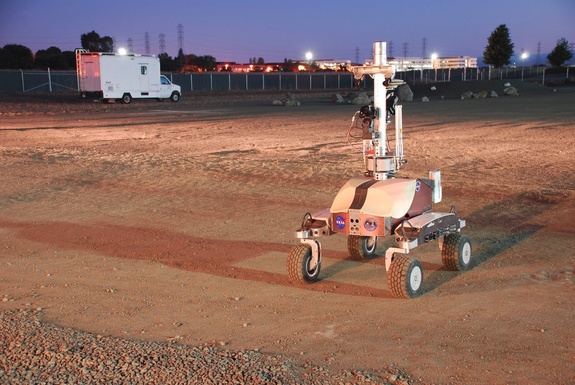
nasa-space-station-telerobotics-test-1

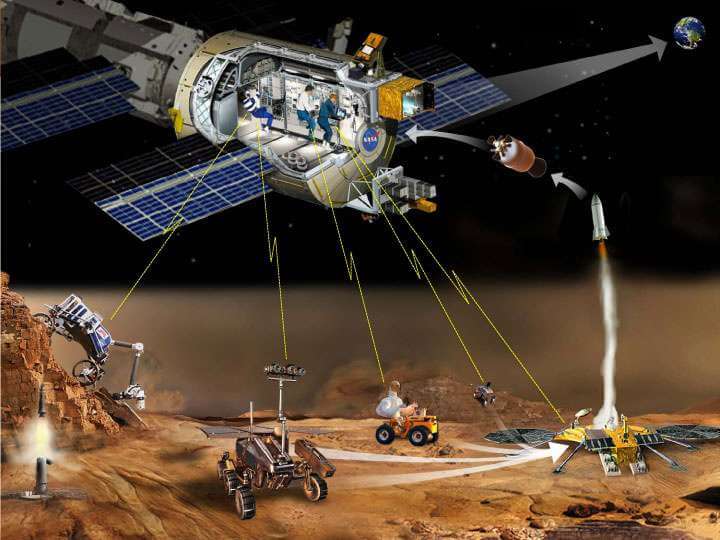
This coming month that is in September, an astronaut named Andreas Mogensen will attempt an important major experiment. He will control a super-precise robot here on earth using force feedback from aboard the ISS. The European Space Agency’s Telerobotics and Haptics Laboratory, which has developed a new type of rover called the Interact Centaur with two robotic arms that give force feedback to the operator in real-time.  But current robotic arm technology is not that refined for precise and nuanced work—so the ESA built Interact’s two arms with advanced force feedback, which the operating astronaut will feel thanks to a small “force reflective Joystick.” So, Interact Centaur is that robot which Mogensen will be controlling from the ISS.

All this is being done keeping the big picture in mind, which is the Mars mission and the team wants to send Centaur on this mission. A rover that can be deployed and controlled by humans who remain in orbit will give an edge of advantage when it comes to future missions to explore distant planets, or even just Mars. Not only would it be safer than landing and re-launching human astronauts, but it would allow us to explore planets whose atmosphere or surface are inhospitable for humans.

Force feedback concept may sound easy or doable when you hear about it but it is actually a huge challenge as the operator has to use only his sight to control the robot without actually being able to feel what the robot is touching and holding as one doesn’t know how much force should one apply in case of fragile objects. The ESA (European Space agency) issued a statement regarding the mission of Andreas Mogensen: ‘Andreas, due to launch to the ISS on 2 September, will first attempt to guide the robot to locate an ‘operations task board’ and then to remove and plug a metal pin into it, which has a very tight mechanical fit and tolerance of only about 150 micrometres, less than a sixth of a millimetre.’

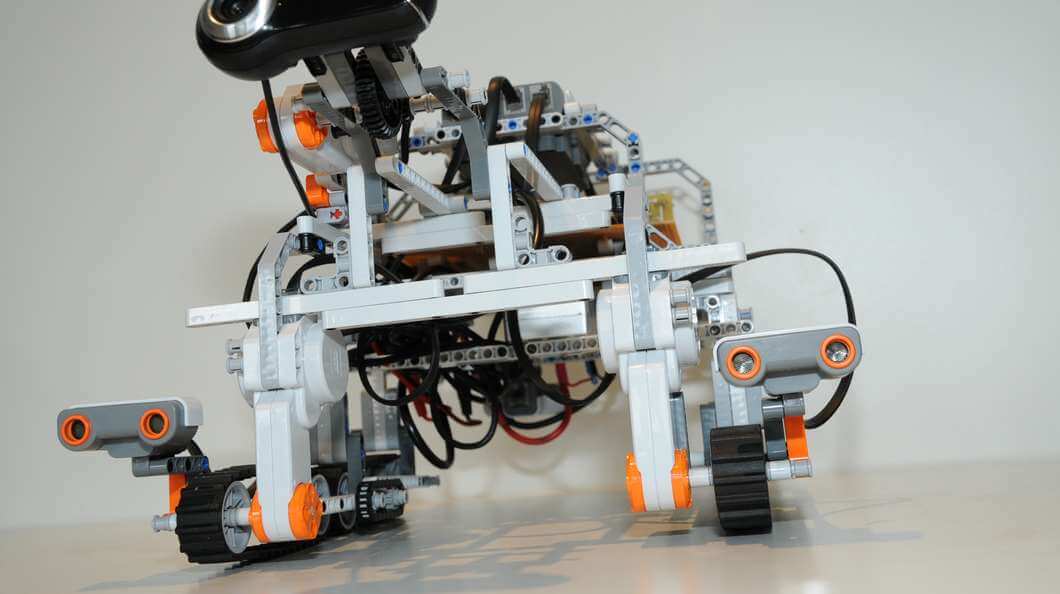
iss-lego-robot@2x

Centaur is one of the many rovers in line to be developed by ESA in the generation of force-controlled rovers, which are designed to feel more like extensions of one’s body irrespective of the distance between the bot and the operator. Great times ahead for sure!

[adinserter block=”7″]

Author: Technology Blog
Want a termite style home ventilation system?

All of us love are our homes and when that tiny devil ‘termite’ attacks it and makes it to crumble in places where it shouldn’t, we curse the little monster. While they don’t spare a thought while damaging ours, they are a brainy thing when it comes to building their own home. Some researchers have found that some of their mounds boast of solar-powered ventilation systems.

termiteskyscraper

Though this doesn’t mean that they have solar panels installed over their mounds! Actually they use sun’s heat and position to ventilate their mounds inhabited by thousands of termites. It is to be noted that termites are only a few millimetres long but as a colony they build mounds that are three to six feet tall (and more than that in some cases).

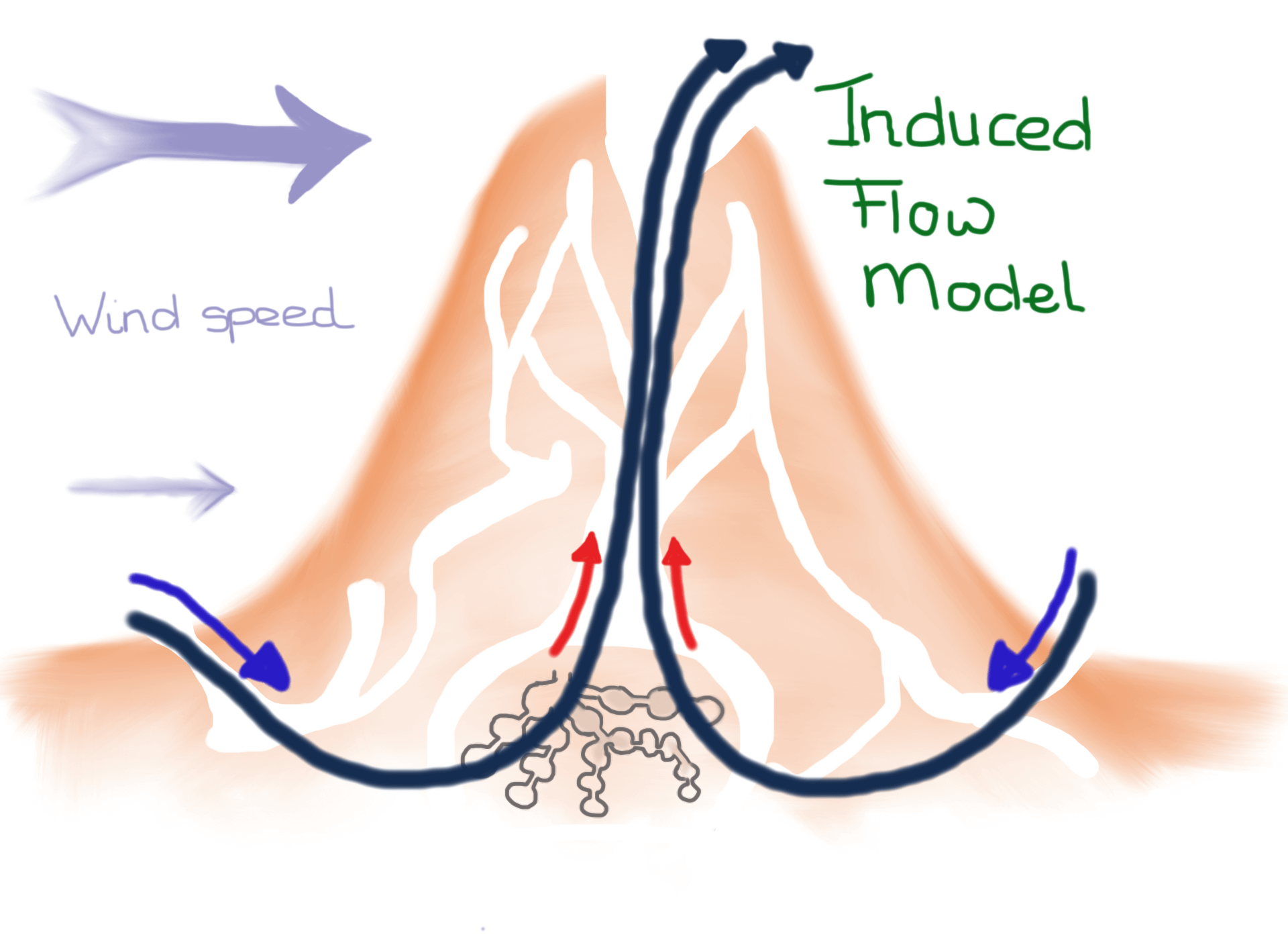
In a mound, there are a huge number of termites that build and maintain it. Ventilation is a need for this structure as there are thousands of termites down there in a small place along with the fungus gardens that some termite colonies tend. All these factors can lead to stale air but in practicality they don’t. That means these termites have such a ventilation system that keeps stale air at bay. When researchers observed closely, that as opposed to their early theory about wind and air pressure being the basis of their ventilation systems; it is actually the temperature fluctuations around the day that is the basis of the ventilation system in a mound. They observed that inside the mounds of many species of termites including Odontotermes obesus, the species involved in this study, there is a hole in the centre that works like an atrium or chimney.

2013-09-04-08-40-20

Several smaller tubes are connected to this central atrium or chimney. During the day time when the sun’s rays are beating down, air warms in the smaller tubes and rises up whereas cools and sinks down in the larger tube. At night, the process is reversed, and so air in the smaller tubes cools faster than the air in the chimney. This airflow pattern that keeps running throughout the day around the year keeps the mound well ventilated. These termite mounds are really a marvel of architecture as they can be as old as 2,000 years old (a mound recently found in Africa is above 2,000 years old).

So dear little termites, salute to you but please maintain the distance when it comes to our house!

[adinserter block=”7″]

Author: Technology Blog
Verified by ExactMetrics