Ever heard about force feedback in the case of robots? Well it is actually a technology by which a robot’s movements can be controlled and manipulated as if you are controlling and manipulating the movements of your hands. That is if a robot’s arm is to pick up a glass from a table, force feeding gives you the feeling that instead of just manipulating the robot it is actually your arm that you are manipulating in lifting that glass. This phenomenon is technically known as haptic or ‘The Science of Touch’.
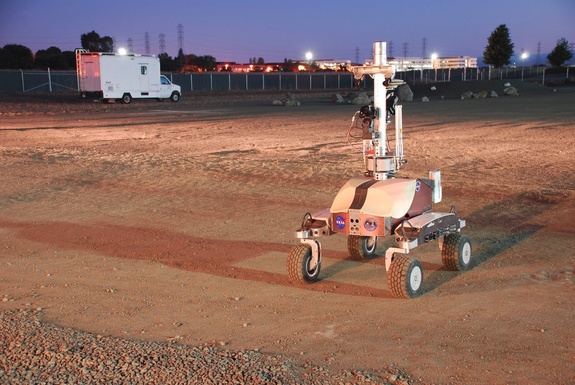
This coming month that is in September, an astronaut named Andreas Mogensen will attempt an important major experiment. He will control a super-precise robot here on earth using force feedback from aboard the ISS. The European Space Agency’s Telerobotics and Haptics Laboratory, which has developed a new type of rover called the Interact Centaur with two robotic arms that give force feedback to the operator in real-time. But current robotic arm technology is not that refined for precise and nuanced work—so the ESA built Interact’s two arms with advanced force feedback, which the operating astronaut will feel thanks to a small “force reflective Joystick.” So, Interact Centaur is that robot which Mogensen will be controlling from the ISS.
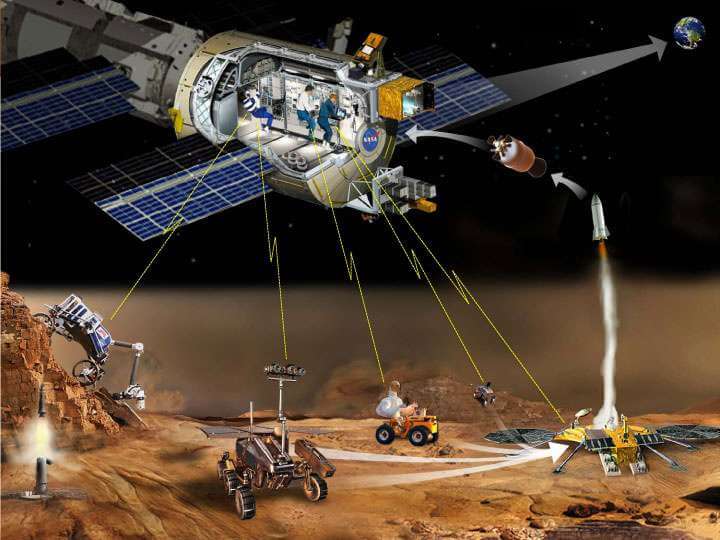
All this is being done keeping the big picture in mind, which is the Mars mission and the team wants to send Centaur on this mission. A rover that can be deployed and controlled by humans who remain in orbit will give an edge of advantage when it comes to future missions to explore distant planets, or even just Mars. Not only would it be safer than landing and re-launching human astronauts, but it would allow us to explore planets whose atmosphere or surface are inhospitable for humans.
Force feedback concept may sound easy or doable when you hear about it but it is actually a huge challenge as the operator has to use only his sight to control the robot without actually being able to feel what the robot is touching and holding as one doesn’t know how much force should one apply in case of fragile objects. The ESA (European Space agency) issued a statement regarding the mission of Andreas Mogensen: ‘Andreas, due to launch to the ISS on 2 September, will first attempt to guide the robot to locate an ‘operations task board’ and then to remove and plug a metal pin into it, which has a very tight mechanical fit and tolerance of only about 150 micrometres, less than a sixth of a millimetre.’
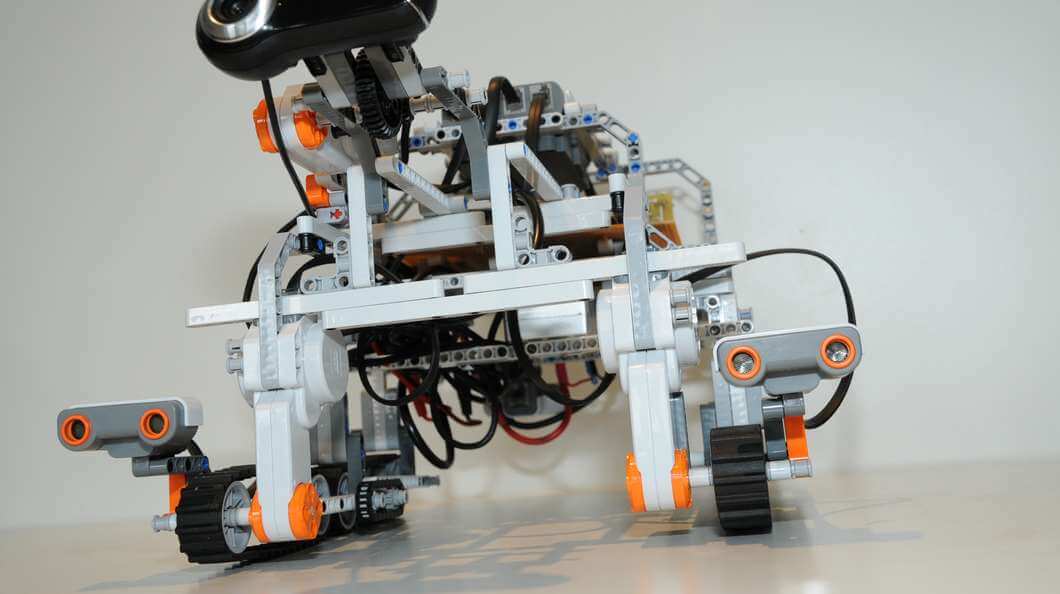
Centaur is one of the many rovers in line to be developed by ESA in the generation of force-controlled rovers, which are designed to feel more like extensions of one’s body irrespective of the distance between the bot and the operator. Great times ahead for sure!
[adinserter block=”7″]
Author: Technology Blog

