Monitoring Honeybees with New Tracking Technology

About 70% of our foodstuffs are pollinated by bees. To be frank, the help we get from these tiny creatures every day, for free, is indispensable. But as all species seem to be endangered as of date, honeybees numbers have been declining drastically too, the factors contributing to their decline, though remain unknown. Thus, a research team lead by Australia’s national science agency, CSIRO, is working with the Global Initiative for Honey Bee Health (GIHH) in a new study designed to identify factors that may be harming the global bee population.

Honeybee-Fullsize

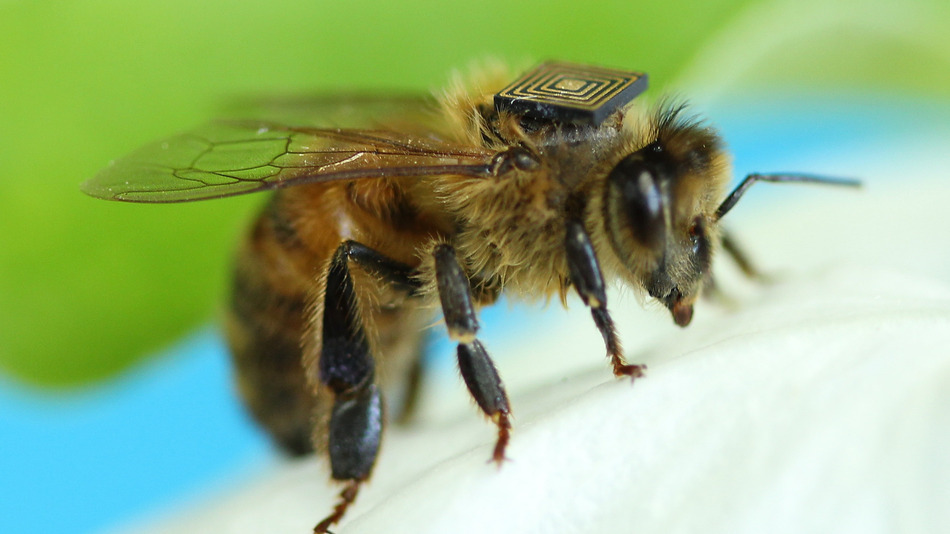
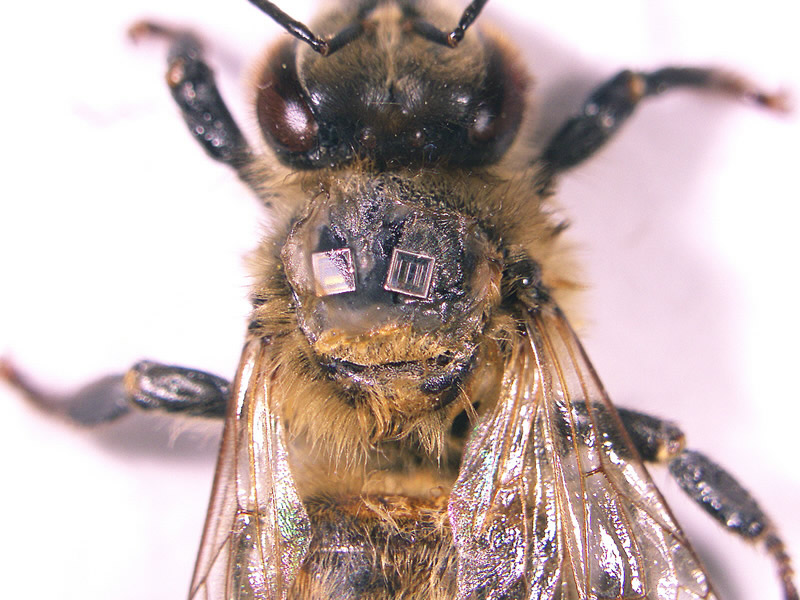
This steady dwindling of bees had been noticed in the late 1990s by the beekeepers. As number of factor could be at fault here, including but not limited to, chemical changes, pathogens or pesticides. The latest technology is RFID micro-sensors that are attached to individual bees using tweezers and super glue. Each sensor confers a unique identity to each bee by designating it a specific code and license plate.

Using these sensors and other solar-powered Intel Edison boards inside the hive and receivers placed in the vicinity of the hive, the researchers can study can study their behavior and monitor their movement throughout each bee’s lifetime. The sensor doesn’t interfere with the bee’s activity in any way.

“The tiny technology allows researchers to analyze the effects of stress factors including disease, pesticides, air pollution, water contamination, diet and extreme weather on the movements of bees and their ability to pollinate,” Professor Paulo de Souza, CSIRO Science Leader, said. “We’re also investigating what key factors, or combination of factors, lead to bee deaths on mass.”
bee_tagged_b

These sensors will be deployed on thousands of bees in Australia to start with, and further goals of this project are to extend the monitored area to a 1000 hives and 2.5 million bees.

[adinserter block=”7″]

Author: Technology Blog
Future may see conversion of sunlight to energy with minimal losses

Sun is that big ball of fire and energy that has been part of our lives from the time immemorial and we have had various attempts at harnessing its energy to convert it in various forms. We have succeeded of course, from conversion to electricity via photovoltaic (PV) panels, concentrated heat to drive steam turbines, and even hydrogen generation via artificial photosynthesis  but the losses related to these transmissions have always been huge. What if we could utilise all of the sunlight that we get without any losses?

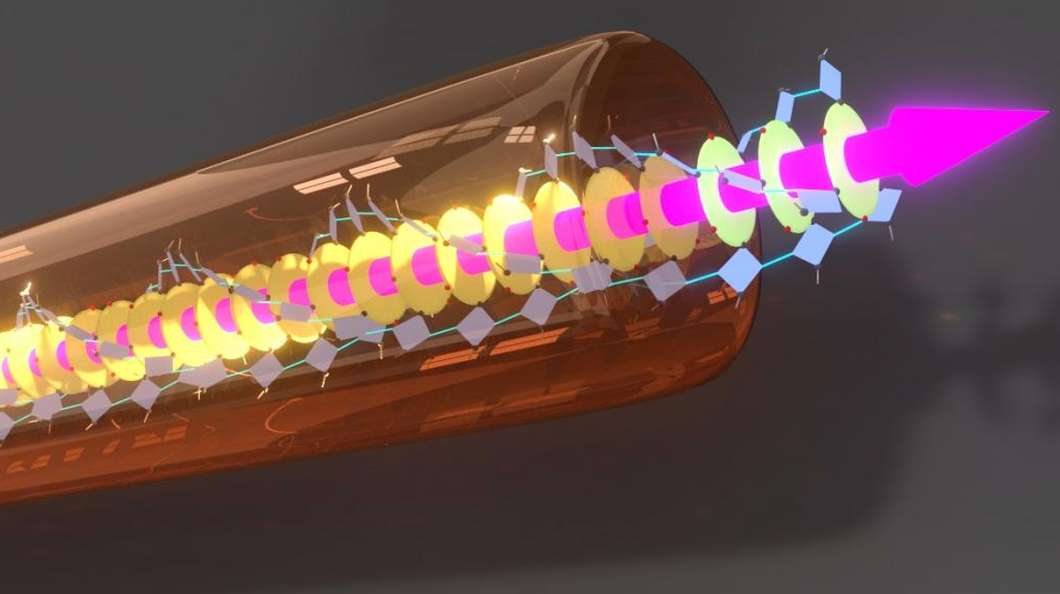
nanofiber-light-transport@2x

It would be a revolutionary thing in the field of energy transmission. Now scientists working at the University of Bayreuth claim that they have created a super-efficient light-energy transport conduit that exhibits almost zero loss. They have used specifically generated nanofibres at the core of this conduit or system.

The scientists have based their conduit on Quantum coherence. Quantum coherence is the phenomenon where subatomic waves are closely interlinked via shared electromagnetic fields. As they travel in phase together, these quantum coherent waves start to act as one very large synchronous wave propagating across a medium. In the case of conduit created by University of Bayreuth these coherent waves of energy travel across the molecular building blocks from which the nanofibers are made, passing from block to block and moving as one continuous energy wave would in unbound free space. According to the scientists, this is exactly the effect which is driving the super-low energy loss capabilities of their device.

It is to be noted that the nanofibres used in the core of the conduit are specifically-prepared supramolecular strands and are manufactured from a chemically customized combination of carbonyl-bridged (molecularly connected) triarylamine (an organic compound) combined with three naphthalimide bithiophene chromophores (copolymer molecules that absorb and reflect specific wavelengths of light).  When brought together under particular conditions, these elements spontaneously self-assemble into 4 micrometer long, 0.005 micrometer diameter nanofibers made up of more than 10,000 identical chemical building blocks.

PVPanels

Let’s hope the revolution of converting sunlight into various forms of energy without losses happens soon!

[adinserter block=”7″]

Author: Technology Blog
Carbon nanotube implants to help peek into the human body and diagnose serious ailments

Human body is a marvellous machine and just like any other machine, it requires repair and maintenance in case of any defect. In humans, these defects can be serious and critical ailments like cancer. From a very long time, scientists have been trying to find out ways by which diseases affecting the health condition of a human body can be identified at an early stage or as soon as possible. Working in this direction, a team of researchers has developed implantable carbon nanotubes.

Biochip-845x321

These nanotubes are designed as miniscule cylinders made of grapheme and coated with another type of polymer. These are flexible and easy to modify for different purposes. To use these nanotubes in diagnosing diseases, the researchers designed special polymers that give response to a molecule which they are interested in. Once this is done, a special sensor in the nanotube sends the signal back to a computer for further processing.

As reported in Nature News, the researchers as part of their presentation gave details about the experiments conducted with mice using these nanotubes. In the case of mice, the nanotubes were designed to detect insulin (for diagnosing diabetes); fibrinogen (an indicator of liver disease and a protein necessary for blood clot formation) and nitric oxide (a molecule the body produces in case of cancer). They then engineered the polymers to sense a particular molecule. After this, they tested the carbon nanotubes in blood samples outside the mice, and then implanted the devices inside the mice. The nanotubes transmitted a continuous signal and, when inside the body, didn’t break down or cause a reaction for 400 days. The nitric oxide sensors in particular worked well, as they were injected into the bloodstream and were even able to pass through the tiny capillaries in the lungs.

web1.18219-ALAMY-E1A17K

Since the cost of these nanotubes is quite high, people will naturally opt for blood tests for the diagnosis in the foreseeable future. But if these tubes show the same success story in humans, then these can surely be used for continuous monitoring of patients in unstable conditions.

[adinserter block=”7″]

Author: Technology Blog

Verified by ExactMetrics