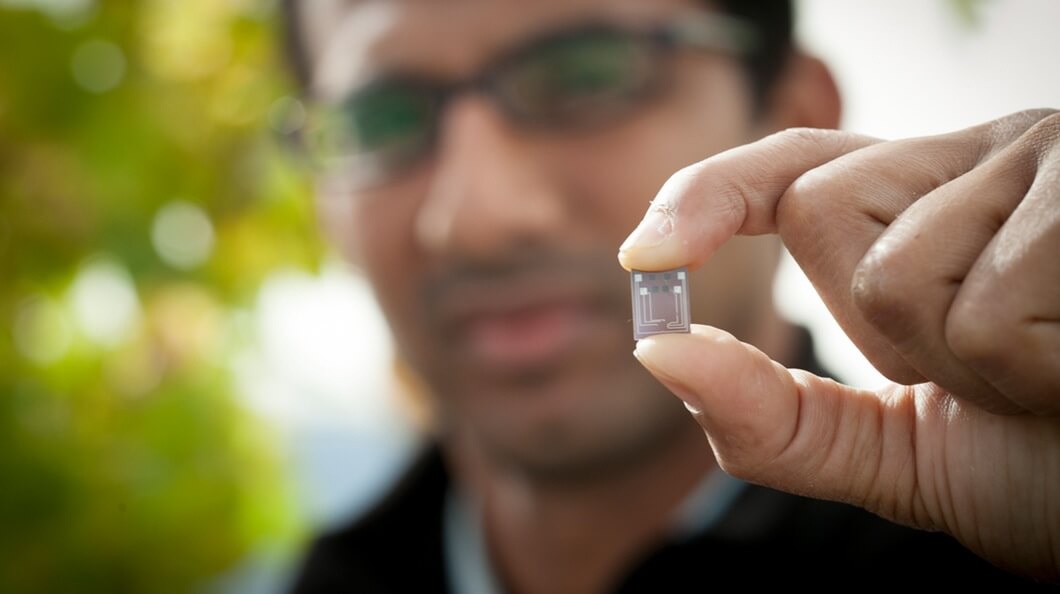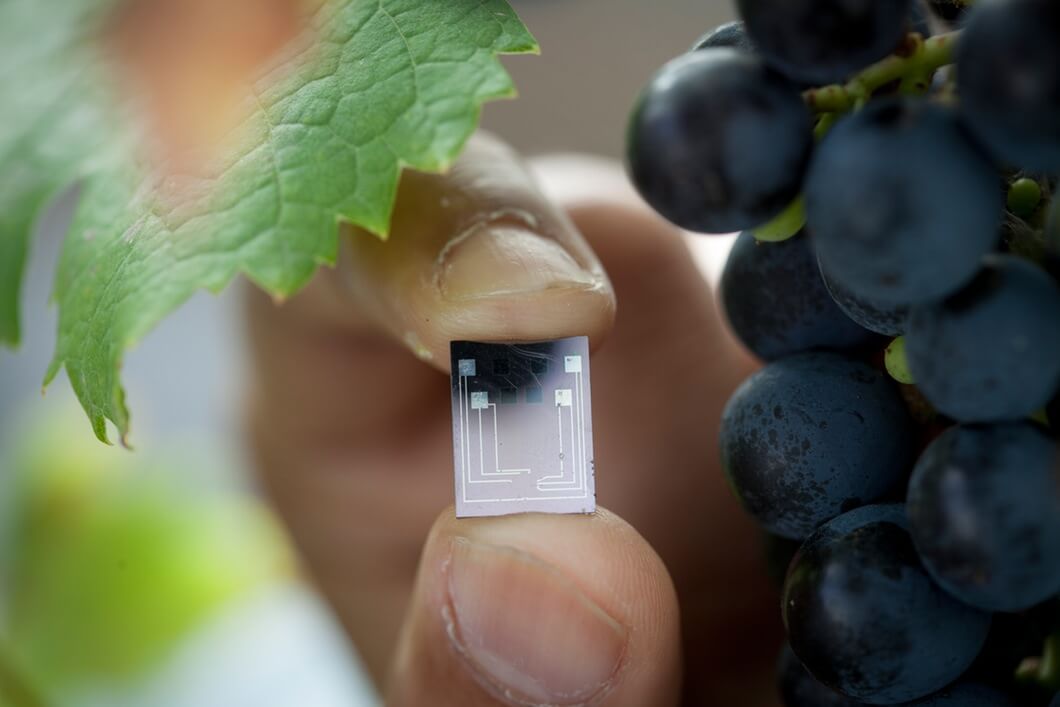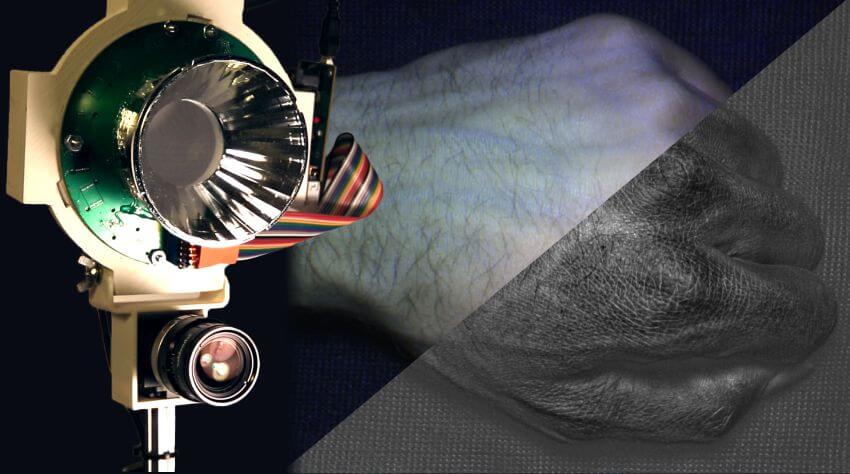
HyperCam, a new type of camera being developed by the University of Washington and Microsoft Research can enable you to see the veins in your hand, the inside of a fruit and stuff like that- just by aiming your phone at it.

The HyperCam uses technology called hyperspectral imaging that gathers images from across the electromagnetic spectrum and combines them into one picture. While, a regular shoots across just three spectrums, NASA’s Airborne Visible/Infrared Imaging Spectrometer (AVIRIS) can record images across 224 different bands. HyperCam is here to balance it out by stretching across 17 bands.
“When you look at a scene with a naked eye or a normal camera, you’re mostly seeing colors. You can say, ‘Oh, that’s a pair of blue pants,'” lead author Mayank Goel (PDF) said in a statement. Goel is a UW computer science and engineering doctoral student and Microsoft Research graduate fellow. “With a hyperspectral camera, you’re looking at the actual material that something is made of. You can see the difference between blue denim and blue cotton.”
In a paper presented at a computer conference in Japan, the team stated its intentions of making available a camera that works with a mobile phone camera for just $50 (about £30, AU$70). It has already developed one that would cost about $800 (about £515, AU$1,100).
“Existing systems are costly and hard to use, so we decided to create an inexpensive hyperspectral camera and explore these uses ourselves,” Microsoft researcher Neel Joshi, who collaborated on the project, said in a statement. “After building the camera we just started pointing it at everyday objects — really anything we could find in our homes and offices — and we were amazed at all the hidden information it revealed.”
In tests, the HyperCam was pointed at 10 different fruits and it was able to predict their ripeness 94 percent of the time, the researchers say. Other applications of this camera would be to detect and record the biometric identification of your fingerprints, for example, while unlocking your phone. The camera revealed vein and skin texture patterns on peoples’ hands, which allowed it to differentiate between the images of hands from 25 people with 99 percent accuracy.
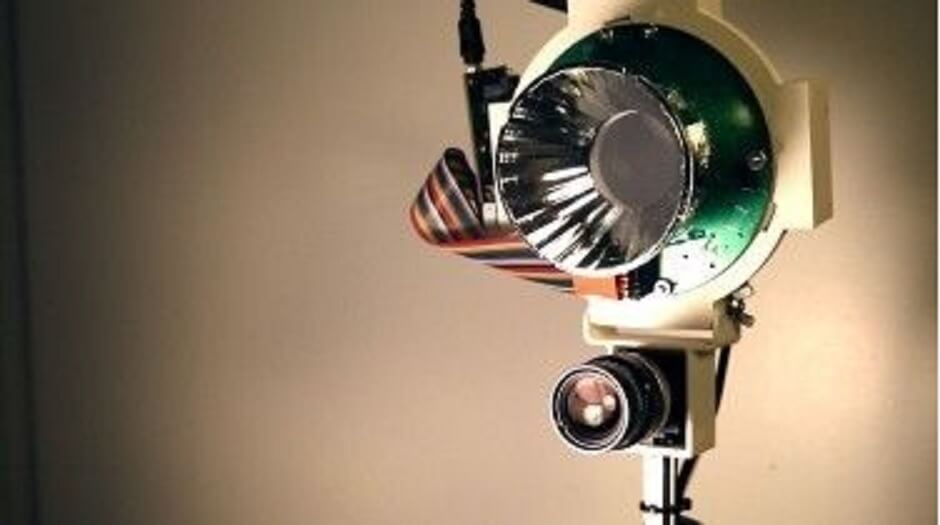
The camera doesn’t work well under low light conditions and the team is still working on that. The effort is also to shrink it down to fit in mobile phones.
[adinserter block=”7″]
Author: Technology Blog