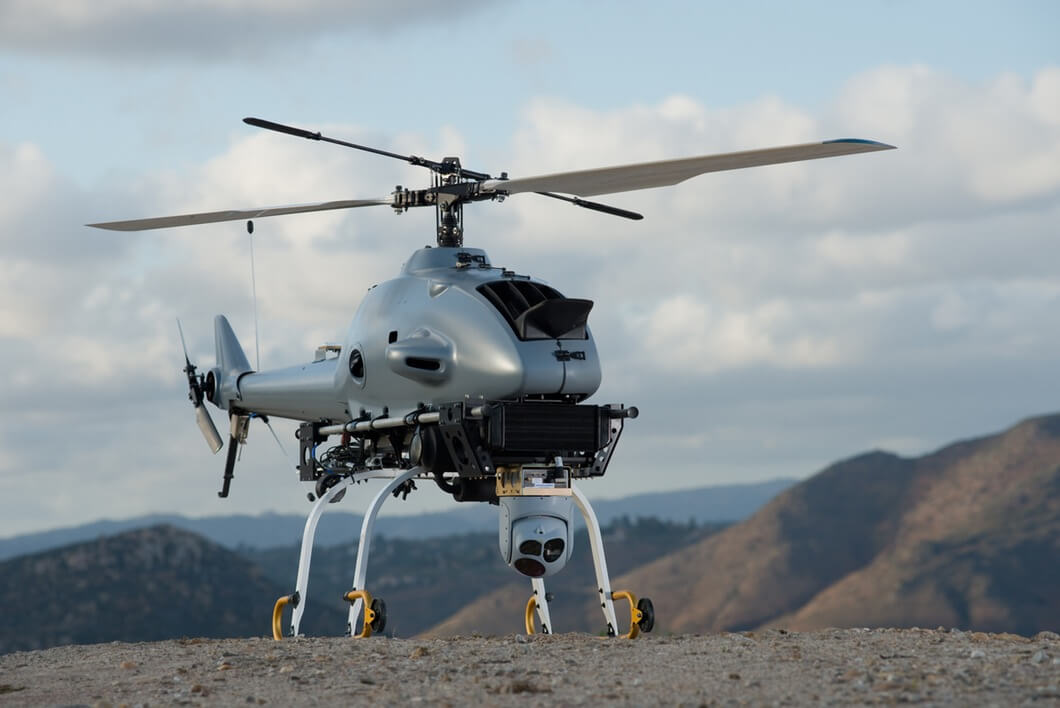
Autonomous Helicopter Puts Out Forest Fires

According to the National Interagency Fire Center, 2015 has been one of the most devastating calendar years for fires in the last decade, losing an estimated 9.3 million acres of land as of the middle of October. Such forest fires ravage not just flora and fauna, but also the tribal and human communities living in the burn radius. Thousands of people with their livelihood depending upon forests are put out of work. Lockheed Martin recently partnered with an aerospace manufacturer Kaman to collectively create autonomous helicopters that would tirelessly put out fires.

Fire-4

What originally started out as building vehicles for the military use in Afghanistan, Kaman’s K-MAX self-flying helicopter boasts the capacity to hold 6,000 pounds of cargo while flying near sea level, and roughly 4,000 pounds of cargo while operating at a 15,000-foot altitude. This helicopter is sturdy in the harshest climates, and is on service round-the-clock.

[adinserter block="7"]

“This technology will allow us to better support our firefighters on the ground, both with suppression and direct logistical support,” said the Department of Interior’s director of Aviation Services Mark Bathrick at a recent K-MAX field test in Idaho. “The integration of technology that could more than double the time we’re able to provide them with logistical and direct air support could be a game-changer in this mission area.”

Demonstration at Lucky Peak Helibase just outside Boise, Lockheed and Kaman displayed K-MAX’s skill as it was able to able to fill water from a far off source and accurately detect an invisible fire hazard on the ground. What’s more, it could do this time and time again without falling off the mark.

Fire-2

“We owe it to the firefighters on the ground to continually explore technologies that improve their safety and best support their efforts,” Bathrick continued. “We see it as a great example of prior tax payer investment that will pay dividends.”

Author: Technology Blog

Forensics to get a smarter way of collecting fingerprints

What would you do if your house was burgled and you found few of your most favourite things stolen? You would call the police, file a report and wait for them to nab the thief. Kang Liang did the same thing when his house was burgled in 2014. But unfortunately police could not find any fingerprints. Common people like us would try to forget this as an unfortunate incident but Liang being a scientist didn’t.

printer-3

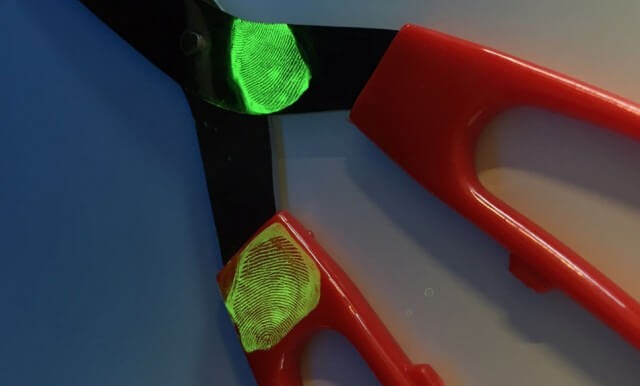
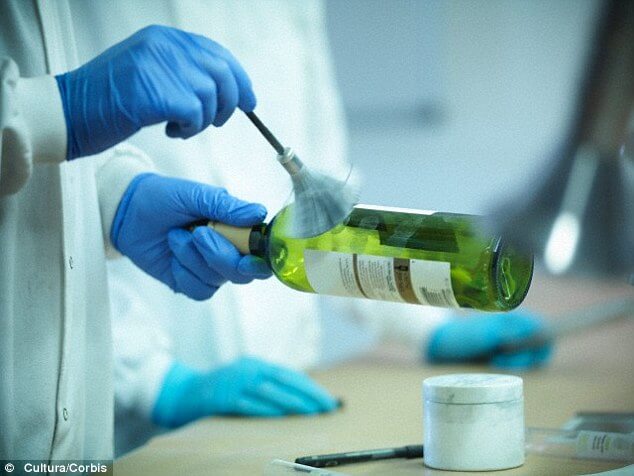
He being a scientist at Australia’s top science body CSIRO, took this break-in as a personal project as he was surprised to find the police using the 100 year old technique of dusting to collect the fingerprints. And because surface in his home wasn’t good for dusting, they couldn’t find any finger prints. Liang took it as a challenge to find a new technique and working on this project, developed a technique that uses liquid containing tiny crystals to combine with fingerprint residue on a molecular level. Under a UV light, the crystal-infused prints show up immediately in a very bright, clear fashion that can be easily photographed and run through a database.

[adinserter block="7"]

 In this technique, the crystals used in the liquid are the most important factors. The material is a new one called metal organic framework crystals (MOF). These MOF crystals bind to biological substances in the fingerprint viz. Proteins and fatty acids and then grow around the pattern of the print. In 10-20 seconds the fingerprints show up with fluorescence. Liang informed that in the lab the fingerprints stayed up for nearly three months. Though MOF crystals are also used for carbon capture and in healthcare, this is its first known application in forensics. Like any other technique this one also has its limitations. Currently, it only works on non-porous surfaces, so paper or clothes are not an option, but Liang said the team is working on it.

Other than the fingerprint technique, Liang and the CSIRO also found a use for MOF crystals in preserving vaccines or drugs without refrigeration. The MOF crystals bind around the vaccine’s molecules to protect it. Then when you want to use it, you can add a drop of bio-friendly solution to dissolve the crystals.

printer-2

Liang now wants to talk to the police for further enhancement of this fingerprint technique. When it is the thieves and the robbers we are facing, the smarter we are the better!

Author: Technology Blog

Hypercam: A camera that shows you the hidden side of the picture!

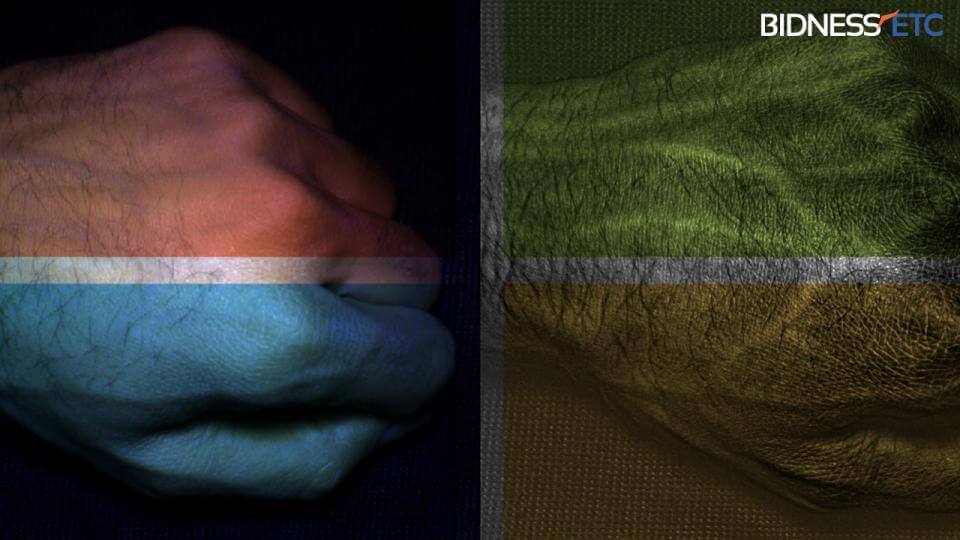
What if you looked at your close-up shot and found a criss-cross of veins on your face or what if you clicked a picture of a fruit and found what it actually looks like from within? Well presenting hyperspectral cameras to you!!

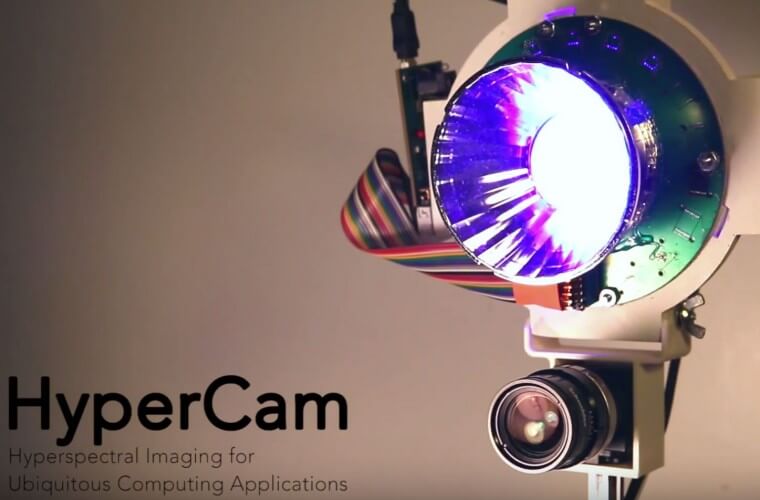
Hyper-2Despite having this amazing quality, these kinds of hyperspectral cameras are big, bulky and expensive hence their use is limited to scientific or industrial applications. But this may change in the near future as researchers from the University of Washington and Microsoft Research are creating a compact, inexpensive consumer hyperspectral camera that may even find its way into your smartphone. So here is where HyperCam comes into picture.

Actually what happens is, when we capture any picture with a conventional camera, it just works with the red, green and blue (RGB) bands of light, whereas the HyperCam , emits and then images 17 various wavelengths of light within the visible and near-infrared part of the electromagnetic spectrum. The HyperCam then compares each of those images to one regular RGB photo of the same subject, to see which ones differ most from what the human eye would see. These selected images are then compiled into one photo and then presented to the user.

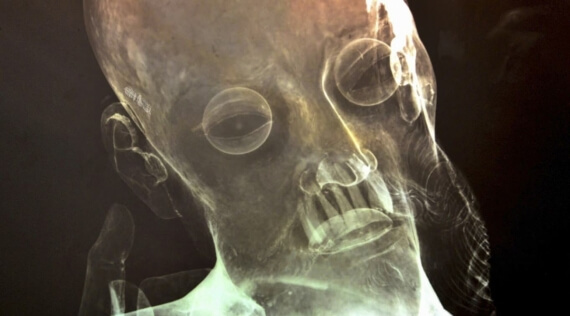
It would be able to show things like veins beneath the skin or ripeness of fruits beneath their peels. Infact, when lab tests were done using this HyperCam, the HyperCam accurately identified 25 different people based on their vein pattern with an accuracy of 99 percent. When such experiment was conducted to gauge the ripeness of 10 types of fruits, it had an accuracy rate of 94 percent as against 62 percent of RGB camera.

Hyper-1

In its current form, the technology would cost about US$800 as a standalone camera, although it might only cost about $50 to add to a smartphone in the manufacturing process. But for that to happen the camera would need to be diminished in size in fact miniaturized and it would also need to be adapted to working in bright lights. It would be really exciting to have such a camera fitted in our smartphones. Wouldn’t it?

Author: Technology Blog

Author: Technology Blog

Solar power may get a boost from this chameleon material

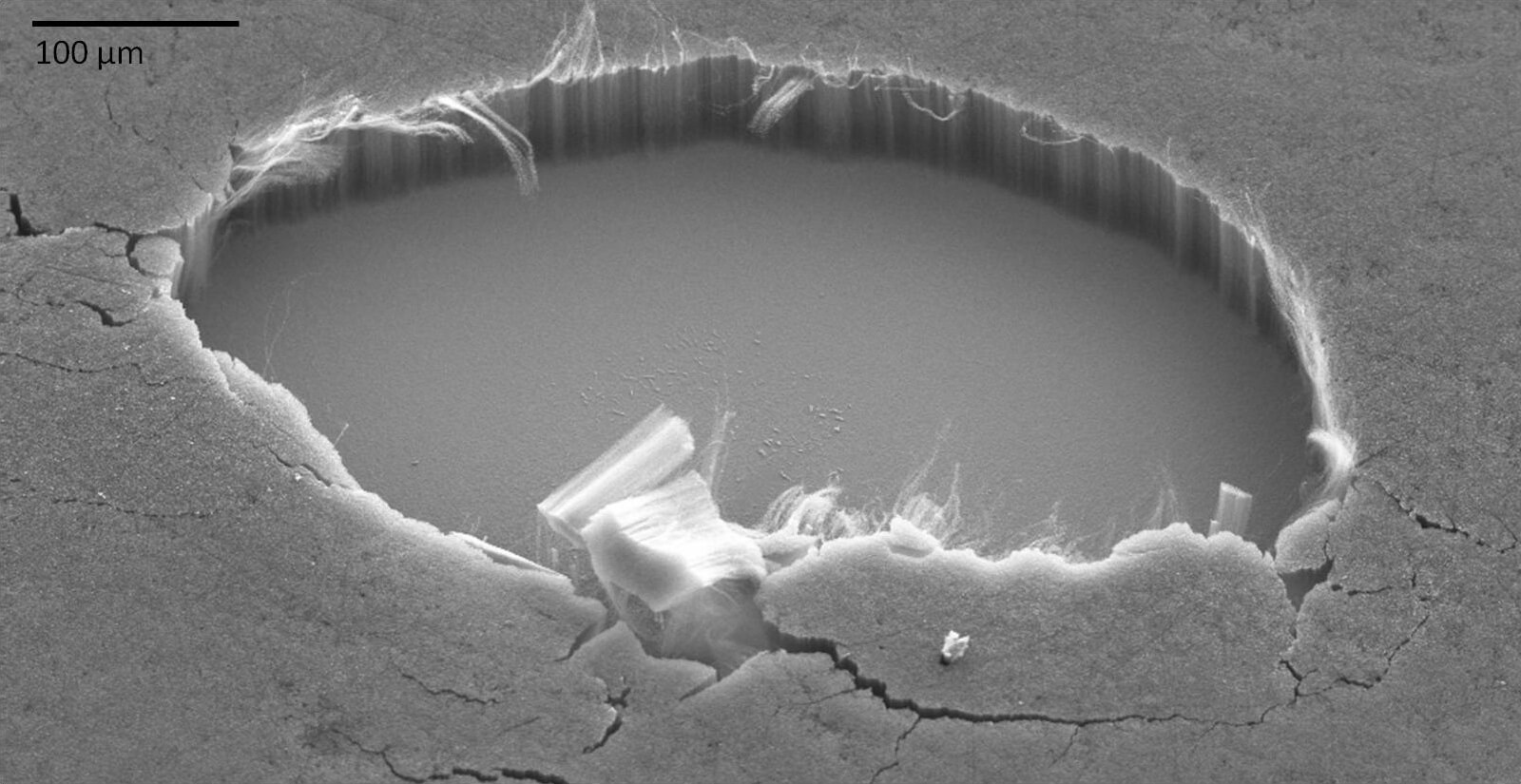
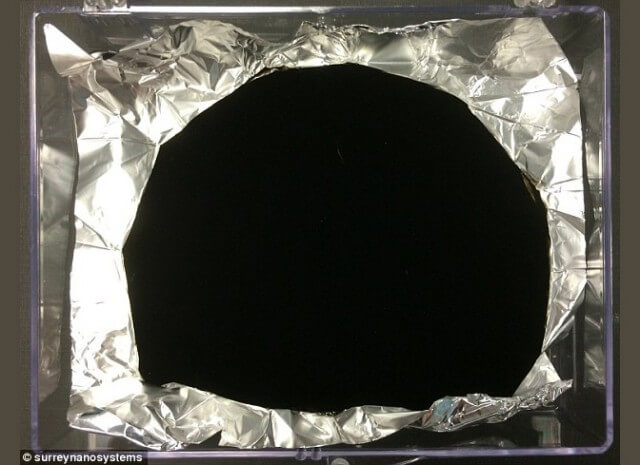
Why do things appear black or white? They appear black because they absorb all the colours of sunlight and reflect none while they appear white because they don’t absorb any of the wavelengths of the visible spectrum and scatter all. Did you know that a material made from carbon nanotubes holds the world record for blackness? This material when layered approximately to a thickness of one mm absorbs 99.8 percent of light!

dark-3

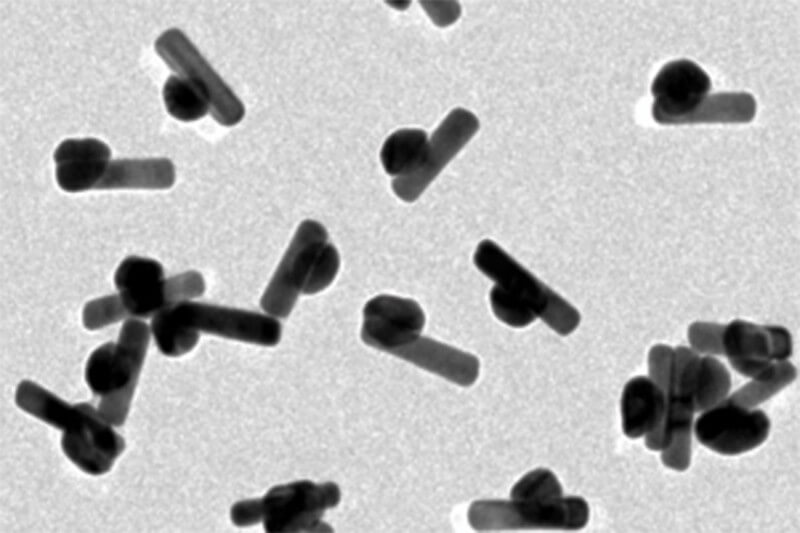
But recently it has come to the notice that a nano-material made of gold and consisting of miniscule hammer-like shapes has succeeded in achieving nearly as much blackness. And what’s more… it was also discovered that with a small addition it can even reflect any colour that one wants to. Inspired by beetles, whose beautiful thin shells reflect all wavelengths of light and thus make them appear whiter than any artificial material, Andrea Fratalocchi at King Abdullah University of Science and Technology in Saudi Arabia; thought of discovering the phenomena that was just reverse of this beetle effect. In this quest, he designed a theoretical system involving a tiny concave shell attached to an infinitely long tube designed to guide waves. If it was practically possible to build such structure light when entered the shell and travelled along the tube would never be seen again. Fratalocchi then approximated this design with gold nanorods and using plasmonics (materials that bend light along different paths). At a thickness of a hundredth of a millimetre, he found that the material absorbed 98.43 percent of light. This is a very high level of absorption and implies that this material could be painted onto other surfaces to turn light into heat.

Yuri Kivshar from Australian National University in Canberra opines that gold being an excellent conductor would transfer heat more efficiently than carbon nanotubes. Moving further in the experiment, when a simple dye was added to this material, its behaviour changed almost drastically. So what it really did was: rather than absorbing light and emitting it as heat the material converted everything in the visible and infra red spectrum into the colour of the dye.

Based on the ongoing research Fratalocchi opines that if a greater amount of sunlight were focussed onto this material such that it surpassed the threshold energy it would be possible to capture a large portion of the sun spectrum and transfer it on a single colour this in turn, would certainly improve the efficiency of photovoltaic cells which are known to work best with some particular frequencies of sunlight.

dark-4

Hope this chameleon brings about a good change in the field of solar power!

Author: Technology Blog

Author: Technology Blog

Four Types Of Software For All Your Businesses Needs

Anyone looking to start a business will want to create a list of the tools they will need to be successful, and then acquire those tools. The problem is that there is no manual available that explains exactly what every business needs to get off the ground. There are the basics such as funding and employees, but then there are more complicated matters such as software and technology.

The Charles Phillips Infor story shows us just one person who is doing what he can to offer the software businesses need. In order to get your business planning off to the right start, it helps to have a list of the different types of business software your company will need to sustain operations.

Client Contact Database

Software-1

The misconception every new business owner has is that their client contact database software needs to be complicated to be effective. Your client database will grow with your business, which means that it can start out as simple as you need it to be in the beginning. The key is to buy software that has features you may not need now, but that you can incorporate as your needs change and your business grows.

Accounting Software

Software-2

Your accounting software winds up being one of the most important platforms your business will ever use. A small business just starting out will want to look at investing in an Internet-based accounting software package for two good reasons. The first is that an Internet-based program can be used on mobile computing devices to create customer invoices and update accounts no matter where you are.

The other reason to use an Internet-based accounting software is that it offers easy access to everyone who needs it without having to worry about setting up a network of your own. Internet-based programs are very secure, and they can help you to save a lot of money on technology costs.

Productivity Software

Software-3

Productivity software is a term used to refer to business software suites that contain word processors, presentation creation software, and spreadsheet software. Once again, there are many advantages to getting an Internet-based software suite that allows you to access your files in the office, on the road, or at home.

Workflow Software

ƒvƒŠƒ“ƒg

Workflow software allows you to take company tasks and map them out from start to finish. For example, a workflow program will allow you to determine who is responsible for creating a purchase order, and who needs to sign the purchase order for it to be valid. Along with your company’s policies and procedures manual, workflow software will keep your company organized and save you a lot of money on administrative costs.

Each business will find that its technology needs are customized to fit their particular way of doing business. But when it comes to the software needed to get a business off the ground, there are certain platforms that every business must have if it is going to be successful and allow itself to grow.

Author: Technology Blog

Author: Technology Blog

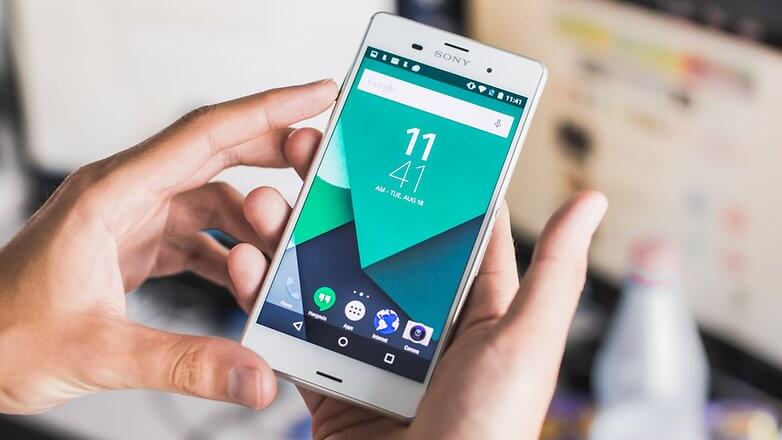
Android 6.0 Marshmallow: Smarter with convenience of the old version

Marshmallow is here to take Lollipop’s place! In technical terms, Version 6.0 of Android is rolling out to Nexus devices. That means it will be a part of all the new Nexus phones very soon and will also be present in the recent Android phones in the coming months. In totality, the immediate and on-the-surface changes are so understated that you would hardly feel that you have changed from Lollipop to Marshmallow. The things that will instantly strike you as something new are the Google Now launcher and the Settings app. Let us discuss some of Marshmallow’s features.

MM-4

Tap! Tap! Tap! Google Now on Tap makes Marshamllow smarter than Lollipop

The Google Now Tap is smarter in terms of the extra information it gives for a single query. For example, if a sports team is displayed, Google Now Tap gives you links to the team’s social media profiles, its official website and even directions to the stadium for the next match. Similarly if it is a movie, the Tap will bring up links to the Internet Movie Database app (if installed), Wikipedia, YouTube and so on. It is to be noted though that the choice of whether to grant Google Now this kind of access is the choice of the developer. It works well, but too often it doesn’t pick up the right bit of data, doesn’t provide relevant enough links, or simply isn’t useful enough. The Now on Tap was quite useful when tried in Chrome, Gmail, Rdio, Hangouts, etc. (Google apps) when it was a question of a movie or place name and a quick information was needed about it. But outside of Google’s apps you won’t find it that reliable.

MM-3

Doze: New battery saver technology

Doze is the name of Marshmallow’s new battery saver technology that cuts down on background processes and checks for new notifications less often when your device is not in use. The technology (Doze) automatically kicks in when if the device is motionless or screen is off. Google claims that the Nexus 9 lasts up to twice as long on a single charge. But the benefits will surely depend on how often you leave your smartphone or tablet idle. Becasue it seems that kind of technology which would be useful for those kinds of devices that are used occasionally on a daily or weekly basis. For devices used continuously in a day’s time, the results weren’t that encouraging. In addition to this, app permissions is another important thing. Apps simply ask for the access to the camera, microphone, contacts list, etc. as soon as they need them, instead of just as they are about to be installed. The change makes it easier to understand what rights particular apps want, and it also means you can let an app access one part of the system but block it from another.
MM-2

Miscellaneous changes

Lollipop was surely a mess when it came to volume control and silent mode and you won’t have this complaint with Marshmallow. If you tap the hardware volume button, then it brings up the system, media or alarm volume slider depending on what you are doing and if you give it a second tap, you can show all three on the screen at once. In addition to this, if you give a tap on the Do not disturb button in Quick Settings, it lets you choose among from amongst the options of total silence, alarms only and priority only (the last one means selected contacts, events and apps can make a sound).

MM-1

The native support for the much faster hence superior USB Type-C and fingerprint sensing technology built into Marshmallow is worth a mention but the benefits could be enjoyed only by those who will grab the new devices and no the updated ones. In addition to this, support for AndroidPay is also there. Some smaller twists like the improved text selection tool (that highlights whole words at once for easier picking out of words and phrases) and a Direct Share feature (that brings up the apps and contacts you connect to most often whenever you want to Share something) are also a part of Marshmallow.

Conclusion
In totality, using Marshmallow would not let you feel that you have made any major changes in the way you tackle and interact your smart device. But the feature of Google Now Tap surely comes out as a winner.

[adinserter block=”7″]

Author: Technology Blog

Coating on Steel to Repel Liquids, Corrosion and Increase Strength

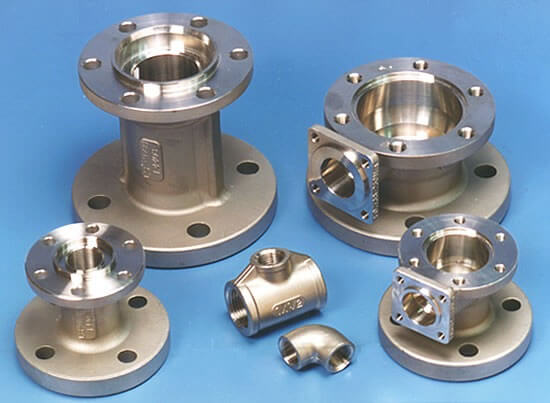
According to a paper published in the journal Nature Communications, the SLIPS (Slippery Liquid Porous Surfaces) technology not only causes liquids to roll right off, but it actually makes steel stronger. Scientists at Harvard University have come to the conclusion that the existing problems of corrosion of steel with sticking liquids, can be eliminated by coating the steel surface with surface coating of rough nanoporous tungsten oxide.

Steel-3

This coating took form of an ultrathin film of nanoparticles of tungsten, and the resulting roughness caused the liquids to be repelled. The nanoparticles are separate enough for any damage to the surface to be localised to that region. Meaning, if a part of the coating came off, the rest of the steel will remain good as new. What is more is that this coat made the steel structurally stronger than the uncoated samples.

“Our slippery steel is orders of magnitude more durable than any anti-fouling material that has been developed before,” says Aizenberg. “So far, these two concepts – mechanical durability and anti-fouling – were at odds with each other. We need surfaces to be textured and porous to impart fouling resistance but rough nanostructured coatings are intrinsically weaker than their bulk analogs. This research shows that careful surface engineering allows the design of a material capable of performing multiple, even conflicting, functions, without performance degradation.”

Steel-2

The steel is hoped to be used in surgical instruments, biofouling-resistant ship hulls or parts for 3D printers that utilize sticky materials.

[adinserter block=”7″]

Author: Technology Blog
Kamigami- A Roach Origami Robot

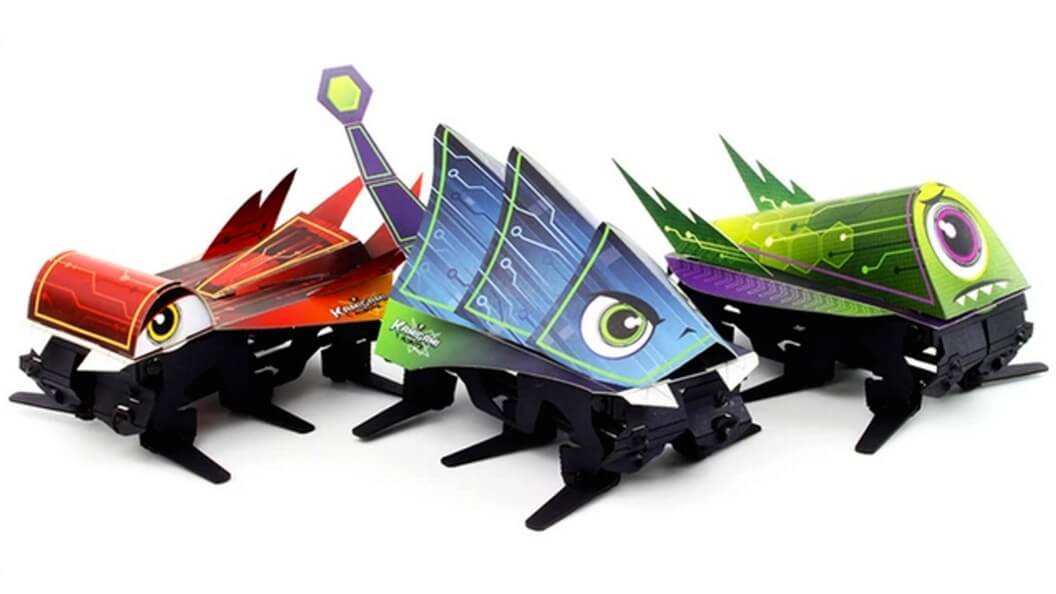
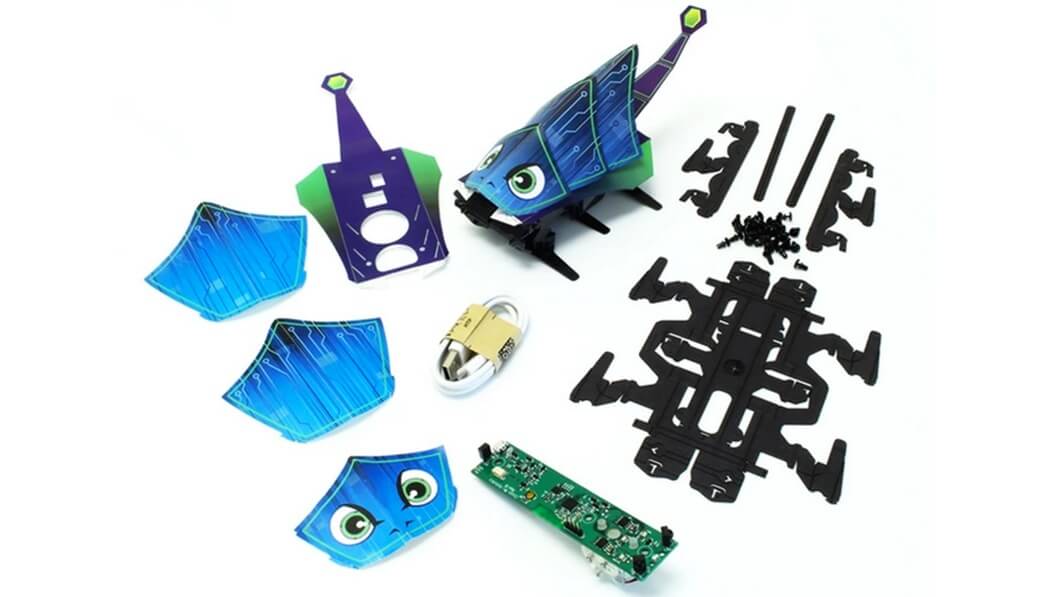
Kamigami is new origami robot releases currently campaigning on Kickstarter that feature tool- free easy “origami like” DIY construction and work in mobile app control, connected by bluetooth. A group of robots can fight with or against each other, the sensor array allows that.

Kamigami-4

Kamigamis are derived from scientific Dash robot announced in 2014, which you might remember it from a study where it was used to mimic gecko behavior, flipping over the edges of tables. The basic design of Kamigami follows suit and is shaped and functions like a cockroach or lizard. With a speed of up to 6 ft or 1.8 m/sec and interchangeable colourful shells, they’re appealing to children eight years and up.

 At the core of the product is a small circuit board, combined with an array of 10 sensors, including a light sensor, IR sensor, gyroscope and accelerometer. The finished robot measures 4.5 inches (11.2 cm) long and has a rechargeable battery, with 30 minutes of microUSB charging providing 45 minutes to an hour of use.

The iOS app will be ready by January and the android app by March. The hardware is pretty durable to endure fun games like running a relay race.

Kamigami-3

Over 25 percent of the way to the US$50,000 goal, with 29 days left to go, it is doing good at the Kickstarter campaign. $49 for a single shell, will give a March delivery, but an extra $10 can ensure early delivery in January 2016.

[adinserter block=”7″]

Author: Technology Blog

Understanding Graphene and what it could do for our future

Material things always matter for us. And material here is in the literal sense of the word. Right from Iron Age or Bronze Age to the recent silicon age (the computer age), these materials have shaped nations, technologies, infrastructures and future of the generations. Now a new material has gained entry into this list to affect our future. This material is called ‘Graphene’. It has been dubbed as a supermaterial and the researchers world over, are trying to find out all possible ways to make hundred percent use of it.

 Understanding Graphene and its history

Graphene is a single thin layer of graphite. Graphite is an allotrope of the element carbon that is it has the same number of atoms as carbon but its atoms are arranged in a different way so that this arrangement brings about a difference in the properties of the two. Graphene’s atoms are arranged in a hexagonal pattern, so when graphene is isolated from graphite, it takes on some amazing properties. It is a mere one atom thick, the first two-dimensional material ever discovered. Despite this, graphene is also one of the strongest materials with a tensile strength of 130 GPa (gigapascals), which makes it more than 100 times stronger than steel. In addition to these qualities, it is also flexible, transparent, highly conductive, and seemingly impermeable to most gases and liquids. The first isolated sample of graphene was discovered in 2004 by Andre Geim and Konstantin Novoselov at the University of Manchester using just a roll of scotch tape. They were actually using tape to polish a large block of graphite; when they noticed exceptionally thin flakes on the tape. They continued peeling layer and layer from the flakes of graphite and eventually produced a sample as thin as possible. They had found graphene. The discovery was so bizarre, the scientific world was skeptical at first. The popular journal Nature even rejected their paper on the experiment twice. Eventually, their research was published, and in 2010 Geim and Novoselov were awarded the Nobel Prize in Physics for their discovery.

graphene-6

Where can it make itself useful?

Considering the many qualities that graphene possesses, it can be put to use in varied things and applications and scientists are working continuously to identify these potential applications. Some of them can be:

  • Water filtration: The world’s ever growing population is putting a lot of pressure on our water resources so making clean drinkable water to such a huge population is a herculean task. Graphene can come to the rescue in this field as Graphene’s tight atomic bonds make it impermeable for nearly all gasses and liquids. Curiously, water molecules are an exception. Because water can evaporate through graphene while most other gasses and liquids cannot, graphene could be an exceptional tool for filtration. Graphene could also be immensely helpful in purifying water of toxins. In a study published by The Royal Society of Chemistry, researchers showed that oxidized graphene could even pull in radioactive materials such as uranium and plutonium present in water, leaving the liquid free of contaminants. The implications of this study are massive. Some of the biggest environmental hazards in history, including nuclear waste and chemical runoff, could be cleansed from water sources thanks to graphene. Graphene filters have immense potential to improve water purification, increasing the amount of fresh water available. In fact, Lockheed Martin recently developed a graphene filter called “Perforene,” which the company claims will revolutionize the desalination process.Current desalination plants use a method called reverse osmosis to filter salt out of seawater. Reverse osmosis uses pressure to move water through a membrane. In order to produce large amounts of drinkable water, the pressure involved requires enormous amounts of energy. A Lockheed Martin engineer claims their Perforene filters could reduce the energy requirements by a massive hundred times.

graphene-2

[adinserter block=”7″]

Next Page For More


Brain-inspired chip to be commercialized by IBM

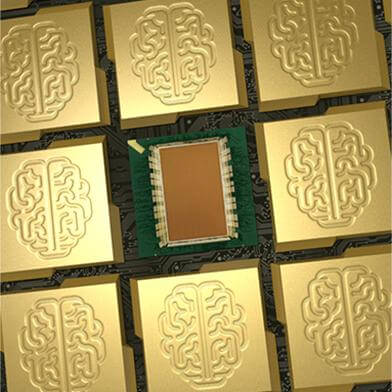
In August 2014, IBM had introduced a chip designed to operate something like the neurons and synapses of the brain. Now the company has moved forward and started developing a next-gen brain-inspired chip that could make mobile devices better and smarter. John Kelly, a senior vice president at IBM who oversees IBM Research and several business units informed: “We’re working on a next generation of the chip, but what’s most important now is commercial partners.

Brain-1

Companies could incorporate this in all sorts of mobile devices, machinery, automotive, you name it.”According to Kelly, if these kinds of chips are added to smartphones, then it would add to the ability of the phone to recognize anything that their owners say and tracking what is going on around them.

The chip as it is called, BM’s TrueNorth chip architecture, was developed through a DARPA-funded program intended to make it possible for mobile computers to run advanced machine intelligence software such as image or speech recognition without having to tap into cloud computing infrastructure, and using very little power.  IBM wants A true North Chip to be added to device designs as a “co-processor” that works alongside the conventional processor and never powers down. The chip that was unveiled last August s roughly the size of a postage stamp and has one million silicon “neurons” with 256 million connections between them that are analogous to the synapses that link real neurons. The chip consumes over 1,000 times less power than a conventional processor of a similar size. IBM has demonstrated how its network of neurons can be programmed to perform tasks such as recognizing different vehicles in video footage in real time.

One thing to be noted though is that the TrueNorth chip architecture is very different from those in existing computers, so it requires new approaches to writing software. Also its fake neurons work differently than the software-based artificial neural networks that companies such as Google, Facebook, and Microsoft have recently used to make breakthroughs in speech and image processing using a method known as deep learning. Neurons in IBM’s TrueNorth architecture encode data using electrical on-off “spikes,” whereas the simulated neurons in deep learning don’t. This is the reason why Yann LeCun, who leads Facebook’s AI research lab and helped pioneer deep learning, has expressed skepticism about the practicality of the TrueNorth chip. But Dharmendra Modha, who leads development of IBM’s brain-inspired chips says that his team has begun o create tools that will make it possible to transfer trained-up deep learning neural networks onto a TrueNorth chip. According to Modha, “This chip was envisioned as a substrate onto which a large variety of neural networks can be mapped for real-time, ultra-low energy, ultra-low volume applications.”

Brain-4

Though this unveiling comes as a progressive surprise for smartphone users, IBM is sure going to face stiff competition because Google is already working on ways to crunch down artificial neural networks to run on existing mobile devices and several companies, including leading mobile processor designer Qualcomm, are also working on chip designs that would run existing deep learning software on mobile computers such as phones or in cars. Whatever may be the result of this competition for these companies, one thing is for sure that the users are going to benefit a lot.

[adinserter block=”7″]

Author: Technology Blog
Alien mega structures built on a bizarre star!

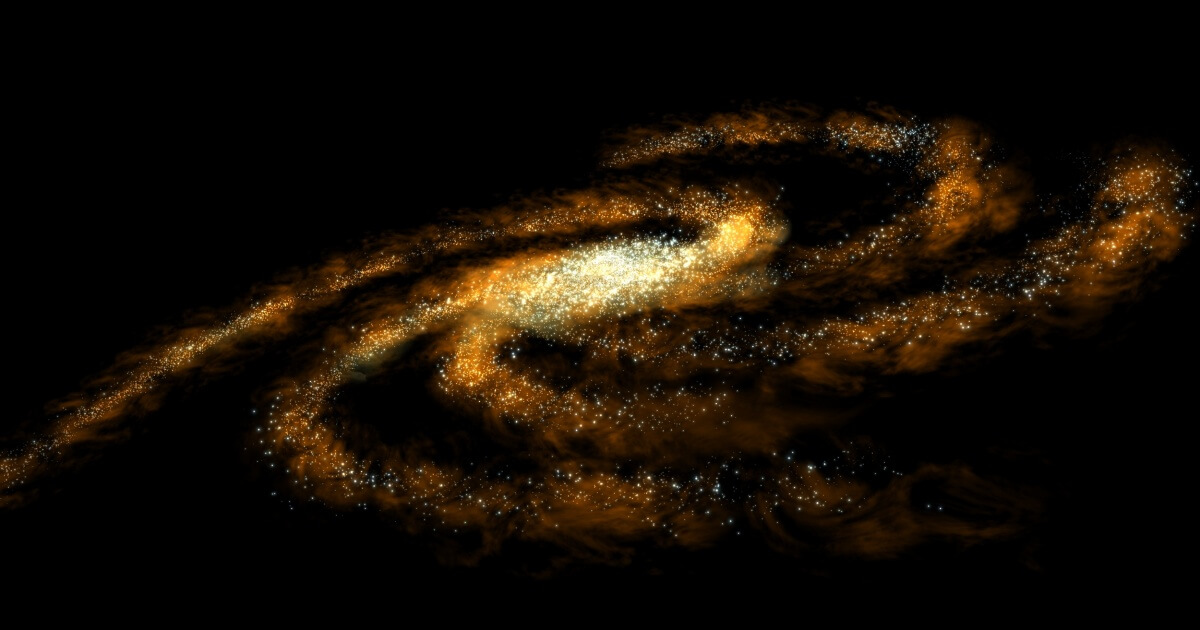
Alien life is something that excites one and all irrespective of the age group they belong to. And when it comes to scientific evidence of this, scientists leave no stones unturned in searching for one. A star designated KIC 8462852located above the Milky Way, between the constellations Cygnus the swan and Lyra the harp, has pushed the astronomers into excitement mode.

Star-3

The star attracted their attention because of a large mass of matter found in tight formation around it. These kinds of formations are common for a young star but according to telescopic evidence, it is a mature star. It also must be a new formation, or the debris field would not be there. Either gravity would have clumped the debris together or it would have been absorbed by the star.

This star first caught the attention of astronomers in 2009, when the Kepler Space Telescope singled it out as possibly having orbiting planets. It landed on the radar again in 2011, when citizen astronomers volunteering at Planet Hunters flagged it as being “interesting” and “bizarre.” Yale post-doctorate student Tabetha Boyajian, who is in charge of the Planet Hunters team, recently published a paper about the phenomena, looking at all the possible natural explanations. The most reasonable explanation is that another star passed by KIC 8462852 star with enough comets in tow to produce the unusual pattern. Although, cosmically speaking, it would be highly unlikely that a star would do this at the exact same time we developed the capability to see it.

Other than that, the astronomers were bound to think the age old theory of alien life thriving on the star because of these unusual patterns. According to Penn State University’s Jason Wright, the structures “looked likeBoyajian also is exploring the alien angle and is working both with Wright and Andrew Siemion, the Director of the SETI Research Center at the University of California, Berkeley.

Star-2

By January 2016, the team of three, plan to point a radio dish at the star to see if it emits radio waves indicative of technological activity. If significant radio wave activity is detected, the trio would use the Very Large Array (VLA) in New Mexico to confirm their findings. But till then we will have to keep our brains working about how do those aliens look and communicate, if they are really there.

[adinserter block=”7″]

Author: Technology Blog
Zoning out isn’t your fault actually; it is your brain’s!

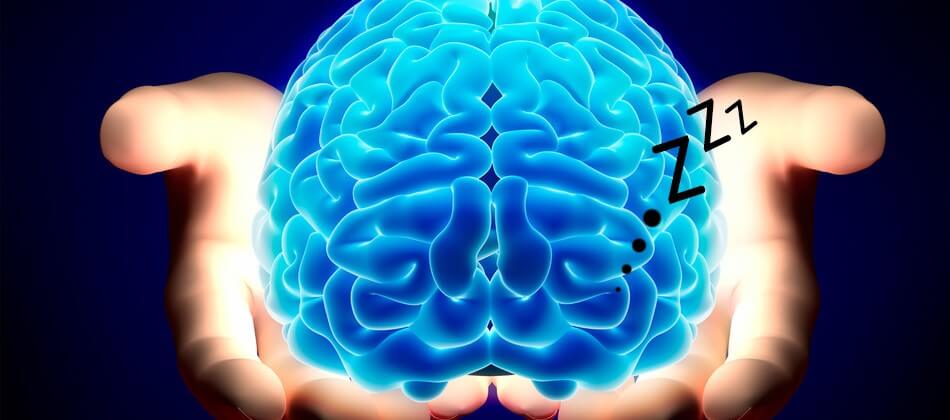
Do you ever feel that you simply didn’t grasp a single word of the boring professor giving lecture on that super-technical subject? Do you feel that you simply zoned out? Then don’t blame yourself. You are not one of those irresponsible lazy people. Neuroscience has come to your rescue as MIT neuroscientists have discovered that even if you are awake it is possible your brain may be sleeping in fragments.

zoning-1

The neuroscientists used the technique of optogenetics. It is a technique that allows scientists to stimulate or silence neurons with light. They performed this test on mice and found a brain circuit that can trigger small regions of the brain to fall asleep or become less alert, while the rest of the brain remains awake.”

Another related research also highlights that the thalamic reticular nucleus (TRN) is responsible for sending signals to the thalamus and the brain’s cortex that slow some brain waves to an appreciable degree leading to a sort of sleep state in parts of the brain even while the rest of the organ is fully functional.

Whereas it was previously thought that your brain is either completely asleep or completely awake, the MIT team found that if they weakly stimulated the TRN, they could produce slower brain waves in just a portion of the brain’s cortex. This can be correlated to the feeling of drowsiness because when you are exhausted or sleep-deprived, according to lead author Laura Lewis of MIT, “it is because the brain becomes begins to transition into sleep and some local brain regions become drowsy even of you force yourself to stay awake.”

zoning-2

Now the question is…. where does this research lead to? Ultimately, this research may lead to development of sleep drugs and anaesthetics that work with the TRN to induce these slow wave patterns, thereby reducing the potential for harmful side effects. Though the tests have been done on mice as of now but hopefully tests with humans also bear the same fruit.

[adinserter block=”7″]

Author: Technology Blog

Not a tooth fairy but you have a 3-D printed tooth guardian!

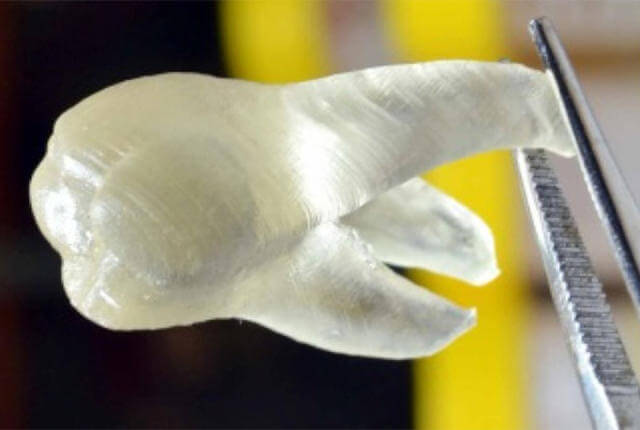
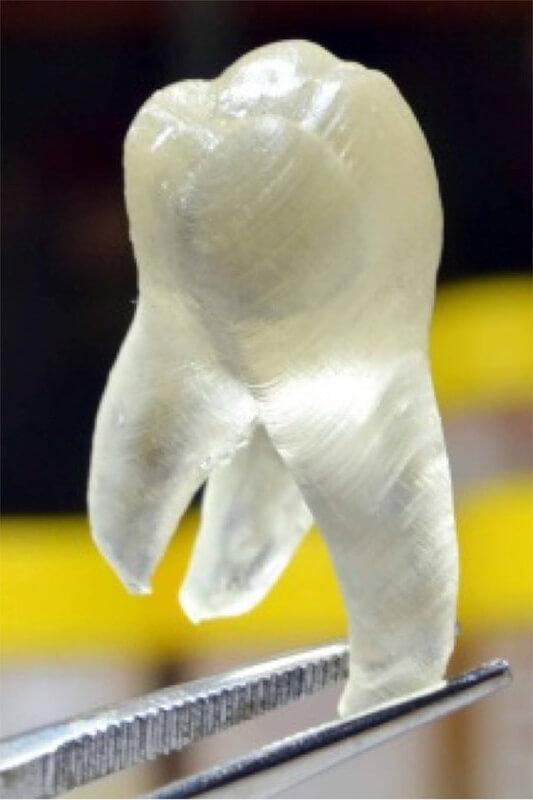
If you have lost a tooth and are planning to get it replaced by an artificial one… then think 3D because researchers at the University of Groningen in the Netherlands have created a dental guardian! According to a paper presented by the team, they have developed a tooth made from materials that kill bacteria on contact. If somebody loses a tooth, the replacement tooth is designed to match the gap in the person’s mouth.

tooth-1

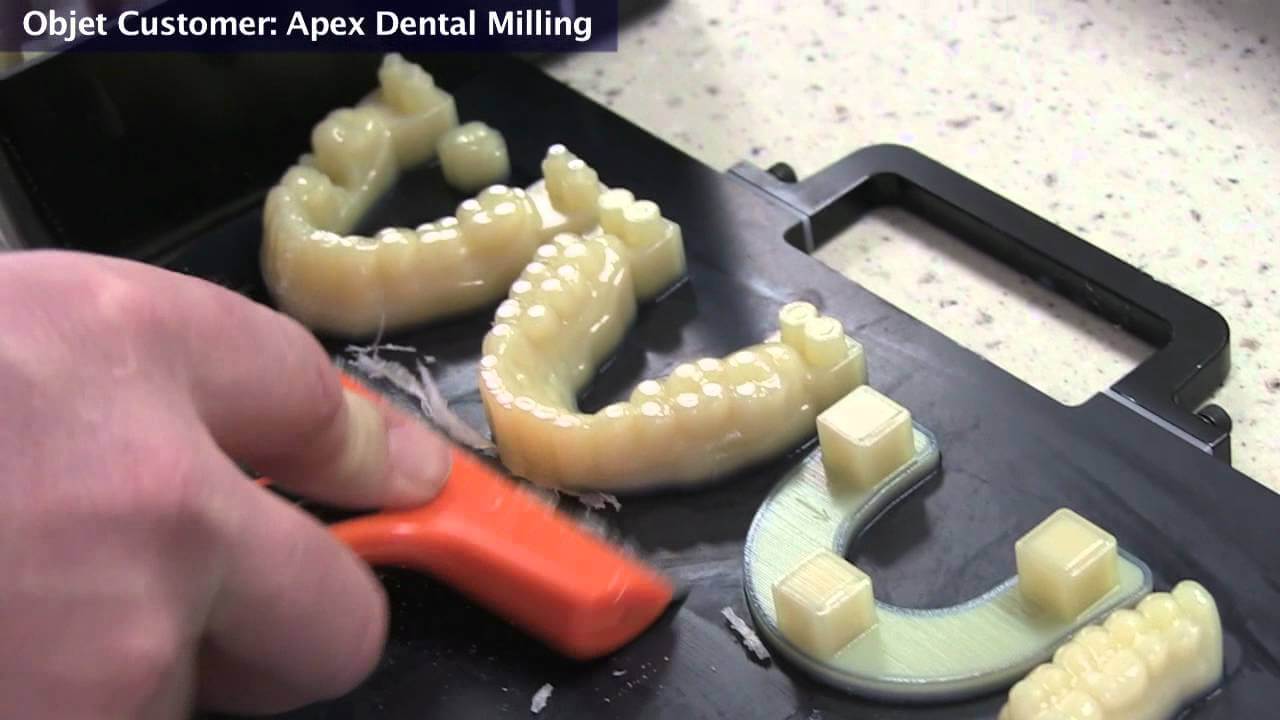
A resin, which is made of safe materials combined with a special salt, is then printed into the shape of the tooth and then fixed into the person’s mouth just like any other replacement tooth. The salts present in the resin have a positive charge which bursts negatively-charged membranes of the bacteria. This burst of positive charge leaves behind dead colonies of bacteria in the same place where there was a thriving spot for these dental pests.

In order to be sure and test the efficacy of this guardian, the researchers printed the object with and without the microbial salts. They then put tooth-decay causing Streptococcus mutans on these samples. In the object without the salts, only one percent of the bacteria died whereas with the salts, almost 99 percent bacteria died.

tooth-3

The team is hopeful that the prototype that they have in hand right now is suited for further clinical setting including not only dental applications but also orthopaedic ones like spacers and other polymeric parts used in total hip or knee arthroplasties. Moreover, the approach to developing 3D printable antimicrobial polymers can easily be transferred to other nonmedical application areas, such as food packaging, water purification, or even toys for children. The team says that the resins that they have developed represent the first report of an antimicrobial, contact-killing 3D printable material.

[adinserter block=”7″]

Author: Technology Blog
This Startup is looking to Teach People Algae Farming

Some 805 million people in the world do not have enough food to lead a healthy active life. That’s about one in nine people on earth. The vast majority of the world’s hungry people live in developing countries, where 13.5 percent of the population is undernourished. The United Nations Food and Agriculture Organization estimates that nearly 870 million people of the 7.1 billion people in the world, or one in eight, were suffering from chronic undernourishment in 2010-2012.

Algae-2

These are jects some quick stats on malnutrition from the net. Malnutrition affects growth rate, study concentration and causes several deficiency disorders.

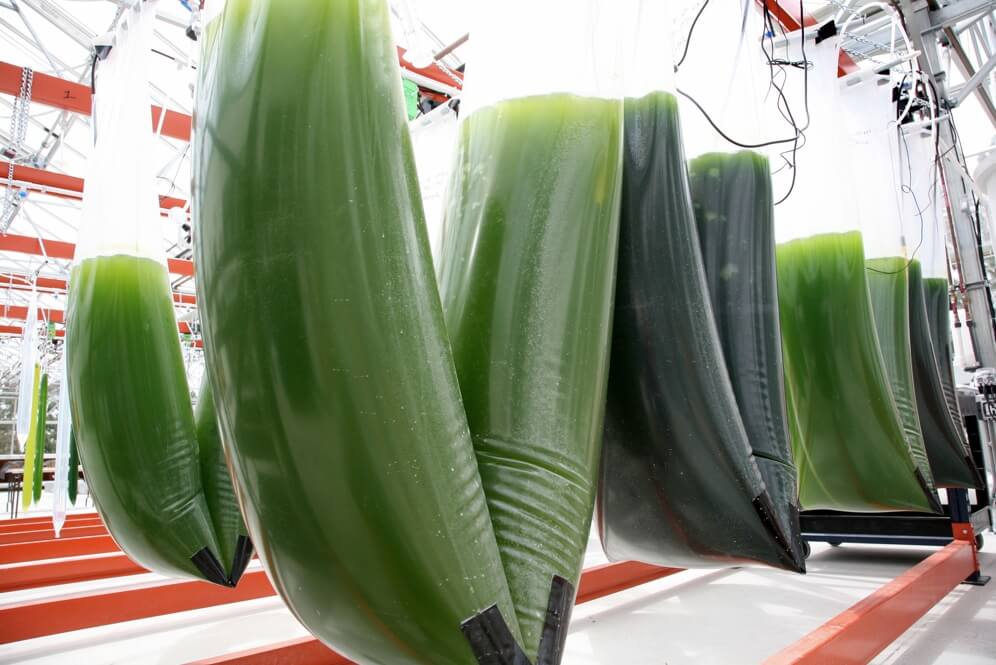
As a solution, many alternatives have been speculated, one of which, is the consumption of algae as food. Algae is sustainable, cheap and easy to grow. And by, easy to grow, it can grow literally anywhere! It takes 3-10 Kg of grain to produce 1 Kg of meat by animal farming. So wouldn’t it make more sense to directly consume grain instead of facing chronic “hidden hunger”?

Thus, the startup  Nannofood encourages people from developing countries suffering from malnutrition to grow algae. They offer to teach farmers the proper way to cultivate algae.

The only thing that seems to be stopping us all these years is the “yuck” factor. But frankly, food is a pretty strong motivator. And when you have known hunger like the starving part of population have, you will eat anything to curb the feeling.

Algae-1

[adinserter block=”7″]

Author: Technology Blog
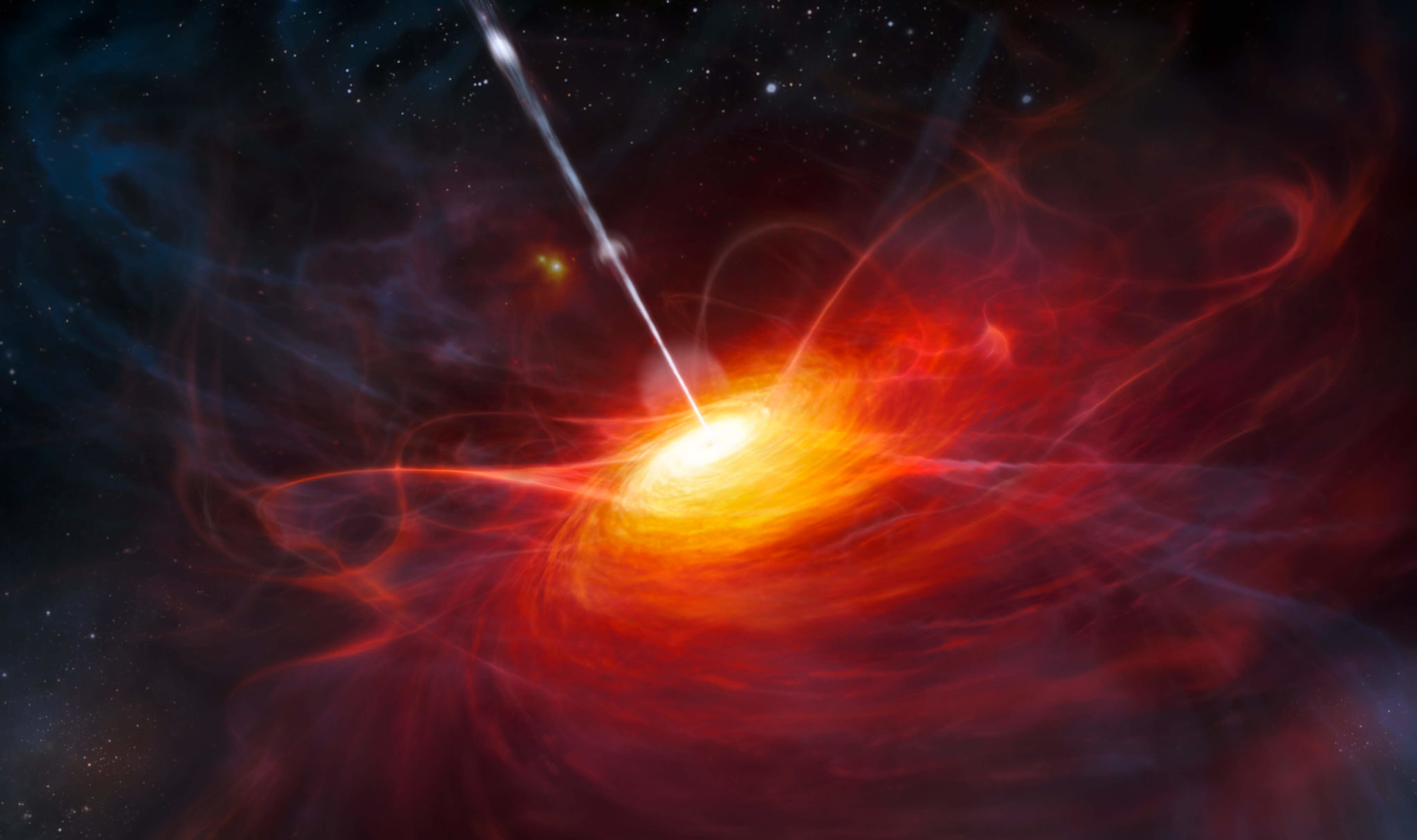
Astonishing Common Link Found Between Black Holes and Young Stars

Comparing data from young stars in the latter stages of formation against that from black holes and white dwarfs, the team, which was led by Dr Simon Vaughan from the University of Leicester’s Department of Physics and Astronomy, made an unexpected discovery when it identified similarities in the readings from the discs surrounding black holes and young stars, even though the objects have wildly different properties.

Two rambunctious young stars are destroying their natal dust cloud with powerful jets of radiation, in an infrared image from NASA's Spitzer Space Telescope. The stars are located approximately 600 light-years away in a cosmic cloud called BHR 71. 

In visible light (see below, left), BHR 71 is just a large black structure. The burst of yellow light toward the bottom of the cloud is the only indication that stars might be forming inside. 

In infrared light (see below, right), the baby stars are shown as the bright yellow smudges toward the center. Both of these yellow spots have wisps of green shooting out of them. The green wisps reveal the beginning of a jet. Like a rainbow, the jet begins as green, then transitions to orange, and red toward the end. 

The combined visible-light and infrared composite (above) shows that a young star's powerful jet is responsible for the rupture at the bottom of the dense cloud in the visible-light image. Astronomers know this because burst of light in the visible-light image overlaps exactly with a jet spouting-out of the left star, in the infrared image. 

The jets' changing colors reveals a cooling effect, and may suggest that the young stars are spouting out radiation in regular bursts. The green tints at the beginning of the jet reveal really hot hydrogen gas, the orange shows warm gas, and the reddish wisps at the end represent the coolest gas. 

The fact that gas toward the beginning of the jet is hotter than gas near the middle suggests that the stars must give off regular bursts of energy -- and the material closest to the star is being heated by shockwaves from a recent stellar outburst. Meanwhile, the tints of orange reveal gas that is currently being heated by shockwaves from a previous stellar outburst. By the time these shockwaves reach the end of the jet, they have slowed down so significantly that the gas is only heated a little, and looks red. 


Two rambunctious young stars are destroying their natal dust cloud with powerful jets of radiation.

“The seemingly random fluctuations we see from the black holes and white dwarfs look remarkably similar to those from the young stellar objects,” said Dr Vaughan. “It is only the tempo that changes.”

To explain, the team targeted accretion discs as their object of study as it produced brightness variations around astronomical objects and provided a common ground of study. The instruments put to use were NASA’s Kepler/K2 and ULTRACAM– a superfast camera taking 500 pictures per second in three colours. ESO’s Very Large Telescope and the William Herschel Telescope were also involved in the process.

Thus, the team was able to conclude that the size of the object at the center of the disc, was influencing the speed of flickering in the observed brightness. This proves that the physics of accretion was sound and universally across all planetary bodies.

Black Hole-3

Findings of this have been published in Science Advances and have been funded in part by the Science and Technology Facilities Council with contribution from the Universities of Leicester, Southampton, Warwick and Sheffield to the study.

[adinserter block=”7″]

Author: Technology Blog
Verified by ExactMetrics