Understanding Graphene and what it could do for our future

Material things always matter for us. And material here is in the literal sense of the word. Right from Iron Age or Bronze Age to the recent silicon age (the computer age), these materials have shaped nations, technologies, infrastructures and future of the generations. Now a new material has gained entry into this list to affect our future. This material is called ‘Graphene’. It has been dubbed as a supermaterial and the researchers world over, are trying to find out all possible ways to make hundred percent use of it.

 Understanding Graphene and its history

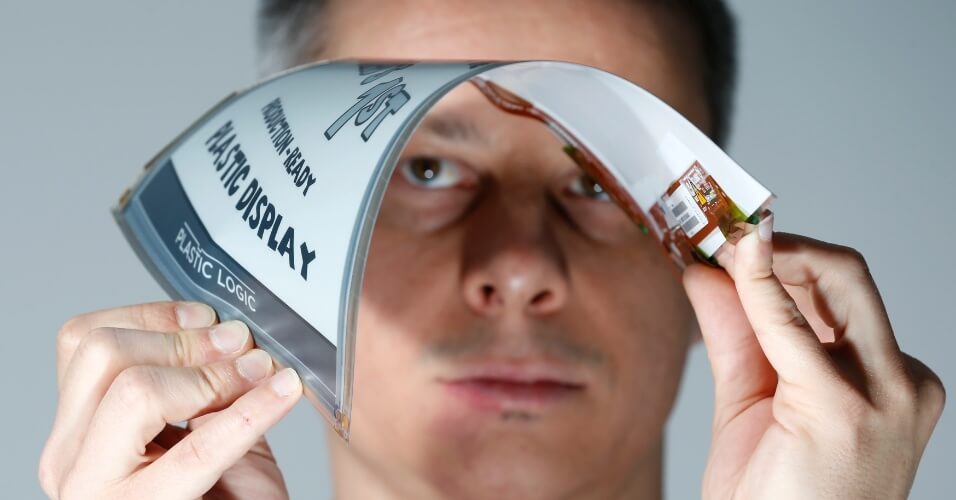
Graphene is a single thin layer of graphite. Graphite is an allotrope of the element carbon that is it has the same number of atoms as carbon but its atoms are arranged in a different way so that this arrangement brings about a difference in the properties of the two. Graphene’s atoms are arranged in a hexagonal pattern, so when graphene is isolated from graphite, it takes on some amazing properties. It is a mere one atom thick, the first two-dimensional material ever discovered. Despite this, graphene is also one of the strongest materials with a tensile strength of 130 GPa (gigapascals), which makes it more than 100 times stronger than steel. In addition to these qualities, it is also flexible, transparent, highly conductive, and seemingly impermeable to most gases and liquids. The first isolated sample of graphene was discovered in 2004 by Andre Geim and Konstantin Novoselov at the University of Manchester using just a roll of scotch tape. They were actually using tape to polish a large block of graphite; when they noticed exceptionally thin flakes on the tape. They continued peeling layer and layer from the flakes of graphite and eventually produced a sample as thin as possible. They had found graphene. The discovery was so bizarre, the scientific world was skeptical at first. The popular journal Nature even rejected their paper on the experiment twice. Eventually, their research was published, and in 2010 Geim and Novoselov were awarded the Nobel Prize in Physics for their discovery.
graphene-6

Where can it make itself useful?

Considering the many qualities that graphene possesses, it can be put to use in varied things and applications and scientists are working continuously to identify these potential applications. Some of them can be:

  • Water filtration: The world’s ever growing population is putting a lot of pressure on our water resources so making clean drinkable water to such a huge population is a herculean task. Graphene can come to the rescue in this field as Graphene’s tight atomic bonds make it impermeable for nearly all gasses and liquids. Curiously, water molecules are an exception. Because water can evaporate through graphene while most other gasses and liquids cannot, graphene could be an exceptional tool for filtration. Graphene could also be immensely helpful in purifying water of toxins. In a study published by The Royal Society of Chemistry, researchers showed that oxidized graphene could even pull in radioactive materials such as uranium and plutonium present in water, leaving the liquid free of contaminants. The implications of this study are massive. Some of the biggest environmental hazards in history, including nuclear waste and chemical runoff, could be cleansed from water sources thanks to graphene. Graphene filters have immense potential to improve water purification, increasing the amount of fresh water available. In fact, Lockheed Martin recently developed a graphene filter called “Perforene,” which the company claims will revolutionize the desalination process.Current desalination plants use a method called reverse osmosis to filter salt out of seawater. Reverse osmosis uses pressure to move water through a membrane. In order to produce large amounts of drinkable water, the pressure involved requires enormous amounts of energy. A Lockheed Martin engineer claims their Perforene filters could reduce the energy requirements by a massive hundred times.
graphene-2

[adinserter block=”7″]

Next Page For More


Brain-inspired chip to be commercialized by IBM

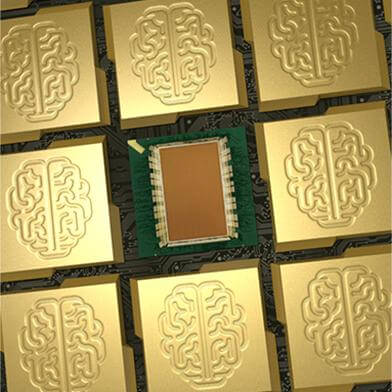
In August 2014, IBM had introduced a chip designed to operate something like the neurons and synapses of the brain. Now the company has moved forward and started developing a next-gen brain-inspired chip that could make mobile devices better and smarter. John Kelly, a senior vice president at IBM who oversees IBM Research and several business units informed: “We’re working on a next generation of the chip, but what’s most important now is commercial partners.

Brain-1

Companies could incorporate this in all sorts of mobile devices, machinery, automotive, you name it.”According to Kelly, if these kinds of chips are added to smartphones, then it would add to the ability of the phone to recognize anything that their owners say and tracking what is going on around them.

The chip as it is called, BM’s TrueNorth chip architecture, was developed through a DARPA-funded program intended to make it possible for mobile computers to run advanced machine intelligence software such as image or speech recognition without having to tap into cloud computing infrastructure, and using very little power.  IBM wants A true North Chip to be added to device designs as a “co-processor” that works alongside the conventional processor and never powers down. The chip that was unveiled last August s roughly the size of a postage stamp and has one million silicon “neurons” with 256 million connections between them that are analogous to the synapses that link real neurons. The chip consumes over 1,000 times less power than a conventional processor of a similar size. IBM has demonstrated how its network of neurons can be programmed to perform tasks such as recognizing different vehicles in video footage in real time.

One thing to be noted though is that the TrueNorth chip architecture is very different from those in existing computers, so it requires new approaches to writing software. Also its fake neurons work differently than the software-based artificial neural networks that companies such as Google, Facebook, and Microsoft have recently used to make breakthroughs in speech and image processing using a method known as deep learning. Neurons in IBM’s TrueNorth architecture encode data using electrical on-off “spikes,” whereas the simulated neurons in deep learning don’t. This is the reason why Yann LeCun, who leads Facebook’s AI research lab and helped pioneer deep learning, has expressed skepticism about the practicality of the TrueNorth chip. But Dharmendra Modha, who leads development of IBM’s brain-inspired chips says that his team has begun o create tools that will make it possible to transfer trained-up deep learning neural networks onto a TrueNorth chip. According to Modha, “This chip was envisioned as a substrate onto which a large variety of neural networks can be mapped for real-time, ultra-low energy, ultra-low volume applications.”

Brain-4

Though this unveiling comes as a progressive surprise for smartphone users, IBM is sure going to face stiff competition because Google is already working on ways to crunch down artificial neural networks to run on existing mobile devices and several companies, including leading mobile processor designer Qualcomm, are also working on chip designs that would run existing deep learning software on mobile computers such as phones or in cars. Whatever may be the result of this competition for these companies, one thing is for sure that the users are going to benefit a lot.

[adinserter block=”7″]

Author: Technology Blog

Alien mega structures built on a bizarre star!

Alien life is something that excites one and all irrespective of the age group they belong to. And when it comes to scientific evidence of this, scientists leave no stones unturned in searching for one. A star designated KIC 8462852located above the Milky Way, between the constellations Cygnus the swan and Lyra the harp, has pushed the astronomers into excitement mode.

Star-3

The star attracted their attention because of a large mass of matter found in tight formation around it. These kinds of formations are common for a young star but according to telescopic evidence, it is a mature star. It also must be a new formation, or the debris field would not be there. Either gravity would have clumped the debris together or it would have been absorbed by the star.

This star first caught the attention of astronomers in 2009, when the Kepler Space Telescope singled it out as possibly having orbiting planets. It landed on the radar again in 2011, when citizen astronomers volunteering at Planet Hunters flagged it as being “interesting” and “bizarre.” Yale post-doctorate student Tabetha Boyajian, who is in charge of the Planet Hunters team, recently published a paper about the phenomena, looking at all the possible natural explanations. The most reasonable explanation is that another star passed by KIC 8462852 star with enough comets in tow to produce the unusual pattern. Although, cosmically speaking, it would be highly unlikely that a star would do this at the exact same time we developed the capability to see it.

Other than that, the astronomers were bound to think the age old theory of alien life thriving on the star because of these unusual patterns. According to Penn State University’s Jason Wright, the structures “looked likeBoyajian also is exploring the alien angle and is working both with Wright and Andrew Siemion, the Director of the SETI Research Center at the University of California, Berkeley.

Star-2

By January 2016, the team of three, plan to point a radio dish at the star to see if it emits radio waves indicative of technological activity. If significant radio wave activity is detected, the trio would use the Very Large Array (VLA) in New Mexico to confirm their findings. But till then we will have to keep our brains working about how do those aliens look and communicate, if they are really there.

[adinserter block=”7″]

Author: Technology Blog

Verified by ExactMetrics