
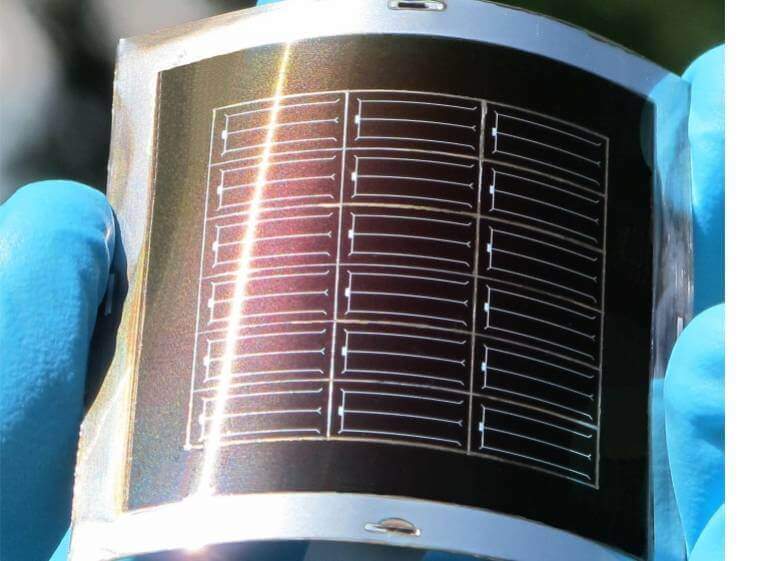
- Solar cells/ Photovoltaics: Graphene has great potential as a material in solar cells as it is both highly conductive and transparent. While silicon typically used in solar cells releases one electron per photon that hits it, graphene can release multiple electrons for each photon that hits it. Hence, graphene could be far better at converting solar energy, with a projected 60 percent compared to the roughly 25 percent efficiency, that current silicon cells are capable of. But these all are theoretical results so far as research into such kind of solar cells is still ongoing and their efficiency is slowly increasing. Meanwhile, the graphene’s photovoltaic properties can also be made useful to develop better image sensors for devices such as cameras.
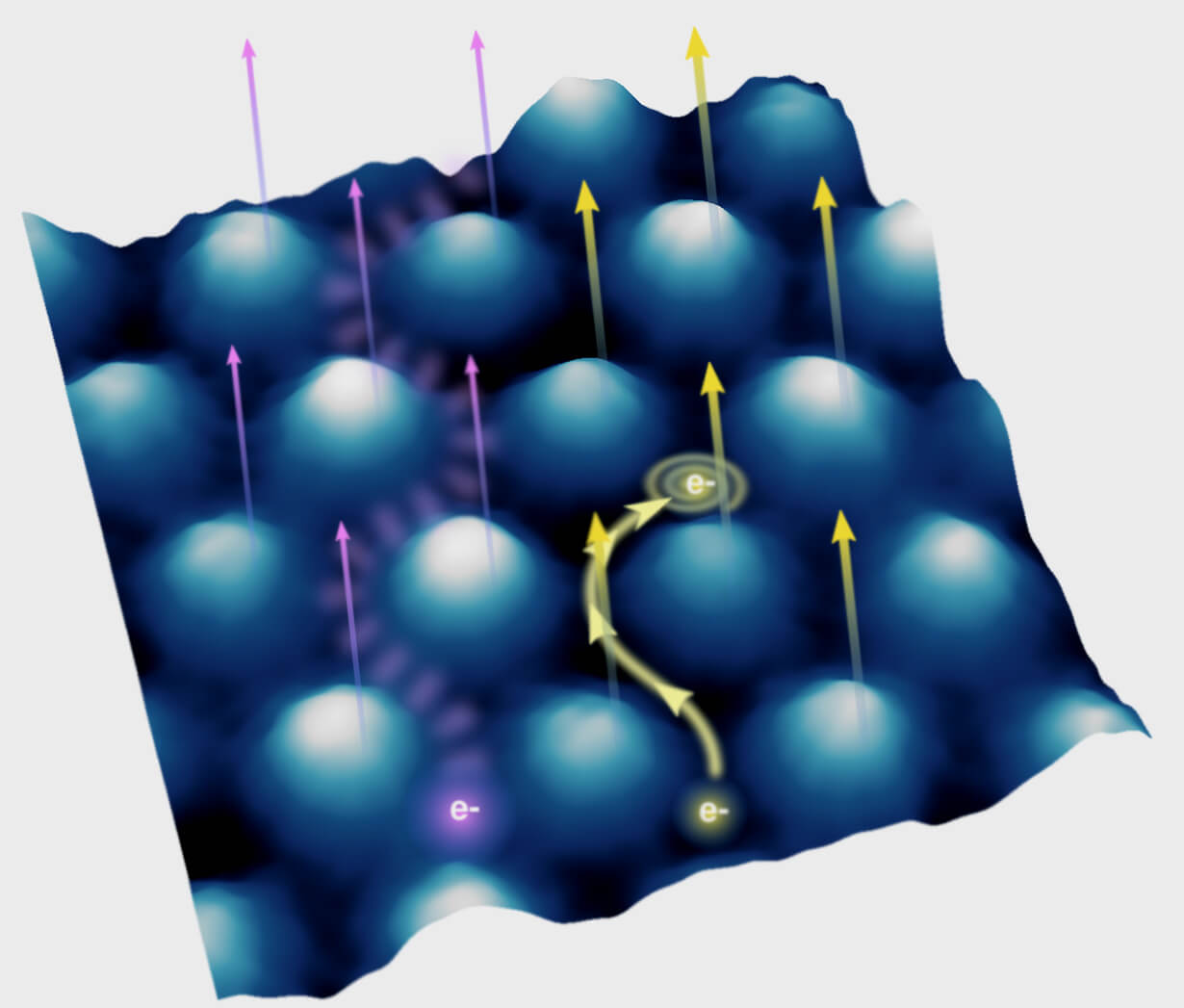
- Semiconductors: Due to its high conductivity, graphene could be used in semiconductors to greatly increase the speed at which information travels. Recently the Department of Energy conducted tests which demonstrated that semiconductive polymers conduct electricity much faster when placed atop a layer of graphene than a layer of silicon. This holds true even if the polymer is thicker. A polymer 50-nanometers thick, when placed on top of a graphene layer, conducted a charge better than a 10 nm thick layer of the polymer. But it is to be noted that the biggest hindrance to graphene’s use in electronics is its lack of a band gap, the gap between valence and conduction bands in a material that, when crossed, allows for a flow of electrical current. The band gap is what allows semiconductive materials such as silicon to function as transistors; they can switch between insulating or conducting an electric current, depending on whether their electrons are pushed across the band gap or not. Because graphene has no band gap, electrical charges simply flow along, as in any metal. But according to a new research conducted by the Georgia Institute of Technology, researchers claim to have produced graphene samples with a band gap of 0.5 electronvolts, which they say should be enough for graphene to function as a semiconductor. If true, this could lead to graphene supplanting silicon as the semiconductor of choice, enabling much faster electronics to be made.
- Flexible Elctronics: High flexibility and transparency are one of the other important qualities of Graphene. This makes it perfect for use in portable electronics. Smart phones and tablets could become much more durable using graphene, and perhaps could even be folded up like paper. Using graphene, wearable devices could be made even more useful, designed to fit snugly around limbs and bending to accommodate exercise. Graphene’s flexibility can lend its use in making small machines and sensors, capable of moving easily and harmlessly through the human body, analyzing tissue or even delivering drugs to specific areas.

After reading all this, you readers would surely agree that graphene sure has the potential to change the face of future.
[adinserter block=”7″]
Author: Technology Blog
Previous Page
Pages: 1 2

