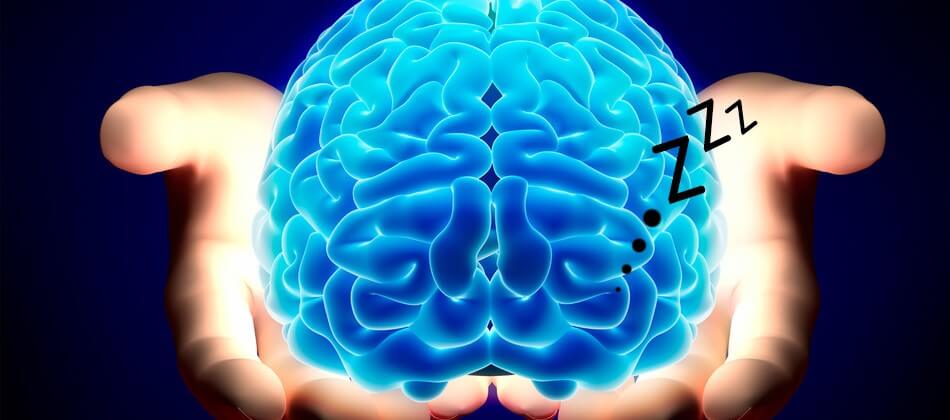
Do you ever feel that you simply didn’t grasp a single word of the boring professor giving lecture on that super-technical subject? Do you feel that you simply zoned out? Then don’t blame yourself. You are not one of those irresponsible lazy people. Neuroscience has come to your rescue as MIT neuroscientists have discovered that even if you are awake it is possible your brain may be sleeping in fragments.

The neuroscientists used the technique of optogenetics. It is a technique that allows scientists to stimulate or silence neurons with light. They performed this test on mice and found a brain circuit that can trigger small regions of the brain to fall asleep or become less alert, while the rest of the brain remains awake.”
Another related research also highlights that the thalamic reticular nucleus (TRN) is responsible for sending signals to the thalamus and the brain’s cortex that slow some brain waves to an appreciable degree leading to a sort of sleep state in parts of the brain even while the rest of the organ is fully functional.
Whereas it was previously thought that your brain is either completely asleep or completely awake, the MIT team found that if they weakly stimulated the TRN, they could produce slower brain waves in just a portion of the brain’s cortex. This can be correlated to the feeling of drowsiness because when you are exhausted or sleep-deprived, according to lead author Laura Lewis of MIT, “it is because the brain becomes begins to transition into sleep and some local brain regions become drowsy even of you force yourself to stay awake.”

Now the question is…. where does this research lead to? Ultimately, this research may lead to development of sleep drugs and anaesthetics that work with the TRN to induce these slow wave patterns, thereby reducing the potential for harmful side effects. Though the tests have been done on mice as of now but hopefully tests with humans also bear the same fruit.
[adinserter block=”7″]
Author: Technology Blog