Handmade 3D Printed Railgun Can Fire 560 MPH Projectiles


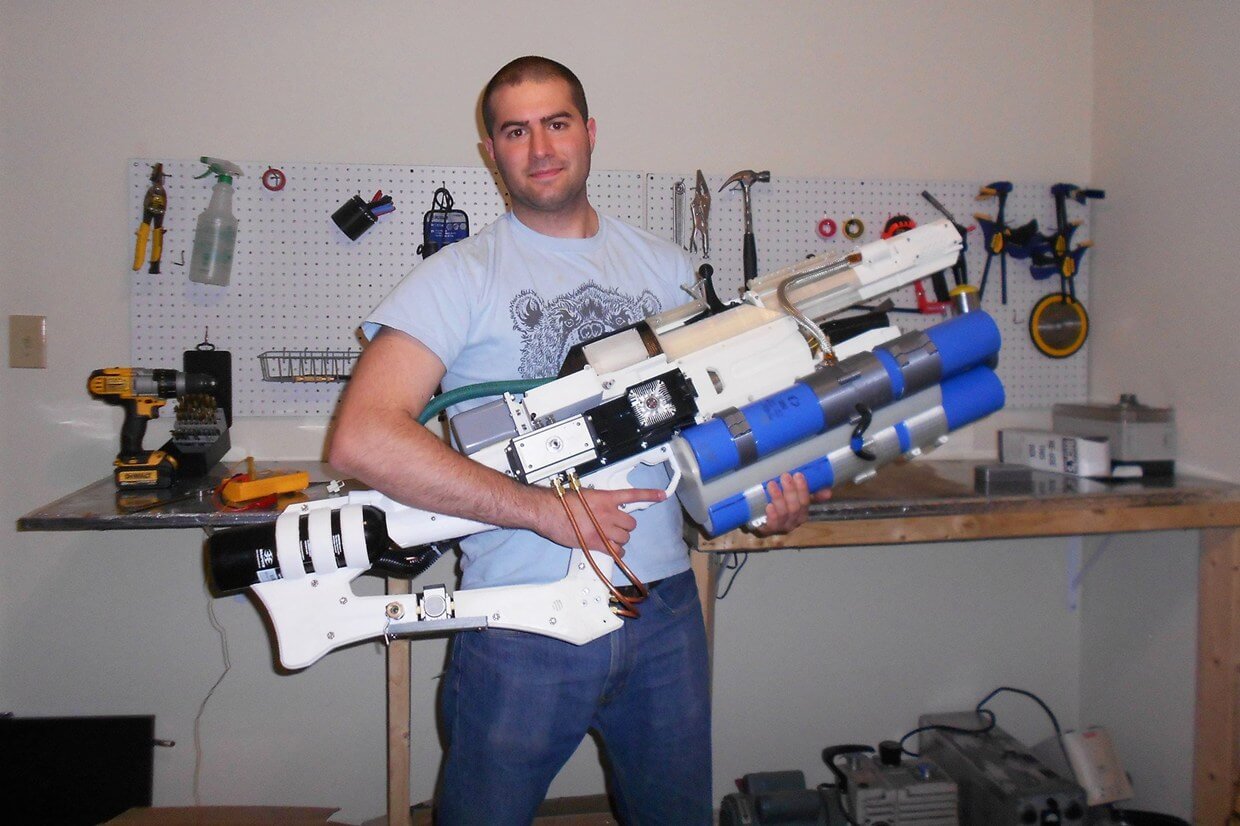
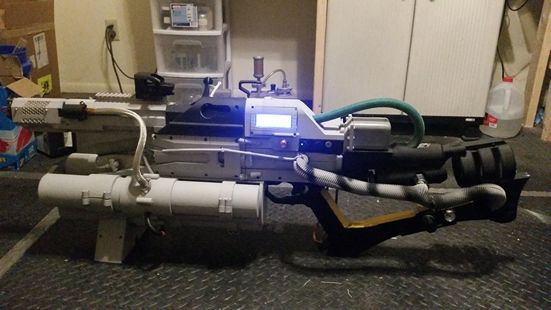
As electronics required to make such instruments are increasingly accessible, railguns are becoming more common to encounter outside the virtual world. Check out this 3D printed one made by YouTuber and DIY electronics enthusiast xtamared.
Gun-2

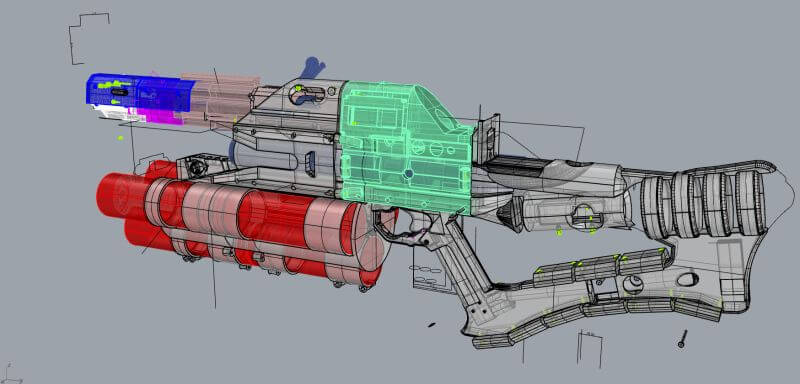
This railgun is relatively huge as compared to the conventional models available in the market, but its effectiveness is no less. Armed with these six capacitors weighing 20 pounds, the gun (dubbed the WXPR-1 by its creator) delivers about 1050 volts and 1.8 kilojoules of energy to the projectile inside the gun. This machine is powerful enough to vaporise a carbon projectile. The six capacitors are held together at the bottom of the gun in groups of two, within 3D frames.

The gun’s electronics are controlled by an Arduino Uno R3, which monitors the levels of the electronic components — including the capacitor voltage, the amperage, the temperature, and battery voltage. The entire unit is powered by a 12V lithium-polymer battery that’s stepped up to 1050V using a micro-inverter and a transformer. It fires a variety of metal armatures, such as copper-plated tungsten, aluminum, carbon, and Teflon/plasma.

[adinserter block="7"]

xtamared describes how he had to do a ton of research. Using information from PhysicsThings micro-railgun and Sam Barros’ Powerless railgun design, it took six months for him to fine tune the electronics, six months to machine the rails, and another six months for the 3D printing, remaining design, and final assembly. A total of about a year and half of work can be seen in the vid above in all its glory.
Gun-3

Author: Technology Blog

Editing Genes Gives Way to Diseased Dog Models and Supermuscled Pets

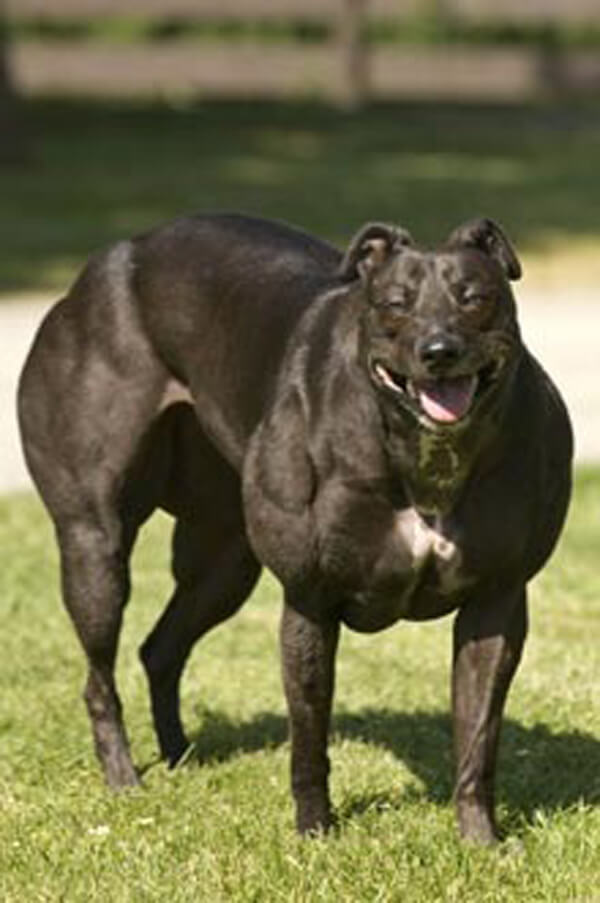
China has taken tampering with nature to the new level with their use of the CRISPR technique. They have been using this to edit the genes in dogs, specifically to create super dogs with huge mutated muscles.

gene-1

The original purpose of the experiments being to introduce certain degenerative human diseases in dogs for efficient testing as, “Dogs are very close to humans in terms of metabolic, physiological, and anatomical characteristics.” said study co-author Liangxue Lai in Technology Review, also a researcher with the Key Laboratory of Regenerative Biology at the Guangzhou Institutes of Biomedicine and Health.

The idea of “customised pets” was also thrown into the mix after the gene for myostatin (MSTN) was effectively knocked out in beagles. Myostatin is the hormone involved in controlling muscle growth, and without it, the muscle mass of the beagle roughly doubled, as Technology Review reports. The details of this work can now be found at the Journal of Molecular Cell Biology.

[adinserter block="7"]

The beagles are similar to super-muscled Belgian Blue cattle and whippet dogs, both of which have been bred in such a way that they now “naturally” suppress myostatin production at the genetic level.  Some humans have actually been born with this mutation.

gene-2

The diseased dog models plan to mimic diseases like the Parkinson’s and muscular dystrophy. And it seems pretty close that there will an array of mutated pets with changed qualities of physical proportions, color patterns, intelligence and temperament.

Author: Technology Blog

Autonomous Helicopter Puts Out Forest Fires

According to the National Interagency Fire Center, 2015 has been one of the most devastating calendar years for fires in the last decade, losing an estimated 9.3 million acres of land as of the middle of October. Such forest fires ravage not just flora and fauna, but also the tribal and human communities living in the burn radius. Thousands of people with their livelihood depending upon forests are put out of work. Lockheed Martin recently partnered with an aerospace manufacturer Kaman to collectively create autonomous helicopters that would tirelessly put out fires.

Fire-4

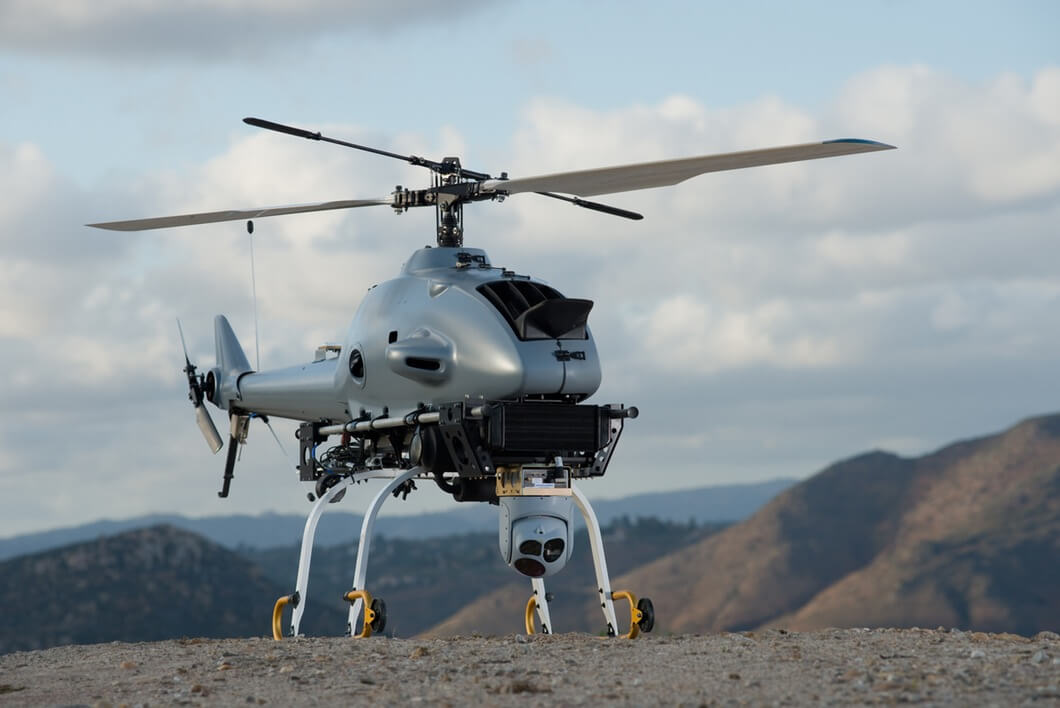
What originally started out as building vehicles for the military use in Afghanistan, Kaman’s K-MAX self-flying helicopter boasts the capacity to hold 6,000 pounds of cargo while flying near sea level, and roughly 4,000 pounds of cargo while operating at a 15,000-foot altitude. This helicopter is sturdy in the harshest climates, and is on service round-the-clock.

[adinserter block="7"]

“This technology will allow us to better support our firefighters on the ground, both with suppression and direct logistical support,” said the Department of Interior’s director of Aviation Services Mark Bathrick at a recent K-MAX field test in Idaho. “The integration of technology that could more than double the time we’re able to provide them with logistical and direct air support could be a game-changer in this mission area.”

Demonstration at Lucky Peak Helibase just outside Boise, Lockheed and Kaman displayed K-MAX’s skill as it was able to able to fill water from a far off source and accurately detect an invisible fire hazard on the ground. What’s more, it could do this time and time again without falling off the mark.

Fire-2

“We owe it to the firefighters on the ground to continually explore technologies that improve their safety and best support their efforts,” Bathrick continued. “We see it as a great example of prior tax payer investment that will pay dividends.”

Author: Technology Blog

Verified by ExactMetrics