Forensics to get a smarter way of collecting fingerprints

What would you do if your house was burgled and you found few of your most favourite things stolen? You would call the police, file a report and wait for them to nab the thief. Kang Liang did the same thing when his house was burgled in 2014. But unfortunately police could not find any fingerprints. Common people like us would try to forget this as an unfortunate incident but Liang being a scientist didn’t.
printer-3

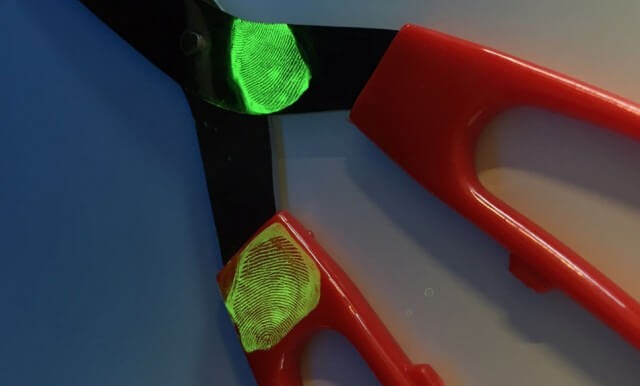
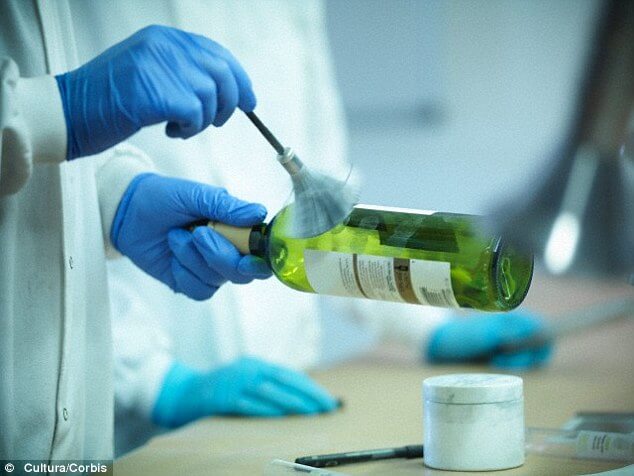
He being a scientist at Australia’s top science body CSIRO, took this break-in as a personal project as he was surprised to find the police using the 100 year old technique of dusting to collect the fingerprints. And because surface in his home wasn’t good for dusting, they couldn’t find any finger prints. Liang took it as a challenge to find a new technique and working on this project, developed a technique that uses liquid containing tiny crystals to combine with fingerprint residue on a molecular level. Under a UV light, the crystal-infused prints show up immediately in a very bright, clear fashion that can be easily photographed and run through a database.

[adinserter block="7"]

 In this technique, the crystals used in the liquid are the most important factors. The material is a new one called metal organic framework crystals (MOF). These MOF crystals bind to biological substances in the fingerprint viz. Proteins and fatty acids and then grow around the pattern of the print. In 10-20 seconds the fingerprints show up with fluorescence. Liang informed that in the lab the fingerprints stayed up for nearly three months. Though MOF crystals are also used for carbon capture and in healthcare, this is its first known application in forensics. Like any other technique this one also has its limitations. Currently, it only works on non-porous surfaces, so paper or clothes are not an option, but Liang said the team is working on it.

Other than the fingerprint technique, Liang and the CSIRO also found a use for MOF crystals in preserving vaccines or drugs without refrigeration. The MOF crystals bind around the vaccine’s molecules to protect it. Then when you want to use it, you can add a drop of bio-friendly solution to dissolve the crystals.

printer-2

Liang now wants to talk to the police for further enhancement of this fingerprint technique. When it is the thieves and the robbers we are facing, the smarter we are the better!

Author: Technology Blog
Hypercam: A camera that shows you the hidden side of the picture!

What if you looked at your close-up shot and found a criss-cross of veins on your face or what if you clicked a picture of a fruit and found what it actually looks like from within? Well presenting hyperspectral cameras to you!!

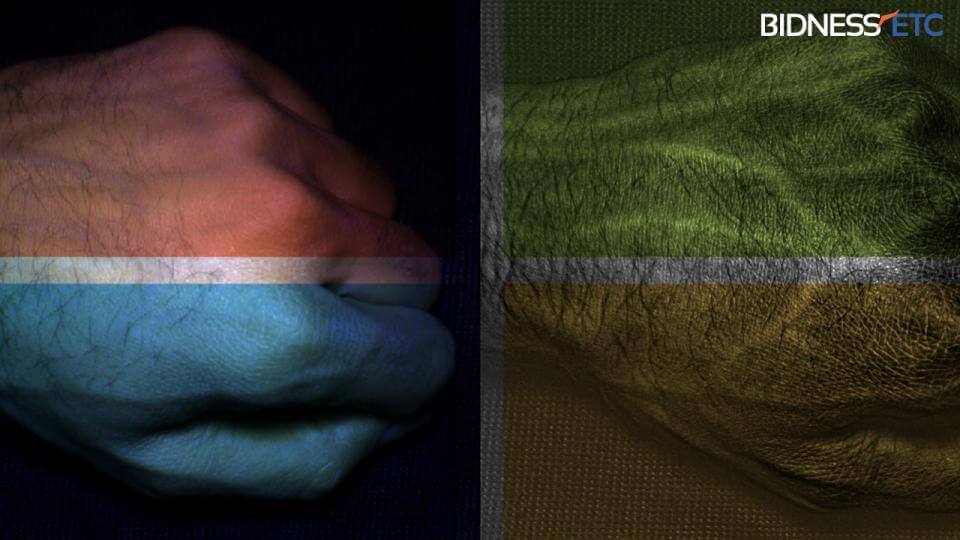
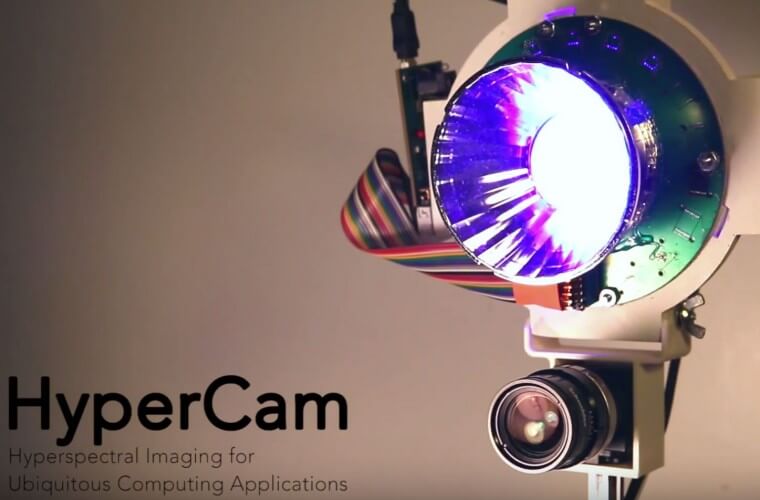
Hyper-2Despite having this amazing quality, these kinds of hyperspectral cameras are big, bulky and expensive hence their use is limited to scientific or industrial applications. But this may change in the near future as researchers from the University of Washington and Microsoft Research are creating a compact, inexpensive consumer hyperspectral camera that may even find its way into your smartphone. So here is where HyperCam comes into picture.

Actually what happens is, when we capture any picture with a conventional camera, it just works with the red, green and blue (RGB) bands of light, whereas the HyperCam , emits and then images 17 various wavelengths of light within the visible and near-infrared part of the electromagnetic spectrum. The HyperCam then compares each of those images to one regular RGB photo of the same subject, to see which ones differ most from what the human eye would see. These selected images are then compiled into one photo and then presented to the user.

It would be able to show things like veins beneath the skin or ripeness of fruits beneath their peels. Infact, when lab tests were done using this HyperCam, the HyperCam accurately identified 25 different people based on their vein pattern with an accuracy of 99 percent. When such experiment was conducted to gauge the ripeness of 10 types of fruits, it had an accuracy rate of 94 percent as against 62 percent of RGB camera.

Hyper-1

In its current form, the technology would cost about US$800 as a standalone camera, although it might only cost about $50 to add to a smartphone in the manufacturing process. But for that to happen the camera would need to be diminished in size in fact miniaturized and it would also need to be adapted to working in bright lights. It would be really exciting to have such a camera fitted in our smartphones. Wouldn’t it?

Author: Technology Blog

Author: Technology Blog

Solar power may get a boost from this chameleon material

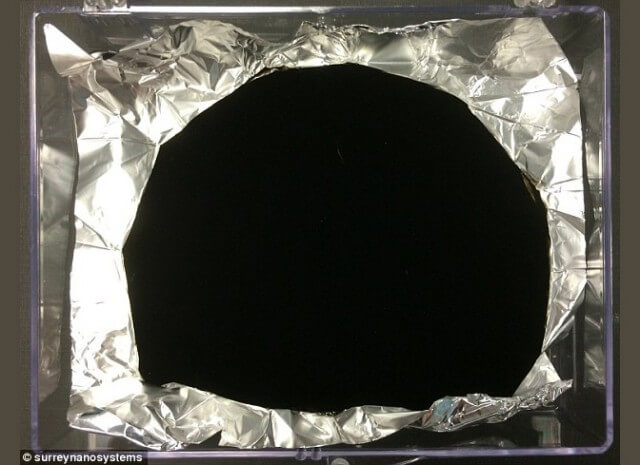
Why do things appear black or white? They appear black because they absorb all the colours of sunlight and reflect none while they appear white because they don’t absorb any of the wavelengths of the visible spectrum and scatter all. Did you know that a material made from carbon nanotubes holds the world record for blackness? This material when layered approximately to a thickness of one mm absorbs 99.8 percent of light!

dark-3

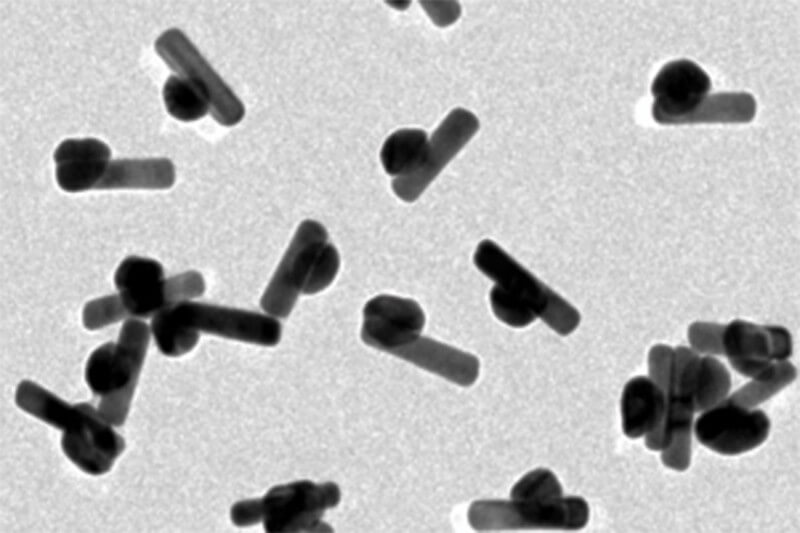
But recently it has come to the notice that a nano-material made of gold and consisting of miniscule hammer-like shapes has succeeded in achieving nearly as much blackness. And what’s more… it was also discovered that with a small addition it can even reflect any colour that one wants to. Inspired by beetles, whose beautiful thin shells reflect all wavelengths of light and thus make them appear whiter than any artificial material, Andrea Fratalocchi at King Abdullah University of Science and Technology in Saudi Arabia; thought of discovering the phenomena that was just reverse of this beetle effect. In this quest, he designed a theoretical system involving a tiny concave shell attached to an infinitely long tube designed to guide waves. If it was practically possible to build such structure light when entered the shell and travelled along the tube would never be seen again. Fratalocchi then approximated this design with gold nanorods and using plasmonics (materials that bend light along different paths). At a thickness of a hundredth of a millimetre, he found that the material absorbed 98.43 percent of light. This is a very high level of absorption and implies that this material could be painted onto other surfaces to turn light into heat.

Yuri Kivshar from Australian National University in Canberra opines that gold being an excellent conductor would transfer heat more efficiently than carbon nanotubes. Moving further in the experiment, when a simple dye was added to this material, its behaviour changed almost drastically. So what it really did was: rather than absorbing light and emitting it as heat the material converted everything in the visible and infra red spectrum into the colour of the dye.

Based on the ongoing research Fratalocchi opines that if a greater amount of sunlight were focussed onto this material such that it surpassed the threshold energy it would be possible to capture a large portion of the sun spectrum and transfer it on a single colour this in turn, would certainly improve the efficiency of photovoltaic cells which are known to work best with some particular frequencies of sunlight.

dark-4

Hope this chameleon brings about a good change in the field of solar power!

Author: Technology Blog

Author: Technology Blog

Verified by ExactMetrics