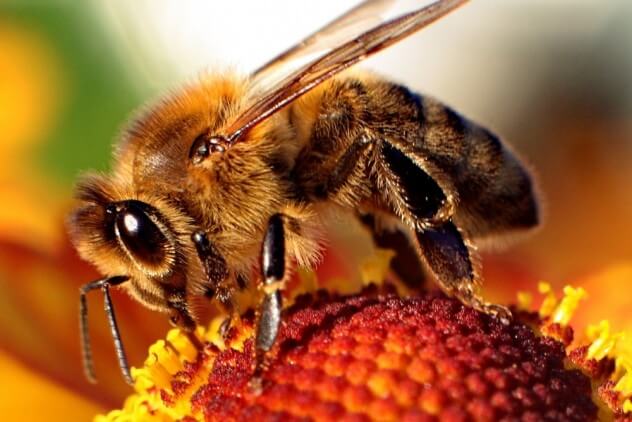
The Nature Games: How Plants Lure Caffeine Addicted Bees

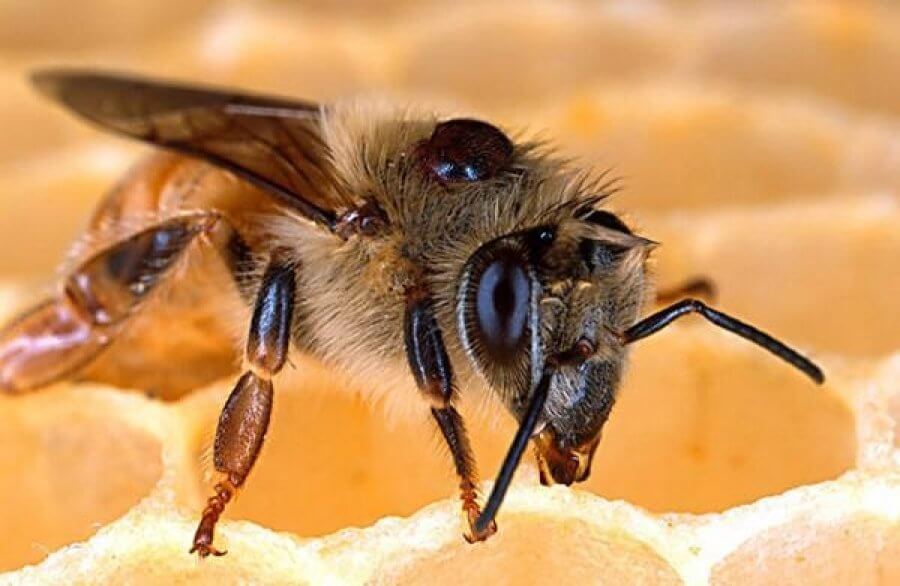
In the aftermath of previous findings that proved caffeine improved bee memory, helping them quickly learn the scent linked to the caffeinated food, results have also emerged that show how plants are actually exploiting the bees by getting them addicted to caffeine. This addiction reduces their performance in making honey, and they are forced to come back to the same plant even though it offers relatively less nectar than the decaf sources.
090705145109_1_900x600

“What I think it does is make them exploited pollinators,” Margaret Couvillon at the University of Sussex, UK says. “The plants are tricking them into foraging in ways that benefit the plant, not the bee.”

To test this further, Couvillon’s team fed the bees caffeinated solution with the right concentration of nectar in it. The bees had little tags stuck to their bags for easy identification. After three hour, they were back in the same spot, in need of the high. “These poor bees came back for four or five days afterwards, and they were kind of desperate,” Couvillon says. The bees continued to search for caffeine instead of the nectar required to make honey.

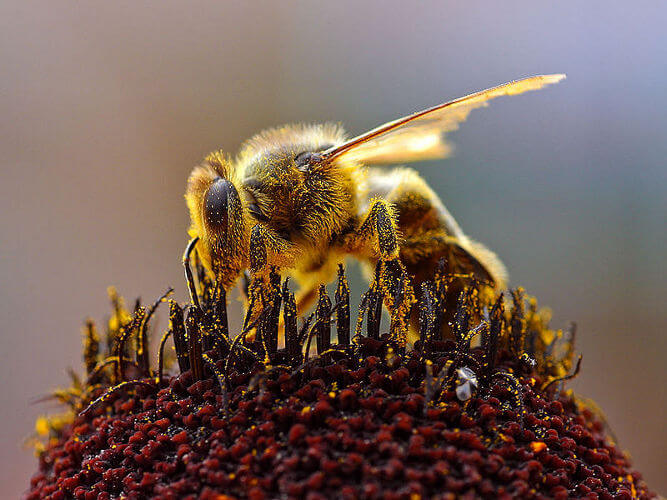
Caffeine was also warping other foraging behaviours; the honeybees who were in the caffeine buzz zone, returned to their hive and did the usual “waggle dance” they do  to direct fellow workers back to a particularly sweet source, just much more enthusiastically. Couvillon’s team calculates that caffeine quadruples the number of waggle dances a bee will do. And each bee convinced by the dance will come back from the sugar source caffeinated, too, strengthening the effect.

The plants use this to their advantage as it is fairly easy to spike their nectar with caffeine for fast pollination and low energy expenditure.
Bees-Addicted-to-Coffee-and-Cigarettes-Too-2

“It really raises a lot of interesting questions about the role of caffeine in the food web,” says James Nieh of the University of California in San Diego. “Although it may seem that the poor bees are being tempted or drugged by these plants, bees have their own tricks that the plants need to defend against,” Nieh says. “Nature is not big on honesty unless it’s somehow enforced, It’s kind of an arms race.”

[adinserter block=”7″]

Author: Technology Blog
Even as Tesla Introduces Auto-Steer, Hands Off is Not Recommended

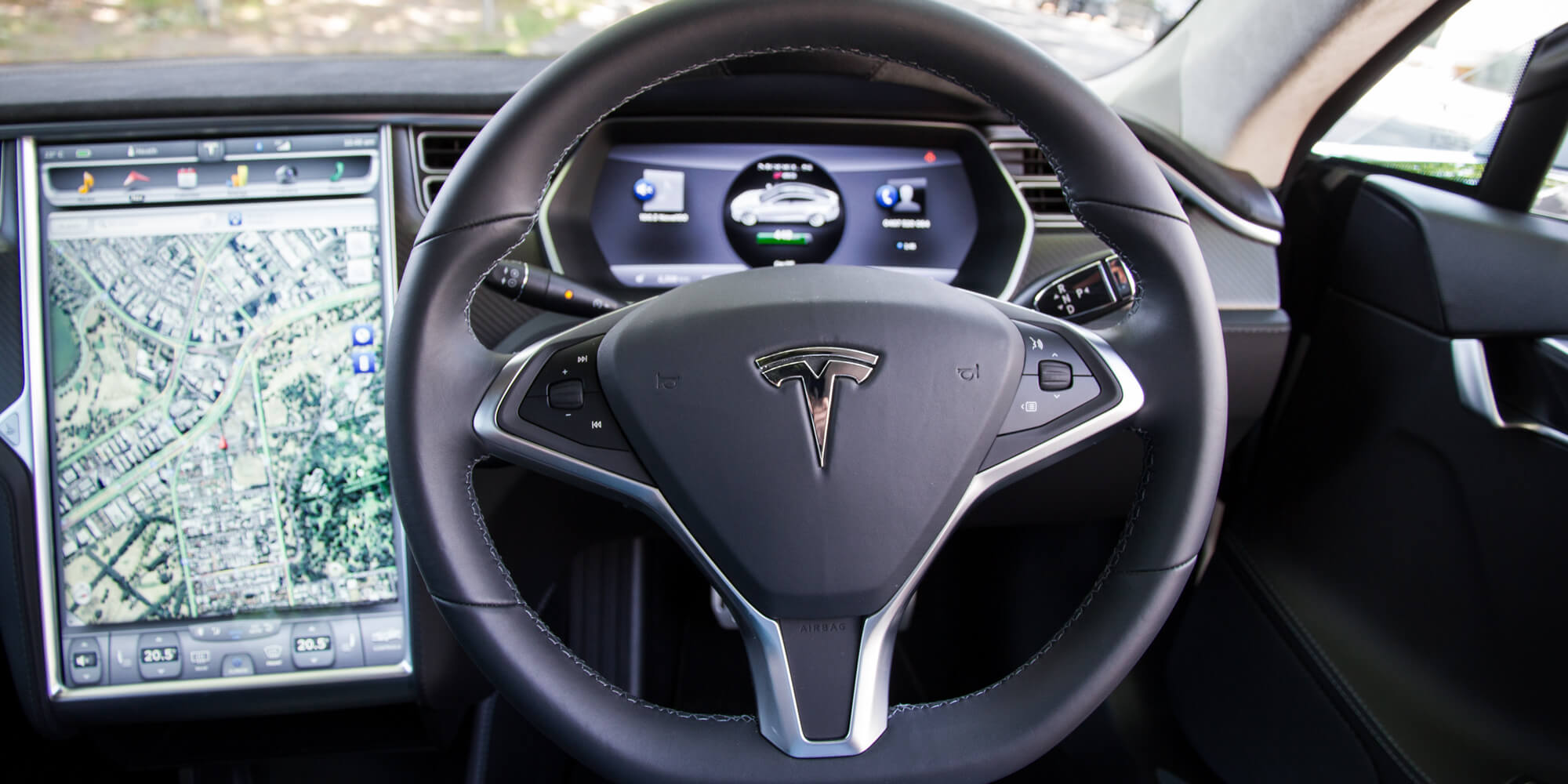
Newer Tesla Motors (TSLA.O) Model S sedans will have new self-steer and park feature enabled in them this Thursday. The Asian and European counterparts will have to wait it out though, as Tesla will provide the features through an over-the-air upgrade a week late. Tesla strictly prohibits letting go of the steering wheel yet.

Tesla-autopilot-dashboard

“We’re being especially cautious at this stage so we’re advising drivers to keep their hands on the wheel just in case,” Chief Executive Officer Elon Musk told reporters at the company’s Silicon Valley headquarters. “Over time there will not be a need to have your hands on the wheel.”

Subjects who took the updated model for an early test drive reported that signs came up on the dashboard cautioning them not to let go of steering wheel once they did so. More difficult navigating conditions, an audio alert will come on and if that also is ignored, the car will slow and eventually stop, Tesla said.

“The whole Tesla fleet acts like a network. When one car learns something they all learn it,” he said. “As … more people enable autopilot, the information about how to drive is uploaded to the network. Each driver is effectively an expert trainer in how the autopilot should work.”

960-tesla-motors-inc-launches-autosteering-feature

Musk figures that within the next three years, the autopilot mode will be able to go fully autonomous and the drivers will not have to touch the wheel from say, their home to office and back.

[adinserter block=”7″]

Author: Technology Blog

New Findings: Protein in Brain Causes Migraine, Can be Prevented by Blocking Receptors

As annoying as a migraine can be, we have come up with meds to keep the effects in control as best we can. But, as to what causes a migraine continued to remain a mystery for quite long.

dn28297-1_800

Two proteins, on the other hand, seemed to be found more often than naught, in blood samples collected from people having frequent and chronic migraine problems. When volunteers were injected with these blood samples intravenously, they developed migraine and migraine related symptoms approximately two hours later. To investigate, Simon Akerman at New York University and Peter Goadsby at King’s College London studied two peptides released by neurons thought to be involved in migraine pain, called VIP and PACAP.

For further proof, rats were injected with those these protein, VIP and PACAP, and only rat injected with the former suffered migraines. This was noticed about an hour and a half after the injection process took place (Science Translational Medicine, doi.org/787). This suggests that PACAP is responsible for kick-starting a migraine, says Akerman.

Now, to prevent the result seen, Akerman and Goadsby inserted molecules which could block the receptors on which PACAP proteins bound. This method worked and the neurons responsible for headaches no longer showed activity surges. “These receptors could represent a new therapeutic target for migraine,” says Akerman.

the-action-of-botox-on-migraine-47-728

“It appears that these receptors are important, and that this is vital to helping us understand migraine and for developing new treatments,” says Debbie Hay at the University of Auckland in New Zealand. “The receptors are a new and exciting target for migraine.”

[adinserter block=”7″]

Author: Technology Blog

Verified by ExactMetrics