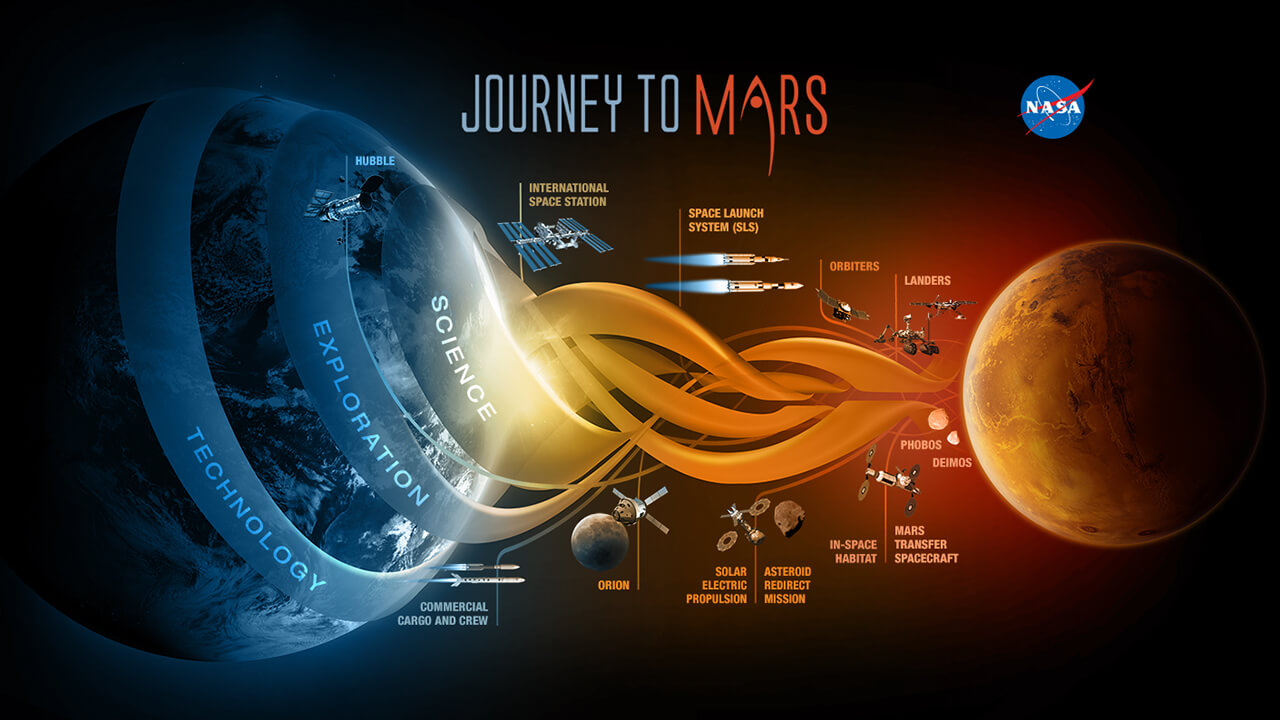
So NASA did it at last, with all of us nearing the edge of our seats every day with the findings of water on Mars, and water ice on Pluto and whatnot, they have finally left us just dangling on the edge. NASA has unveiled its complete plan to get humans out of earth and in slow, gradual steps- on Mars.

This blueprint has three subparts. Let’s go step-by-step.
First, we have “Earth Reliant”- this is just the beginning which has already commenced, mind you, the ISS is being used to perform various tests on important systems such as the life support systems, 3D printing modules. Effect of life from extended bouts in space is also being studied carefully. One mistake, and the entire crew might be wiped off in that foreign land. NASA hopes to compile the data necessary to begin preparing for an actual long-haul mission to Mars. American astronaut Scott Kelly and Russian cosmonaut Mikhail Kornienko are currently participating in phase one, analyzing the effects of spending one year in space.
Now we come to phase two, “Proving Ground,” that aims to expand testing and research beyond low-Earth orbit. All the operations and tests in this space will be conducted in the deep space. The problems and limitations that might be part of working in space will be uncovered in this phase. The astronauts will be free to return back to earth in a few days during this phase that will be conducted primarily in the cislunar space (the area around the moon which provides stable staging orbits). NASA is building the the Space Launch System rocket, as well as the Orion spacecraft which will be utilised in phase two by the end of this decade.
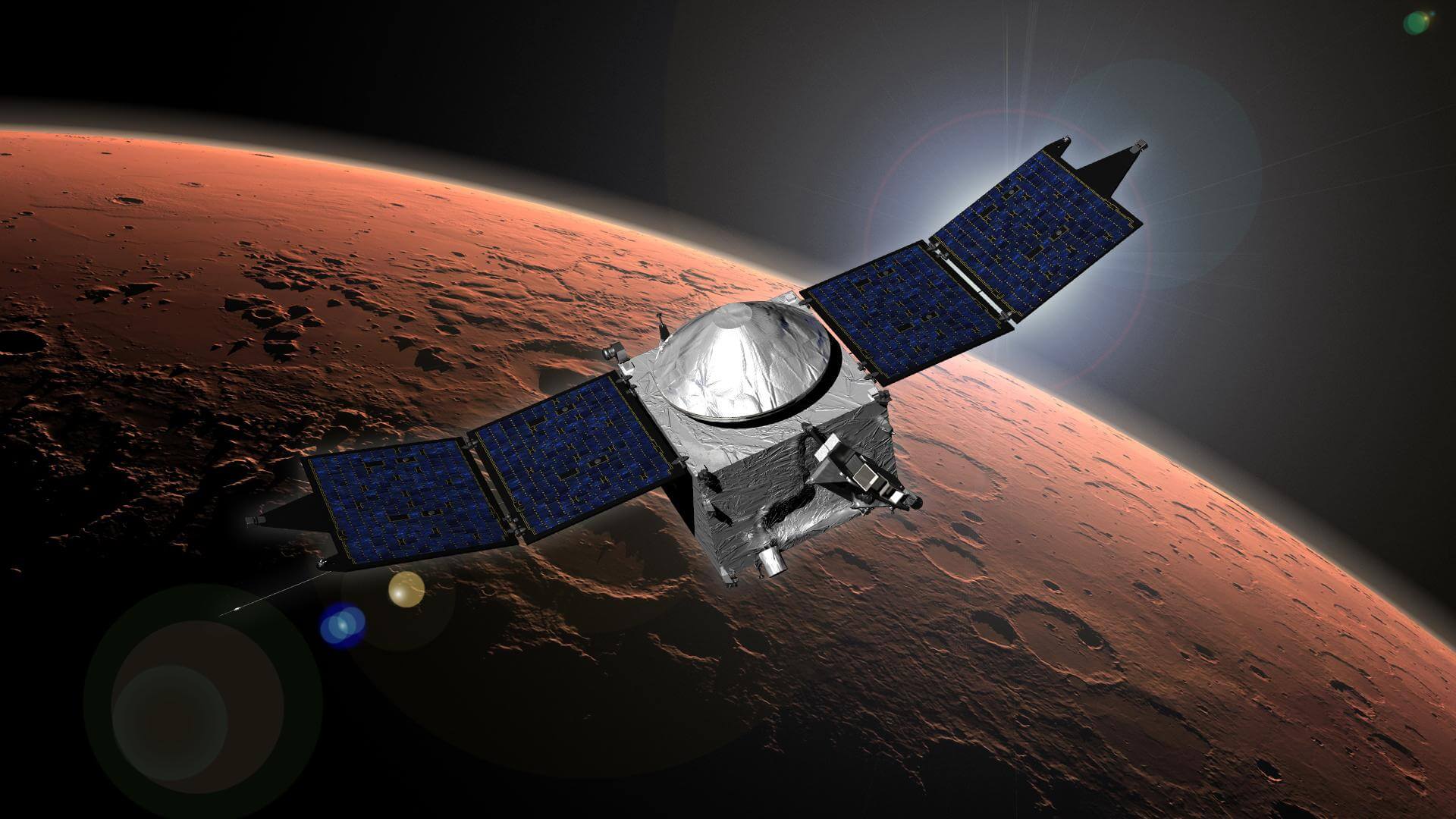
“NASA’s strategy connects near-term activities and capability development to the journey to Mars and a future with a sustainable human presence in deep space,” associate administrator for Human Exploration and Operations William Gerstenmaier says. “This strategy charts a course toward horizon goals, while delivering near-term benefits, and defining a resilient architecture that can accommodate budgetary changes, political priorities, new scientific discoveries, technological breakthroughs, and evolving partnerships.”
The last stage of this rehabilitation operation will be the “Earth Independent” phase. (Intimidated yet?) This phase will combine all the knowledge gained in the previous two stages that were aimed to prepare us for the great foreign beyond. It first plans on sending humans to either the low-orbit area of Mars or to one of Mars’ moons, before eventually descending onto the planet’s surface.
NASA believes that humans will have better revolutionary advantage at exploration thereafter as opposed to space rovers.
NASA plans all this by 2030s and maintains that this is to be achieved in a “global environment”. The ESA is lending hand to Orion spacecraft while the doors are open for Russia, China and Japan to join. In terms of funding, NASA currently has roughly $4 billion to spend each year on the development of necessary technology with another $4 billion per year expected once the ISS retires.
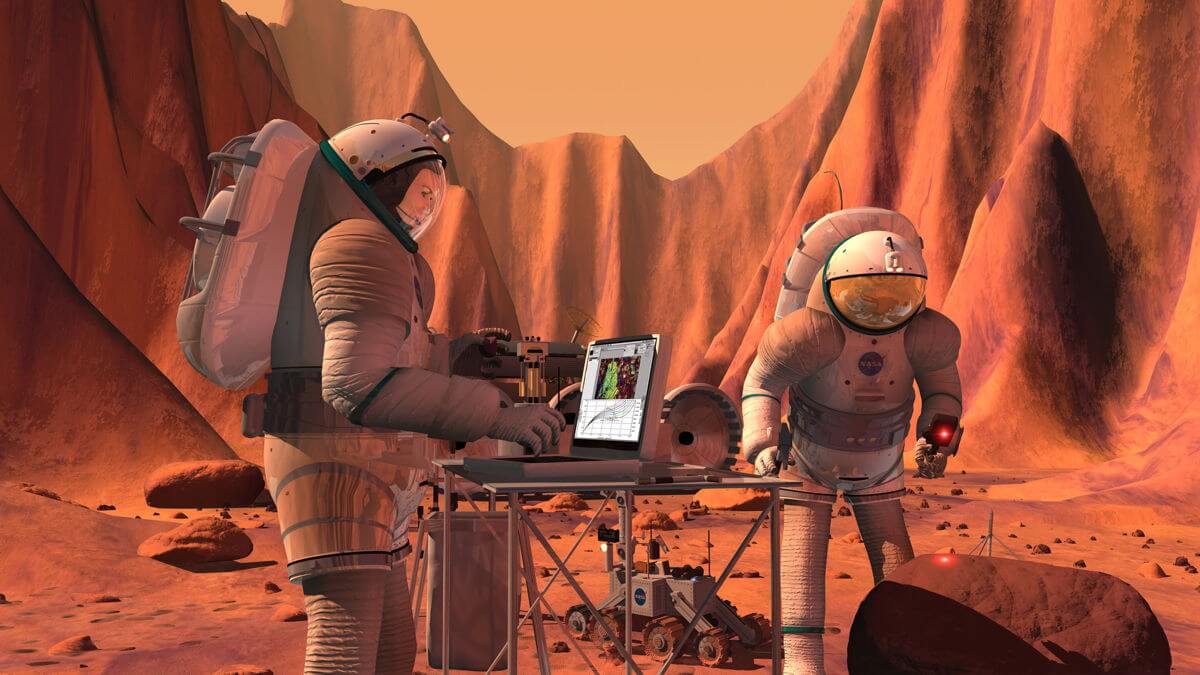
This expedition, if successful, would answer our biggest questions: Could we survive on Mars? And what could it teach us about the past, present, and future of Earth?
[adinserter block=”7″]
Author: Technology Blog