
- Miscellany Space Bugs are the fourth point of concern. NASA might have thought of everything- every emergency, every disease that could hit the crew- but, they couldn’t have prepared the said crew for something they don’t know exist! While shooting through space, the spacecraft is shiny and squeaky clean at first. But the first food can opened, and it gets contaminated.
Most of the bacteria that reside with us are helpful to our system and digestion, But they might change sides in hostile and strange conditions. Over the years, a series of scientific studies have shown that certain bacteria, including known human pathogens Pseudomonas aeruginosa and Staphylococcus aureus, seem to become hardier and more virulent after a stint in zero-gee. At the same time, weightlessness can suppress certain immune functions, leaving astronauts more vulnerable to disease.
Taking antibiotics in space might prove detrimental to the health of the subject instead as, it might work against the good bacteria we have and further sabotage our immune wall. Thus, NASA’s Human Research Program has put aside a lot of funds to studying possible illnesses in space. The Kelly twins are the major focus of studies. Scientists are investigating shifts in Kelly’s digestive tract and on his skin as part of the One-Year mission. Immunome Changes in Space Investigation, is using both twin brothers to test the response of their immunity to vaccines after prolonged exposure in space. After annual flu shots, their blood tests will be compared periodically.
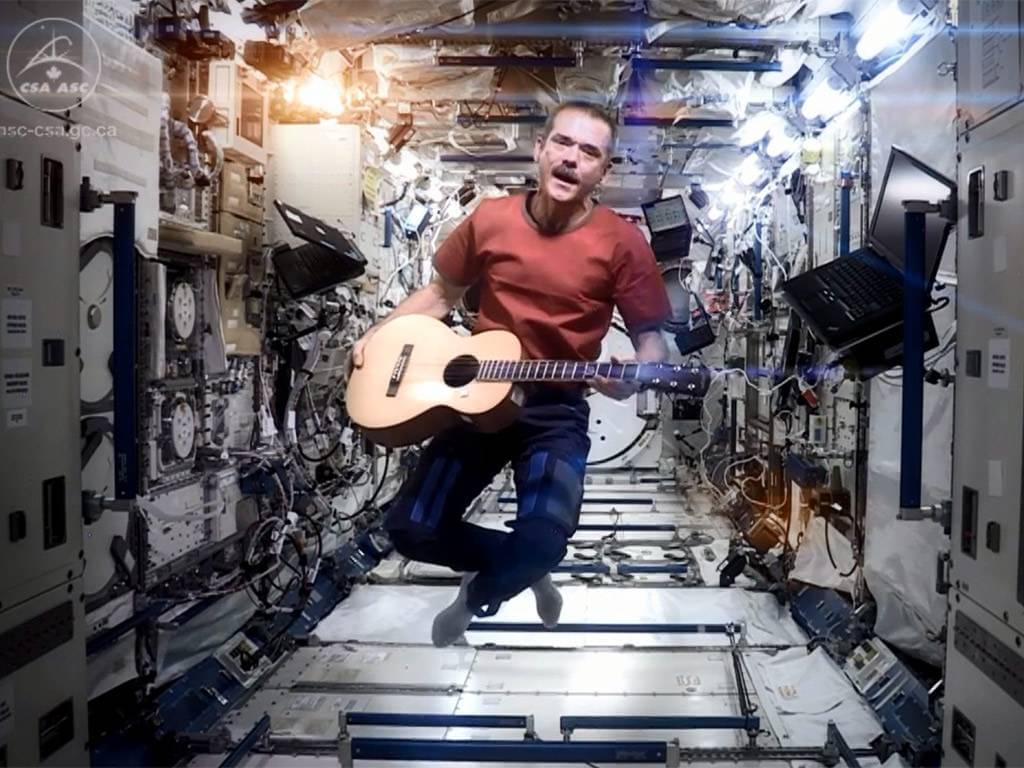
- Radiation is the fifth element that can cause you a slow and painful death. You see, Mars lacks the layer of protection that the earth possess against damaging UV rays i.e., the ozone layer. And without that, the surface of Mars is continually bathed with a strong dose of these rays. UV rays are notorious for causing mutations and damage in DNA.
During Kelly’s year in space, he’s soaking up roughly the same amount of extra radiation (0.16 sieverts) that a regular cigarette smoker does over the course of a year. The Curiosity Rover recently revealed its findings via a device placed on it that even the shortest round-trip from Earth to Mars could dose our astronauts with 0.66 sieverts of radiation—the equivalent of a whole-body CT scan every five or six days. Ooh, insanity with cancer sounds pretty nasty!
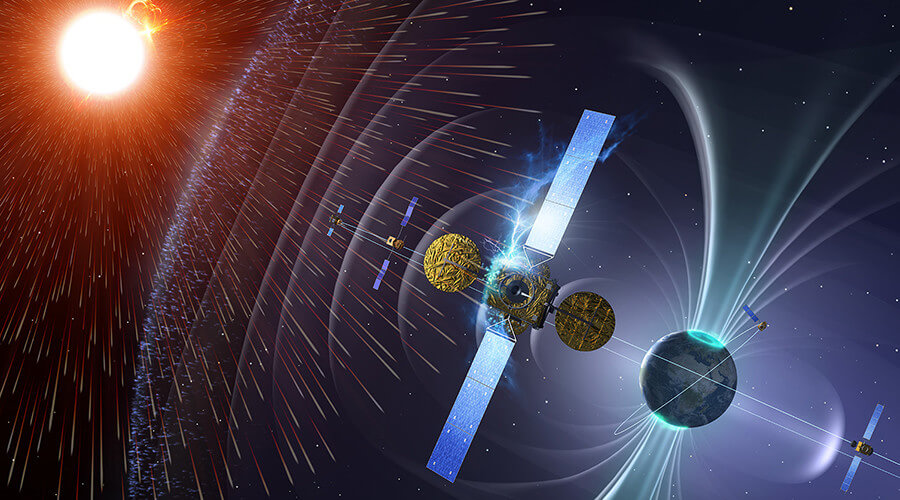
Aluminium and polyethene materials have been known to deflect radiation, but this method too can very well backfire on us. A high energy cosmic ray on slowing down might collide with other particles and create damaging secondary ones.
“A particle of galactic radiation might be better off going fast…. if it’s moving slowly, it has the opportunity to create more damage,” Shelhamer said. “It’s a very tricky situation, and we don’t have a good handle on the extent of the risk and what can we do about it.”
- The Unexpected Dismissal. No, this is not about a sudden cancelled date of space walking with a fellow astronaut. Though, that could be excruciatingly awkward too given all the months you’ll have to spend in their company. No, this is about when you do manage to catch a space bug and walk into the emergency medical cabinet for supplies. You down the appropriate dose and wait self-assuredly only have it get worse as the day goes by. This is until you realise that the medication isn’t doing the trick!
“As the Chief Scientist whose job is to oversee this whole thing, the thing that concerns me most is the one danger that we haven’t yet thought of,” Shelhamer said. “What’s the biggest risk? It’s the radiation that causes a mutation in a pathogen when your immune system is compromised, and the medication on board doesn’t work because your metabolism has shifted. It’s the interaction of factors nobody considered.”
So, are you still bouncing up and down with excitement at the prospect of exploring a foreign land? Or are you a one planet person?
[adinserter block=”7″]
Author: Technology Blog

