Pains exists in brain only! THIS new device tricks your brain to ‘not’ feel the pain!

Pain relieving medications are harmful for the body if one gets addicted to it and pops them every now and then for even the slightest of pains. The abuse and overuse of prescription pain medicines is gradually becoming a serious problem. People wasn’t a quick fix for every kind of pain hence instantly pop up a pain relieving drug never realizing that it can harmful for them in the long run.

pain

To help reduce this problem and patient’s growing reliance on pain relieving medication, a research team from the University of Texas at Arlington has been working on an alternative method for controlling pain. This alternative method is – electrical stimulation of the brain.

It is to be noted that this is not the very first method of this kind because there already exists a similar, experimental class of wearable devices that utilize the technique called transcutaneous electrical nerve stimulation, or TENS. These devices deliver small and painless electrical pulses to your nerves, using electrodes placed on your skin. The pulses are designed in such a way that they confuse your nerves and cancel out the pain signal they are sending to your brain, giving instant relief to the part of body which has electrodes on it.

The UTA technique takes this method forward by specifically concentrating and working on the spinal cord, blocking pain signals so that they don’t ever reach the brain.

The UTA system uses a custom-designed wireless device worn by the patient that stimulates the ventral tegmental area of the brain. Yuan Bo Peng, UTA psychology professor and team head said: “While still under laboratory testing, this new method does provide hope that in the future we will be able to alleviate chronic pain without the side effects of medications.”

[adinserter block=”7″]

Author: Technology and Beyond

Tagged : /

Believe it or not! This software can predict the next terrorist attack

Wouldn’t it be great if we knew beforehand that a certain terrorist attack was to take place or a certain war was to break out? Wouldn’t it be great that we would then have a way of saving thousands of lives? A Washington-based company Predata, founded by James Shinn, claims to have created a new and advanced software that can accurately predict the chance of the next terrorist attack.

terorist

The company does it by using data from online activity on sites like Wikipedia, YouTube and Facebook. It then compares this data with past patterns. It then provides its outlook on political unrest and attacks on different areas on the world.

How it works? Well, everyday Predata monitors 1,000 Twitter feeds, 10,000 Wikipedia pages, 50,000 YouTube videos and several dozen newspapers. It covers 300 topics in 200 countries which also include news about business and political decisions.

It then collects the metadata that users leave on these sites, monitoring their levels of activity and tone. The software then compares these patterns to the historical data to predict whether the chance of political unrest or a terrorist attack is likely.

The software works efficiently when there are a set of historical events to compare to. For example, in the case of the recent Brussels attack, there was no related historical data, so the software could not predict the attack. Predata’s Richard Laurent says: “Hte open internet is littered with material that can give us important clues about where and when the attackers will strike next.” Well, let’s just hope, this tool really helps and tells us beforehand, the next time any such unfortunate event was to take place.

[adinserter block=”7″]

Author: Technology and Beyond

Tagged : /

REVEALED: There is another inbox hiding in your Facebook messenger. Here is How to find it!

Your familiar Facebook Messenger is having another inbox which you normally don’t notice.

Getting into touch with your friends through Facebook Messenger is an everyday chore for you. But, occasionally, you do receive messages from strangers. They are not yet your friends but, they may be somebody known to you or somebody asking you some question to confirm if you are the person he/she is looking for.

Sometimes, if you would like to have short interaction with anybody without being a friend you would like to communicate by sending a “message request”. It sends a notification to the users that a “non-friend” is trying to contact them. It used to work that way. But, now, Facebook algorithm decides whether or not, you would like to hear from that person. Accordingly, it filters out the message if it is considered as a spam and the message is sent to spam folder directly.

There may be a case that the message placed in the spam folder is not actually a spam. In that case, you need to visit the spam folder to verify that.

For iPhone, you need to do this:

  • Go into the Messenger app
  • Tap on the Settings icon
  • Tap on “People”
  • Tap “Message Requests”
  • Scroll to the bottom and tap “See filtered requests”

And on other devices please follow the procedure described below:

Click on settings.

1-1

Click on “People”

2-1

Click on  “Message requests”.

3-1

Finally  “See filtered requests”

4-1

There is no guarantee that there will be messages in that folder and good chances are there that it will be full of spam messages from probably fake accounts. It can even be from some stalker ex whom you have blocked years ago.

Either way, please go ahead and check.

Author: Technology and Beyond

Tagged : /

THIS is what your body Shape tells about your chances to develop a heart disease

Do you have weight around your abdomen? Waist circumference is considered as a strong predictor of heart disease in the case of patients affected with type 1 or type 2 diabetes. Surprisingly, this finding is not a function of body mass index (BMI) or total body weight. And the observation holds good even if these patients have no current manifestations of heart disease.

know-ur-body-type

This study has been conducted by the Intermountain Medical Center Heart Institute, Salt Lake City and John Hopkins Hospital, Baltimore. The paper was presented at the 2016 American College of Cardiology Scientific Session in Chicago on April 2. The title of the presentation was “Waist Circumference Is a Strong Predictor of Regional Left Ventricular Dysfunction in Asymptomatic Diabetic Patients: The Factor-64 Study.”

The new dataset collected by this study complements another recent study which suggested that clinicians already moved away from single metrics determination (Like BMI) of overall patient health.

Around 200 diabetic men and women with no reported coronary disease were examined. Scientists concluded that more than body weight and BMI, abdominal obesity was strongly associated with regional left ventricular (LV) dysfunction which is a common cause of heart disease and probably congestive heart failure. LV dysfunction caused blood backs up into the lungs and lower extremities which often lead to heart failure and sudden cardiac arrest.

“Our research examined patients with diabetes, who are considered high risk for developing heart disease already, and found that the shape of your body determined if you were at a greater risk to develop left ventricular dysfunction,” informed J. Brent Muhlestein, M.D., Intermountain Medical Center Heart Institute.

“This study confirms that having an apple-shaped body—or a high waist circumference—can lead to heart disease, and that reducing your waist size can reduce your risks,” mentioned Dr. Muhlestein.

Earlier study, called faCTor-64 concluded that that the greater is the BMI of a person, the greater the risk of heart disease. All types of obesity can produce stress on the heart but abdominal obesity is the strongest predictive factor so far as LV dysfunction is concerned.

“We specifically found that waist circumference appears to be a stronger predictor for LV dysfunction than total body weight or BMI,” mentioned Boaz D. Rosen, M.D, who was the principal investigator of the current study. However, he firmly opined the need of further studies to verify the new findings: “It will be important to see if these patients are indeed at risk of developing heart failure or coronary artery disease in the future.”

Incidentally, Diabetes is a major health problem in the United States. About 21 million Americans are confirmed to be diagnosed with the disease, and estimated 8.1 million are afflicted with the disease without being undiagnosed. It is no surprise that cardiovascular death rates are 1.7 times higher in the case of adults with diabetes.

[adinserter block=”7″]

Author: Technology and Beyond

Tagged : /

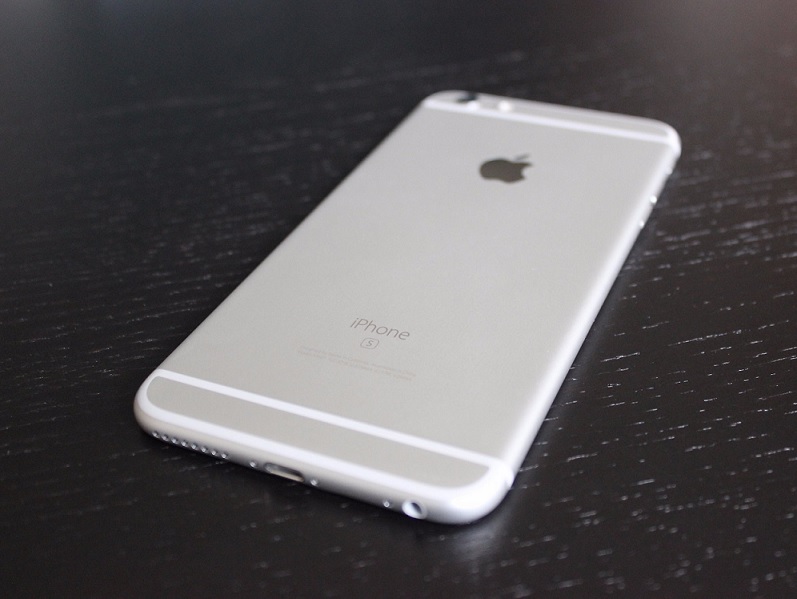
This is how Apple is making iPhone 7 slimmer and lighter!

iPhones have witnessed a sea of change. They have had small screens and the big ones. The current trend is moving towards larger screens and slimmer, lighter phones with enhanced battery lives. iPhone 7 will surely follow the trends and if you want to know how exactly it plans to do so, then the answer is-using new antenna technology.

phone-2

According to some sources, in order to get the new slimmer and lighter look, the iPhone 7’s radio frequency chip will get a complete packaging overhaul. The connected ASM (Antenna Switching Module) chip is going to use a new thing called “fan out technology”. This fan out technology increases the number of input/output terminals while reducing the size of the chip.

A notable fact is that, Apple will be the first manufacturer to use fan out technology on major components. Using this technology, the single ASM chip on the smartphone can be used for switching between LTE, GSM or CDMA cellular networks.

This has the advantage of repackaging multiple components into a single smaller package. Together these advantages will make the phone knock off a millimetre or two and will also reduce signal loss and interference.

Apart from a slimmer, lighter look and increased battery life, the iPhone 7 is expected to let go of its 3.5mm headphone jack. Though how many of these things are true will be known only after a confirmation from the company or the launch itself.

[adinserter block=”7″]

Author: Technology and Beyond

Tagged : /

Believe it or not! iPhone SE is priced at USD 399 (Rs 39,000) but it costs the company only THIS!

The new iPhone SE is the new flavour of the season. Though it hasn’t shown very exciting sales figures in its opening weekend, it is quite early to announce anything catastrophic about the phone.

Is-this-pink-iPhone-SE-in-China-real-main

The phone has been priced at Rs 39,000 and it still seems a high cost phone for most of the people in India.

But if you knew how much the company spent on making this phone, you will be surprised. According to tear-down by research firm IHS, the manufacturing cost of Apple iPhone SE is just Rs 10,720 ($160)!! Yes, and to think we are paying Rs. 39,000 ($399) for the same. Though if you want to take a breath of relief then you may know that this manufacturing cost does not include costs related to software research, R & D, marketing, distribution and other taxes and charges.

If you want to know the breakdown, one of the costliest sub systems in the iPhone SE is its four-inch Corning Gorilla Glass Display with integrated, in-cell touch-sensing, however the bill of material cost of $20 is less than half the cost of the same display in the iPhone 5s, when it was originally released.

[adinserter block=”7″]

Next Page For More

Tagged : /

THIS sixth state of matter could lead to superfast computers!

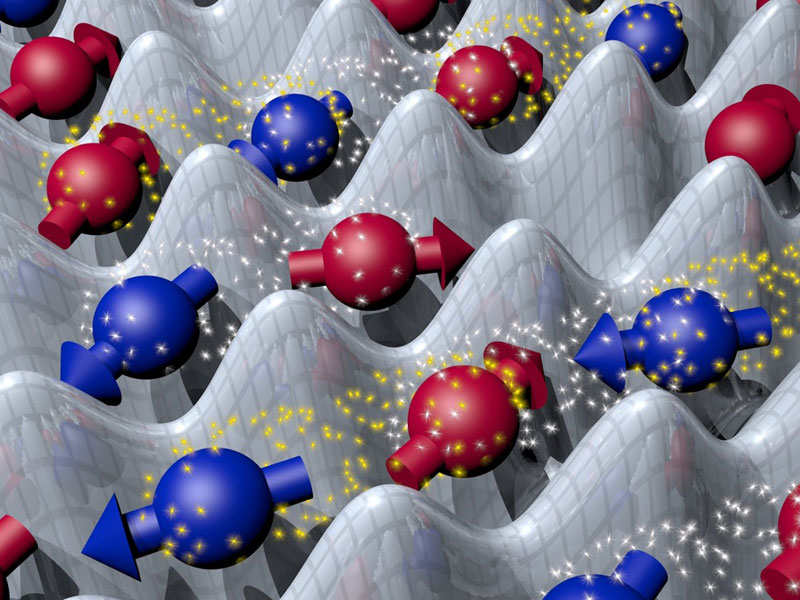
According to a research led by the University of Cambridge, evidence of a mysterious new state of matter has been found in a material. The state was first proposed by physicist Phil Anderson in 1973. Electrons were supposed to be indivisible building blocks of nature. But this state known as ‘quantum spin liquid’ causes electrons to break into pieces.

quantummagnetism_l

The discovery of electron splitting in a real material can be a revolutionary one because the fractional particles that come into being (these are known as Majorana fermions) after splitting of electrons can be used in quantum computers. Quantum spin liquids are mysterious states of matter thought to be hiding in certain magnetic materials but had not been conclusively seen in nature before.

The observation of one of their most interesting and fascinating properties of electron splitting in real materials is really important because the resulting Majorana fermions could make quantum computers far faster than conventional computers and would be able to perform calculations that could not be done otherwise.

The physicists involved in the research measured the first signatures of Majorana fermions in a two dimensional material with a structure similar to graphene. The results obtained after their experiment accurately matched with one of the main theoretical models for a quantum spin liquid known as a Kitaev model. Dr Johannes Knolle of Cambridge’s Cavendish Laboratory, one of the paper’s co-authors said: “This is a new quantum state of matter which has been predicted but hasn’t been seen before.”

This is to be noted that in a typical magnetic material, the electrons each behave like tiny bar magnets and when this material is cooled to a low enough temperature, the magnets automatically order themselves in a way that all the north magnetic poles point in the same direction.

But if it is a material containing a spin liquid state, even if the material is cooled to absolute zero, the bar magnets would not align and instead form a haphazard structure caused by quantum fluctuations. Paper co-author Dr Dmitry Kovrizhin said: “It’s an important step for our understanding of quantum matter,’ said Kovrizhin. ‘It’s fun to have another new quantum state that we’ve never seen before – it presents us with new possibilities to try new things.”

[adinserter block=”7″]

Author: Technology and Beyond

Tagged : /

How many 3s do you see on the Phone screen? (see the full picture inside the post)

Do you know what the latest internet sensation is? What is that one thing that’s driving people crazy on the internet? Well, it is our humble, simple number ‘3’. An image of an iPhone screen with a number of threes on the screen has become an internet sensation.

32B1F4F700000578-3517249-Can_you_count_how_many_threes_are_on_the_iphone_screen_If_you_se-m-23_1459436202654

Thousands of social networkers have gone berserk calculating and counting the number of threes seen on the iPhone’s screen. This photo has been widely shared with the accompanying question: “How many threes can you see in this picture?”

The most common answers are 15, 19 or 21. But to know which one is the correct answer, you will have to use a little interpretation too. There are in fact 19 threes in the picture but it can increase to 21 depending on how you interpret the question. There are eight threes in the phone number. Two threes on the keypad (number eight button has been replaced with a three).

The time on the phone shows 3.33 pm which again is three threes. Add to this, two threes which are shown in the battery power of 33%. All these sum up to 15. Now, there is something more. The ‘e’ in the contact’s name has been replaced with the number three and hence we have three more threes which takes the total to 18. Also, the letter ‘i’ on the number 4 key has been replaced by three which makes the total 19.

The puzzle, which has been widely shared on Facebook and Twitter after resurfacing again online, has instigated heated debate, with many being totally puzzled when others have arrived at a different answer.

[adinserter block=”7″]

Author: Technology and Beyond

Tagged : /

DARPA’s new Vertical Take-Off Aircraft is something unique

People familiar with aircraft industry are well aware of the fact that DARPA is trying really heard, for some time now, to create “an unmanned vertical take-off and landing (VTOL)” aircraft.

It seems DARPA is very near to achieving their goal. In this regard, DARPA (Defence Advanced Research Projects Agency) has just awarded the second phase design contract to Aurora Flight Sciences.

darpa-vtol-plane-3

In this connection, DARPA has uploaded an animated video to their YouTube channel to provide us with the first glimpse of the upcoming aircraft’s unique design.

As per the video description: “DARPA’s Vertical Takeoff and Landing Experimental Plane (VTOL X-Plane) program seeks to provide innovative cross-pollination between fixed-wing and rotary-wing technologies and by developing and integrating novel subsystems to enable radical improvements in vertical and cruising flight capabilities. In an important step toward that goal, DARPA has awarded the Phase 2 contract for VTOL X-Plane to Aurora Flight Sciences.”

This plane will be powered by a 4000 HP engine which will generate 3 megawatts of electricity. Majority of this electricity is used to propel 24 ductless fans. This aircraft will be capable of carrying a maximum load of 4500 kg with a speed range varying from 345 to 460 miles per hour.

Once completed and commissioned, the X-Plane is supposed to provide a better performance than the Bell Boeing V-22 Osprey which is another VTOL aircraft in operation. X plane can easily switch over from hover to flight mode and vice-versa.

darpa-vtol-plane-1

[adinserter block=”7″]

You may be interested about the video below:

width="731" height="731" allowfullscreen="allowfullscreen">

Author: Technology and Beyond

Tagged : /

This is how NASA spent millions in developing a Space Pen!

You might have heard stories about NASA and its space pen. This story is available in various shapes and forms. The story, mostly highlights the habit of overspending and lack of common sense in government organisations. The bottom-line of the story is how NASA spent millions of dollars in inventing a pen that writes in zero gravity whereas their soviet counterparts just used pencils.

spacepenexplain

The story might induce a good laughter but the real story behind NASA’s space pens is very different. Before going into that, we need to know a few scientific facts. Pencils are not a solution in zero gravity conditions of space vehicle. Graphite pencils give of a little amount of dust everytime you use it. When it breaks, the amount of dust generated is bigger. This may cause irritation to the astronauts in a confined and limited space. On top of that, pencils are highly flammable in zero gravity condition as they are made of graphite and wood.

Therefore, it was evident that a pen was needed for writing. In addition to this, there are other technical factors which made it impossible to use a common pen for this purpose. They were needed to be used by astronauts wearing gloves, they were also needed to be absolutely shatterproof and yet ridiculously lightweight, as every ounce on a space mission counts in terms of resources.

During 1965, NASA procured a set of suitable mechanical pencils for Project Gemini. The pencils were supplied by Tycam Engineering Manufacturing Inc. The cost of 34 pencils was a staggering $4,382.50. Nobody, including Congress or the American public was ready for this kind of perceived wastage. Just few days before the Gemini launch, NASA was struggling to justify the massive expense involved in the mission.

However, after the Gemini mission was over, it came to the public domain that astronauts had personally carried a whole bunch of unapproved items up into space. These items included sandwich (despite fear of crumbs), a diamond ring, and some common pencils.

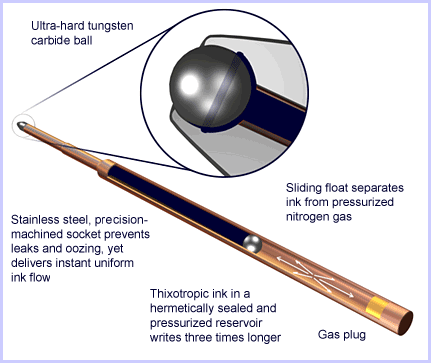
However, NASA, at this point, was looking for viable alternative to the pencils. They came across Paul Fisher and his Fisher Pen Company. It turned out that Fisher company inadvertently invented a pen that will be totally suitable for space. This pressured pen was supposed to work in extreme temperature and pressure conditions and even in underwater. The ink cartridge was also suitable for zero gravity.

NASA was getting this option without even spending a dime in R&D. However, when the pen was offered, NASA refused to accept the offer and went for a more expensive version of this pen. After a lot of testing and deliberations, NASA finally agreed to adopt this pen for Apollo mission. Four hundred pens costed a total of $2,400. Subsequently, Fisher’s Space Pens also secured a contract with the Soviet Union for their space missions.

As a technology lover you may like our daily important technology news series. It’s a playlist and you can retrieve the total day-wise videos. Please consider subscribing our YouTube channel:

Author: Technology and Beyond

Tagged : /

Look, what Samsung is planning to come out with!

Samsung is going to announce a game-changing device very soon. Consumers can look forward to this device during early 2017. This special foldable device will be a 7-inch tablet which when folded becomes a 5-inch smartphone.

phpt9jk7p

According to the reports available, the prototype of foldable display has crossed the R&D stage and the company is gearing up for mass production starting from the last quarter of this year. This device is being referred as “smartlet” internally.

This device can be kept folded and stored inside a wallet by folding the OLED display and while folded it can be used as a smartphone. When it is open, it becomes a tablet of 7-inch.

 “Although mass-production cannot be concluded hastily since Samsung Electronics still has few other major tasks to complete, I’ve heard that Samsung Electronics had made considerable amount of results in the time being,” mentioned a representative of an industry that is well aware of the developments pertaining to the Samsung Electronics’ foldable smartphone.

Earlier, it was reported that Samsung was going to release this device during January this year (2016). It also mentioned that the secret project called “Project valley” is undergoing extensive testing. This foldable device is supposed to come in two configurations, one with Snapdragon 620 processor and other with latest Snapdragon 820 chipset. It will also feature a microSD card slot, 3 GB RAM and a non-removable battery.

As a technology lover you may like our daily important technology news series. It’s a playlist and you can retrieve the total day-wise videos. Please consider subscribing our YouTube channel:

Author: Technology and Beyond

Tagged :

You know it all wrong, sex of a baby depends on something stunning!

It happens with all expectant mothers and fathers. While some wish for a sweet, cuddly baby girl, others pray for a chubby, cute baby boy. But at the end of the day it is not just God that decides which one you will receive via the stork. There is actually an ancient virus which is responsible for this.

7ff797f347c6d16da8991ecc25deb059

According to a new Yale-University led study, the sex of a human and in fact all mammalian babies may be determined by a simple modification of a virus that insinuated itself into the mammalian genome about 1.5 million years ago. Andrew Xiao of the Department of Genetics and Yale Stem Cell Centre, senior author of the study said: “Basically, these viruses appear to allow the mammalian genome to continuously evolve, but they can also bring instability. Aside from the embryo, the only other places people have found this virus active is in tumours and neurons.”

Xiao and his team have discovered a new mechanism by which the early embryo turns off this virus on the X chromosome, which ultimately decides the sex of an organism. The study reveals that if the level of this molecular marker is normal, it is the X chromosomes that remain active and hence females and males will be born at an equal ratio.

When the case is of the marker being overrepresented, X chromosomes get muted and males are born twice as often as females. The Yale team also found the mechanism to disable the virus and Xiao said that there is a possibility that this mechanism might be used to suppress cancer which has been known to hijack the same virus to spread.

[adinserter block=”7″]

Author: Technology and Beyond

Tagged : /

Another Earth? THESE Five exoplanets that are quite like our Mother Earth!

Space research is a fascinating field. Searching new planets and stars and galaxies, studying the existing ones, comparing two different celestial bodies etc. are some of the interesting aspects of it. One of the fixation of space scientists is searching planets similar to Mother Earth. Finding a planet and life (or even probability of life) on it has been a fetish since long for these scientists.  The habitability of these planets is calculated on the basis of Earth Similarity Index (ESI).

image_2387_2e-Kepler-438b

This number is calculated from the exoplanet’s radius, density, surface temperature and escape velocity, which is the minimum speed needed to break free from the planet’s surface.  The ESI varies from 0 to 1 and anything with an ESI above 0.8 may be considered ‘earth-like’. Based on these ESI values we present you a list of five exoplanets that are quite like our beloved planet.

Kepler 438b

kepler 438b

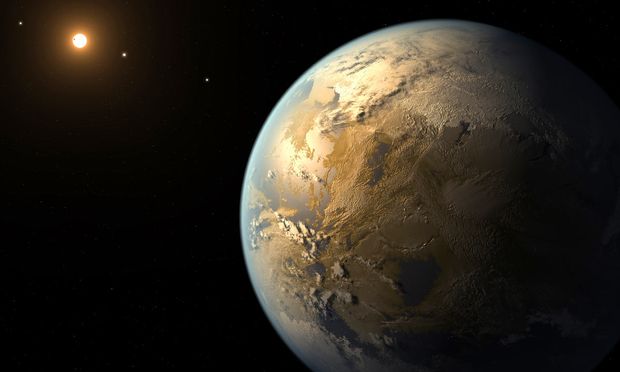
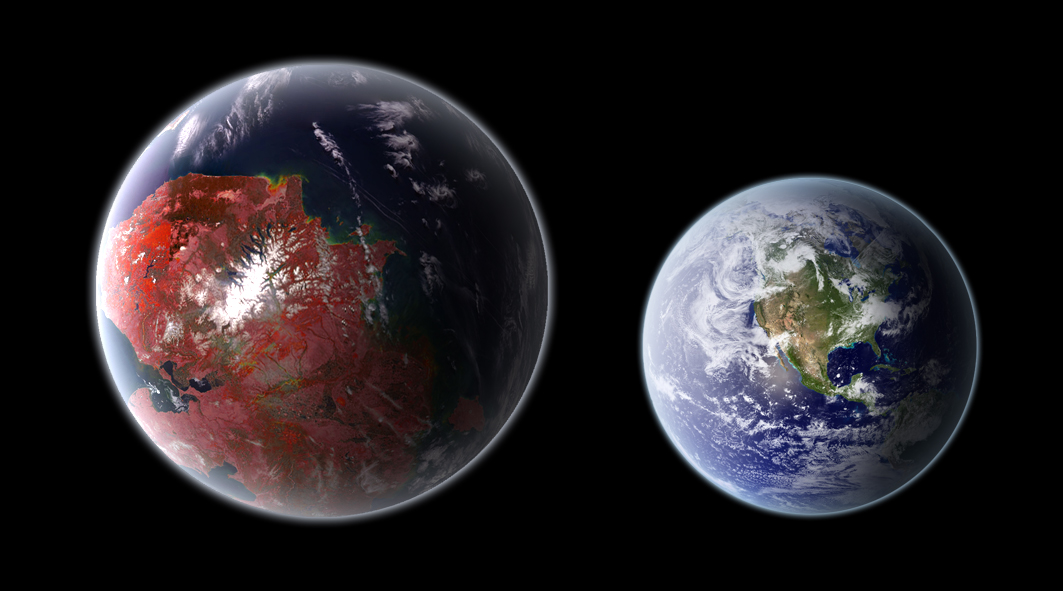
Of all the exoplnets known this has the highest ESI of 0.88. It was discovered in 2015 around a red dwarf star that was way smaller and cooler than our very own sun. The star is nearly 470 light years from earth. It has a radius only 12% larger than Earth’s and orbits its star every 35 days. The mass of the planet hasn’t been measured yet but if it has a rocky composition it may be 1.4 times that of the Earth’s with a surface temperature between 0°C and 60°C. But according to a recent finding, the host star of this exoplanet sends out powerful flares of radiation, which may render the planet uninhabitable after all.

Gliese 667Cc

Gliese667Cc_Facts

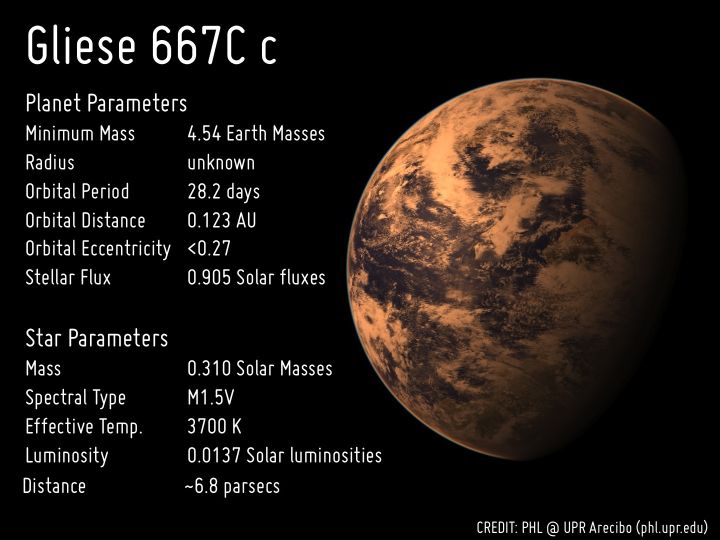
Discovered in 2011, orbiting a red dwarf in the Gliese 667 triple star system, just 24 light years away, the exoplanet has an ESI of 0.85. The planet’s mass has been estimated at 3.8 times the Earth’s, and its size is unknown as yet. This is because the planet does not pass in front of the star, which helps us to measure the planet’s radius. It has an orbital period of 28 days and lies in the habitable zone of the cool star with a possible surface temperature of around 5°C.

Kepler 442b

Kepler442b(comp)

It was discovered in 2015. It has an ESI of 0.84 and a size 1.3 times the size of the earth. With an orbital period of 112 days, it is orbiting a star cooler than the sun about 1100 light years away. It may be hospitable but with a surface temperature as low as -40°C. Once again, the exoplanet’s mass is not known, but if it has a rocky composition, it may be only 2.3 times the mass of the Earth.

Kepler 62e and 62f

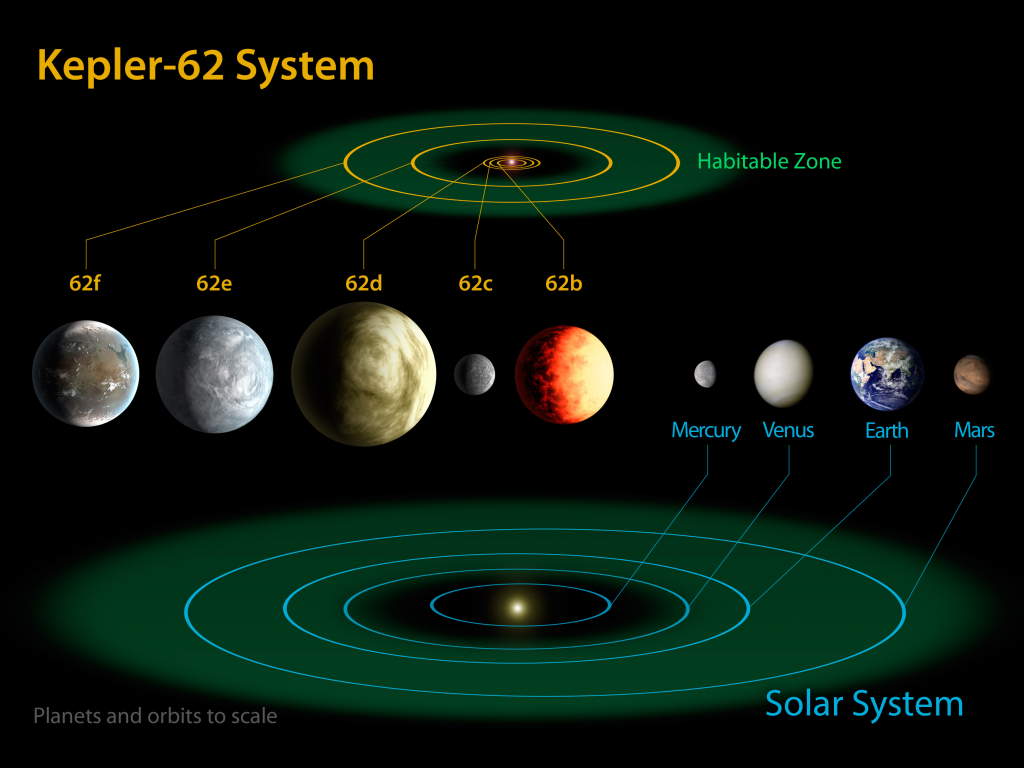
Kepler-62-systemBoth these exoplanets were discovered in 2013 and have an ESI of 0.83 and 0.67 respectively. These were discovered in with the help of Kepler telescope which spotted their transit in front of their host star. This star is located at a distance of 1200 light years from us and is a bit cooler than the sun. They both have planetary radii of 1.6 and 1.4 times that of the earth and their orbital periods of 122 and 267 days mean that they both fall within the star’s habitable zone. As with many other planets discovered by Kepler, their masses have not been measured, but are estimated at over 30 times the mass of the Earth in each case. The temperatures of each could permit liquid water to exist on their surfaces, depending on their atmospheric composition.

Kepler 452b

Kepler-452b_System

Discovered in 2015 and an ESI value of  0.83 it was the first potentially Earth-like planet orbiting in the habitable zone of a star similar to our Sun. The radius of the planet is 1.4 times that of the earth and it takes 385 days to orbit its star. This star is 1400 light years away from our planet. Because the star is too faint to measure its movement due to the gravitational tug by Kepler 452b, the planet’s mass is unknown. However it has been predicted to be at least five times that of the Earth and the planet’s surface temperature is estimated between -20°C and +10°C.

Considering all the facts, one may notice that despite many similarities even all these planets are not much habitable if you consider the atmosphere of earth. But nothing can beat hope. Let’s hope we find one that is actually like our Mother Earth and habitable.

[adinserter block=”7″]

Author: Technology Blog

Tagged : /

THIS is how GM mosquitoes are all set to eradicate malaria

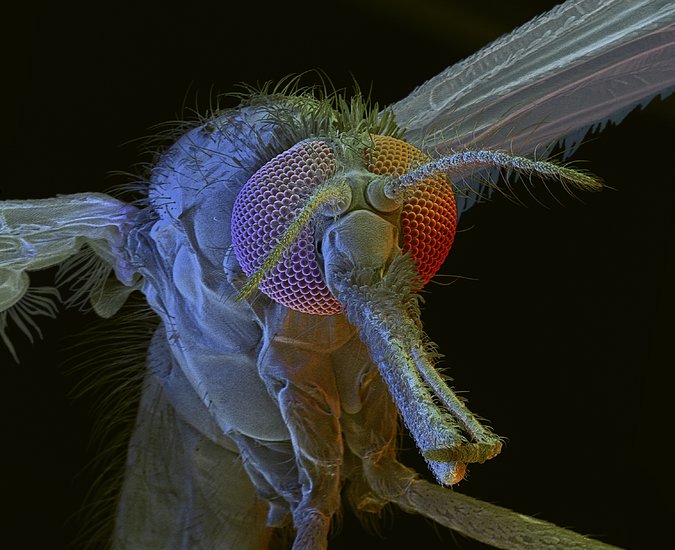
Malaria is a fatal disease claiming a large number of lives every year in different parts of Africa, Latin America and other tropical parts of the world. Researchers have been working around the world, day and night to find a way to combat this dreadful disease. There are medicines available but the best way to fight with this disease is to nip it in the bud that is to make the mosquito unable to carry the fatal parasite Plasmodium which is responsible for spreading this disease. Genetically engineering a mosquito such that it rejects the plasmodium parasite is one way of doing this. Though theoretically, this theory is good enough but when it comes to real world tests, only about 50 percent of the offspring insects will acquire the resistance from its parents.

mosquito-2

A new technique it seems has come to the rescue. The technique is called “gene driving” and papers claim that it ups the inheritance percentage up to 100 percent. Gene driving is basically a method of manipulating DNA in such a way that it ensures a gene is passed from a parent to its progeny at a rate as close as possible to 100 percent. Scientists used the genome editing CRISPR–Cas9 system to do this. This system allows the researchers to target a particular area on the DNA for cutting and insertion of a mutated gene. In the next step, the same mutation is transferred from one chromosome to another making it mandatory that all offspring inherit at least one copy of the modified gene. The high point is: because all the offspring receive a copy of the mutation, the modified gene can be transmitted quite fast through an entire population in the wild.

As exciting as it may sound, the technique is under much criticism because it clashes with the natural process of evolution by literally altering an entire population which in turn can cause huge side effects on the ecosystem as a whole.

[adinserter block=”7″]

Next Page For More

Tagged : /

When Earth is going to flip its Magnetic Poles? Is it in the near future?

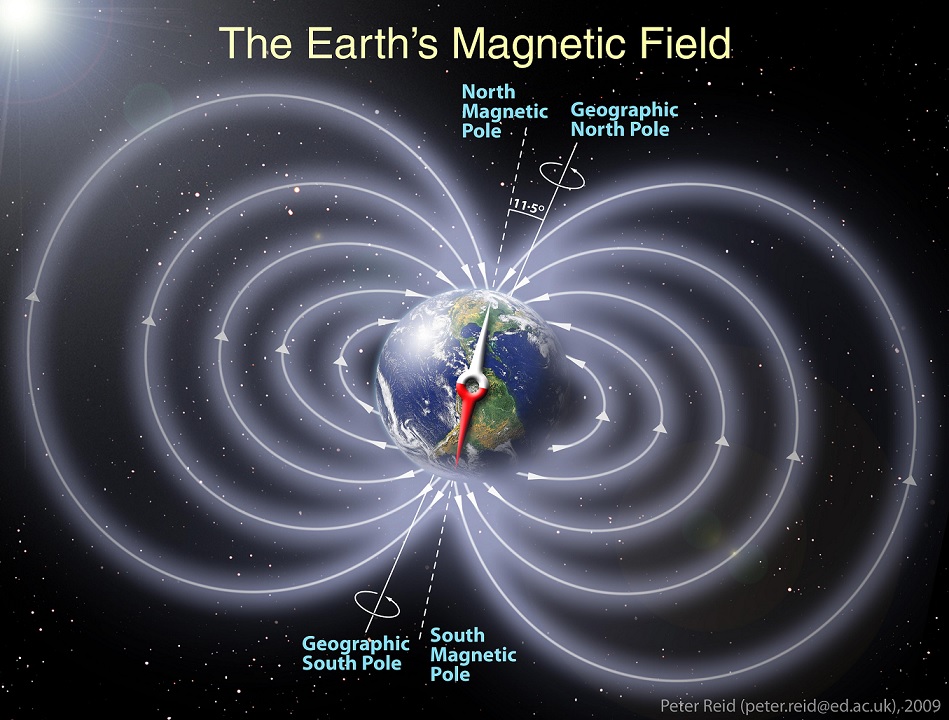
While the earth’s geomagnetic field has been decreasing over the past two centuries, and the average duration between flips tends to be about a few hundred thousand years, the fact being that earth hasn’t experienced a reversal in 780,000 years, is leading scientists to believe it’s time.

magnet-5

But a recent study shows that the intensity of today’s field is still uncharacteristically strong. When the geomagnetic field intensity is significantly below its historical, long-term average, a geomagnetic swap may be on its way. We are far from that happening, about 1,000 years at least. Not to mention, it has been impossible to narrow down on any kind of pattern regarding the switch frequency as the decreasing geomagnetic field might have a change in heart and start building itself up again anytime.

“It makes a huge difference, knowing if today’s field is a long-term average or is way above the long-term average,” noted lead author Huapei Wang in MIT News. “Now we know we are way above the unstable zone. Even if the [field intensity] is dropping, we still have a long buffer that we can comfortably rely on.”

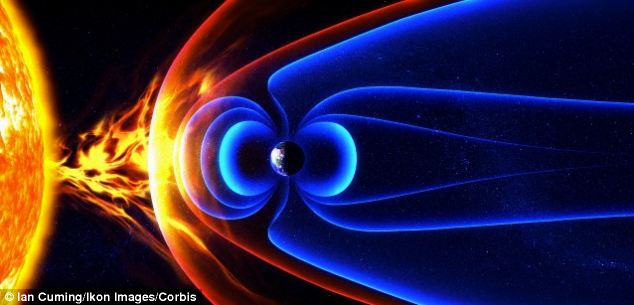
Now, why is it important to predict this inevitable switch of polarity? The Earth’s magnetic field actively deflects solar wind and cosmic rays and a weakened field would allow the entry of solar radiation that could have serious repercussions on biological life such as genetic mutations. It could even result in mass extinctions; scientists speculate that previous polar flips have done exactly this. In short, the longer the field is decreasing, more harmful rays are getting through to us.

There are also errors that could affect the technological infrastructure (satellites, power grids, sensitive equipment like pacemakers and the sort). Now, more about this new study- Scientists from MIT and Columbia University’s Lamont-Doherty Earth Observatory arrived at their conclusion by analyzing ancient rocks erupted from volcanoes on the Galapagos Islands, chosen for its location on the equator, where the strength of the Earth’s magnetic field is exactly half of what it is at the poles. Cooling lava makes the iron-bearing minerals within in it act like tiny magnets that align perfectly with the earth’s magnetic field giving a sense of its direction and intensity. The results suggest that the time-averaged geomagnetic field intensity over the past 5 million years is about 60% of the field’s intensity today.

magnet-1

“What I can say is, if you keep a constant present-day decrease rate, it will take another 1,000 years for the field to drop to its long-term average,” Wang told MIT News. “From there, the field intensity may go up again. There’s really no way to predict what will happen after that, given the random nature of the [geomagnetic process].”

[adinserter block=”7″]

Author: Technology Blog

Tagged : /
Verified by ExactMetrics