Its your turn to catch up with these interesting rumors on iPhone 7

The waiting game for that next iPhone coming to the shelves is something that all Apple fans love and the time between the news of launching a new phone and it being actually launched, gets filled with all types of notions, ideas and rumours about the new entrant.

iPhone 7 too doesn’t seem like an exception. Let’s look at some of the rumours (or are these just rumours?) doing the rounds nowadays.

A smaller 4-inch screen iPhone: There are reports that Apple may launch its iPhone series for 2016 in three different screen sizes. While the regular iPhone 7 will have a 4.7-inch and a 5.5-inch screen for iPhone 7 Plus.

Reports also claim that Apple is working on a smaller iPhone with a 4-inch screen which could be launched as early as March 2016. iPhone 7c, or iPhone 6c as it is being referred to, will also be waterproof. According to Chinese tech blog MyDrivers, the smaller iPhone will have 2GB of RAM and 16GB of internal storage and a 1,642mAh battery.

apple%20iphone

New operating system iOS 9.3: This is more of confirmed news than a rumour that a new operating system is just around the block from the Apple software labs. The new OS will supposedly have Smart Education Upgrades, support for smart screen filtering and more matured 3D touch features.

It may also involve a feature called NightShift that would help change the background colour tone of the phone’s screen to aid comfortable reading and surfing experience.

No headphone jack: While this may not be like by one and all, but it seems Apple wants its users to go wireless. It is rumoured that the new iPhone won’t have a 3.5 mm headphone jack.

Reports say that Apple could go for headphones, which can be plugged into the Lightning charging port, or possibly a pair of more expensive Bluetooth headphones.

Next Page For More

Tagged : /

Why Brain Uses So Much Energy? Mystery explained…

Human brain is very complicated and fascinating! We hardly know much about it. Researchers and scientists have poked and prodded parts of our complicated organ for hundreds of years, giving names to the parts that were most noticeable. But we still lack answers to essential questions. For example, the consumption of energy by brain or how disorders make neurons in the brain behave.

IBM neuroscientist, named James Kozloski has uncovered some of the answers. A model is prepared with what brain does at rest, like when it is not reading, thinking etc. It may be the beginning which could give us answers. He calls it “The Grand Loop”.

BmZxxmyIIAEST6i

Kozloski says that the brain consumes good amount of energy doing nothing. Brain doesn’t spend much energy on noise unless a good reason is there. Kozloski says about 90 percent of the power used up by the mind is unaccounted, which can be a substantial number given the brain requires 20 percent of the overall energy of the body’s.

His study suggests that brain usually constantly loop the signals via a number of nerve pathways in the mind, made of tissue and neurons. The brain is always following them, it is like a city street and brain keeps tracing them and retracing them.  The pathways pass through three areas of function in the brain: sensory (what’s happening), behavioral (what can I do about it), and limbic (what does it mean to me).

There are regions of the mind that include new advice, but Kozloski credits a lot of the energy of the brain to these cycling procedures. Because the pattern is cyclical, it is called a “closed loop,”. To be able to examine this theory, the model ran through the nerve tissue simulator of IBM, algorithms that mimics the manner neurons fire in the mind.

While we are able to see brain process, this research makes it more straightforward to examine neurological disease, and gives us a better knowledge of what is happening in those scans. This research would help to diagnose Huntington’s disease. However, this disease is manifested by single gene, and the understanding of its neurodegeneration is lacking currently. By looking at Huntington’s with the newest study, advice made by one gene that is erroneous can cascade into misinformation for a complete nerve pathway. In case the gene makes a protein that is mutant, then it may change the way neuron sends or receives signs. It may give rise to a chain reaction which impacts an innumerable number of other neurons.

While this research on Huntington’s is still a theory, Kozloski is confident that this model can assist the understanding of brain in a different way. Also, the next area of research would be to discover how the nerve pathways are selected, to understand the motivations of the mind.

[adinserter block=”7″]

Author: Technology Blog

Tagged : /

Heard about Cryptid? Your honest guide to cryptozoology!

Imaginary monstrous creatures, birds of exceptional human like qualities, horrible fuzzy creatures have always been a part of our mythology and folklore. For those who don’t believe in anything other than the creatures accounted for by science, cryptozoology is simply paranormal s**t and they think that this is something entirely out of the realm of science. There have been various views about cryptozoology and cryptids. If you are wondering what these both things mean then let us take the help of some renowned people in this field.

Cowichan_Lake_monster

The general consensus about the word ‘cryptid’ is the idea or a creature which doesn’t have any scientific proof, like the Big Foot. But the real definition of cryptid is really vast. According to a famous cryptozoologist, Loren Coleman, cryptozoology is the study devoted to the discovery of creatures that have not been formally recognized by the modern science.

When it comes to the word cryptid, there have been various different definitions and ways to describe it. This term was first coined in the 1980s and there were debates and arguments for a long time as to what exactly the word meant. Bernard Heuvelmans, often referred to as one of the pioneers of cryptozoology, took a broader approach to the idea when he stated that a cryptid is any animal that has left behind circumstantial or testimonial evidence but no physical evidence.

Heuvelmans discards the idea of describing cryptids as otherworldly creatures with ghostly qualities because he thought that describing this concept in this way takes the subject out of the realms of science and pushes it towards folklore and mythology which is not right. While defining cryptids though, Heuvelmans opined that in order to be a cryptid, an animal should be unexpected or different in some way but it could also be ‘emotionally upsetting’.

It was in 2004, that Chad Arment’s cryptozoology textbook outlined the four different types of cryptids that should be under investigation. These were:

  • Animals outside their usual geographic range
  • Individuals within a species that have some extraordinary characteristic
  • Creatures that look like a species declared extinct
  • Creatures that are completely unlike anything accepted by science.

This attempt by Arment was his way of making cryptology more acceptable as a science than just a folklore and myth. Arment believed that cryptozoology is not the investigation of something paranormal. He believes that it is part of the same science that led to the discovery and confirmation of the existence of animals like the okapi and the lowland gorilla which were once thought to be just fanciful exaggeration of human imagination.

Cryptids and Cryptozoology is nothing but a very interesting wing of science which may or may not be accepted by the entire scientific community.

[adinserter block=”7″]

Author: Technology and Beyond

Tagged : /

This double barreled pistol disguised as a smartphone is creating controversies! Do you support it?

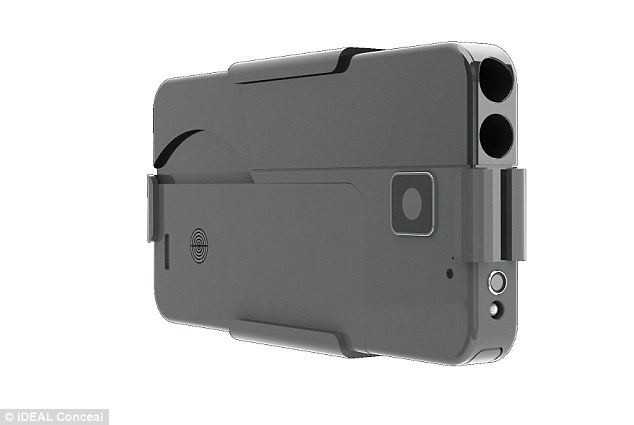
Ideal Conceal has recently submitted a patent for approval pertaining to a gun which will allow the owner to hide it from others. This is because, apparently the gun, while folded, will look like a smartphone.

12400995_936657009781803_4258235401157787642_n

The double barrelled pistol is specially designed and disguised to look like a smartphone so much so that it even has mock camera lens and a headphone jack to look similar to a popular handheld device. This firearm is lightweight and is having a single frame construction with a hammerless firing system.

Ideal Conceal hopes that the gun will blend itself well in today’s environment. They further explained: “The ground breaking Ideal Conceal is a carefully engineered double barrelled .380 caliber people can safely carry in their purse or clipped to their side. Ingeniously designed to resemble a smartphone, yet with one click of the safety it opens and is ready to fire.”

The so called smartphone converts itself into a fully working pistol with a single click. While many gun enthusiasts have expressed great interest about the detail of the gun and its release date, law enforcement agencies and gun haters, however, are not as impressed at all. Critics simply cannot digest the thought of carrying a gun in plain sight and think that it is simply irresponsible.

smartphone-gun-2 smartphone-gun

Andrew Patrick, Deputy Communications Director at Coalition to Stop Gun Violence, mentioned: “What’s disturbing is that this looks like a real smartphone. There are countless stories of children playing with toy guns who were shot, because it was mistaken for the real thing.

This gun is not only dangerous, but it is also irresponsible.”

Patrick further emphasized:
“The more you have open carrying in communities the more people start to worry and become nervous, because you don’t know a good guy with a gun from a bad guy with a gun until the shooting starts.”
Bill Johnson, executive director and general counsel for the National Association of Police Organizations, mentioned: “In general, the concept of any kind of weapon that’s disguised, so that it’s not apparent that it’s a weapon, would be cause for concern.”
Observing the negative reactions, Ideal Conceal came out and clarified the following:

smartphone-gun-6

[adinserter block=”7″]

Author: Technology and Beyond

Tagged : /

THIS is how mosquitoes find and target us!

Researchers from University of Washington and the California Institute of Technology, have successfully observed mosquitoes long enough to decode their pattern of finding food.

how-do-mosquitoes-find-their-host-4-638

They will smell you, might not exactly be groundbreaking. But what is so, is that, they smell your breath and not ‘you’. The carbon dioxide you expel with every breath is their muse. When they have got your scent, their visual cues shift into drive, quickly followed up with their heat senses.

How are strong is their sense of scent? They can smell you out from up to 30 feet away.

“Carbon dioxide is the best signal for a warm-blooded animal, and they can sense that from up to 30 feet away – quite a distance,” Mr. Riffell, researcher and co-author on the paper,  said. “And then they start using vision and other body odors to discriminate whether we’re a dog or a deer or a cow or a human. That may be how they discriminate among potential blood hosts.”

9049865251_fd2cf15a9a_b.jpg__800x600_q85_crop

“The unfortunate conclusion is that it’s very difficult to escape mosquitoes,” he said.

[adinserter block=”7″]

Author: Technology Blog

Tagged :

THIS Smart Window Keeps heat & light out and privacy in!

The invention of windows that could regulate the light or heat coming in, has long been in place. Many variations of these have been created, but none that could block just heat or, just the light. Blocking of heat would invariably lead to the obstruction of light partly, or completely.

But recently a team at the Cockrell School of Engineering at The University of Texas at Austin has developed a “smart window” technology that allows the passage of light while blocking heat, or vice versa.

self-darkening glass- anna llordés, lawrence berkeley national lab.

This idea had emerged with Delia Milliron and her team when they build a smart glass coating that could block visible light, near-infrared light (NIR), or both. This had been achieved by embedding indium tin oxide (ITO) nanocrystals in glass, imbued with niobium oxide. An electrochromic material had thus been created, that was able to transmit or block light depending on the electric potential applied.

Further building of this original invention, has led to the introduction of electrochromic materials which can let one of the energy form in, while keeping the other out successfully. The cool mode permits light and blocks heat, and the heat mode does the exact opposite. These materials have proved effective screening 90% NIR and 80% visible light. Switching back and forth between modes, is a matter of seconds. There is also a bright mode that allows normal window function.

Residential-Window-Tinting

The mechanism behind this, is the use of a single, porous penetrating network that comprises of all the components. This design opens channels for both ionic and electronic change, which allows for selective blocking of heat and light. Low-cost production is currently being focused on.

[adinserter block=”7″]

Author: Technology Blog

Tagged :

What’s in the height? Height could tell about the possible cause of death !

We are aware about the fact that body weight plays a major role on our health and longevity but we are not very well aware about any existing correlations between height and longevity. There have been various studies conducted to establish a correlation between height and chronic illness. The result of these studies indicate that irrespective of whether you are short or tall, there are some bad news for you.

160202121823_1_900x600

The study conducted by University of Leicester, UK, investigated into a possible correlation between height and heart disease. They examined 180 genetic indicators and specifically examined the ones associated with either height and heart disease. It has been observed that the shorter people are more prone to coronary heart disease. In fact, with every 2.5 inch increase in height the chances of coronary disease decrease by 13.5 percent!

They also isolated the genetic markers associated with increase of height and found that persons having those genetic markers are 26% less likely to develop coronary disease condition that those having less genetic markers. Another interesting study published in European Heart Journal indicated that coronary disease may be linked to smaller coronary arteries present in shorter people.
There is a third study by American Stroke Association and they indicated that taller people are having less chance of dying due to stroke even when the lifestyle and age is factored in.

There is some bad news for the taller people too. A research conducted by the Albert Einstein College of Medicine indicated that every 4-inch increase of height is adding 13% added risk of cancer. This includes almost all types of cancers possible.

Additionally, women with a good height are at greater risk so far as developing blood clots are concerned. Iowa women’s health project indicated that women taller than 5’6” were 76% more likely to suffer from blood clots compared to those who were about 5’2” tall.

Correlation between height, weight and the diseases were comparatively unknown till recently. The idea propagated with the involvement of insurance industry. Previously, the insurance industry used to have strange charts to correlate height, weight and diseases. But, with the advancement of medical technology, many of these diseases became curable/ controllable or even obsolete. With this, there is now a clear shift in what are counted as the ideal weight and height combinations.

[adinserter block=”7″]

Author: Technology and Beyond

Tagged : /

Turn any Table into music keyboard by using smart musical table cloth

We know, you have been focusing on your table drumming skills since your childhood. Now it is time for you to show off and demonstrate your musical prowess. To facilitate your effort, a Swedish company ‘Smart Textiles’ has developed a musical tablecloth.

Smart-Textiles-Company-Creates-World’s-First-Musical-Tablecloth

Li Guo and Mats Johansson, from Smart Textiles explained that sensors paly a big role in developing such musical tablecloth. While Mats is very passionate about music, Li, a textile sensor expert, has been looking into the mechanism of integrating sensors into textile for a long time. So, they sat down together to come up with this unique tablecloth.

“We wanted to combine sound and textiles and visualise the possibilities of textile sensors in a fun way,” Mats mentioned. “Since I’m interested in music, we decided to create a musical tablecloth.”

“The special thing is, of course, that it is all from textile technologies,” he explained. “We have the woven cloth but on that we added prints for the piano, we added other laminated textile structures for the drums. And these are also from knitted fabrics. And then sewing as connectors or taping, so it is all technologies that we are familiar with in textiles now used for an entertaining purpose in this case.”

“You can see that we have several different pins here, so they are actually functioning as sensors,” Li added. “So when you press one you actually switch it on. And the technology behind this is sense capacitive coupling. So actually it senses any of the conductors and you know that human beings are conductors so when we put our finger on it, it actually switches on.”

According to Mats, the main challenge was to integrate soft fabric with hard electronics. “The problem today is very much where you get this change from the actual fabric to some kind of electronics, from soft flexible things to the rigid hardware and of course the electricity, the batteries.” Together they tried hard to make the finished product strong, light and flexible.

[adinserter block=”7″]

Next Page For More

Tagged : /

Your exercise means a lot for this Bicycle washing machine

There might be a popular form of exercise called “laundry workout” very soon. Students at China’s Dalian National University created a cloth washer powered by a stationary bike. This machine is called Bike Washing Machine (BWM).

bike-washing-machine3-600x377

“Riding a bike is a popular exercise, washing laundry is something that you might do on a daily basis or at least once a week, so why not combine them into a single useful equipment/appliance,” the makers stated on Tuvie, a publishing medium for tech innovations.

The clothes are kept into a large drum located at the bottom of the exercise bike. When somebody rides the bike, the rotating motion rotates the drum of the washing machine. It generates some amount of electrical energy too. This energy is used either to power the display screen can be stored for future use

The concept is attractive but not entirely new. Tuvie magazine earlier featured similar type of washing machine called BiWa which is made by Slovakian industrial designer Barbora Tobolova. This is actually an operational bike and the laundry drum is fitted with the rear wheel. Therefore, while you roam around with this bike and do the other jobs, your clothes get washed simultaneously. The drum has a small opening to let the dirty water out.

The vital question remains if these washing machines are workable enough to completely replace the conventional domestic washing machines. But, if your main objective is to exercise and get the washed clothes as a by-product, this machines will be ideal for you. Both the concepts are under development phase and soon you may start getting them commercially.
As a technology lover you may like our daily important technology news series. It’s a playlist and you can retrieve the total day-wise videos. Please consider subscribing our YouTube channel:


Author: Technology Vista

Tagged : /

When you see someone eating food wearing this device, it means THIS!!

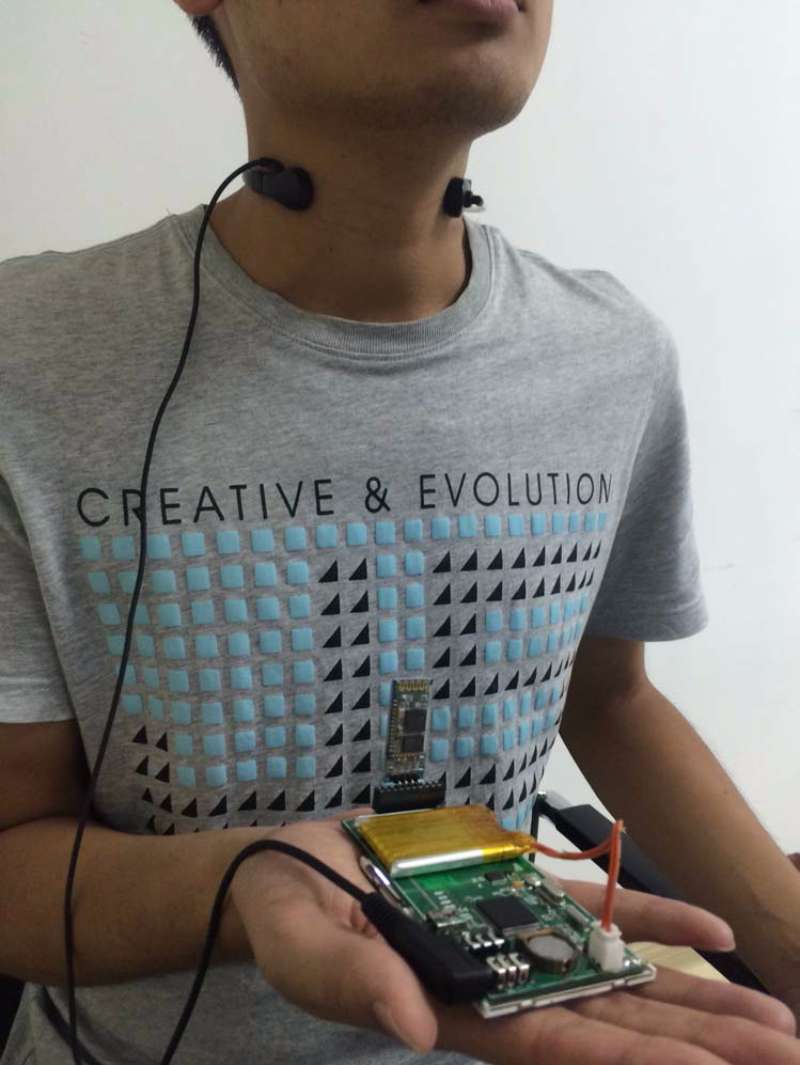
We all know that food logging is essential to keep a check on your calorie intake. But, food logging is boring and if you are not very dedicated, the chances are there that you will lose your track. To make this job simple, a computer scientist from the University at Buffalo, New York, has devised a whole new way of food logging and counting the consumed calories. Here, you just wear a choker-style necklace that is able calculate your calorie intake based on the sounds you make while you chew!

v8em1lizzn09t3xr

The wearable device, which is called AutoDietary, works on a simple assumption that different foods make different type of sounds when you chew them. Wenyao Xu, who is the main brain behind the gadget, is trying to create a catalogue of biting, grinding, and swallowing sounds of different types of food. This library will power the app that is being developed in collaboration with China’s Northeastern University.

“There is no shortage of wearable devices that tell us how many calories we burn, but creating a device that reliably measures caloric intake isn’t so easy,” Xu explained. “People either forget or they tend to forget or they want to forget what they eat.”

“You can set up a threshold,” he informed. “For example, I want to eat 2,000 calories a day. Once you have reached that, the threshold will send you a reminder.

AutoDietary is designed like a necklace that fits comfortably around the neck. This allows its high-fidelity microphone to record sounds of eating. The captured sounds are then sent to the smartphone app via Bluetooth. The app compares the database sounds with captured sounds and identify the food and the calorie consumed. This device is said to be 85% accurate and effort is being made to enhance the accuracy further.

The inaccuracy arises because of foods of similar texture and similar sounds. Frosted corn flakes and regular corn flakes are very difficult to identify separately though calorie counts will be vastly different. In case the dish contains more than one ingredient the device cannot identify that correctly. These limitations are being addressed through better algorithm and by adding a biomonitoring device. When the device detects that you are eating a general type of food, it activates the biomonitoring process which in turn monitors blood glucose level etc. to determine the total calorie value of the food.

Despite its drawbacks, AutoDietary is a pretty neat concept. We are sure that it will be further  improved in the days to come. This device will be really helpful for people suffering from diabetes, obesity, bowel disorders, and several other disorders.

[adinserter block=”7″]

Author: Technology and Beyond

Tagged : /

Never charge your phone again: THIS new technology will keep your phone charged…always!

unnamed-2

Our world is about to witness a revolutionary change as a new technology is on the cards that can wirelessly power our devices on the go. This means: you won’t need to plug in your cell phone time and again and that electronic car battery of yours keeps on running!

smartphone-radio-wave-scavenging

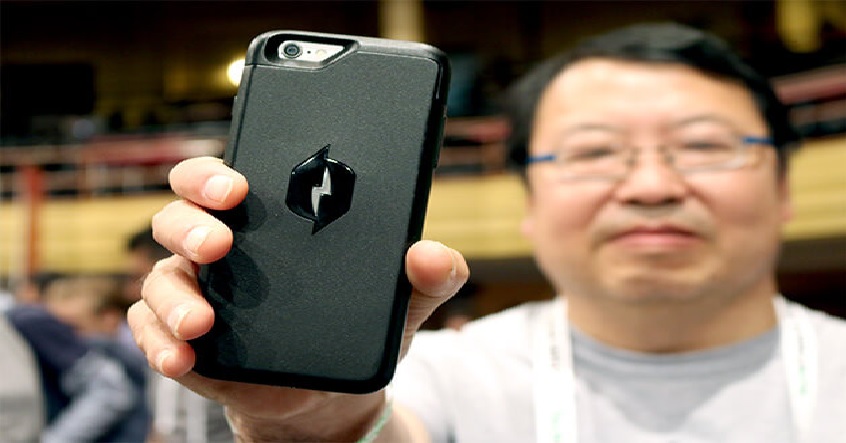
Energous Corporation’s amazing “WattUp” is a wireless charger for electronic devices and is soon going to charge your cell phones and other battery devices using the abundance of radio waves. In this technology, Wirefree power router transmitters called WattUp will be fitted in a room or your home or office or any place of your choice and using software, the power from these transmitters will enable the battery operated devices to charge themselves on the go. According to Energous, this tech would possibly reach the consumers next year.

As a technology lover you may like our daily important technology news series. It’s a playlist and you can retrieve the total day-wise videos. Please consider subscribing our YouTube channel:

Author: Technology Vista

Tagged :

THIS new initiative by the scientists will restore your faith in humanity!

The need of synthetic horns 

untitled-article-1435168902

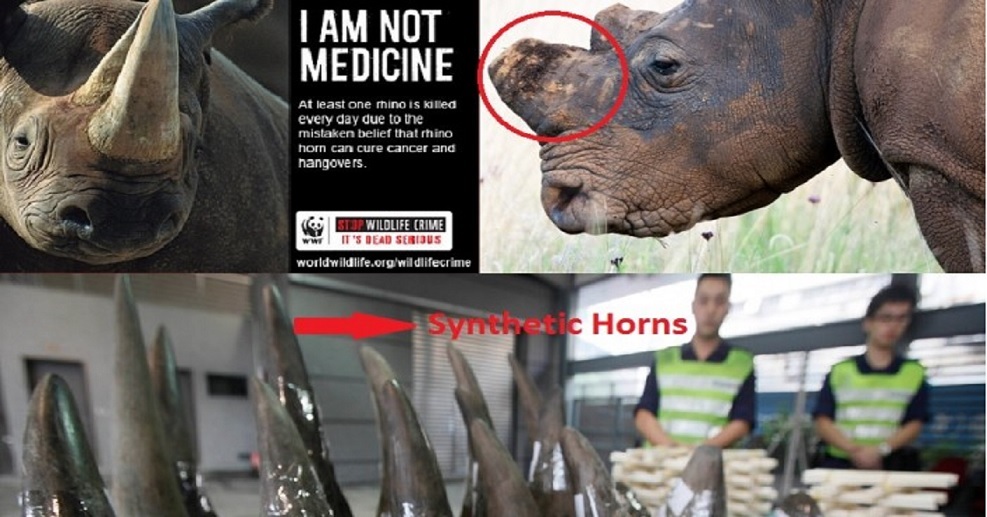
We are aware about the incessant poaching of all five species of wild rhinos, which is contributing to their declining numbers in Africa and Asia. Other than hunting for sport, rhino horns have been an ancient attraction in many cultures for a myriad of reasons. The horns’ luster increases with age and has been used as handles for curved dagger, vessels, paperweights and even buttons.

But mostly, there are sought after for their medical properties. There might be some truth behind their ability in detection of poisons, as most poisons are highly alkaline and rhino horns are composed of protein keratin, also the main constituent of hair, nails and animal hooves. The poisons may have reacted chemically with keratin and could have caused bubbles to form in the presence of poisoned liquids, when stored in vessels carved from rhino horns.

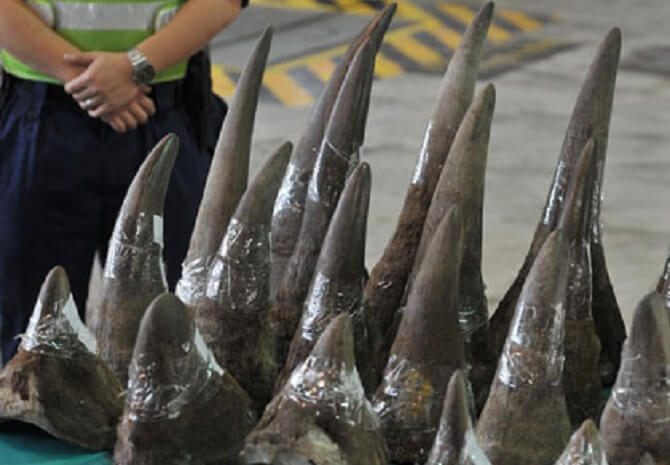
Rhinoceros horns are displayed in Hong Kong's Customs and Excise Department Offices on November 15, 2011. Hong Kong Customs on November 14, 2011, seized 33 unmanifested rhinoceros horns, 758 ivory chopsticks and 127 ivory bracelets, worth about 17.4 million HKD (2.23 Million USD), inside a container shipped to Hong Kong from Cape Town, South Africa. AFP PHOTO / AARON TAM (Photo credit should read aaron tam/AFP/Getty Images)

In 1990, some Chinese researchers in China found that very high doses of rhino horn extract could slightly lower the fever in rats, water buffalo horns and Saiga antelope could also work in this regard. But keep in mind that the concentration of horns prescribed by traditional Chinese medicine used doses much too lower to bring about these effects in human or rats.

Shunning these speculations, San Francisco-based biotech startup Pembient has come up with a possible substitute to stop the accelerated rate of poaching of rhinos for their horns. This cost effective synthetic horn is made by blending 3D printing technology and bioengineering, could be accepted by a wide range of customers who instead currently settle for water buffalo horn.

“We create synthetic rhino horn by taking advantage of advances in synthetic biology and 3D printing,” explains Pembient president Matthew Markus. “First, we engineer yeast cells to produce the same keratins found in rhino horn. These keratins are then amalgamated with the other natural components of rhino horn, such as trace elements and rhino DNA. The end result is a powder. This powder may be used as an ‘ink’ in a 3D printing process to make solid objects, including horns.”

In a survey conducted among rhino horn users by Pembient, 15% preferred to use water buffalo horn, while 45% testified they would be open to buying the synthetic product.

[adinserter block=”7″]

Next Page For More

Tagged : /

Now, you don’t have to be a super-hero to get the Iron-Man Helmet!

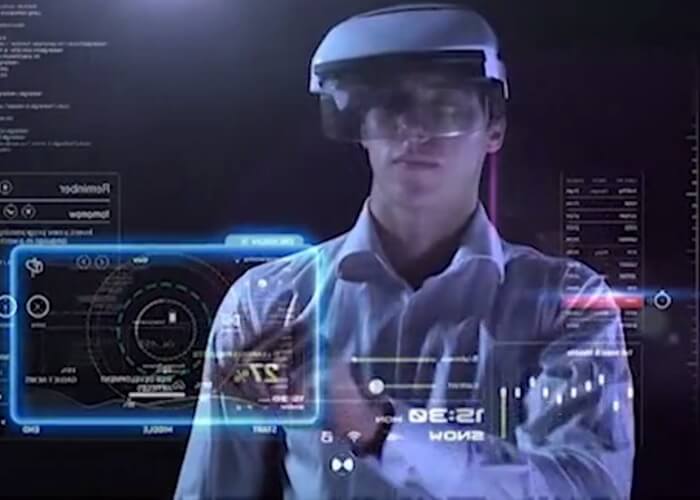
F-35 Gen III Helmet Mounted Display System (HMDS) has been dubbed as a super helmet, when compiled with one of the most complex weapons systems ever: the F-35 Lightning II.

This awesome helmet has essentially been built to accompany Lockheed Martin-built fighter jet, which can land even vertically. A jet that fine, would necessarily require a finer helmet.

Besides the information like altitudes, targeting, and airspeed, this helmet can also see through walls.

Augmented-Reality

How? Cameras mounted around the aircraft via Northrop Grumman’s electro-optical Distributed Aperture System (DAS), records, and sends back the data. The wearer can control the images being shown by simply tuning the head in the direction they want to capture.

“When the helmet’s tuned correctly to the pilot’s eyes, you almost step into this other world where all this information comes in,” said Al Norman, an F-35 test pilot for Lockheed Martin. “You can look through the jet’s eyeballs to see the world as the jet sees the world.”

livemap-the-future-of-motorcycle-helmets-and-navigation-61370_1

The others feature described would be biocular view, High Accuracy Tracking, Active Noise Reduction, night vision, ejection capacity up to 550 KEAS, lightweight and comfy, voice recording and Multiple Interpupillary Distance setting.

[adinserter block=”7″]

Author: Technology Blog

Tagged :

Beware! Hackers can take control of your system through your wireless mouse or keyboard!

We are generally having a notion that hacking is connected to accessing the risky parts of the web or downloading some malicious code in your computer which give hackers access to your computer. This is true. We definitely need to be cautious about what sites we are accessing or what we are downloading but simply by doing that we cannot avoid being hacked.

Anonymous-Hacker-Charged-with-CyberStalking

According to a recently published article, you also need to be equally careful while using wireless mouse or keyboard as they could be a gateway for the hackers.

Bastille, a security firm, carried out extensive researches about this and they came to a conclusion that “mousejacking” is real. According to them, the hackers would just need a $10 to $15 antenna and few lines of code to accomplish that.

Chris Rouland, CEO of Bastille, mentioned: “With about fifteen lines of code, you can take over a computer more than a hundred yards away.”

Rouland and fellow researcher Marc Newlin connected a $12 Geeetech Crazyradio USB dongle to a laptop running the exploit code and accessing the victim’s device was a cakewalk.

The above claim was evaluated by independent hacker Samy Kamkar.  who commented:

“It’s a bit of a wakeup call when it comes to the implementations of these protocols that are entirely proprietary and that no one has looked at before. Now someone has finally taken a look and found that virtually all of them are vulnerable. That’s pretty scary. If you can go wired, go wired.”

Popular Mechanics published a related article and assured:

“Fortunately, there are limitations to what a hacker could do. Not only does the hacker have to be within at least a few hundred yards of the target, but they also might not be able to do anything with their illicit access.”

Wired further added:

“Injecting keystrokes on a target computer, of course, isn’t in itself a full compromise of the machine. The hacker would only have the same privileges as the person using the computer and wouldn’t necessarily be able to type his or her passwords. Rouland argues that the attack could quickly be used to download malware and take full remote control of a PC. But the computer would have to already be unlocked, a caveat that would likely require the attacker to be able to see his or her target’s screen.”

Whatever way you look at it it’s not a comfortable situation. With the advancement of technology, this method of hacking will only become more popular and easier.

You may have to take a call about using wireless products, very soon!

[adinserter block=”7″]

Author: Technology and Beyond


Tagged : /

Stunning! THIS is what happens to your brain when you believe in God

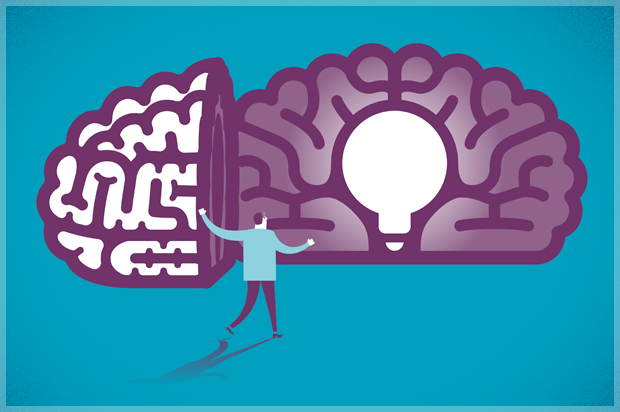
It is sunning, but, we do switch off areas of the brain responsible for analytical thinking and switch on the parts responsible for empathy when we want to believe in god, research suggests. We do exactly the opposite when we think about the mundane things.

brain_lightbulb

“When there’s a question of faith, from the analytic point of view, it may seem absurd,” mentioned Professor Tony Jack, who was the leading the research. “But, from what we understand about the brain, the leap of faith to belief in the supernatural amounts to pushing aside the critical/analytical way of thinking to help us achieve greater social and emotional insight.”

This paper was published in the journal PLOS ONE though an analysis of eight separate experiments. Researchers found out that people with faith were more empathetic than those who don’t have faith. In these experiments, the relationship between the belief in god and measures of analytic thinking and moral concern were also evaluated. Each experiment was having around 159 to 527 adult participants. It was also observed that spiritual belief and empathic concerns are directly proportional to frequency of prayer or meditation.

In an earlier research, Professor Jack’s Brain, Mind & Consciousness laboratory deployed fMRI machine to demonstrate that the brain is having an analytical network of neurons that helps us to think critically and a social network to empathise.

“Because of the tension between networks, pushing aside a naturalistic world view enables you to delve deeper into the social/emotional side,” Professor Jack mentioned. “And that may be the key to why beliefs in the supernatural exist throughout the history of cultures. It appeals to an essentially nonmaterial way of understanding the world and our place in it.”

Interestingly, our brain discovers the world using both networks. While encountering a physics problem or an ethical dilemma, a healthy brain switches on the appropriate network and suppress the other.

Such suppression has the ability to develop into a conflict between science and religion, the researchers mentioned.

“Because the networks suppress each other, they may create two extremes,” said Richard Boyatzis, professor of organisational behavior at Case Western Reserve University.

“Recognizing that this is how the brain operates, maybe we can create more reason and balance in the national conversations involving science and religion.”

Author: Technology and Beyond

Tagged : /
Verified by ExactMetrics