Pains exists in brain only! THIS new device tricks your brain to ‘not’ feel the pain!

Pain relieving medications are harmful for the body if one gets addicted to it and pops them every now and then for even the slightest of pains. The abuse and overuse of prescription pain medicines is gradually becoming a serious problem. People wasn’t a quick fix for every kind of pain hence instantly pop up a pain relieving drug never realizing that it can harmful for them in the long run.

pain

To help reduce this problem and patient’s growing reliance on pain relieving medication, a research team from the University of Texas at Arlington has been working on an alternative method for controlling pain. This alternative method is – electrical stimulation of the brain.

It is to be noted that this is not the very first method of this kind because there already exists a similar, experimental class of wearable devices that utilize the technique called transcutaneous electrical nerve stimulation, or TENS. These devices deliver small and painless electrical pulses to your nerves, using electrodes placed on your skin. The pulses are designed in such a way that they confuse your nerves and cancel out the pain signal they are sending to your brain, giving instant relief to the part of body which has electrodes on it.

The UTA technique takes this method forward by specifically concentrating and working on the spinal cord, blocking pain signals so that they don’t ever reach the brain.

The UTA system uses a custom-designed wireless device worn by the patient that stimulates the ventral tegmental area of the brain. Yuan Bo Peng, UTA psychology professor and team head said: “While still under laboratory testing, this new method does provide hope that in the future we will be able to alleviate chronic pain without the side effects of medications.”

[adinserter block=”7″]

Author: Technology and Beyond

Tagged : /

Believe it or not! This software can predict the next terrorist attack

Wouldn’t it be great if we knew beforehand that a certain terrorist attack was to take place or a certain war was to break out? Wouldn’t it be great that we would then have a way of saving thousands of lives? A Washington-based company Predata, founded by James Shinn, claims to have created a new and advanced software that can accurately predict the chance of the next terrorist attack.

terorist

The company does it by using data from online activity on sites like Wikipedia, YouTube and Facebook. It then compares this data with past patterns. It then provides its outlook on political unrest and attacks on different areas on the world.

How it works? Well, everyday Predata monitors 1,000 Twitter feeds, 10,000 Wikipedia pages, 50,000 YouTube videos and several dozen newspapers. It covers 300 topics in 200 countries which also include news about business and political decisions.

It then collects the metadata that users leave on these sites, monitoring their levels of activity and tone. The software then compares these patterns to the historical data to predict whether the chance of political unrest or a terrorist attack is likely.

The software works efficiently when there are a set of historical events to compare to. For example, in the case of the recent Brussels attack, there was no related historical data, so the software could not predict the attack. Predata’s Richard Laurent says: “Hte open internet is littered with material that can give us important clues about where and when the attackers will strike next.” Well, let’s just hope, this tool really helps and tells us beforehand, the next time any such unfortunate event was to take place.

[adinserter block=”7″]

Author: Technology and Beyond

Tagged : /

REVEALED: There is another inbox hiding in your Facebook messenger. Here is How to find it!

Your familiar Facebook Messenger is having another inbox which you normally don’t notice.

Getting into touch with your friends through Facebook Messenger is an everyday chore for you. But, occasionally, you do receive messages from strangers. They are not yet your friends but, they may be somebody known to you or somebody asking you some question to confirm if you are the person he/she is looking for.

Sometimes, if you would like to have short interaction with anybody without being a friend you would like to communicate by sending a “message request”. It sends a notification to the users that a “non-friend” is trying to contact them. It used to work that way. But, now, Facebook algorithm decides whether or not, you would like to hear from that person. Accordingly, it filters out the message if it is considered as a spam and the message is sent to spam folder directly.

There may be a case that the message placed in the spam folder is not actually a spam. In that case, you need to visit the spam folder to verify that.

For iPhone, you need to do this:

  • Go into the Messenger app
  • Tap on the Settings icon
  • Tap on “People”
  • Tap “Message Requests”
  • Scroll to the bottom and tap “See filtered requests”

And on other devices please follow the procedure described below:

Click on settings.

1-1

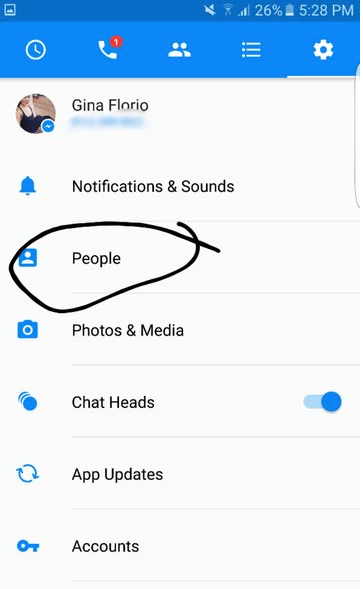
Click on “People”

2-1

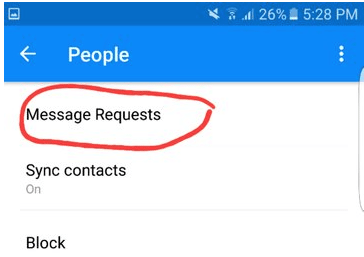
Click on  “Message requests”.

3-1

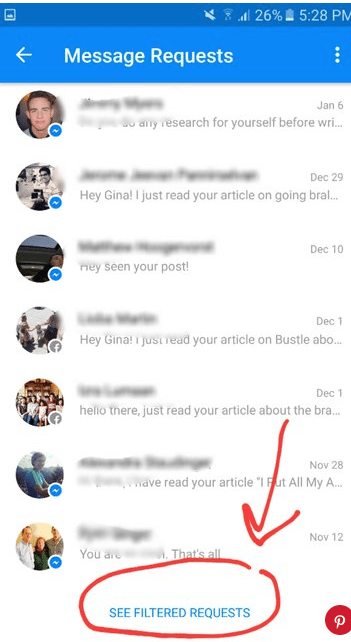
Finally  “See filtered requests”

4-1

There is no guarantee that there will be messages in that folder and good chances are there that it will be full of spam messages from probably fake accounts. It can even be from some stalker ex whom you have blocked years ago.

Either way, please go ahead and check.

Author: Technology and Beyond

Tagged : /
Verified by ExactMetrics