Neil Armstrong and Buzz Aldrin are names to reckon with. They will be admired in awe for generations to come because they were the first men to ever step on the Moon. They were the first men who ever walked on the surface of the Moon. But as popular as the walk on the moon is with the people of the world, the theories proving it to be a fake have never died down. And if you are among those people who believed that the Walk on the moon never actually happened then check out the facts below, which are a clear proof of man’s victory over something invincible.
The Rock!
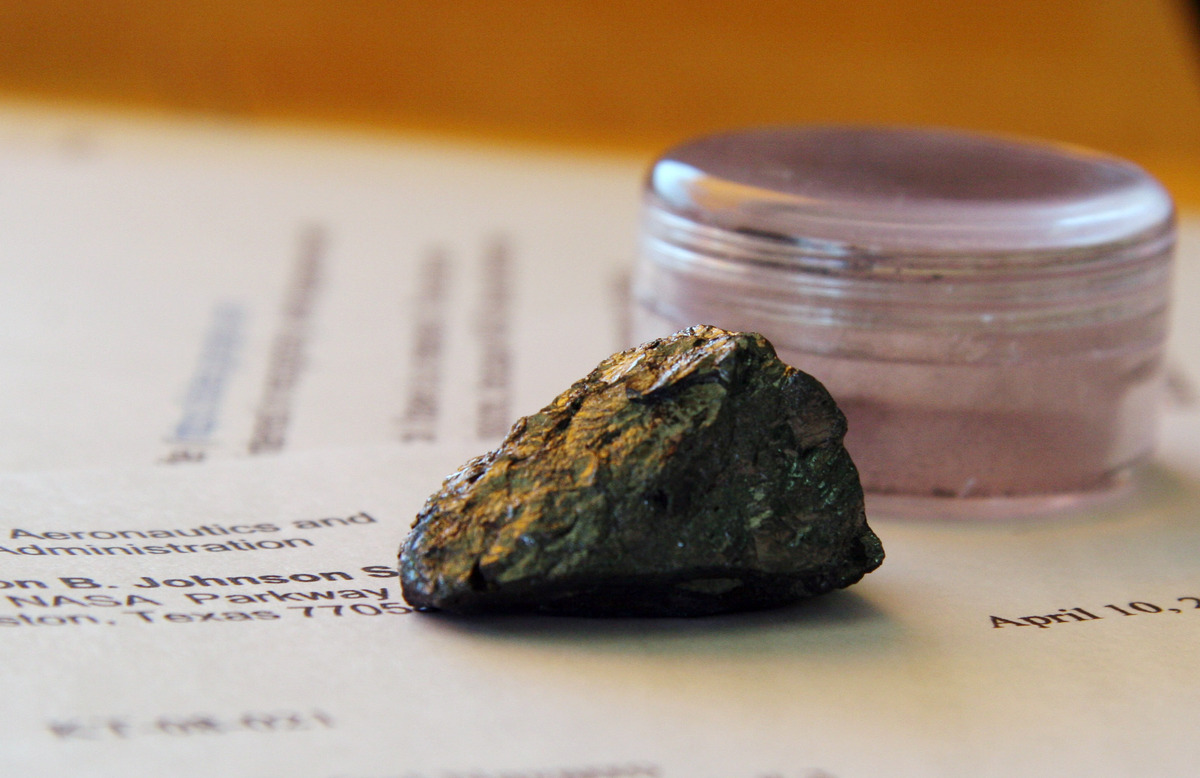
Armstrong and Aldrin brought back a rock from the moon and this is identical to all the other samples found all around the world, proving that the duo had indeed stepped on the moon.
More than one witnesses
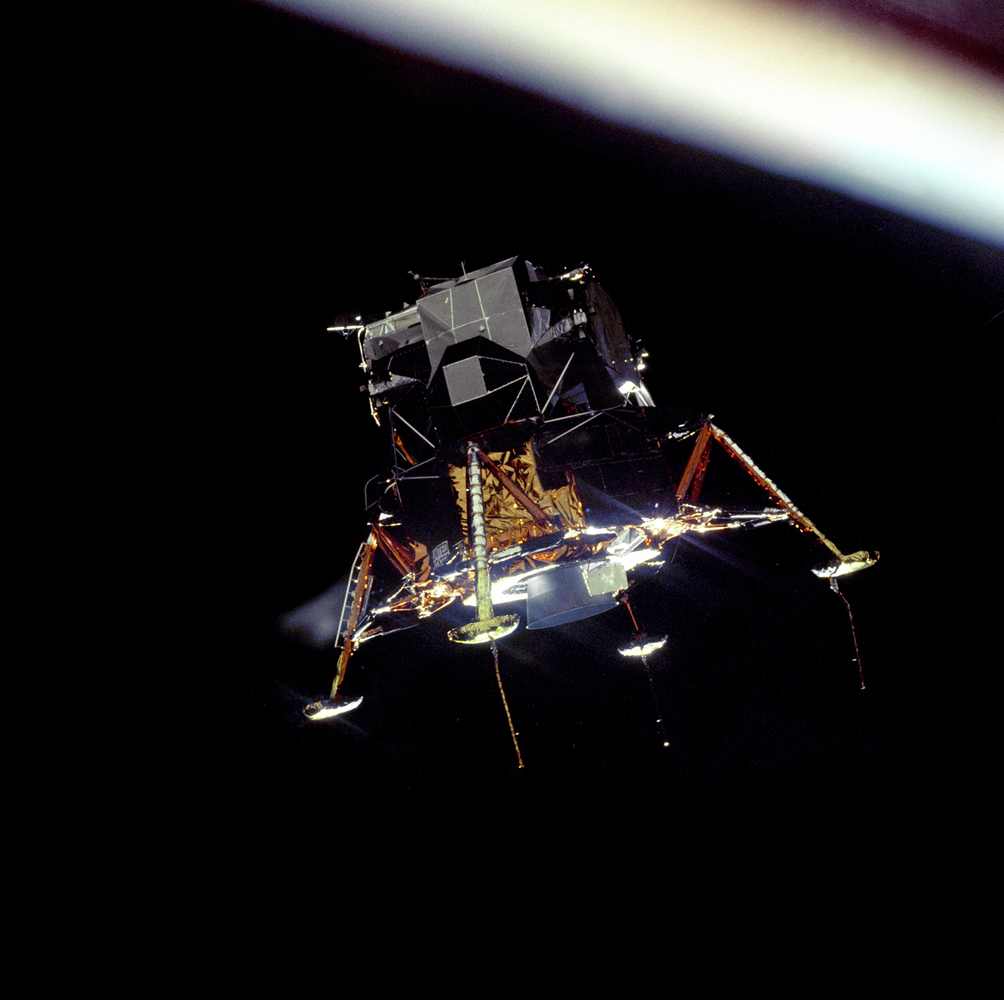
The event has its own witnesses. China’s Chang’e 2 lunar probe, the Indian Chandrayaan-1 probe and various other independent space agencies (not funded by NASA) spotted the landings.
The explanation for the ‘flapping’ flag
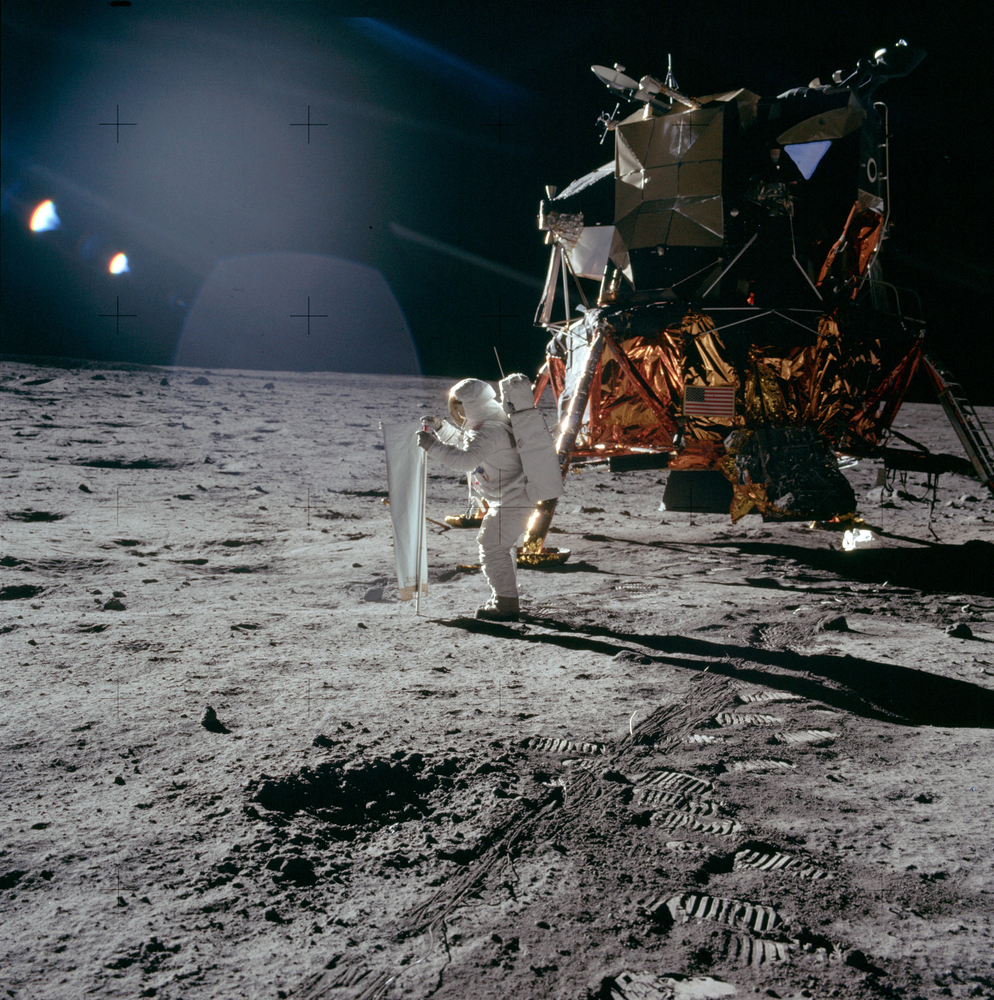
There were people who argued that the flag shown flapping in the picture shouldn’t do so considering there is no wind on the moon. But don’t forget the momentum and inertia which made the flag flap as it was around while astronauts were setting it in position.
NO studio lights in the picture
There were many who said that the lights in this historic picture at the upper corner are studio lights. But NO, according to National Geographic’s Roger Launius these were actually lens flares.
You might have heard stories about NASA and its space pen. This story is available in various shapes and forms. The story, mostly highlights the habit of overspending and lack of common sense in government organisations. The bottom-line of the story is how NASA spent millions of dollars in inventing a pen that writes in zero gravity whereas their soviet counterparts just used pencils.
The story might induce a good laughter but the real story behind NASA’s space pens is very different. Before going into that, we need to know a few scientific facts. Pencils are not a solution in zero gravity conditions of space vehicle. Graphite pencils give of a little amount of dust everytime you use it. When it breaks, the amount of dust generated is bigger. This may cause irritation to the astronauts in a confined and limited space. On top of that, pencils are highly flammable in zero gravity condition as they are made of graphite and wood.
Therefore, it was evident that a pen was needed for writing. In addition to this, there are other technical factors which made it impossible to use a common pen for this purpose. They were needed to be used by astronauts wearing gloves, they were also needed to be absolutely shatterproof and yet ridiculously lightweight, as every ounce on a space mission counts in terms of resources.
During 1965, NASA procured a set of suitable mechanical pencils for Project Gemini. The pencils were supplied by Tycam Engineering Manufacturing Inc. The cost of 34 pencils was a staggering $4,382.50. Nobody, including Congress or the American public was ready for this kind of perceived wastage. Just few days before the Gemini launch, NASA was struggling to justify the massive expense involved in the mission.
However, after the Gemini mission was over, it came to the public domain that astronauts had personally carried a whole bunch of unapproved items up into space. These items included sandwich (despite fear of crumbs), a diamond ring, and some common pencils.
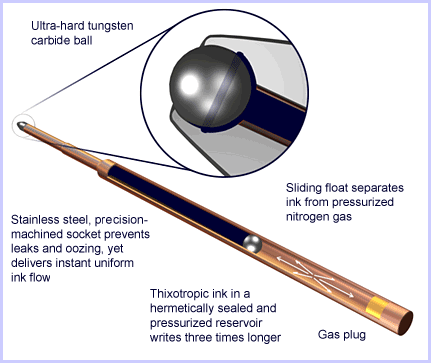
However, NASA, at this point, was looking for viable alternative to the pencils. They came across Paul Fisher and his Fisher Pen Company. It turned out that Fisher company inadvertently invented a pen that will be totally suitable for space. This pressured pen was supposed to work in extreme temperature and pressure conditions and even in underwater. The ink cartridge was also suitable for zero gravity.
NASA was getting this option without even spending a dime in R&D. However, when the pen was offered, NASA refused to accept the offer and went for a more expensive version of this pen. After a lot of testing and deliberations, NASA finally agreed to adopt this pen for Apollo mission. Four hundred pens costed a total of $2,400. Subsequently, Fisher’s Space Pens also secured a contract with the Soviet Union for their space missions.
As a technology lover you may like our daily important technology news series. It’s a playlist and you can retrieve the total day-wise videos. Please consider subscribing our YouTube channel: