We are now able to 3D print absolutely anything. Here are some examples that’ll surprise you

When he invented it 33 years ago, Chuck Hull couldn’t have known what weird and wonderful things 3D printing would end up being used for. Now we continue to make huge strides using the same technology. Here are some feats achieved by 3D printing that’re sure to amaze you:

The first ever 3D object ever built by 3D printing was the stereolithography to prototype plastic parts. Chuck Hull developed it in 1983.

This is a truly astonishing product of 3D printing. An artwork, by Dutch artist Diemut Strebe, is a replica of Vincent van Gogh’s left ear. It is not made of plastic, but living cells derived from tissue supplied by van Gogh’s great-grandson!

Musical instruments: The “3Dvarius” Laurent Bernadac plays is a 3D-printed violin made of transparent resin. The instrument was based on a model of a Stradivarius violin, then the design was modified to try and give it the best possible weight distribution and acoustic properties.

Bionic products, designed by Japanese company exiii, would have cost tens of thousands of dollars to make a decade ago  Now, using a 3D printer, it can be made for less than $300. The firm has made the 3D-model files for the arm, called HACKberry, available for anyone to download.

This is one invention the creators of 3d printing objected to. The first completely 3D-printed handgun was made by Cody Wilson in Austin, Texas, in 2013. However, the company was not happy about the use of its device to make weapons.

Even foods have been included! Marzipan figures have been printed at a conference in Germany in February. Other foods that lend themselves to 3D printing include chocolate, cookie dough and ice cream.

And even homes… This year, Chinese construction company HuaShang Tengda printed an entire two-storey house in Beijing. The company’s team built the frame of the house then covered it with concrete using its gigantic 3D printer. It took just 45 days from start to finish – traditional building methods would usually take months to achieve the same feat.

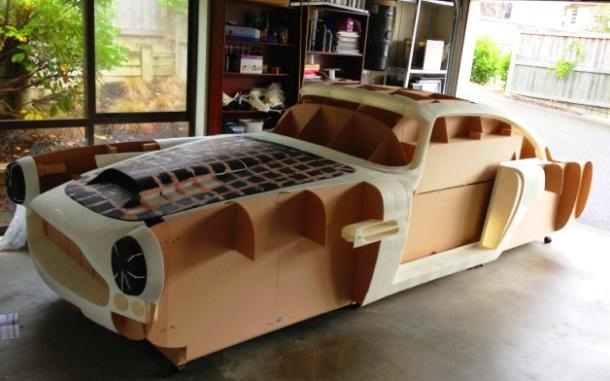
And of course, electric cars. The body of this electric car was made as a single piece by a giant 3D printer in Chicago in 2014. It took 45 hours to print, then the mechanical parts were made using conventional methods. Other vehicles have since been printed, including a nano racing car.

As a technology lover you may like our daily important technology news series. It’s a playlist and you can retrieve the total day-wise videos. Please consider subscribing our YouTube channel:

Author: Technology and Beyond
Tagged : / /

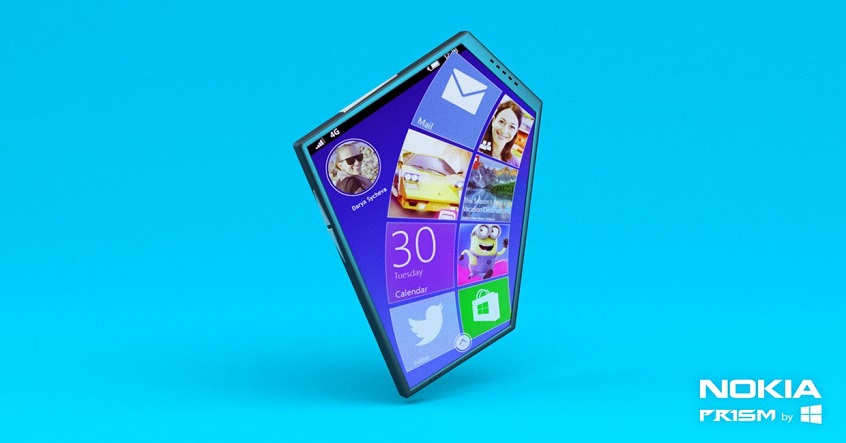
Nokia Prism – Is it Plain Weird or Simply the Future?

While Xiaomi has gone ahead and launched the first ever concept with almost zero bezels, a concept from an unknown source shows a Nokia phone and it looks incredibly… intriguing.

Most of us like “weird”. We like foldable phones, handsets made of crazy materials, smartphones with 64 GB of RAM and sporting endless battery lives. But this Nokia concept phone is a bit out there. It’s called Nokia Prism and it’s the creation of Vasili Sychev from Russia. As per the concept, the weird Nokia phone runs Windows Phone OS and there aren’t many leaks on this aspect.

As we all know and per several employees of Nokia itself, the Finnish smartphone giant will launch Android-powered smartphones by the end of this year or maybe early 2017 or by MWC 2017. If this concept is indeed what they have planned, it’s going to be quite a buzz.

Don’t get me wrong, the execution of the Nokia Prism phone is flawless, but in the end what’s the point? This prism-shaped phone looks good only as a piece of art nouveau and only when seen from the back. It feels like the time when you tried to cut a piece of paper and it ended up being a trapeze instead of a rectangle. And then you started cutting again…

he problem with the Nokia Prism is that it has those sharp and angular corners and edges, making it not very comfy to hold, actually, not comfy at all. And I’m not even talking about the resolution and the fitting of apps on the screen. It appears that the most prominent corner is reserved for the signal and notifications, while the “base” of the phone shows the rest of the UI and video playback screen.

This would work fine as a boomerang, but a phone? … Nope!

Users on 9gag have given extremely mixed, but nevertheless hilarious reactions:

“So what’s next? Cubicle phone? Sphere phone? Hexagonal phone?” speculates one comment.

While another practical one reads: “Does it come in lefty-mode?”

Other comments range from enquiring about its size and fit compared to their pockets to wondering if the YouTube clips with have parts of the screen cut off at weird angles.

At first glance itself, we admitted that the Nokia Prism doesn’t look like a phone in any angle. Instead, it looks like a tablet, however, the extra-large bezels don’t pave its way as a tablet either. In the camera department, the Nokia Prism’s concept images show that the rear camera will have two flashes, which is really awkward. Its shape proves that it won’t be easier to hold even with two hands.

“If I had a dollar for every application that would actually be compatible with the phone, I wouldn’t even have enough money to buy a different phone.” This one raises the whole new question.

“I think you would actually have less money.” is one of the less than enthusiastic replies.

width="560" height="314" allowfullscreen="allowfullscreen">

As a technology lover you may like our daily important technology news series. It’s a playlist and you can retrieve the total day-wise videos. Please consider subscribing our YouTube channel:

Author: Technology and Beyond

Tagged : / /

How Smartphone Lights Are Affecting Your Mind and Body

Of course we do the last notifications check right before falling asleep. And of course we do it again right after we wake up. For the majority of us, smartphones provide for at least 60% of our social, personal and professional needs. But what changes has this dependency bought on?

There’s something incredibly powerful about the blue lights that the designers of our smartphone, tablet, and laptop screens have been able to create. The lights in these screens glow so bright that we can see them even during a sunny day. At night, they’re bright enough that they’ve been compared to a “little window” that daylight can peer through.

bi-graphics_bluelight-effects

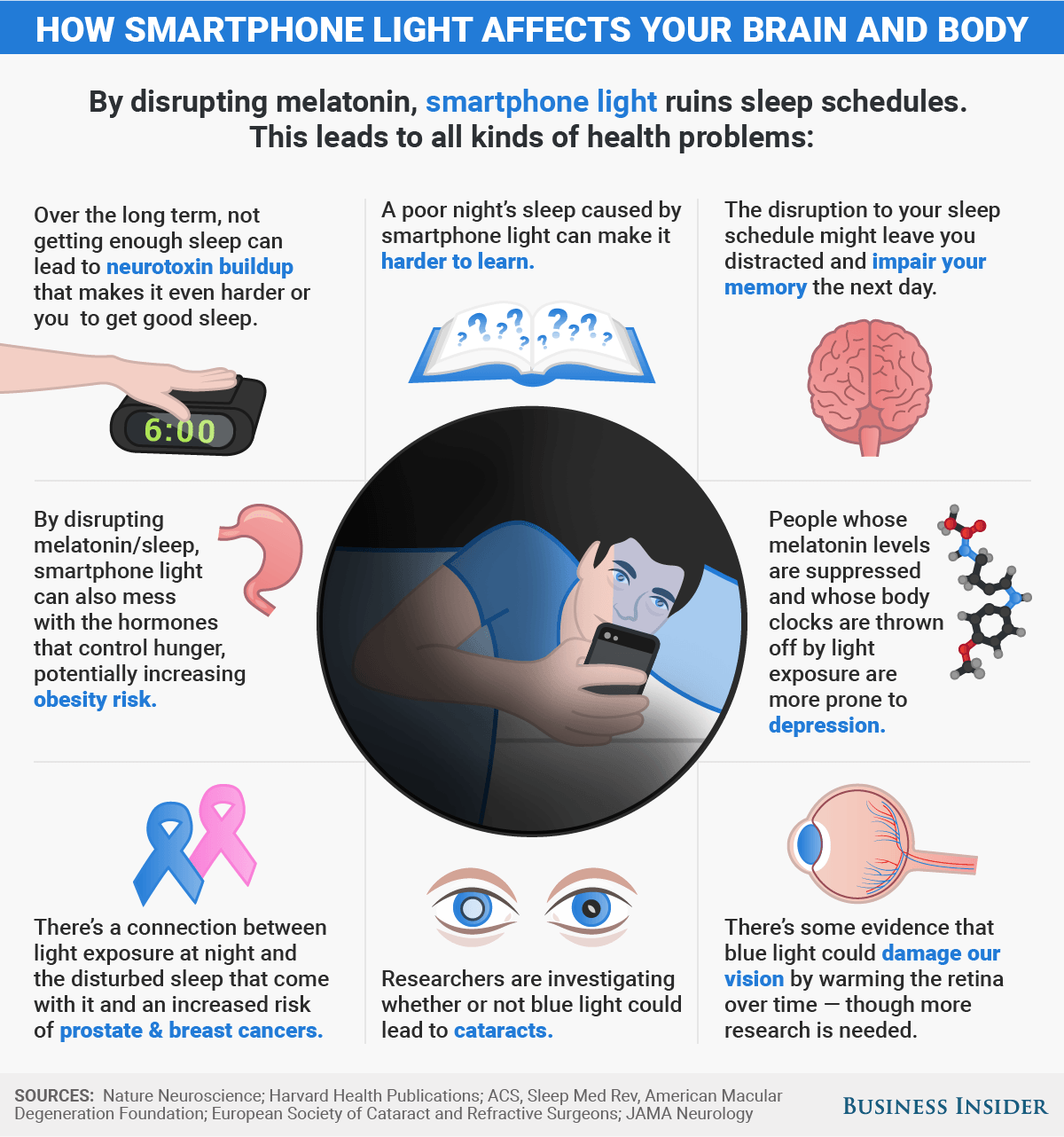
Our bodies naturally follow a cycle that helps us stay awake and alert during the day and helps us get essential rest at night. This is called our circadian cycle and it governed by melatonin. The main and probably worse proven effect of blue light is its disruption of our melatonin.

When we look at these screens as we’re getting ready for sleep, our brains get confused. That light has a similar effect to the sight of the morning sun, which causes the brain to stop producing melatonin, a hormone that gives your body “time to sleep” cues.

By disrupting melatonin production, smartphone light can disrupt your sleep cycle like an artificially induced sort of jet lag. This makes it harder to fall and stay asleep – and potentially causes serious health problems along the way.

By messing around with our sleep and melatonin levels, blue light also tampers with our hunger hormones that increase the chances of potential obesity. Moreover, people whose melatonin levels are suppressed and whose body clocks are thrown in discord are more susceptible to depression.

A bad night’s sleep also causes memory impairment and lack of focus. Basically, lack of sleep might be causing you to be scatterbrained. Neurotoxin buildup due to lack of sleep over time, may make it harder to fall asleep.

In physical effects, blue light can been linked by prostate and breast cancer chances. There is ongoing research about whether blur light warms up our retinas and damage our vision over time. Its link of cataracts is also being studied.

To combat this problem, app designers have created programs like f.lux and Apple’s Night Shift mode for iPhones, both of which adjust the light tones emitted by screens to remove bright blue light from the display at certain times of day. Many users swear by the effects of these apps and the orange tint they create does feel less harsh on the eyes. But while there’s some research indicating that the dimmer light may improve sleep, more study is needed on the topic in general.

Instant notification and updates and also causing us to desire faster gratification. Long story short, there are a lot of negative ways we are being affected in that we might have felt in our everyday lives. The least you can do is stop looking at your phones at least an hour before bedtime and keep them safely away for the night.

The University of Manchester now touts itself as the “Home of Graphene.”

As a technology lover you may like our daily important technology news series. It’s a playlist and you can retrieve the total day-wise videos. Please consider subscribing our YouTube channel:

Author: Technology and Beyond
Tagged : / /

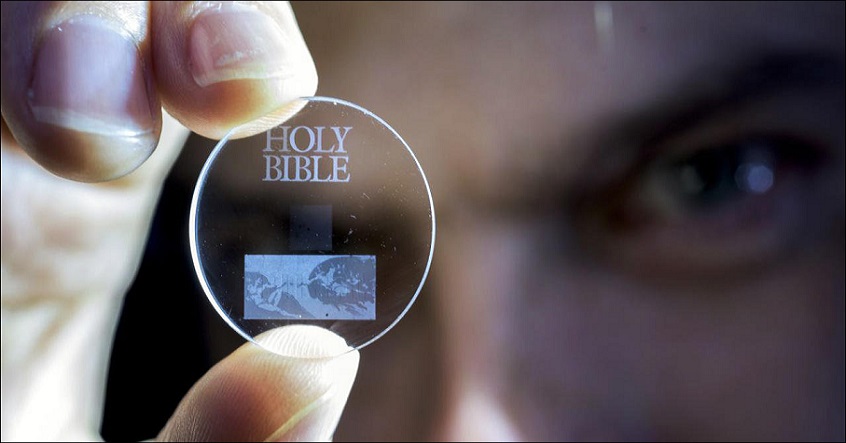
This Tiny Coin Will Store 360 Tb of Data…Forever. Even after the Sun is burnt out!

Were you surprised on hearing about the slivers of quartz glass that stored data for 300 million years? Not that we were worried, but for the people who wonder what will happen to their precious data after the 300 million years, there’s a new coin in town that will store your data essentially forever.

Let’s get some perspective. The Earth is 4.534 billion years old and the universe is a 13.82 billion. This upgradation will allow the quartz to store data safely for an even 14 billion years. That’s pretty much forever.

The storage system, in addition to being long lasting, is also pretty safe—the quartz can withstand up to 157 degrees Celsius (350 degrees Fahrenheit). Researchers at Southampton University in the UK have developed the technique of storing data digitally using laser light. 360 terabytes of information can fit on one sliver of nanostructured quartz. With this tech, we can store literally the whole of human history.

The technique uses femtosecond laser pulses to write data in the 3D structure of quartz at the nanoscale. The pulses create three layers of nanostructured dots, each just microns above the other. The changes in the structure can be read by interrogating the sample with another pulse of light and recording the orientation of the waves after they’ve passed through. Notably, this is referred to as a 5D storage device.

There are the three dimensions of space, which are responsible for describing the physical location of the dot, and two additional dimensions that are encoded by the polarity and intensity of the beam that creates the dot.

This new advance in storage makes the technique a genuine means of archiving vast quantities of information in perpetuity. We no longer have to fear the loss associated with tragedies like the Library of Alexandria.

In the same way that the Pioneer Plaque is meant to be a communication tool between us and any extraterrestrial life, these tiny storage systems could someday inform other beings (maybe our far, far, far off descendants) about Earth and humanity after we are long gone.

As a technology lover you may like our daily important technology news series. It’s a playlist and you can retrieve the total day-wise videos. Please consider subscribing our YouTube channel:

Author: Technology Vista

Tagged : / /

Believe it or not, Australia is drifting so fast that GPS can’t just keep up with the movement!

Australia is always a mystery. With its one-of-a-kind flora and fauna, it never fails to surprise. And if you haven’t been informed, the continent has shifted by 4.9 feet since the last adjustment was made to GPS coordinates in 1994, reports the New York Times.

Believe it or not, this is something very routine. All of the Earth’s continents float on tectonic plates, which glide slowly over a plastic-like layer of the upper mantle. And the plate that Australia sits on has been moving relatively fast, about 2.7 inches a year (northward and with a slight clockwise rotation). In contrast, the North American plate has been moving roughly one inch a year, though the Pacific plate moves three to four inches a year.

Australia has tended to move particularly fast due to its unique geology. Corrections have been made to its latitude and longitude four times over the past 50 years, the Times reports. The last adjustment there, in 1994, was about 656 feet. The next adjustment is said to be due by the end of this year, on the order of 4.9 feet.

“Some countries are more stationary than others,” says Damien Saunder, the director of cartography for National Geographic. “When there is a significant shift in land masses over time we need to revise the models of the Earth from which GPS coordinates are calculated, so for example your neighbor doesn’t end up with your old coordinates.” This type of shifting is coming more into focus as GPS systems get more accurate.

“It’s important to remember that the Earth is not a perfect sphere or ellipsoid, and continents are not all moving at the same rate,” Saunder says. “So sometimes we have to make adjustments to our models, both at the global and local levels.”

The most advanced technology can now pinpoint a location to a matter of inches. Although most consumer cellphones don’t have that level of accuracy (yet), the technology is being used in other ways, including by farmers who spray fields with precision agriculture and self-driving vehicles.

As a technology lover you may like our daily important technology news series. It’s a playlist and you can retrieve the total day-wise videos. Please consider subscribing our YouTube channel:

Author: Technology and Beyond
Tagged : / /

Get rid of your slow PC! Increase the RAM in your PC without any hassle!

We are getting used to new exciting and amazing technology with each day. With the invention of computers came the software. These days software’s like Photoshop, Drop box, Skype and various web browsers are common among most users, which need RAM to run.

We usually have a maximum 2GB to 4GB of RAM in old PC’s that makes it difficult for the computer to work efficiently. Turn your slow computer into a speedy one with an effortless and useful update. If you face regular problems regarding your PC working slowly, then you must consider it as a warning to increase your RAM. 4GB is what we can advise if the PC is performing very gentle tasks, and you need 8GB for heavy softwares, however 16GB is the superlative option.

Various kinds of RAM’s are available in the market like DDR4, DDR2, and DDR3 etc. DDR2 and DDR are older versions of RAM, whereas DDR3 rules the market today. Different brands of RAM are available like Kingston, Corsair, G.Skill etc. You must keep in mind the design of RAM’s heat sink when selecting a brand. The other important features that can be considered are the speed and memory kit capacity of the RAM. Clock speed should be from 1600HZ to 1866HZ for DDR3 RAM.

Follow the step to install new memory in your Personal Computer

 Step 1

 Shut down your PC and disconnect all the connected cables. Take out the motherboard by opening the CPU.

 Step 2

There are four memory slots next to the big heat sink. RAM slots are adjacent to the CPU socket.

 Step 3

Remove the old Ram by removing the plastic latch aside of it also remove the dust on the RAM slot.

Step 4

 Now place the new RAM in the slot so that every small socket in the RAM get filled with the slots, you can also read the Motherboard manual. Now lock the RAM with the plastic latch.

Step 5: 

Now put back the PC case and connect all the cables and turn on your PC.

Sometimes the system might take few restarts to adopt your newly introduced memory, so keep calm. You can use the same steps for any RAM.

As a technology lover you may like our daily important technology news series. It’s a playlist and you can retrieve the total day-wise videos. Please consider subscribing our YouTube channel:

Author: Technology and Beyond

Tagged : /

Love making in zero gravity! Scientists came out with the pros and cons!

Elon Musk is not planning to send humans to Mars. While SpaceX CEO wants an ‘Interplanetary Species” on Mars. Which means that at some point sex and pregnancy has to take place in space and/or in Mars. But how will it work? And is it possible?

Until now no human has reached mars so data on how sex will work there is not available. But believe me, sex in space will be a real hassle. Having intimate relations without gravity is impossible. It will be physically complicated to have sex in zero-G. Even if you try in such a conditions, there is the possibility of space sickness and frankly speaking, it will definitely not be romantic. Microgravity makes it difficult to hold on to each other because you keep floating. You can try by anchoring yourself to something but it can also create blood flow problems that will make it difficult to sustain an erection. Also, in zero-G, the bodily fluids will float like a small droplets and will make it complicated. 

According to the estimation by Elon Musk, one can reach to Mars in as little as 80 days and realistically 6 months. So sexual frustration will be a serious problem. Also, according to Sheryl Bishop, a researcher in extreme environments says that sending married couples will complicate the things.

space-sex-1

“THE ONLY ETHICAL THING IS THAT EVERY SINGLE PERSON ON BOARD WOULD HAVE TO AGREE TO BE STERILIZED”

Beside space sex, other obstacles also exist. Like Radiation. Musk dismissed the possibility of radiation making humans infertile but it can have disastrous consequences on the genome. Which means the possibility of babies with severe birth defects for the astronauts who are exposed to radiation. So self-sustaining civilization will be difficult.

Next Page For More

Tagged : /

You should ditch iPhone7 and wait for this forthcoming all-glass iPhone!

An Apple patent spotted by Patently Apple suggests Apple is probably considering the idea of creating an iPhone that’s mostly glass.

The patent hints that Apple could be making an all-glass iPhone in 2017, reported one of Apple’s main suppliers of iPhone casings.

The patent describes iPhone with rounded glass that wraps around its side edges. It details how the glass edges act as a “mini flexible edge display” with customizable “active virtual buttons.”

It possibly means that the edges have customizable touch buttons for definite roles and shortcuts to features such as opening the camera, turn on the flashlight, or music controls.

If that seems familiar, that’s because you’ve seen the Samsung Galaxy Note Edge, release in 2014, which had curved glass edge that displayed information that could be tapped to open features and functions.

Patently Apple also mentioned a patent granted to Apple back in 2013 that had a very similar design concept:

As attractive as an all-glass iPhone might sound, it isn’t clear how durable it would be, as the surface of the phone would be at risk of being cracked. And case makers would potentially have a hard time making a case for a phone where it’s entire front and sides are made of touch screens.

While these patents seem more official than rumors filed by Apple, they’re not indicators of what Apple has in store for future products. As the company has been granted plenty of patents with new product ideas, but only so many of them have never seen the light of day.

As a technology lover you may like our daily important technology news series. It’s a playlist and you can retrieve the total day-wise videos. Please consider subscribing our YouTube channel:

Author: Technology and Beyond

Tagged : /

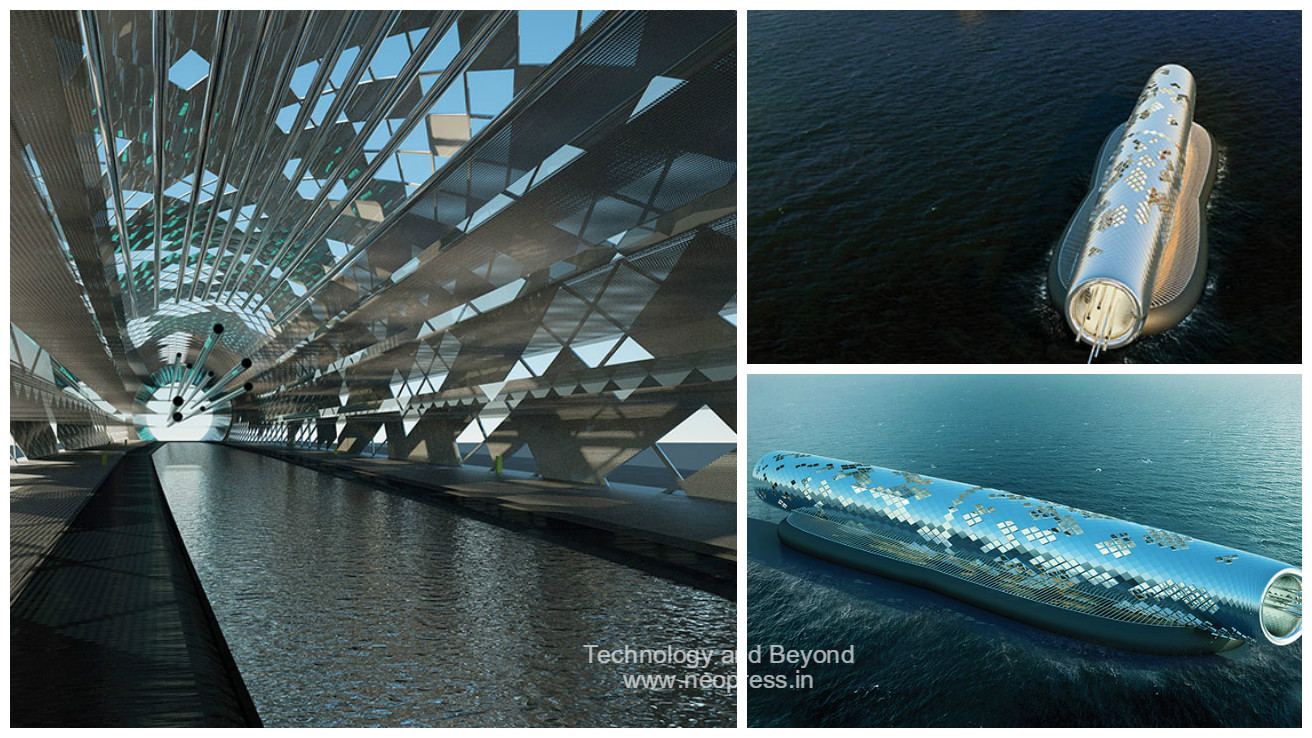
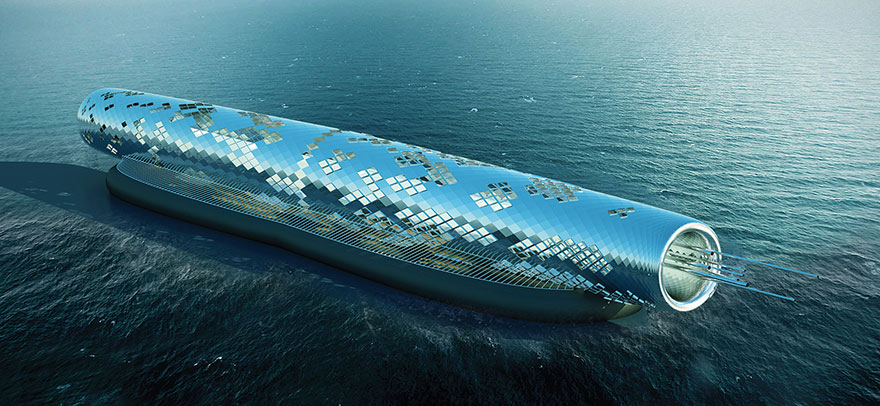
This Solar-Powered Pipe is capable of desalinate 1.5 billion gallons of drinking water for whole California city

As California is supposed to witness water scarcity in the coming years, the amount of energy required to produce water is sure to increase. Fortunately, designs such as ‘The Pipe’ can potentially solve California’s water shortage problems.

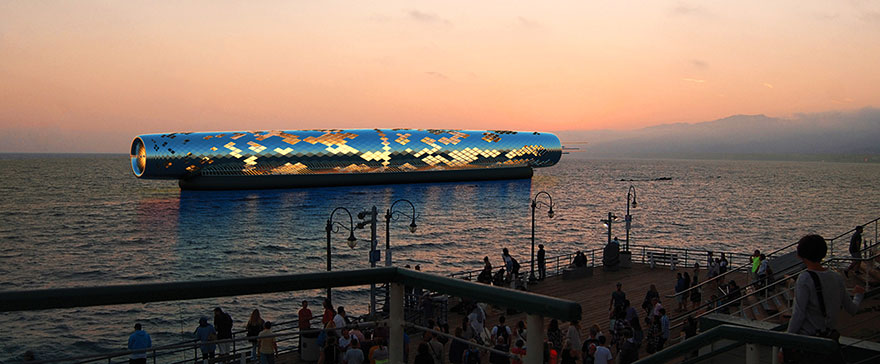
LAGI (Land Art Generator Initiative) reported to have received a design for the city of Santa Monica, The Pipe, designed by Abdolaziz Khalili and Associates, a Canadian engineering firm is a wonderful piece of art, and it also “represents a change in the future of water”. Khalili Engineers reported The Pipe can annually generate 10,000 MWh and also desalinate about 1.5 billion gallons of drinking water.

“Results are two products: pure drinkable water that can be directed to the city’s primary water piping grid, and clear water with less than twelve percent salinity. The drinking water piped to shore, and the salt water supply to the thermal baths before redirecting back to the ocean,” the design says.

pipe-1

pipe-2

pipe-3

pipe-5

As a technology lover you may like our daily important technology news series. It’s a playlist and you can retrieve the total day-wise videos. Please consider subscribing our YouTube channel:

Author: Technology and Beyond

Tagged : /

Meet Railgun, lethal, accurate and unbetable: The new form of strategic warfare

War has many things associated with it- politics, strategic alliances, demographics of various countries, conflicts over resources.  But for most people, war is about creating a political statement with the help of arms and ammunition. Considering this, General Atomics is writing a new war statement with the help of its new and futuristic warfare- the Blitzer Electromagnetic Railgun. This new ammunition is soon going to make waves in the war arena.

The railgun is basically an artillery piece which utilises electromagnetic fields in place of the conventional chemical propellants to launch projectiles at hypersonic speeds. Because of using the electromagnetic field, this railgun can achieve far higher speeds and range as compared to the conventional ones.

Test firings were held at the U.S. Army’s annual Maneuver and Fires Integration Experiment (MFIX) and the Blitzer performed successfully in all eleven test firings. The test projectiles contained a Guidance Electronics Unit (GEU), which beamed back telemetry indicating, the shells managed to attain an acceleration of over 30,000 gravities and encouragingly, all the components survived the multi-Tesla magnetic field that powers the launcher.

Nick Bucci, vice president of Missile Defence and Space Systems at General Atomics Electromagnetic Systems said: “We continue to perform risk reduction and technology maturation of projectile designs and components to culminate in an integrated demonstration of a manoeuvring railgun launched projectile.” The next step in this technology is to integrate the system into a mobile, truck based platform. You can get more information on this RAILgun in the following video.

width="560" height="314" allowfullscreen="allowfullscreen">

As a technology lover you may like our daily important technology news series. It’s a playlist and you can retrieve the total day-wise videos. Please consider subscribing our YouTube channel:

Author: Technology and Beyond

Tagged : /

This miracle eye drop will make you say goodbye to cataracts

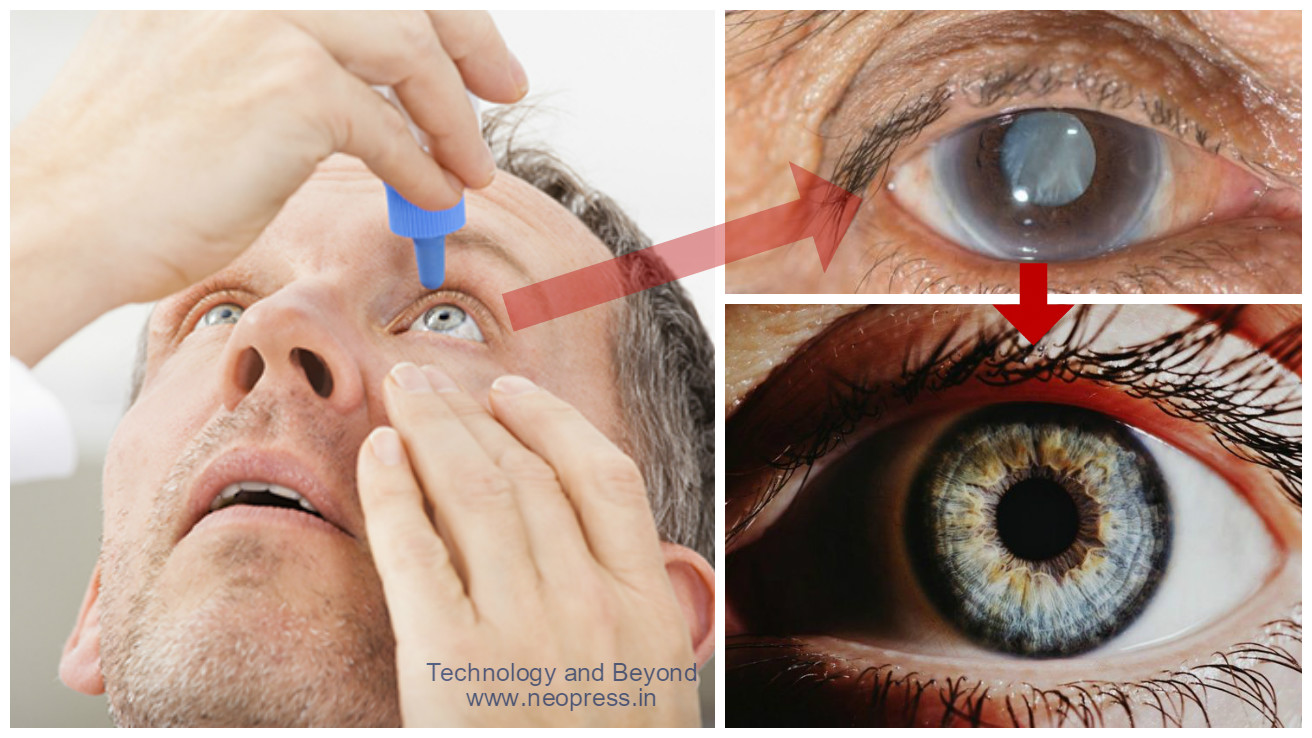
Cataracts are generally associated with old age though in some cases it develops at quite a young age owing to genetics. These develop when protein in the lens builds up and prevents light from getting through.  This is to be noted that cataracts are one of the leading causes of blindness throughout the world. Currently the only treatment available for cataracts is removing the clouded lens from the eye and then replacing it with an artificial one.

Now in a recent development scientists in California have discovered that the naturally occurring steroid lanosterol possesses the ability to melt away cataracts and prevent them from returning when administered to patients via eye drops. If this gets approval for use in humans, then there is a possibility that it would be available as a non-invasive treatment for individuals with moderate forms of cataracts.

The group of scientists first came to know about this steroid when they came across two children in China who had a hereditary form of this disease. When the team closely observed and examined these two children, they found that the children shared a mutation that blocked the production of the steroid lanosterol. Their parents never developed cataracts though as they lacked this mutation. The team hence deduced that the steroid must have some contribution in the formation of cataracts.

This observation was followed by a series of experiments and an in-depth study which involved testing lanosterol on donated human lenses and live rabbits and dogs. The result obtained from the tests showed that lanosterol contributed significantly in reducing the size of the cataracts. Though this sis till not completely clear as to how this happens, the scientists believe that the steroid prevents the proteins from building up.

It has been reported that if the drops prove to also work on humans, it could pave the way to offering a non-invasive treatment for humans too. If this happens, it would prove to be a good alternative treatment for cataract. The study is already creating quite a stir and everybody is hoping that it may have a very effective treatment in its kitty down the line.

As a technology lover you may like our daily important technology news series. It’s a playlist and you can retrieve the total day-wise videos. Please consider subscribing our YouTube channel:

Author: Technology and Beyond

Tagged : /

US Military is planning tiny implants in order to actively monitor soldiers’ health in Real-Time and 24×7

One of the bravest and most adventurous professions is that of a Soldier. And in turn it becomes the Government’s duty to ensure their well-being by investing however much is needed. From the most efficient armor to the highest grade weapons and the best nutrition, soldiers must have the best of all to maintain their power in battle. The US Army Research Office as their step toward better welfare of soldiers in battlefield has funded the research and development of implantable biosensors that can observe the soldiers’ health.

The US Army Research Office gave Profusa, a biotech company $7.5 million grant in order to develop implantable biosensors that help monitor Soldier’s health status.

The Chairman and CEO of Profusa, Ben Hwang explains, “Profusa aims to change a point-in-time chemistry panel which measures multiple biomarkers, such as oxygen, lactate, glucose, urea, with a biosensor which provides a continuous stream of wireless data.”

The sensors between 2mm and 5mm of length and 200 to 500 microns in diameter, bioengineered “smart hydrogel” which is of the same material of contact lenses. They form a tissue-integrating scaffold which is porous and can fully integrate into the tissue of the body through an injection, without using any metal devices or electronics.

The hydrogel glows when exposed to light due to the concentration of chemicals like oxygen or other biomarkers. This allows health professionals to see if a soldier is suffering from a certain ailment like high uric acid, low blood sugar or a lack of oxygen in the blood. This will then allow the health professionals to  administer first aid to bring them back into top shape.

width="560" height="314" allowfullscreen="allowfullscreen">

As a technology lover you may like our daily important technology news series. It’s a playlist and you can retrieve the total day-wise videos. Please consider subscribing our YouTube channel:

Author: Technology and Beyond
Tagged : / /

Ever imagined a house completely bio-degradable and organic? This Romanian couple made an organic castle!

Whoever said life is different from movies did not see this couple living it!

Razvan and Gabriela Vasile , a couple from Transylvania, Romania has made their castle that looks nothing less than one seen in a fairytale.

They both are singers by profession, and looks like their love for art did not end there, as they have also built a castle out of 100% organic materials — straw, clay, wooden pillars, sand, and stones that looks like Perfection.

They moved out of their urban house in Bucharest and have now settled in a village 24 miles (40 km) away from the city of Sibiu.

This 10-room Classic Clay Castle’s work began in 2014. Now the interiors are being done so that it can be a place to stay for people. This eco-castle in the Valley of the Fairies will be commercially opened by the end of the year.

While it is still not operative, tourists visit the place to look at the magnificence of the Carpathian Mountains blanketed in white, close to the well-known Transfagarasan highway and medieval Sibiu.

It is an escape into tranquility from the busy city life. Perfect for those who seek solitude.

Marius-Man

1-10

2-12

13322185_1554951028139550_7923672099720384493_n

RomanianFairytaleCastle4

RomanianFairytaleCastle13

As a technology lover you may like our daily important technology news series. It’s a playlist and you can retrieve the total day-wise videos. Please consider subscribing our YouTube channel:

Author: Technology and Beyond
Tagged : / /

10 reasons why 3D printing technology will shape up our future

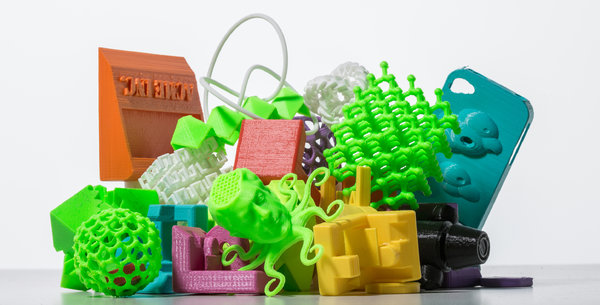
Welcome to the world of 3D printing. You might have heard about exciting 3D printed objects  but we really need to understand why 3D printing technology is creating waves in recent times.  You might have heard about the CNC machines (Computer Numerical Control) which are being used to fabricate complex objects in short time. Numerical programs control the movements of conventional cutting, turning, machining  or polishing tools in optimized way to produce complex objects in short time. You are still doing all the conventional jobs being controlled by computer.

20TOOLKIT1-articleLarge:3D printing
3D printing

Imagine using material of your choice like plastic, paper, binding material like sand or metal powders to form layer after layers in definitive way to build a 3D object instead of cutting a big chunk/ block to produce an object. As mentioned before, conventional manufacturing despite controlled by computer extensively cannot overcome the limitations of movement of the tool fronts. in 3D printing there is no such limitation except limitation of imagination.

Knowing the advantages of the 3D printing it will be interesting to know how it can shape up our future in a major way:

3D printed  Wearable

Ever imagined making your own dress or shoes? that reminds you about complex manufacturing process and messy atmospheres of a manufacturing plant. All you wanted is your own styled wearable. 3D printing can come handy for you. There are thousands of ready made designs available. You make your own variations and get your own thing printed. it is going to redefine the world of fashion

de5bcb712749e05cf9b1a9d47f96a901

dezeen_Voltage-by-Iris-van-Herpen-and-Materialise_1

dezeen_Voltage-by-Iris-van-Herpen-and-Materialise_3

Janne-Kyttanen-Cubify-3D-printed-shoe-macedonia-model-sq


Spare parts

Have you ever thought of why we always go for the latest models discarding the models of things? Of course, availability of advanced feature is a criteria. But at the same time there is always a concern in your mind that company may stop making spare parts of the old models. Also, many times companies adjusts their models slightly (almost without a reason) to propel sales of the connected accessories and adopters. Have you ever experienced how difficult it is to maintain your vintage beloved vehicles because of the spare part problems? Well 3D printing is a viable solution to all these problems.

car

20TOOLKIT-popup

Auto enthusiasts have found a niche in 3-D printing. Mr. McMaster has found that he can save money by printing out custom car parts for his mother, who is restoring a 1966 Mustang Coupe.

Sculpture and architecture

3D printing has gone beyond its infancy. Companies are able to print very fine detail with a high degree of accuracy with a layer thickness of about 16 microns (.0006″ or .016mm)-that’s about 1/5th the thickness of a human hair! Right now the parts are generally made of a resin, but it is expected that soon printing will be possible with glass, ceramic or with metals.

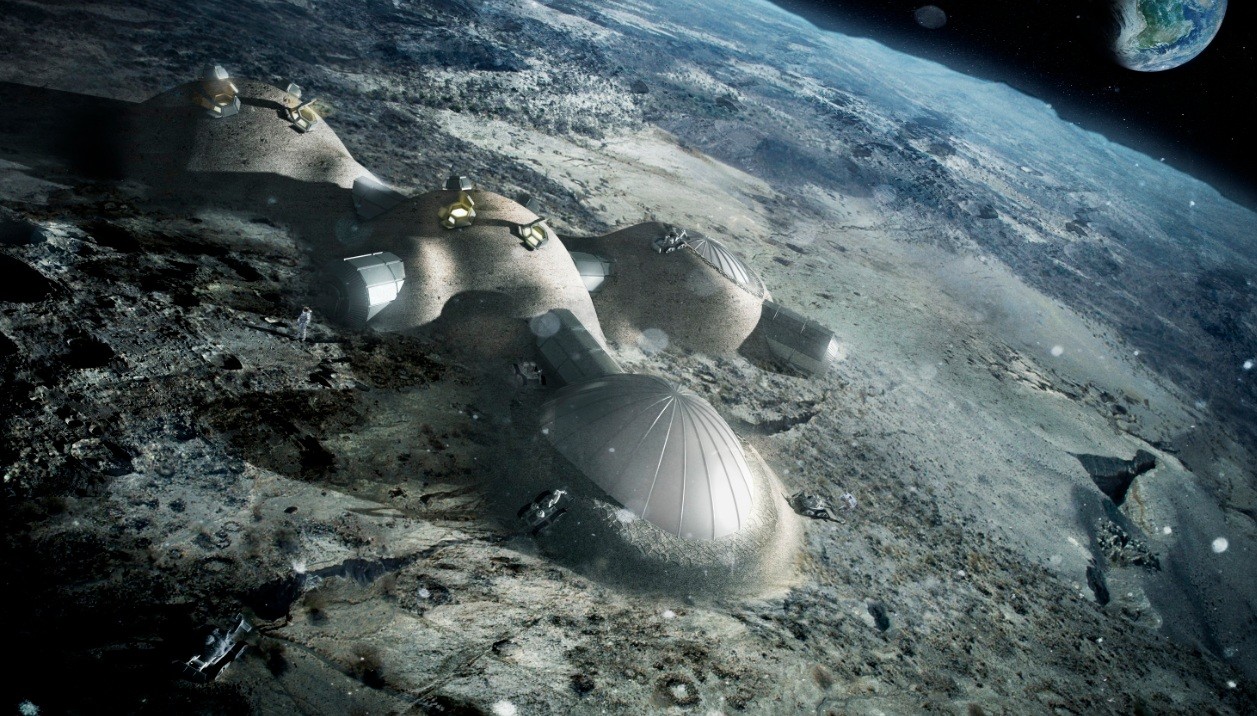
Once the 3D printing technology achieves the ability to use any material and a suitable binder it will be possible to print even houses/ shelters anywhere and even on the moon !!

23690d432b62313611b32f1efb43a8ab

newspic_2728

Artist’s impression of 3D printed dwelling place on the moon

dezeen_Prouve-Collection-Update-by-Vitra_1

3D printed furniture

Next Page

Tagged : /

Verified by ExactMetrics