This Self Healing Material Will Remind You of Wolverine!

Scientists have developed a transparent, self-healing, highly stretchable conductive material that can be electrically activated to power artificial muscles and used to improve batteries, electronic devices and robots.

“Creating a material with all these properties has been a puzzle for years. We did that and now are just beginning to explore the applications,” said Chao Wang, assistant professor at University of California.

The material could give robots the ability to self-heal after mechanical failure; extend the lifetime of lithium ion batteries used in electronics and electric cars and improve biosensors used in the medical field and environmental monitoring.

The low-cost, easy to produce soft rubber-like material can stretch 50 times its original length, researchers said. After being cut, it can completely re-attach, or heal, in 24 hours at room temperature. In fact, after only five minutes of healing the material can be stretched two times its original length, they said.

Ionic conductors are a class of materials with key roles in energy storage, solar energy conversion, sensors and electronic devices. Conventionally, self-healing polymers make use of non-covalent bonds, which creates a problem because those bonds are affected by electrochemical reactions that degrade the performance of the materials.

Wang helped solve that problem by using a mechanism called ion-dipole interactions, which are forces between charged ions and polar molecules that are highly stable under electrochemical conditions. He combined a polar, stretchable polymer with a mobile, high-ionic-strength salt to create the material with the properties the researchers were seeking.

Self-healing materials repair damage caused by wear and extend the lifetime, and lower the cost, of materials and devices. Wang was inspired by Wolverine, the comic book character who has the ability to self-heal.

Researchers at the University of Colorado, Boulder in the US demonstrated that the material could be used to power a so-called artificial muscle, also called dielectric elastomer actuator.

As a technology lover you may like our daily important technology news series. It’s a playlist and you can retrieve the total day-wise videos. Please consider subscribing our YouTube channel:

Author: Technology Vista

Tagged : / /

In A First Ever, China Aims To Land On The Farthest Side of the Moon

In the next five years, China will continue to enhance the basic capacities of its space industry, and strengthen research into key and cutting-edge technologies. As of the 27th of December, China announced that it will launch a lunar probe in 2018 to achieve the world’s first soft landing on the far side of the moon to showcase its ambitious space programme.

China has already landed a rover on the moon in the past but wants to explore the dark side of the lunar surface to carve out a niche for itself as it has not been done by other countries.

China will continue its lunar exploration project in the next five years, and strive to attain the automated extra-terrestrial sampling and returning technology by space explorers, a White Paper titled ‘China’s Space Activities in 2016’ released said.

“The lunar probe Chang’e-4 will conduct in situ and roving detection and relay communications at earth-moon L2 point,” the white paper said.

The probe plans to fulfil the three strategic steps of “orbiting, landing and returning” for the lunar exploration project by launching the Chang’e-5 lunar probe by the end of 2017 and realising regional soft landing, sampling and return, it said.

“Geological survey and research as well as low-frequency radio astronomy observation and research will be carried out targeting the landing area on the far side of the moon for a better understanding of the formation and evolution of the moon,” it added.

As a technology lover you may like our daily important technology news series. It’s a playlist and you can retrieve the total day-wise videos. Please consider subscribing our YouTube channel:

Author: Technology Vista
Tagged : / /

Nokia C1 Leak Suggests Dual Rear Cameras and 4GB RAM

The Finnish smartphone maker, Nokia is expected to showcase its first products at Mobile World Congress in February, making its return to the smartphone industry with two new flagships smartphones.

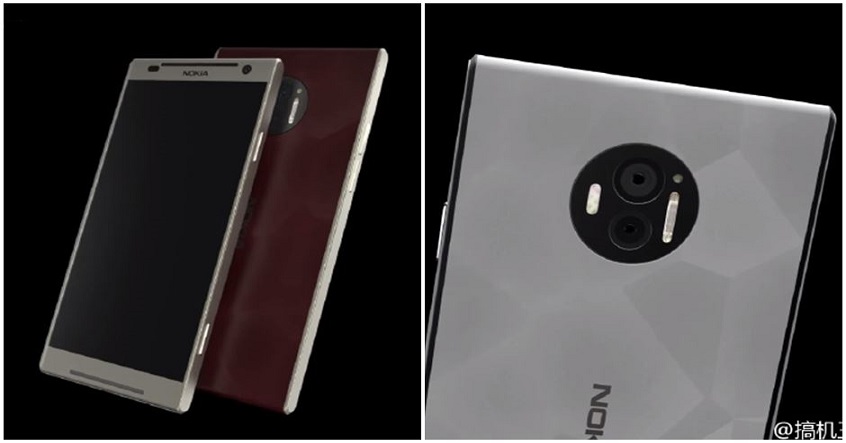
Nokia C1 renders have now appeared on Weibo and offers a rather unusual design. The renders show Nokia C1 to feature metal unibody design with the screen dominating the front. The smartphone also seem to drop the physical home button with front camera and another sensor tucked in between a large speaker grille. There is a similar speaker layout at the bottom edge of the screen as well.

The leaked images also reveal that the smartphone will be powered by Qualcomm Snapdragon 830 processor aided by 4GB DDR4 RAM and option of 32/64/128GB storage.  The smartphone houses a 3210mAh battery and runs Android 7.1 Nougat.

The smartphone seems to have buttons placed at the right hand side of the device. It is unclear whether these button are physical or capacitive ones. Interestingly, the render hints at the device adopting dual rear camera mechanism with LED flash placed at either side of the camera.

It sports a combination of 16 + 12MP rear camera setup with Xenon flash and triple LED flash aiding for low light photography. However, the front camera is a modest 5MP one.

Nokia C1 uses USB-C port for data and charging while there also seems to be a 3.5mm audio jack. If these leaks are true, we are looking at a hot selling product of 2017.

As a technology lover you may like our daily important technology news series. It’s a playlist and you can retrieve the total day-wise videos. Please consider subscribing our YouTube channel:

Author: Technology Vista

Tagged : / /

We are probably in an accelerated path towards getting an Apple Car!

Alexander Hitzinger is the latest auto specialist to be recruited by technology giant Apple as it explores building its own car. In case you’re confused, he’s the guy who helped engineer the sports car company’s (Porsche’s)  victorious return to the Le Mans endurance race. Hitzinger helped hire and build a development team and organisational structure at Porsche, expanding from ten staff to over 150 employees. He also helped them return to endurance racing and to develop the 919 hybrid sports car from scratch. Hitzinger’s LinkedIn profile states he left Porsche in March and joined a ‘Technology Company’ located in the San Francisco Bay Area as an engineering executive in April.

Apple was recently been awarded a patent that suggests it’s much rumoured ‘Project Titan’ car project is getting closer to being revealed. The document describes technology for a collision avoidance system that is designed for robots, or self-driving cars. It is the first public patent granted for the project – although the firm last week revealed its ‘interest’ in the area in a government filing.

The patent, filed on June 7, 2015, is entitled ‘Collision Avoidance Of Arbitrary Polygonal Obstacles’. A new patent describes technology that could be the key to self-driving cars – a system that can operate in both 2D and 3D area, which computer visions systems have had difficulty doing. It describes a technique capable of avoiding collisions and navigating through unfamiliar areas by calculating distances and shapes.

The system is described as having a memory, display unit ‘and one or more processors coupled to the memory and the display unit and configured to execute program code stored in the memory to cause the one or more processors to,’ reads the patent.

If the technology detects that the edges of the object are not in its path, the vehicle will keep driving in the same motion. But if it a potential collision is predicted, ‘the system selects the edge vector closest to the vehicle’s current position and calculates the force needed to avoid the obstacle,’ reports Mikey Campbell with Apple Insider.

width="560" height="314" allowfullscreen="allowfullscreen">

As a technology lover you may like our daily important technology news series. It’s a playlist and you can retrieve the total day-wise videos. Please consider subscribing our YouTube channel:

Author: Technology Vista
Tagged : / /

LG’s Working On Foldable Display Panels with Apple, Microsoft and Google

It’s not the first time we’re hearing about LG’s endeavors in the foldable display space. It’s actually been years since the company showed prototype units, so mass production can’t be that far ahead.

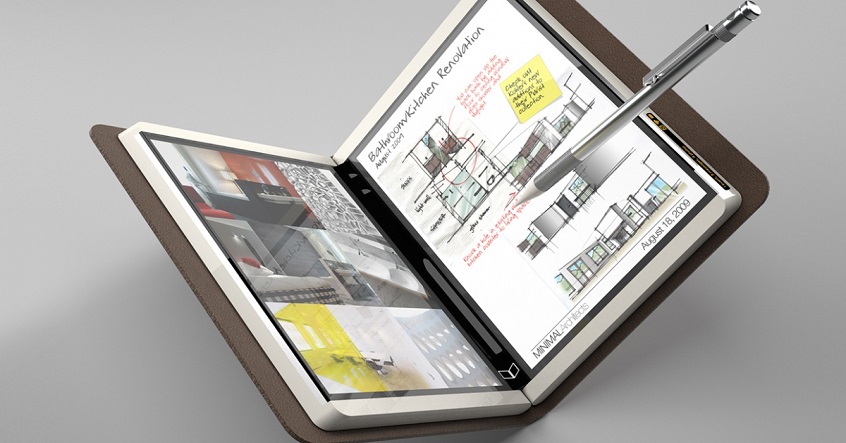
A report out of South Korea states that LG’s Display subsidiary has partnered up with Apple, Google, and Microsoft for the task of creating foldable display panels. The report doesn’t say much on when to expect actual consumer devices with foldable displays, though it does hint at a flexible OLED panel for the 2017 iPhone. But ‘flexible’ in this sense might just mean ‘curved’, and not actually foldable, not to mention that rumor has it it will be Samsung that will be delivering the bulk of those displays to Apple.

Samsung might be the pioneer in the field. It won’t be alone, though, that’s for sure, as LG Display is developing foldable OLED panels itself, with some heavyweight device manufacturers joining its team. Still, analysts speculate that Samsung might have more experience when it comes to mass producing flexible displays and thus have the upper hand.

As a technology lover you may like our daily important technology news series. It’s a playlist and you can retrieve the total day-wise videos. Please consider subscribing our YouTube channel:

Author: Technology Vista

Tagged : / /

Driverless Ship! US Navy’s 132ft Long Sea Hunter Drone Needs No Crew At All

Dubbed the ‘Sea Hunter’, the 132ft ship is designed to travel thousands of miles out at sea without a single crew member on board. It marks the first step toward sending unmanned cargo vessels between countries, according to military officials, who showed off the ship in San Diego today before it was put in the water. The Pentagon’s research arm, the Defense Advanced Research Projects Agency (Darpa) developed the ship along with Virginia-based Leidos. When it enters service, Sea Hunter will operate for around 30 to 90 days at sea without a crew, and will leave and return to port on its own. In initial testing of Sea Hunter’s autonomy capability, the ship successfully executed a multi-waypoint mission with no person directing course or speed changes.

Leidos also completed a test of the Remote Supervisory Control Station (RSCS), which allows remote supervisory control of the vessel and enables new mission tasking from a remote location, either afloat or ashore. Testing of the Sea Hunter autonomy system in a variety of mission scenarios is scheduled to continue through fall 2017 as part of a two-year test program jointly funded by DARPA and the Office of Naval Research (ONR).

Experts say the vessel has the potential to revolutionise not only the military’s maritime service but also commercial shipping. Testing in upcoming months is scheduled to include testing of sensors, the vessel’s autonomy suite, compliance with maritime collision regulations, and proof-of-concept demonstrations for a variety of U.S. Navy missions.

‘Sea Hunter is at the forefront of new autonomy technologies for the U.S. military,’ said Mike Chagnon, president of the Leidos Advanced Solutions Group.

‘The operational testing is designed to showcase the unprecedented capabilities that this type of unmanned vessel could offer our military forces.’

Next Page For More

Tagged : / /

Your Dog Understands Exactly What You Say. This brain scan shows the way!

Dogs understand both the meaning of words and the intonation used to speak them, so say scientists in Hungary, who have published a groundbreaking study that shows they process language using the same regions of the brain as people.

Put simply: Even if you use a very excited tone of voice to tell the dog he’s going to the vet, he’ll probably see through you and be bummed about going.

It had already been established that dogs respond to human voices better than their wolf brethren, are able to match hundreds of objects to words and learn elements of grammar, and can be directed by human speech. To determine how the canine brain works while processing the words, Attila Andics and colleagues at Eötvös Loránd University in Budapest recruited 13 family dogs — mostly golden retrievers and border collies — and trained them to sit totally still for seven minutes in an fMRI scanner that measured their brain activity.

The pups were not restrained, and they “could leave the scanner at any time,” the authors assured. A female trainer familiar to the dogs then spoke words of praise that all their owners said they used — “that’s it,” “clever,” and “well done” — and neutral, common words such as “yet” and “if,” which the researchers believed were meaningless to the animals. Each dog heard each word in both a neutral tone and a happy, atta-boy tone.

Turns out, we aren’t as special as we like to think, at least when it comes to how our brains deal with language. What makes words uniquely human, Andics said, is that we came up with using them. Using the brain activity images, the researchers saw that the dogs processed the familiar words regardless of intonation, and they did so using the left hemisphere, just like humans. Tone, or the emotion behind the word, on the other hand, was analyzed in the auditory regions of the right hemisphere — just as it is in people, the study said.

width="560" height="314" allowfullscreen="allowfullscreen">

Next Page For More

Tagged : / /

This is what Nokia needs to do before their 2017 launch!

2017 is an important year for brand Nokia and HMD Global in the smartphone game. In a few months we’ll find out what the two companies have been working on. Many of us have started out our smartphone journey with a Nokia device and so our hopes remain high for a successful comeback. Let’s explore what all Nokia will have to hit the spot off to do so.

HMD Global officially announced its entry into the mobile market, with Nokia-branded Android phones set to release in first half of 2017. For months now there have been a number of rumours and benchmark listings of various Nokia-branded Android phones, the most popular one codenamed Nokia D1C. It is likely that HMD Global will unveil its upcoming Nokia-branded Android smartphone at the MWC 2017 in February.

Whatever Nokia comes out with, for starters, will have to be wildly creative. The worst thing to do here is to be the same as everyone else. Whether it is a new, quirky design or an eye-catching new feature in hardware, a risky play could just be a breath of fresh air.

Even at the height of its popularity, the company often took risks to keep its lineup fresh, some of which worked, others, not so much. Remember the Nokia Lumia 1020 with its crazy 41-megapixel camera? A device that has yet to be matched on that front even today. Or the Nokia 3650 with a circular keypad. Or the dual-sliding N96. If one thinks about it, Nokia has done it all. The company has produced phones in all shapes and sizes and while there have been a misses, many ended up gaining an iconic standing.

HMD Global has been very secretive regarding the design of the upcoming Nokia Android smartphone. A Weibo leak of the rumoured Nokia D1C in November revealed a pretty standard smartphone design language that hardly screams out ‘Nokia’, but hopefully the final product will be more in line with what Nokia fans have come to expect from the company.

nokiaandroid

Now, if they have succeeded in attracting people to their product, the second factor to focus on is the price. Over the past few months there have been rumours of multiple Nokia-branded devices, both low-end and high.

Devices like the Pixel and D1C have been spotted on sites like GeekBench. They are rumoured to be entry-level devices while an unnamed smartphone recently reported is rumoured to be HMD’s high-end Nokia-branded offering with a Snapdragon 820 or 821 processor. Additionally, the high-end device is also rumoured to feature Zeiss lens for the primary camera, something seen in previous Lumia phones.

The D1C is rumoured to come with a Snapdragon 430 processor with Adreno 505 GPU and running Android 7.0 Nougat, though there have been plenty of conflicting leaks on the subject. And the most recent rumour suggests that the entry-level device, which is tentatively called Pixel (not to be confused with the Google Pixel), will run Android 7.0.1 Nougat, powered by a Snapdragon 800 SoC, according to the Geekbench listing.

Next Page For More

Tagged : / /

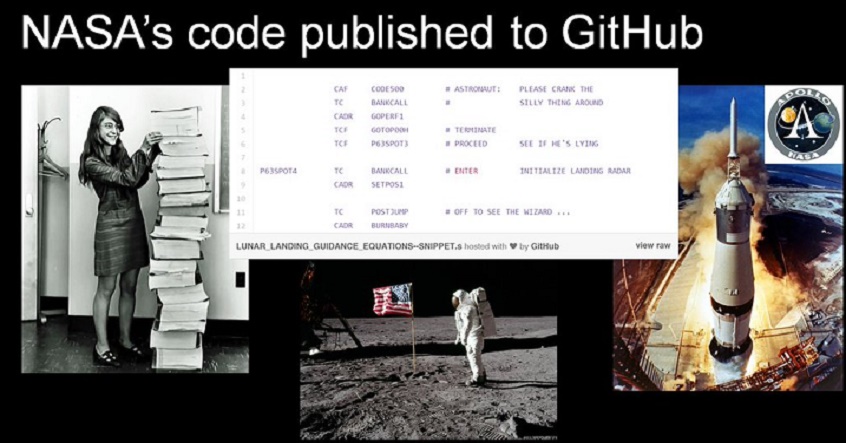
The Code That Sent America To the Moon Has Just Emerged, And It Will Awe You!

In the mid-1960s, the necessary technology to create the flight software for the Apollo 11 space program did not exist. Programmers at the MIT Instrumentation Laboratory had painstakingly invent it- line by line.

Assembly itself is obscure to many of today’s programmers—it’s very difficult to read, intended to be easily understood by computers, not humans. For the Apollo Guidance Computer (AGC), MIT programmers wrote thousands of lines of that esoteric code. They came up with a new way to store computer programs, called “rope memory,” and created a special version of the assembly programming language.

Margaret Hamilton, director of software engineering for the project, took a black-and-white picture standing next to a stack of paper containing the software to commemorate their success. And let’s just say she saw eye-to-eye it with!

The AGC code has been available to the public for quite a while–it was first uploaded by tech researcher Ron Burkey in 2003, after he’d transcribed it from scanned images of the original hardcopies MIT had put online. That is, he manually typed out each line, one by one.

“It was scanned by a airplane pilot named Gary Neff in Colorado,” Burkey said in an email. “MIT got hold of the scans and put them online in the form of page images, which unfortunately had been mutilated in the process to the point of being unreadable in places.” Burkey reconstructed the unreadable parts, he said, using his engineering skills to fill in the blanks.

“Quite a bit later, I managed to get some replacement scans from Gary Neff for the unreadable parts and fortunately found out that the parts I filled in were 100% correct!” he said.

However, the code itself remained somewhat obscure to many of today’s software developers. That was until last Thursday (July 7), when former NASA intern Chris Garry uploaded the software in its entirety to GitHub, the code-sharing site where millions of programmers hang out these days.

Next Page For More

Tagged : / /

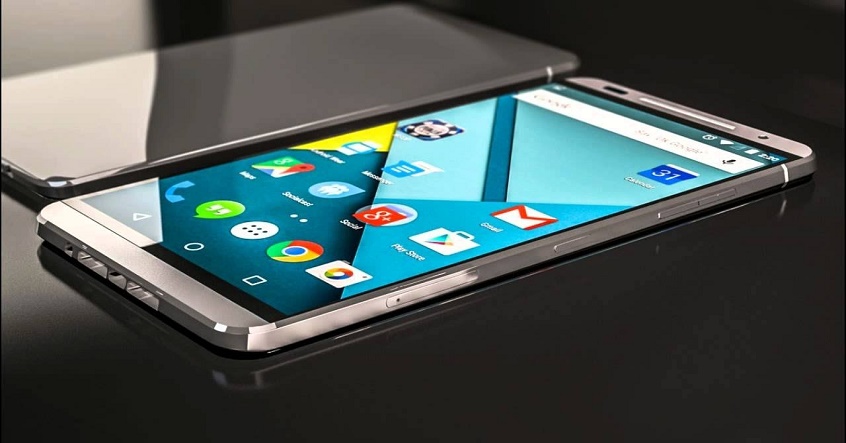
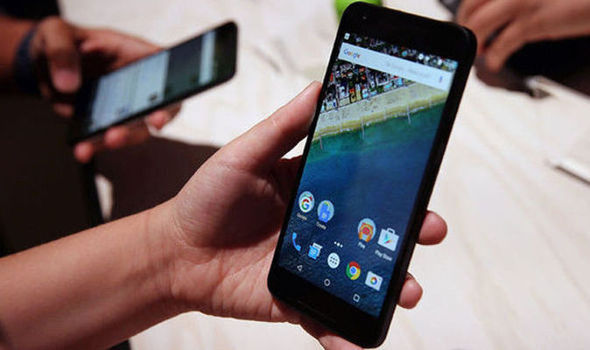
8 reasons why Google’s Pixel may be considered better than iPhone

After using Google’s Pixel XL smartphone for a few weeks, it has highlighted the iPhone’s glaringly lacking key features. Woah, woah there. iPhone supporters, hear me out. You’ll have plenty to defend your smartphone of choice down in the comments section.

The iPhone has great features that the Pixel doesn’t have, and the Apple ecosystem is in a league of its own, of course. But the Pixel is something worth talking about.

To start with, the grip and the weight. Focusing on the comfort of your hand, iPhone 6s Plus’ weight (192 grams) never bothered me until I picked up the Google Pixel XL (168 grams).  The Pixel’s lighter weight has no ill effect on its reliability, and it’s easier to manage in your hands. Speaking of which, the Pixel has a clever way to add grip.

pixel-smartphone-google-main-android-mobile-713785

As nice as the iPhone’s metal back and edges are, they don’t offer any grip, and I’ve dropped and dented my iPhone a couple times as a result. It needs a case.

On the other hand, the glass inlay on the Pixel’s back doesn’t look particularly nice (it looks better on the white model), but it’s actually a great grip for your index finger, which makes the Pixel feel more secure in your hands as you hold it.

SuperSaf TV, a tech YouTube channel, tested the charging times of the Pixel XL, iPhone 7 Plus, and Galaxy S7 Edge with the chargers included in each phone’s packaging. After two hours of charging, the Pixel XL is nearly 100 percent charged while the iPhone 7 Plus is dragging its feet at 72 percent. Meanwhile, the Galaxy S7 wiped the floor with the other two, having charged to 100 percent after an amazing one hour, 29 minutes.

Fast charging is actually a huge deal, isn’t it? The Pixel’s USB-C fast charging is faster than the iPhone’s comparatively slow charging, and it’s one of the harder things to adjust to while switching back to the iPhone.

screen_shot_2016-10-05_at_00_36_22

The Pixel’s design is more utilitarian than it is beautiful, but its sharper AMOLED screen outshines the iPhone’s Retina display. The iPhone 7 Plus has a 1080p screen that’s fine and sharp enough, but the Pixel’s 1440p screen is sharper. And more importantly, the Pixel’s AMOLED screen makes everything it displays look better than on the iPhone’s LCD display. Pictures, videos, and apps pop with inky blacks and vibrant (but not oversaturated) colors on the Pixel, which makes for a more premium and modern look overall.

Next Page For More

Tagged : /

Nokia is back from exile armed with Android, Zeiss Lens and 2K Display!

Once the leading mobile phone manufacturer in the world, Nokia failed to tackle the smartphone era well, with several wrong decisions like embracing Windows Phone and shunning Android. But now it’s coming back, and that too with Android in tow. In the Mobile World Congress 2017, the new details of Nokia’s upcoming Android smartphone will be announced.

The latest leak points to the flagship handset having a 5.2-inch or a 5.5-inch QuadHD display (2K). The smartphone is also said to come with Zeiss branded optics as seen on earlier Nokia devices. Taking Nokia’s history with imaging into account, the camera is sure to be a highlight of the device. Additionally, the device is set to be powered by the Snapdragon 820 processor which is a bit disappointing considering that the world has moved on to the Snapdragon 821. In fact, Qualcomm has just announced the Snapdragon 835 which the Samsung Galaxy S8 is tipped to come with.

nokiaandroid

Taking Nokia’s history with imaging into account, the camera is sure to be a highlight of the device. The Nokia D1C has also been out for awhile. The D1C is set to come with rounded metal edges, with capacitive buttons at the front and volume and power buttons on the right. It will also come with a 64-bit Qualcomm Snapdragon 430 octa-core processor, 3GB of RAM, 32GB of internal storage, a fullHD screen (display size uncertain) and the Adreno 505 GPU. What is interesting is that the Gold color variant of the device is expected to come with a fingerprint scanner embedded in the Home button, while the other color variants (White and Black) will lack this feature. Leaks and rumours point to the flagship device sporting a price tag of around Rs 30,000, while the D1C (the mid-range device) is expected to be priced south of Rs 20,000.

While not confirmed, the device could come with a 13MP front and 8MP rear camera, with Android 7.0 Nougat on board. On the connectivity side, the device is set to support 4G LTE, Wi-Fi Bluetooth 4.0 as well as GPS/A-GPS.

As a technology lover you may like our daily important technology news series. It’s a playlist and you can retrieve the total day-wise videos. Please consider subscribing our YouTube channel:

Author: Technology Vista

Tagged : / /

Is it a tile or is it a solar panel? Tesla made it impossible to distinguish !

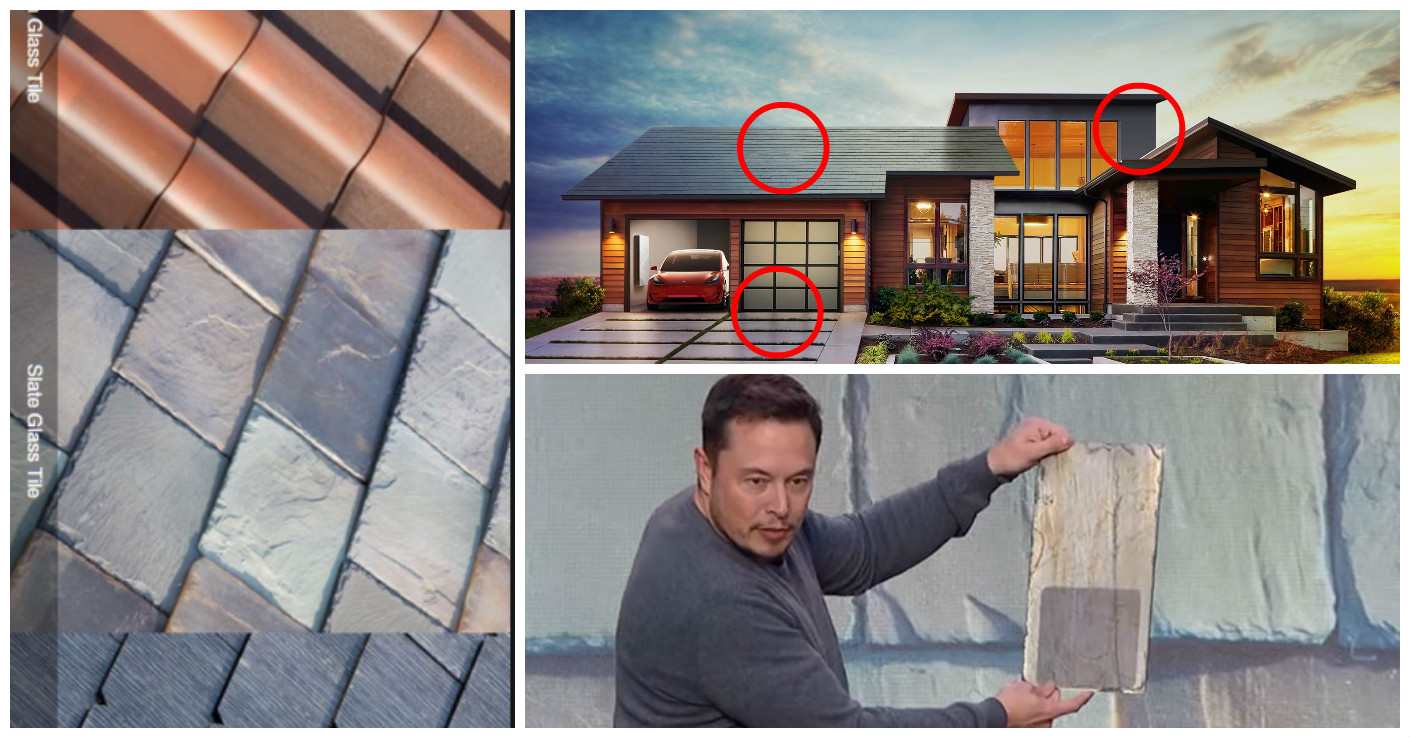
Tesla CEO Elon Musk took to the stage at Universal Studios in LA promising to make solar sexy. And, I have to agree, he did succeed. He unveiled a range of textured glass tiles with integrated solar cells that are nearly indistinguishable from conventional tiling.

Musk revealed that a row of suburban American houses on Wisteria Lane—the old set of Desperate Housewives—were all, in fact, topped with solar roofs. Each house’s old roofing material had been stripped away, and replaced with one of four new styles of solar tile. From the street, it was virtually impossible to tell; the roofs retained a variety of traditional looks, from textured slate shingle to terra cotta tile.

The audience, a couple hundred invited guests, mostly Tesla owners, ooh-ed and ahh-ed in awe. These tiles coupled with the sleek update to the company’s energy-storing Powerwall and you are good to go!

The solar roofs are designed to be used with the Tesla Powerwall Version 2.0, which Musk also unveiled, is a bright white rectangle, and flatter than the first version released in April 2015. It will cost $5,500 for 14kWh of storage and 7kWh peak power draw. That’s enough to power a four bedroom house for a day.

Why do you need the battery? Once the panels are installed, they make electricity whenever the sun shines, with no moving parts, no noise, and, beyond the occasional cleaning, very little maintenance. The problem is, when the sun isn’t shining, like in the evenings when electricity demand peaks, they’re useless. Hence Tesla’s plan to integrate pretty panels with a battery. Generate and store by day, light up your house by night, and brag about it when you feel so inclined.

Another thing holding people back from switching to green electricity is that the large, purple-black sheets of glass don’t exactly blend in on a period house—or most other properties, for that matter.

Next page For More

Tagged : / /

Want Faster Wi-Fi? How About 100 Times Faster?

You’re probably going to hear a lot about LiFi technology the coming months, so better familiarise yourself. In simple words, it is a wireless technology that transmits high-speed data using visible light communication (VLC). With scientists achieving speeds of 224 gigabits per second in the lab using Li-Fi earlier this year, that’s 18 movies of 1.5 GB each being downloaded every single second.

Li-Fi was invented by Harald Haas from the University of Edinburgh, Scotland back in 2011, when he demonstrated for the first time that by flickering the light from a single LED, he could transmit far more data than a cellular tower. Now, it is out of the lab for the first time, trialling it in offices and industrial environments in Tallinn, Estonia, reporting that they can achieve data transmission at 1GB per second – that’s 100 times faster than current average Wi-Fi speeds.

“We are doing a few pilot projects within different industries where we can utilise the VLC (visible light communication) technology,” Deepak Solanki, CEO of Estonian tech company, Velmenni, told IBTimes UK.

“Currently we have designed a smart lighting solution for an industrial environment where the data communication is done through light. We are also doing a pilot project with a private client where we are setting up a Li-Fi network to access the Internet in their office space.”

The benefits of Li-Fi over Wi-Fi, other than potentially much faster speeds, is that because light cannot pass through walls, it makes it a whole lot more secure, and as Anthony Cuthbertson points out at IBTimes UK, this also means there’s less interference between devices.

And while you might be worried about how all that flickering in an office environment would drive you crazy, don’t worry – we’re talking LEDs that can be switched on and off at speeds imperceptible to the naked eye.

Next Page For More

Tagged : / /

Nokia is plotting it’s comeback armed with Android OS

The company already made quite the buzz with confirmed debut of new handsets at Mobile World Congress in February. Nokia CEO has already promised to deliver the trademark design and build quality we come to associate with the brand. However, Nokia won’t be building its own smartphones rather will be outsourcing it to HMD Global, a Finnish hardware startup run by former Nokia employees.

Nokia’s two-year non-compete deal with Microsoft ends this year and HMD Global holds the right to license Nokia’s brand for the next 10 years. The company will further license the manufacturing part to Foxconn and use Nokia’s diverse set of design and telecom patents. Nokia is reported to make its smartphone comeback with three new devices. Nokia has already made significant strides in the world of virtual reality and its OZO VR camera is already helping in the production of world-class VR content.

nokiaandroid

Initially rumours indicated that Nokia’s comeback devices will be powered by Qualcomm’s Snapdragon 820 processor. But other rumours indicate that Nokia will announce two flagship devices and another mid-range smartphone at MWC in February 2017 and the company might jump to Snapdragon 821 or the latest Snapdragon 835 ahead of the launch in order to better compete with Google’s Pixel and Pixel XL range in the flagship segment.

Not to forget, is Nokia’s promise to deliver the latest Android operating system. The large part of play here is the use of company’s very own Z-launcher based UI instead of stock one. Nokia’s Z launcher is a fun third party launcher that adapts itself according to use. Users can access their favourite apps quickly and there is even an option to scribble to reach apps.

Next Page For More

Tagged : / /

Don’t drive and text. This amazing new camera can catch texting drivers in seconds

Humans are great at spotting anomalies, but terrible at concentrating on what we’re supposed to be keeping an eye on. That’s why inspectors are able to sneak so many guns past TSA security agents. Machines have unlimited attention, but are often less good at detecting things like suspicious packages—in part because they need to know precisely what it is they’re looking for. A new camera from Movidius, however, defies this rule.

The new Hikvision camera uses neural networks to “automatically detect anomalies such as suspicious packages, drivers distracted by mobile devices, and intruders trying to access secure locations.”

Tech-wise, the breakthroughs are the camera’s stereo 3D imaging, and a new chip that’s powerful enough to do all the analysis in real time inside the camera itself, instead of connecting to a bigger computer in the cloud. According to the press release, the new camera managed 99% accuracy in tests, but the nature of those tests isn’t revealed.

Deep learning like this is what allows you to type something like “muffin” into your iPhone’s photo search field and get back not even just pictures of cakes, but specifically all the photos of muffins you’ve ever taken. But it’s also able to track activists and protestors, or pretty much anything else its owners, private or government, want it to track.

It’s both terrifying, and also a great new investigation technique for TV crime dramas.

When used as a security camera, it’s able to not only detect movement but to see what is moving, distinguishing tumbleweed from a car or a human intruder, say. But it has also been used to locate a lost senior citizen using facial recognition, which is an ability with obvious privacy concerns.

It’s ability to spot texting drivers coupled with license-plate reading, and automatic ticketing, could we finally have a solution to careless, law-flouting types on the road?

The University of Manchester now touts itself as the “Home of Graphene.”

As a technology lover you may like our daily important technology news series. It’s a playlist and you can retrieve the total day-wise videos. Please consider subscribing our YouTube channel:

Author: Technology and Beyond

Tagged : / /
Verified by ExactMetrics