Turns out, yes! But there are some things that need to be taken care of first to make this fertilizer a success.
“If you’re ever going to have a tomato on Mars, you’re going to have to grow it there,” says Bruce Bugbee, a Utah State University professor who helps NASA develop life-support systems for astronauts in space.
Long story short, if humans ever settle on Mars, getting reliable food will be one of the major challenges they face.
Setting aside light and water issues, plants still need nitrogen to grow. Human feces contains nitrogen as well as bacteria that break it down into nitrate, which plants prefer for growth. That’s one problem solved but, lingering alongside those useful bacteria will be any bad bacteria the crew brought with them.
If they were to dump the waste directly onto the plants, the harmful bacteria could thrive and proliferate and make people sick. To avoid this, says Bugbee, Martians will have to compost the feces over several months to weed out the bad microbes.
So, in order to make use of this natural fertilizer, we better have a contingency plan for the first few months!
As a technology lover you may like our daily important technology news series. It’s a playlist and you can retrieve the total day-wise videos. Please consider subscribing our YouTube channel:
It started with only Nokia 6 being available in markets of solely China, but now the global tech major will be branching out to the rest of the markets with not one, but three Nokia models.
Nokia missed out on the transformation of the mobile market to smartphones, whereafter, it chose Microsoft’s Windows operating system for its ‘Lumia’ range. After the Nokia-Microsoft deal in 2014, Microsoft continued to sell cheaper basic phones under Nokia’s name and Lumia smartphones by its own name but abandoned both the businesses last year.
Meanwhile, HMD last month took over the Nokia feature phone business and bagged the deal of Nokia brand (phones and tablets) for the next decade. HMD Global, announced that the smartphones will be launched in the second quarter this year. The phones will be released in almost 120 markets, and all at the same time. The company in a statement to NPU said, “HMD has ambitious plans to release Nokia 3, 5 and 6 in 120 markets at the same time in Q2 2017. This is ambitious because HMD is de facto a start-up, though it has support from Nokia and Foxconn.”
At the MWC event, Nokia CEO Rajeev Suri, had said, “We’ve achieved many things in our 150-year history. One thing for us is to create technology that will help connect the world.” Apart from the phones, the company also talked about Ozo, their 360-degree camera for virtual reality.
HMD had unveiled the Nokia 3 and Nokia 5 smartphones, alongside the worldwide release of Nokia 6 at the Mobile World Congress in Barcelona, Spain. It claimed that the comeback with Nokia 6 smartphone has been a hit as it was sold out in 23 seconds in China in its first sale. It added that customer satisfaction has been 97 per cent.
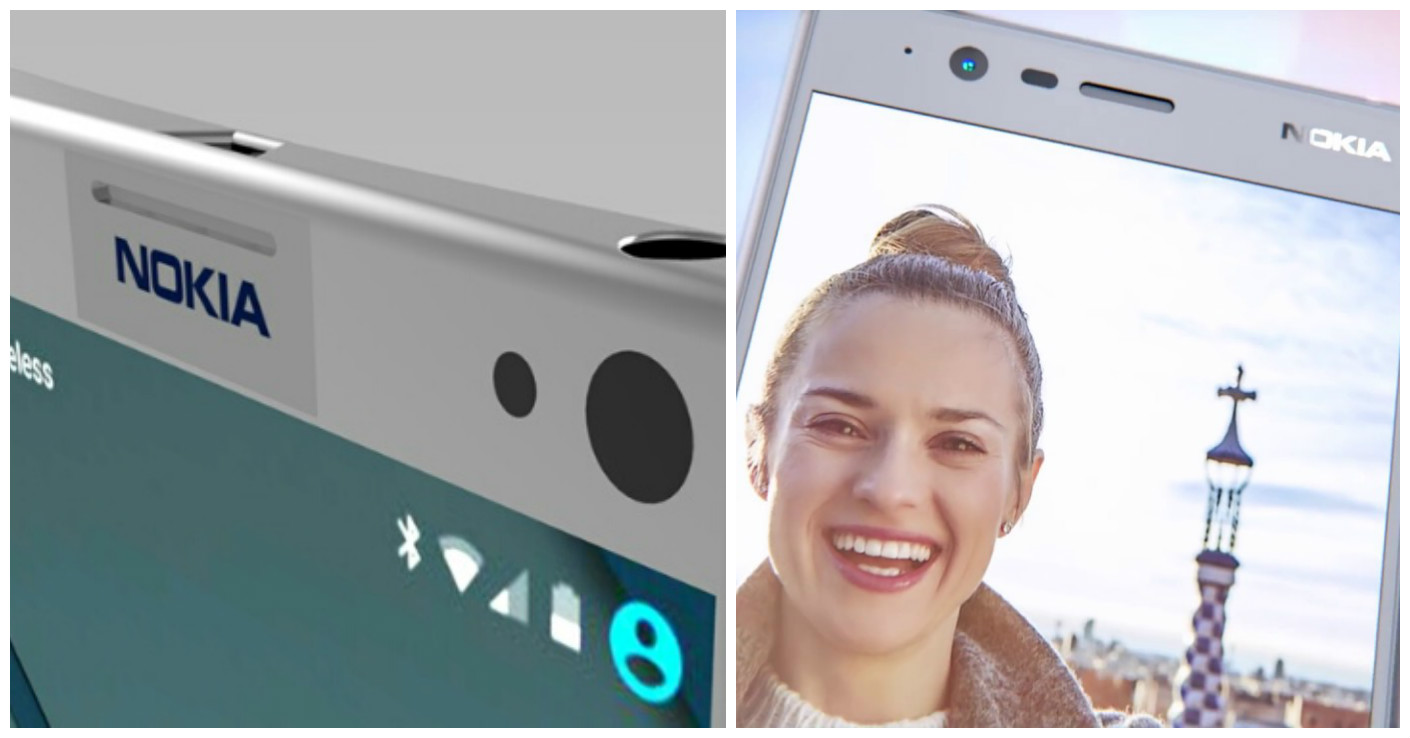
All the three devices run the latest pure Android Nougat. While, the Nokia 3 smartphone has a 5-inch HD display, Gorilla Glass, and comes with an 8MP selfie camera, the Nokia 6 has a special art black version which looks glossy just like the iPhone 7 Jet Black.
Nokia 5 device has also been announced but with a smaller 5.2-inch display. It comes in blue, copper, black and silver colours and has been priced at 189 Euros. When it comes to specifications the Nokia 6 is powered by Qualcomm Snapdragon 430 processor with 4GB RAM and 64GB internal storage (expandable up to 128GB via microSD card). It has dual amplifier speaker with Dolby Atmos technology for sound output. Nokia 6 features a 16MP PDAF rear camera with f/2.0 aperture and an 8MP front camera. It is backed by a powerful 3,000 mAh battery.
The home button in Nokia 6 doubles up as a fingerprint sensor. It is a 4G-enabled smartphone that supports Bluetooth v4.1, Wi-Fi, GPS and USB-OTG. According to a press statement by HMD Global, more Android smartphones will be unveiled in H1 2017.
As a technology lover you may like our daily important technology news series. It’s a playlist and you can retrieve the total day-wise videos. Please consider subscribing our YouTube channel:
5G is just yet to be introduced to the world and into mainstream tech communication, but it has an astonishingly ancient root in India. More precisely, Kolkata, India.
Italian inventor Guglielmo Marconi is credited with first inventing the telegraph in 1895, a device that used what we now know as radio waves to send an electromagnetic signal across distance. However, at the same time that Marconi was pioneering the first commercial use of telegraphy as a communication, Indian polymath Sir Jagadish Chandra Bose was working to understand the nature of the phenomenon.
Sir Jagadish Chandra Bose attended Cambridge after studying physics at Calcutta University. He was the first to demonstrate radio communication with millimetre wavelengths, which fall in the 30GHz to 300GHz spectrum.
The Institute of Electrical and Electronics Engineers (IEEE), the largest international body dedicated to advancement of technology, has recognised Bose’s 1895 experiment demonstrating short-wave communication as a milestone achievement nearly 120 years later. Bose generated 5mm electromagnetic waves, 60GHz, before instruments even evolved to measure frequencies that low.
“In the scientific community, Bose is now gaining recognition as the father of radio science and semiconductors technology,” remarked Suvra Sekhar Das, associate professor at the GS Sanyal School of Telecommunication at IIT-Kharagpur. “His experiments in the early 1890’s and early 1900’s with millimetre wave radio frequencies were much ahead of his time — so much so that the time has only come now. While advancement in semiconductor technology led to smartphones, millimetre wave communication technology may bring about a more wirelessly connected world tomorrow.”
Bose’s millimetre waves have found applications in a variety of fields since their discovery over a century ago — they’re used in everything from radio telescopes to radar and, more recently, for collision-warning systems and cruise control in modern day cars.
“I take a lot of inspiration from Bengal and Kolkata because it is here that radio communication was born,” said Ramjee Prasad, professor of Future Technologies for Business Ecosystem Innovation, Aarhus University, Denmark, on the sidelines of the IEEE International 5G Summit in Kolkata last week. “The millimetre wave that J C Bose worked on is the backbone of developing 5G. Marconi and Russian scientists Alexander Stepanovich Popov, who were also conducting similar experiments, were working with much lower frequencies. In fact, the technology that Marconi used was developed by Bose.”
As a technology lover you may like our daily important technology news series. It’s a playlist and you can retrieve the total day-wise videos. Please consider subscribing our YouTube channel:
Have you ever watched someone with a VR headset on? They might be having the time of their lives, but watching them can be a tad bit awkward, to say the least. They just look odd with a high-tech blindfold on.
That’s not good for demonstrating the emerging technology, especially while it still has a lot to prove before it enters the mainstream. And that’s why Google’s Research arm and Daydream Labs have partnered to figure out a way to let spectators see VR headset users’ full faces while they’re immersed in an experience – as if the headsets were practically invisible.
End goal? To allow for less awkward demonstrations of VR technology and experiences on video.
In a blog post, Google noted that this solution will go beyond improving VR and mixed reality experiences: Headset removal is poised to enhance communication and social interaction in VR itself with diverse applications like VR video conference meetings, multiplayer VR gaming, and exploration with friends and family. Going from an utterly blank headset to being able to see, with photographic realism, the faces of fellow VR users promises to be a significant transition in the VR world, and we are excited to be a part of it.
Google’s trick, as you can imagine, is not that straightforward. The team first constructs a 3D model of the user’s face, using a color and depth camera in a process that takes about a minute to complete. Next, they’re handed a modified HTC Vive headset that’s capable of tracking eye-gaze. For a fully immersive video demo, the user is shot in front of a green screen while they’re engaged in a VR experience, with their VR environment composited into the background.
Additionally, the specialized camera setup for filming this is calibrated and time-synced with the headset, which makes it possible to replace the headset with the 3D face model and line it up with the visible portion of the user’s face.
Slapping on a digital top half of a person’s head onto a real image can look unnatural (the phenomenon is known as the ‘uncanny valley’); as such, the team decided to depict a ‘scuba mask effect’ that shows the 3D face model composited with a translucent headset. This reduces the chance of viewers getting distracted by imperfections and artifacts in the 3D model.
Confused? Let’s just say this is better than the blindfold look!
As a technology lover you may like our daily important technology news series. It’s a playlist and you can retrieve the total day-wise videos. Please consider subscribing our YouTube channel:
Currently it takes about seven hours to travel between the Mumbai and Ahmedabad and the bullet train, which includes 7-kilometres (about 4.3 miles) undersea rail corridor between Mumbai and Ahmedabad in western India, aims to reduce it to about two hours. Construction of the corridor is expected to be completed by 2023 provided it starts next year.
Indian Prime Minister Narendra Modi who traveled to Japan last year traveled in the Shinkansen bullet train alongside Japanese Prime Minister Shinzo Abe. Estimated to cost about Rs 976 billion ($14.5 billion), 80% of the project’s funding will come by way of a loan from Japan that operates the Shinkansen bullet train between Tokyo and Osaka. India will replicate that system.
Drills for India’s first bullet train has begun and will help ascertain soil conditions under water. “Soil and rocks below the 70-meter-deep sea are being tested as part of the geo-technical and geophysical investigation undertaken for the entire project,” a senior Railway Ministry official reportedly said.
Japan’s decision to give virtually free finance for Modi’s pet program is reportedly part of its broader push back against China’s involvement in infrastructure development in South Asia over the past several years.
https://youtu.be/rSvA_vBlqGI
As a technology lover you may like our daily important technology news series. It’s a playlist and you can retrieve the total day-wise videos. Please consider subscribing our YouTube channel:
We know for sure that brand license owner HMD Global will be releasing around 6 to 7 Nokia Android smartphones in the year 2017 as per a presentation slide that leaked some time ago. We figure HMD will be launching three more phones, and the Nokia 7 and Nokia 8 are rumored to be next in line.
We’ve already seen the Nokia 3, Nokia 5, and Nokia 6 announced officially (as well as a pretty adorable Nokia 3310 reboot). While, industry pundits are expecting the Nokia 7 and Nokia 8 to be flagship level phones, but if the rumors are true, we may see these next two as upper midrange phones, with the Nokia 9 probably the flagship phone we have been waiting for.
Rumors also suggest that the flagship phone (quite possibly Nokia 9), will be powered by an SD835 chipset and will sport Carl-Zeiss optics like the Nokia Lumias of old.
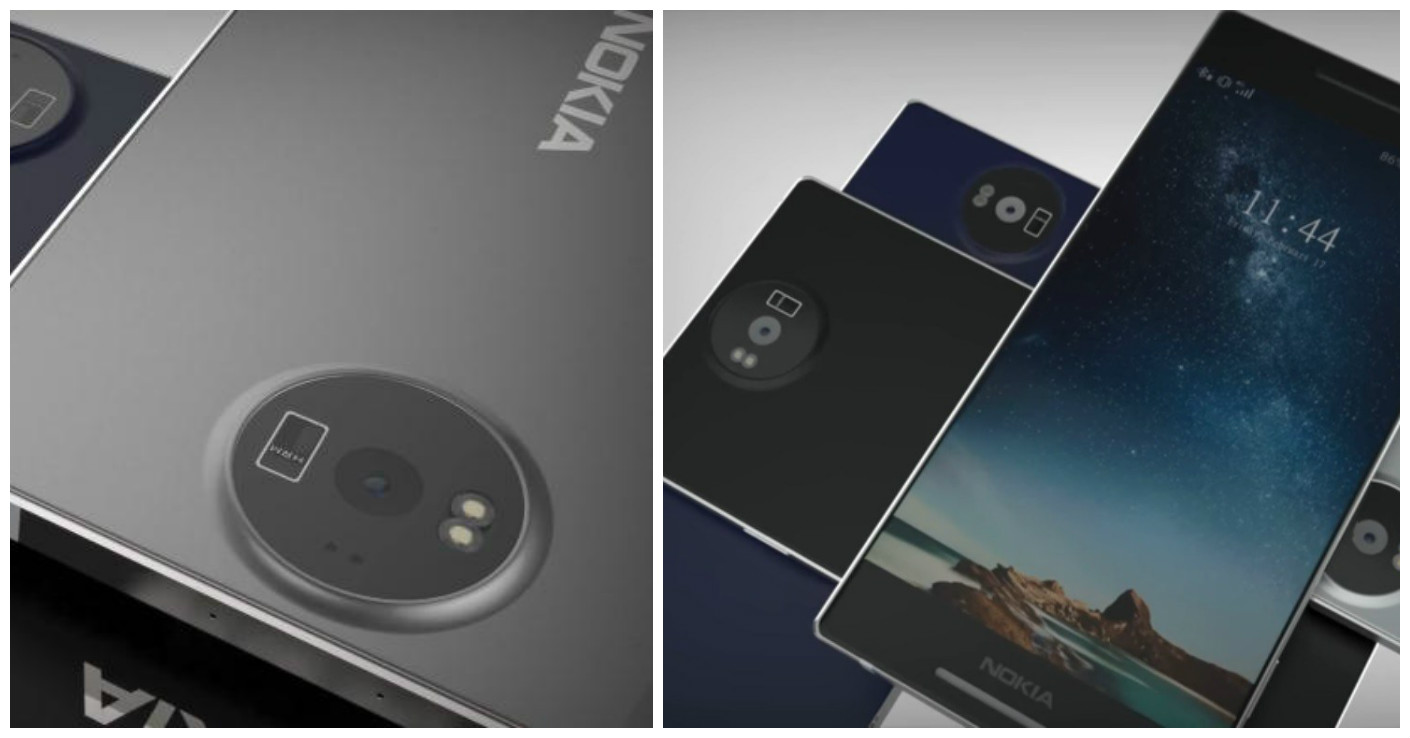
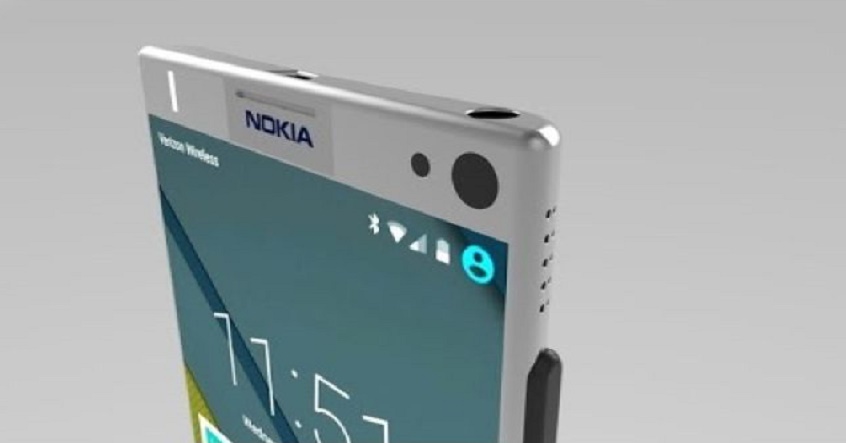
These two devices may differ in displays used – one will have a 1080p display and the other one QHD display. They are rumored to have a new metallic design different from what we’ve seen in the early Nokia models, with thinner bezels and a revamped camera design – dual cams might just be possible. These devices will be packing Qualcomm’s fast charging technology and fingerprint scanners.
Rumors say that these next two devices will be powered by Qualcomm’s Snapdragon 660 chipset – definitely a chipset targeted at top midrange models. The SD660 is rumored to pack as much power as last year’s SD820 chipsets, made from Samsung’s 14nm FinFET process.
As a technology lover you may like our daily important technology news series. It’s a playlist and you can retrieve the total day-wise videos. Please consider subscribing our YouTube channel:
The latest Kantar Worldpanel data, published March 15, shows the iPhone 7 is the world’s most popular handset; that Samsung is still the biggest handset maker; and Android still dominates the operating system landscape around the world. In Europe, 74.3% of phones run Android, 83.2% in China, 58.2% in the US and 52.6% in Australia. Only in Japan is iOS more popular (49.5% verses 49%).
In this situation, what are the chances of Nokia making a comeback? Yet, according to Kantar, the two marques that essentially created the smartphone market, Nokia and BlackBerry, could still find a new niche in this duopoly.
“We witnessed something of a throwback to times past with the new Nokia 3310 feature phone, an updated version of the iconic Nokia look, plus several new Nokia Android smartphones being marketed by HMD, now the exclusive licensee of the Nokia brand.”
Indeed, the fondness with which Nokia is still regarded, particularly in Europe could well see the brand re-establish itself among consumers who would otherwise be considering a mid-range Samsung handset.
However, breaking into the US once more could be a bigger challenge. “Seventy percent of the US domestic market is dominated by Apple and Samsung, and the third largest manufacturer, LG, accounted for an additional 11.1% of sales in the three months ending January 2017,” Guenveur said.
“It is difficult to see the impact of all the devices launched at MWC 2017 from the perspective of a US consumer since many of them are not initially planned for sale in the US.” — AFP Relaxnews But then, “HMD Global’s focus on revitalizing the Nokia name seems concentrated on quality for cost. Its three new Android phones are priced at €229 (RM1,100) or less, with Android Nougat, Google Assistant, aluminum construction, and otherwise solid mid-range specs,” said Dominic Sunnebo, Business Unit Director for Kantar Worldpanel ComTech Europe. In other words, they could be very popular in “price-conscious markets like Italy and Spain,” said Sunnebo.
As a technology lover you may like our daily important technology news series. It’s a playlist and you can retrieve the total day-wise videos. Please consider subscribing our YouTube channel:
Right now, effective solutions are hard to come by. The CDC estimates that about 70 percent of U.S. smokers want to quit, but only 6 percent actually do. That’s a lot of people looking for answers and not finding them. While the patch or medication are the top ways using which people attempt to kick the butt, here might be better ways.
A new study in Frontiers in Psychiatry found that only smokers who thought that their cigarettes contained nicotine got the satisfaction of smoking. Anyone who was told they weren’t getting nicotine — even if it was a normal cigarette — was left unsatisfied. In other words, nicotine needs you just like you need it. That sweet release of dopamine only happens if you really believe in it.
Smokers normally get a rush of dopamine when the nicotine hits them, which is why it feels so good to finally have that cigarette you’ve been craving. It’s why nicotine is so addictive: you crave the rush, physically and psychologically. But if you don’t think you’re getting nicotine, the satisfaction never comes.
How does that work?
The researchers took 24 chronic smokers and looked at their brain activity in an fMRI machine right after they smoked. Every smoker visited them four separate times, but they were only give real cigarettes twice. One time they were told it had nicotine, the other they were told it didn’t. It was only when they were told there was nicotine that it had any power over them — The fMRI scans showed increased activity in the insula, one of the principle areas of the brain that controls cravings to addictive substances, indicating that the cigarettes were only satisfying their addiction when they knew there was nicotine inside.
Fake cigarettes couldn’t provide that satisfaction, regardless of what smokers were told. If the simple act of not believing can counteract nicotine’s effects, we might have a lot of other ways to think about.
As a technology lover you may like our daily important technology news series. It’s a playlist and you can retrieve the total day-wise videos. Please consider subscribing our YouTube channel:
A hack has been discovered in a number of popular web browsers that can use the”Autofill” feature to allow cyber thieves to view user names, emails and even passwords. The issues were found by Viljami Kuosmanen, who states that Chrome, Apple’s Safari and Opera are all vulnerable.
According to the federal government’s Digital Analytics Program, Chrome dominates as the most popular for web browsing. The report says that around 44 per cent of web traffic comes from Chrome while Apple’s Safari has a 24.5 per cent share while Microsoft’s browsers make up 15.5 per cent of the market. So, if you use Google’s Chrome browser, you must be doubly careful.
When a Chrome, Safari or Opera user inputs personal information on a webpage, the Autofill option will fill in every data text box based on your previous entries. And yes, this even happens to boxes that may not be visible on the page that’s open. By tricking the browser, Kuosmanen has revealed how a form with just a couple of fields showing Name and Email address could be designed to auto-fill every section.
This data can then be sent straight to the hacker without the user ever knowing. To make things even more worrying it could also be possible to gain access to credit card numbers and security codes using the same method.
To stop any chance of the issue affecting users, Chrome, Safari and Opera fans can switch off the Autofill setting or double check before filling in any online forms as the hack only works if users are tricked into filling in the fake form.
As a technology lover you may like our daily important technology news series. It’s a playlist and you can retrieve the total day-wise videos. Please consider subscribing our YouTube channel:
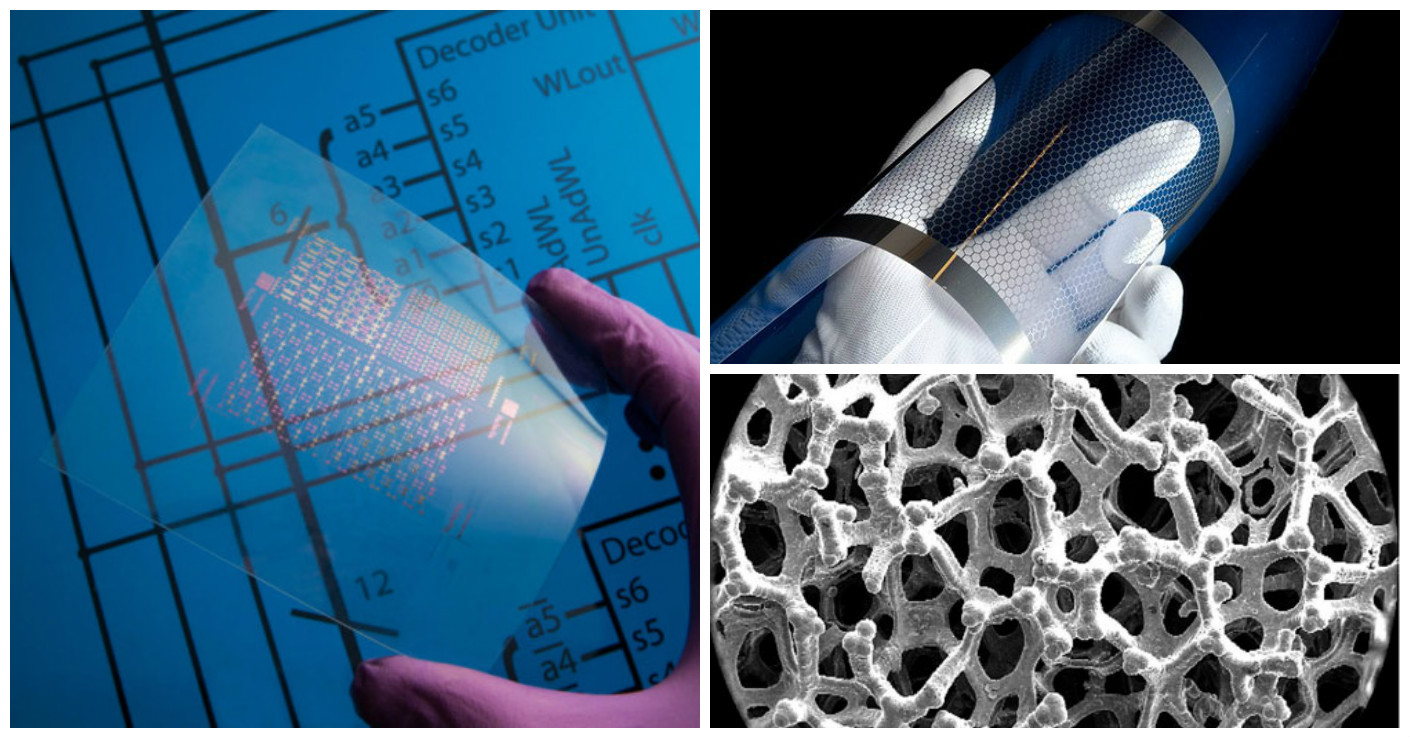
Its extraordinary electronic properties make graphene a very promising candidate for future applications in the field of electronics. It is often touted as the ‘wonder material’ – can transmit extremely high currents, making it a potential building block for next-generation ultra-fast electronics, scientists say.
Impacting xenon ions with a particularly high electric charge on a graphene film causes a large number of electrons to be torn away from the graphene in a very precise spot. However, the material was able to replace the electrons within some femto seconds. This resulted in extremely high currents, which would not be maintained under normal circumstances.
Researchers from Technische Universitat Wien (TU Wien) in Austria showed that the electrons in graphene are extremely mobile and react very quickly.
“We work with extremely highly-charged xenon ions. Up to 35 electrons are removed from the xenon atoms, meaning the atoms have a high positive electric charge,” said Elisabeth Gruber from TU Wien.
These ions are then fired at a free-standing single layer of graphene, which is clamped between microscopically small brackets. This happens even before the highly charged xenon ion collides with the graphene film. As the highly charged ion is approaching it starts tearing electrons away from the graphene due to its extremely strong electric field.
“The xenon ion penetrates the graphene film, thereby knocking a carbon atom out of the graphene – but that has very little effect, as the gap that has opened up in the graphene is then refilled with another carbon atom,” said Gruber. “For us, what is much more interesting is how the electrical field of the highly charged ion affects the electrons in the graphene film.”
By the time the ion has fully passed through the graphene layer, it has a positive charge of less than ten, compared to over 30 when it started out. The ion is able to extract more than 20 electrons from a tiny area of the graphene film. This means that electrons are now missing from the graphene layer, so the carbon atoms surrounding the point of impact of the xenon ions are positively charged.
“Graphene also appears to be excellently suited for use in optics, for example in connecting optical and electronic components,” they added.
This extremely high electron mobility in graphene is of great significance for a number of potential applications.
As a technology lover you may like our daily important technology news series. It’s a playlist and you can retrieve the total day-wise videos. Please consider subscribing our YouTube channel:
Google is the fastest and the best source of information- undoubtedly. But, have you ever found yourself combing through pages and various search results before finding what you needed? Or worse still, getting distracted and remembering hours later that you didn’t actually get what you were looking for? Not to worry, you could probably make your searches much more efficient!
Use the power of synonyms and your vocab: To find websites that write on a specific subjects, and not only those that include a specific phrase, add the “~” symbol to your search. This way Google will search for both the word you’ve typed and its synonyms.
e.g. healthy ~dinner
When you are confused or unsure whether you’ve correctly remembered the information or name you want to start your search with, simply write the potential variants of what you are looking for and separate them with “OR”. You can also replace “OR” with “|”. The second one has worked better for me.
This way you will get results of all documents containing either the first or the second word. Seeing the options will help you to choose the result that is more useful for you.
NOTE: It’s important to use “OR” in caps, or Google will ignore your request.
e.g. Jennifer Lawrence OR Aniston
Sometimes you may want to find a phrase you’ve heard somewhere but you can’t seem to recall a word of it. Don’t worry, just replace the missing word or item with an asterisk. This way Google will find it for you.
e.g. The 22.11*
Then again, an asterisk won’t help if lots of words are missing in the phrase you are looking for. Google has this solved too!
Simply write whatever you can think of and put (note all caps) AROUND(the number of words missing) where the words are missing.
e.g. Lines composed AROUND(4) Abbey
Do you want to see all the fashion icons from 1960s to 2000s? Or maybe you are looking to buy a new laptop costing from $200 to $400? Whether it’s within a particular year or money range (or any numeric range, really), instead of browsing and scrolling to find what you need, you can write the range you are looking for and you will get your results instantly.
e.g. laptop $200…$400
Sometimes you just want to revisit an interesting article you’ve read on a website or search for a particular information in a particular website. Instead of writing all those keywords you’ve been thinking of, use the “site:” option Google has to offer. After typing site:, add the website you have in mind without spaces and then the information you are looking for separated by a space.
e.g. site:curiousmindmagazine.com psychology
If you want to read articles that are particularly written about that topic, what I personally love about Google is the option to search for words within titles, instead of content within pages.
Use the command “intitle:” and (without adding a space) write the word you are looking for. If you want to find a title containing more words of your interest, use the command “allintitle:”, just to be on the safe side.
e.g. intitle:ginger
allintitle:ginger benefits
For finding that exact phrase, write the phrase in quotes. This way (even if the phrase is incomplete), you will get the exact order of the words in results – which is very convenient.
e.g. “The ides of March”
You can also combine this with many other search tricks, such as: “The * of March” and many others.
Sometimes you may want to browse Google and exclude a word from the search results. It has often happened to me to browse for books and get the “buy” option in the first search results, which I didn’t need.
Simply add a “-” before the word you don’t want to see.
e.g. Good books -buy
Lastly, for finding similar kind of websites you are interested in, write “related:” and add the website after it without spaces.
e.g. related:curiousmindmagazine.com
As a technology lover you may like our daily important technology news series. It’s a playlist and you can retrieve the total day-wise videos. Please consider subscribing our YouTube channel:
With 160 million users in India, the Facebook-owned mobile messaging app has become a top choice among marketers, social influencers and certain groups to reach them via jokes, videos and GIFs whenever there is a breaking news, a major announcement, a tongue-in-cheek celebrity statement or even a festival, say experts. Similarly, with 150 million active users in India, Facebook is the second-most used social media platform and can also act as a catalyst for proliferation of viral content due to a broader sharing and a greater engagement with the content.
In India, WhatsApp has the highest penetration among any “social-centric” web/app platform available on the nearly 260 million active smartphone users.
“However, Facebook is quite curated and controlled via an algorithm according to a person’s social graph and Facebook’s advertising engine and, hence, potentially less viral than Whatsapp,” Neil Shah, Research Director (Devices & Ecosystems) at the market research firm Counterpoint Research, told IANS.
“WhatsApp is emerging as a highly susceptible channel for propaganda, misinformation, fake news as well as highly influenceable from the targeted marketing message or advertisement perspective, i.e., digital word-of-mouth.”
“Several marketers are leveraging an infantry of smart or influential folks to develop and spread targeted and viral-natured content. I believe the viral messages developed and spread are not by a single source but many individuals and firms working on this behind the scenes,” Shah added.
Facebook’s third property, Instagram, is also quickly rising to become a popular platform from the perspective of social media influencers to drive rich content for marketers and mainly target millennials. But according to Shah, among several social media platforms, WhatsApp has a clear edge because of its user-friendly approach which has put the platform in a strong (as well as vulnerable position) for flow of both good and bad news or information or any content across the platform.
We have had flip phones and sliders, round phones and rectangular ones, small ones barely bigger than your thumb and large ones that covered the palm of your hand. We even have had phones designed specifically for gamers or music enthusiasts.
But, since the advent of the smartphone, we’ve pretty much been stuck with the traditional candy bar shape. Time to spice things up a bit.
South Korean IT news site ET News has just reported that LG Display will not only be producing foldable displays for smartphones come 2018, they’ll also be supplying that technology to Apple, Google, and Microsoft. This implies that the technology will hit the market soon, possibly as early as 2018, and that some of the biggest names in the smartphone industry will be competing to introduce their own version of it.
As far back as December 2015, however, Samsung had already filed for patents for what can presumably be an upcoming fully foldable flagship product. They have pushed the boundaries of recent smartphone design with their EDGE technology, a minimal design edit that sees the smartphone screen curving around the edge of the phone for some added functionality.
Apple also happens to have a flexible device in the works — the company has been awarded a patent for carbon nanotube circuits that would allow for flexible electronic devices.
The talk of foldable smartphone technology isn’t exactly new, but seeing it finally hit the market would be. This would allow for more durable, adaptable devices. Semiconductor Energy Laboratory had long before demonstrated the first consumer-grade display that could be folded in three without breaking!
As a technology lover you may like our daily important technology news series. It’s a playlist and you can retrieve the total day-wise videos. Please consider subscribing our YouTube channel:
Facebook is great, right? It does amazing social service and builds connections- all for free. In return, Facebook collects information about you—your profile information, articles or pages that you “like,” videos you watch, and so on—and uses that to sell ads.
The thing is, Facebook has made a show of being transparent with how it collects users’ information and what categories of interest it assigns to users. Anyone who wants to can look this information up on Facebook’s site. But it’s not that simple.
As an ongoing investigation by ProPublica has shown, Facebook is going beyond the tacit agreement that it provides a free service in exchange for online personal information. It has contracts with several data brokers that provide Facebook with information about your offline life—things like how much money you make, where you like to eat out, and how many credit cards you keep. It is using that data to flesh out its advertising profile of you, and it isn’t telling you about it.
The social network has an extraordinarily large user base, but what really turns advertisers on is that it lets marketers narrowly define the subset of users who will see an ad based on all sorts of parameters, including users’ shared interests, political leanings, age, and mobile devices.
Facebook’s advertising operation is a remarkable machine. This kind of microtargeting is incredibly valuable—and what better way to augment it than to buy up offline data sets that can then be matched to Facebook’s users?
As part of its investigation, ProPublica built a tool to help users with this—and encouraged them to share what they found. Since September, the publication has gathered over 52,000 categories of interest in this way ranging from, as they say, “Pretending to Text in Awkward Situations” to “Breastfeeding in Public.”
But when ProPublica went into Facebook’s advertising platform to see what parameters ad buyers could use to target an ad, it found close to 600 categories that were described as “provided by a third party.”
Most of those had to do with users’ financial attributes, and none of them showed up in the crowdsourced list that users sent in. Turns out, Facebook’s transparency has its limits.
But still, it’s far better than simply knowing that someone clicked “like” on the Food Network’s page, and instead knowing how much money they make each year, or whether they shop at low- or high-end retail stores.
As a technology lover you may like our daily important technology news series. It’s a playlist and you can retrieve the total day-wise videos. Please consider subscribing our YouTube channel:
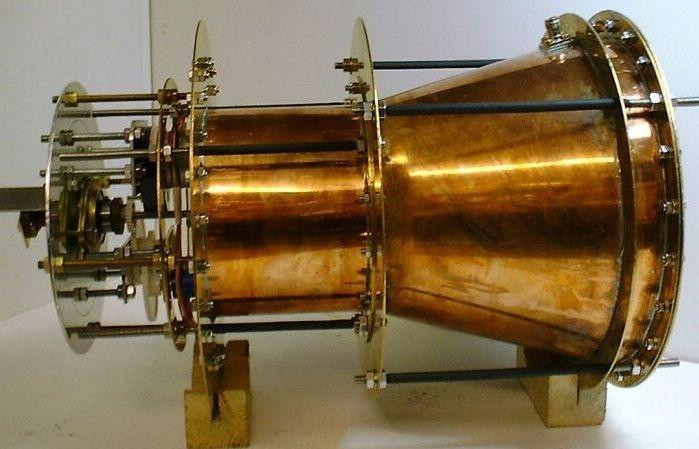
The paper shows that the ‘impossible’ propulsion system really does appear to work, and that is surprising as it defies Newton’s third law, which states that everything must have an equal and opposite reaction. Yet in test after test it continues to work. Last year, NASA’s Eagleworks Laboratory team got their hands on an EM Drive to try to figure out once and for all what was going on.
In case you’ve missed the hype, the EM Drive, or Electromagnetic Drive, is a propulsion system first proposed by British inventor Roger Shawyer back in 1999. Instead of using heavy, inefficient rocket fuel, it bounces microwaves back and forth inside a cone-shaped metal cavity to generate thrust. According to Shawyer’s calculations, the EM Drive could be so efficient that it could power us to Mars in just 70 days.
But, according to Newton’s Third law, for a system to produce thrust, it has to push something out the other way. The EM Drive doesn’t do this.
The new peer-reviewed paper is titled “Measurement of Impulsive Thrust from a Closed Radio-Frequency Cavity in Vacuum“, and has been published online as an open access ‘article in advance’ in the American Institute of Aeronautics and Astronautics (AIAA)’s Journal of Propulsion and Power. It’s very similar to the paper that was leaked online earlier this month and, most notably, shows that the drive does indeed produce 1.2 millinewtons per kilowatt of thrust in a vacuum:
“Thrust data from forward, reverse, and null suggested that the system was consistently performing at 1.2 ± 0.1 mN/kW, which was very close to the average impulsive performance measured in air. A number of error sources were considered and discussed.”