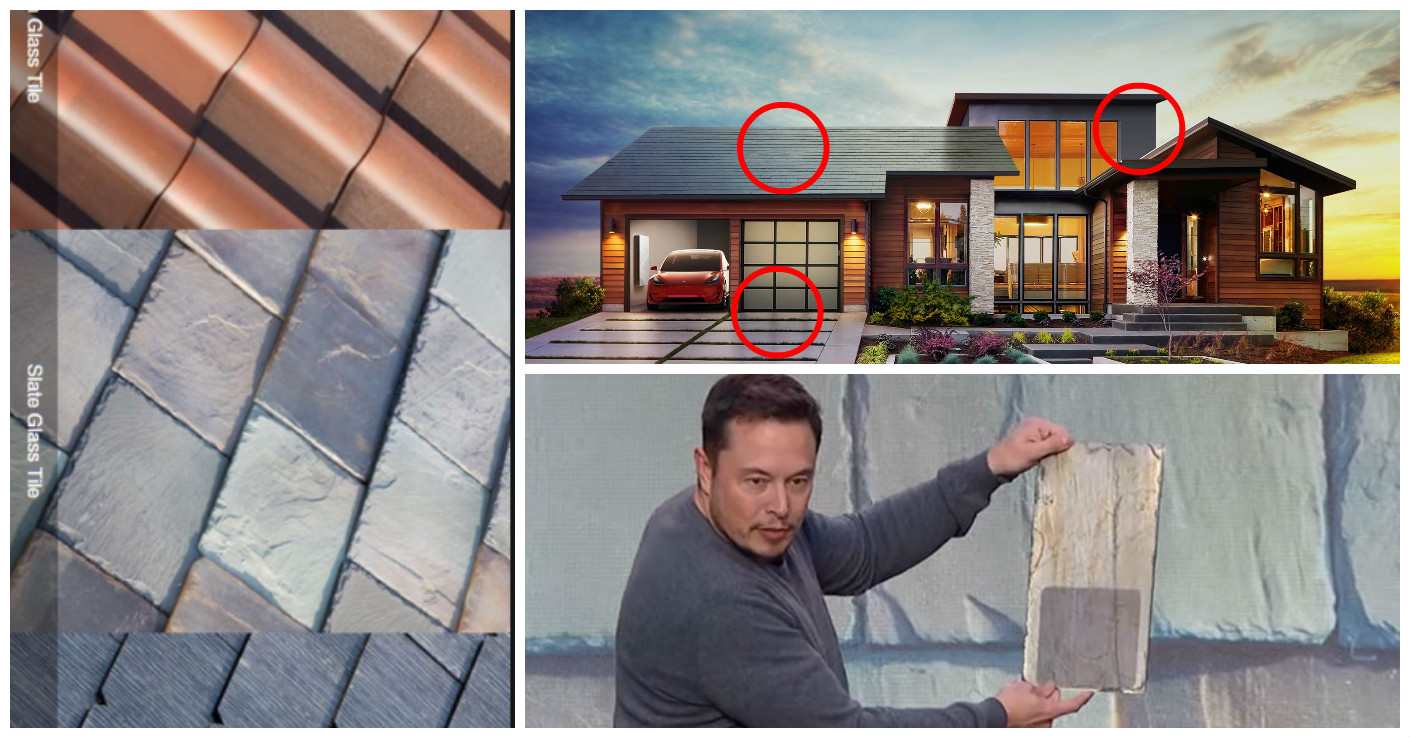
Is it a tile or is it a solar panel? Tesla made it impossible to distinguish !

Tesla CEO Elon Musk took to the stage at Universal Studios in LA promising to make solar sexy. And, I have to agree, he did succeed. He unveiled a range of textured glass tiles with integrated solar cells that are nearly indistinguishable from conventional tiling.

Musk revealed that a row of suburban American houses on Wisteria Lane—the old set of Desperate Housewives—were all, in fact, topped with solar roofs. Each house’s old roofing material had been stripped away, and replaced with one of four new styles of solar tile. From the street, it was virtually impossible to tell; the roofs retained a variety of traditional looks, from textured slate shingle to terra cotta tile.

The audience, a couple hundred invited guests, mostly Tesla owners, ooh-ed and ahh-ed in awe. These tiles coupled with the sleek update to the company’s energy-storing Powerwall and you are good to go!

The solar roofs are designed to be used with the Tesla Powerwall Version 2.0, which Musk also unveiled, is a bright white rectangle, and flatter than the first version released in April 2015. It will cost $5,500 for 14kWh of storage and 7kWh peak power draw. That’s enough to power a four bedroom house for a day.

Why do you need the battery? Once the panels are installed, they make electricity whenever the sun shines, with no moving parts, no noise, and, beyond the occasional cleaning, very little maintenance. The problem is, when the sun isn’t shining, like in the evenings when electricity demand peaks, they’re useless. Hence Tesla’s plan to integrate pretty panels with a battery. Generate and store by day, light up your house by night, and brag about it when you feel so inclined.

Another thing holding people back from switching to green electricity is that the large, purple-black sheets of glass don’t exactly blend in on a period house—or most other properties, for that matter.

Next page For More

Tagged : / /

Want Faster Wi-Fi? How About 100 Times Faster?

You’re probably going to hear a lot about LiFi technology the coming months, so better familiarise yourself. In simple words, it is a wireless technology that transmits high-speed data using visible light communication (VLC). With scientists achieving speeds of 224 gigabits per second in the lab using Li-Fi earlier this year, that’s 18 movies of 1.5 GB each being downloaded every single second.

Li-Fi was invented by Harald Haas from the University of Edinburgh, Scotland back in 2011, when he demonstrated for the first time that by flickering the light from a single LED, he could transmit far more data than a cellular tower. Now, it is out of the lab for the first time, trialling it in offices and industrial environments in Tallinn, Estonia, reporting that they can achieve data transmission at 1GB per second – that’s 100 times faster than current average Wi-Fi speeds.

“We are doing a few pilot projects within different industries where we can utilise the VLC (visible light communication) technology,” Deepak Solanki, CEO of Estonian tech company, Velmenni, told IBTimes UK.

“Currently we have designed a smart lighting solution for an industrial environment where the data communication is done through light. We are also doing a pilot project with a private client where we are setting up a Li-Fi network to access the Internet in their office space.”

The benefits of Li-Fi over Wi-Fi, other than potentially much faster speeds, is that because light cannot pass through walls, it makes it a whole lot more secure, and as Anthony Cuthbertson points out at IBTimes UK, this also means there’s less interference between devices.

And while you might be worried about how all that flickering in an office environment would drive you crazy, don’t worry – we’re talking LEDs that can be switched on and off at speeds imperceptible to the naked eye.

Next Page For More

Tagged : / /

Nokia is plotting it’s comeback armed with Android OS

The company already made quite the buzz with confirmed debut of new handsets at Mobile World Congress in February. Nokia CEO has already promised to deliver the trademark design and build quality we come to associate with the brand. However, Nokia won’t be building its own smartphones rather will be outsourcing it to HMD Global, a Finnish hardware startup run by former Nokia employees.

Nokia’s two-year non-compete deal with Microsoft ends this year and HMD Global holds the right to license Nokia’s brand for the next 10 years. The company will further license the manufacturing part to Foxconn and use Nokia’s diverse set of design and telecom patents. Nokia is reported to make its smartphone comeback with three new devices. Nokia has already made significant strides in the world of virtual reality and its OZO VR camera is already helping in the production of world-class VR content.

nokiaandroid

Initially rumours indicated that Nokia’s comeback devices will be powered by Qualcomm’s Snapdragon 820 processor. But other rumours indicate that Nokia will announce two flagship devices and another mid-range smartphone at MWC in February 2017 and the company might jump to Snapdragon 821 or the latest Snapdragon 835 ahead of the launch in order to better compete with Google’s Pixel and Pixel XL range in the flagship segment.

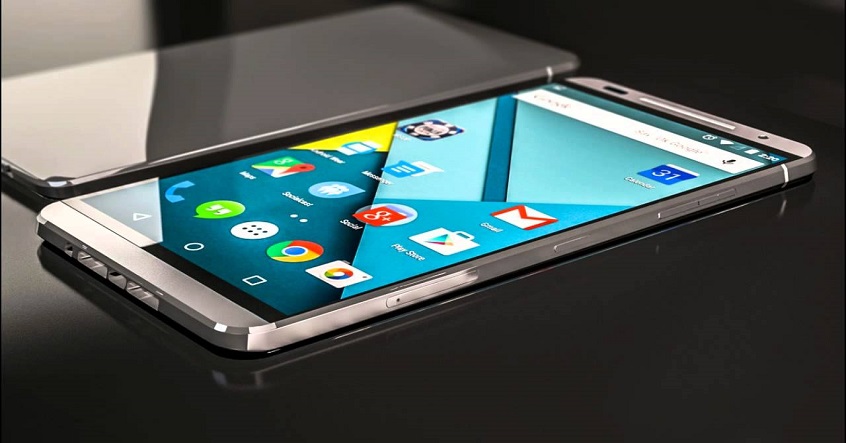
Not to forget, is Nokia’s promise to deliver the latest Android operating system. The large part of play here is the use of company’s very own Z-launcher based UI instead of stock one. Nokia’s Z launcher is a fun third party launcher that adapts itself according to use. Users can access their favourite apps quickly and there is even an option to scribble to reach apps.

Next Page For More

Tagged : / /
Verified by ExactMetrics