Of course we do the last notifications check right before falling asleep. And of course we do it again right after we wake up. For the majority of us, smartphones provide for at least 60% of our social, personal and professional needs. But what changes has this dependency bought on?
There’s something incredibly powerful about the blue lights that the designers of our smartphone, tablet, and laptop screens have been able to create. The lights in these screens glow so bright that we can see them even during a sunny day. At night, they’re bright enough that they’ve been compared to a “little window” that daylight can peer through.
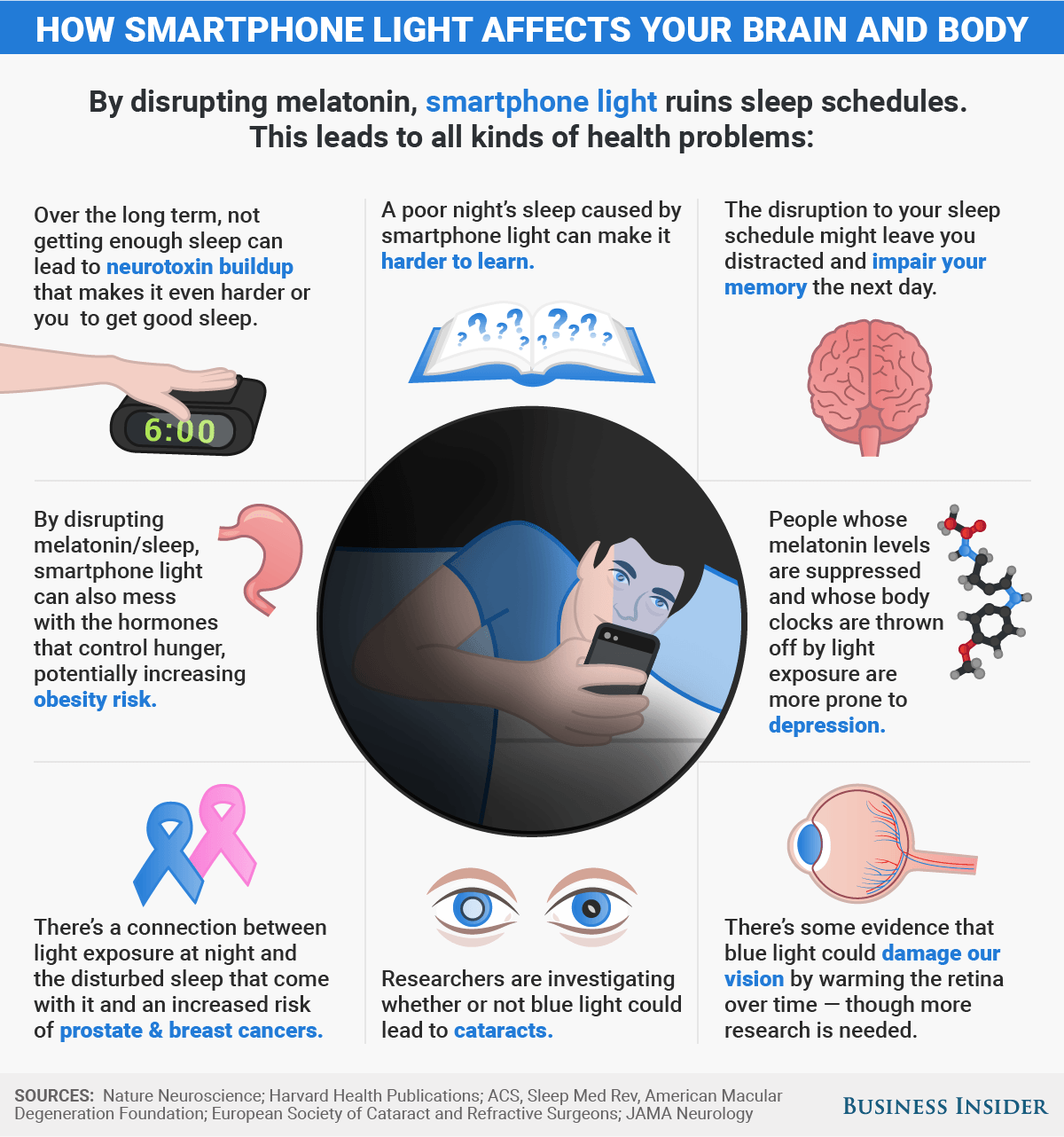
Our bodies naturally follow a cycle that helps us stay awake and alert during the day and helps us get essential rest at night. This is called our circadian cycle and it governed by melatonin. The main and probably worse proven effect of blue light is its disruption of our melatonin.
When we look at these screens as we’re getting ready for sleep, our brains get confused. That light has a similar effect to the sight of the morning sun, which causes the brain to stop producing melatonin, a hormone that gives your body “time to sleep” cues.
By disrupting melatonin production, smartphone light can disrupt your sleep cycle like an artificially induced sort of jet lag. This makes it harder to fall and stay asleep – and potentially causes serious health problems along the way.
By messing around with our sleep and melatonin levels, blue light also tampers with our hunger hormones that increase the chances of potential obesity. Moreover, people whose melatonin levels are suppressed and whose body clocks are thrown in discord are more susceptible to depression.
A bad night’s sleep also causes memory impairment and lack of focus. Basically, lack of sleep might be causing you to be scatterbrained. Neurotoxin buildup due to lack of sleep over time, may make it harder to fall asleep.
In physical effects, blue light can been linked by prostate and breast cancer chances. There is ongoing research about whether blur light warms up our retinas and damage our vision over time. Its link of cataracts is also being studied.
To combat this problem, app designers have created programs like f.lux and Apple’s Night Shift mode for iPhones, both of which adjust the light tones emitted by screens to remove bright blue light from the display at certain times of day. Many users swear by the effects of these apps and the orange tint they create does feel less harsh on the eyes. But while there’s some research indicating that the dimmer light may improve sleep, more study is needed on the topic in general.
Instant notification and updates and also causing us to desire faster gratification. Long story short, there are a lot of negative ways we are being affected in that we might have felt in our everyday lives. The least you can do is stop looking at your phones at least an hour before bedtime and keep them safely away for the night.
The University of Manchester now touts itself as the “Home of Graphene.”
As a technology lover you may like our daily important technology news series. It’s a playlist and you can retrieve the total day-wise videos. Please consider subscribing our YouTube channel:
Author: Technology and Beyond