
Nokia Prism – Is it Plain Weird or Simply the Future?

While Xiaomi has gone ahead and launched the first ever concept with almost zero bezels, a concept from an unknown source shows a Nokia phone and it looks incredibly… intriguing.

Most of us like “weird”. We like foldable phones, handsets made of crazy materials, smartphones with 64 GB of RAM and sporting endless battery lives. But this Nokia concept phone is a bit out there. It’s called Nokia Prism and it’s the creation of Vasili Sychev from Russia. As per the concept, the weird Nokia phone runs Windows Phone OS and there aren’t many leaks on this aspect.

As we all know and per several employees of Nokia itself, the Finnish smartphone giant will launch Android-powered smartphones by the end of this year or maybe early 2017 or by MWC 2017. If this concept is indeed what they have planned, it’s going to be quite a buzz.

Don’t get me wrong, the execution of the Nokia Prism phone is flawless, but in the end what’s the point? This prism-shaped phone looks good only as a piece of art nouveau and only when seen from the back. It feels like the time when you tried to cut a piece of paper and it ended up being a trapeze instead of a rectangle. And then you started cutting again…

he problem with the Nokia Prism is that it has those sharp and angular corners and edges, making it not very comfy to hold, actually, not comfy at all. And I’m not even talking about the resolution and the fitting of apps on the screen. It appears that the most prominent corner is reserved for the signal and notifications, while the “base” of the phone shows the rest of the UI and video playback screen.

This would work fine as a boomerang, but a phone? … Nope!

Users on 9gag have given extremely mixed, but nevertheless hilarious reactions:

“So what’s next? Cubicle phone? Sphere phone? Hexagonal phone?” speculates one comment.

While another practical one reads: “Does it come in lefty-mode?”

Other comments range from enquiring about its size and fit compared to their pockets to wondering if the YouTube clips with have parts of the screen cut off at weird angles.

At first glance itself, we admitted that the Nokia Prism doesn’t look like a phone in any angle. Instead, it looks like a tablet, however, the extra-large bezels don’t pave its way as a tablet either. In the camera department, the Nokia Prism’s concept images show that the rear camera will have two flashes, which is really awkward. Its shape proves that it won’t be easier to hold even with two hands.

“If I had a dollar for every application that would actually be compatible with the phone, I wouldn’t even have enough money to buy a different phone.” This one raises the whole new question.

“I think you would actually have less money.” is one of the less than enthusiastic replies.

width="560" height="314" allowfullscreen="allowfullscreen">

As a technology lover you may like our daily important technology news series. It’s a playlist and you can retrieve the total day-wise videos. Please consider subscribing our YouTube channel:

Author: Technology and Beyond
Tagged : / /

Cure at last! New Alzheimer’s Treatment Restores Memory Function Perfectly!

Alzheimer’s is a disease that affects 343,000 people in Australia, and 50 million worldwide. And as we don’t have any kind of vaccine or preventative measure to cure to stop it, it has been a race to to figure out how best to treat it. Publishing in Science Translational Medicine, a team from Queensland Brain Institute (QBI) at the University of Queensland have come up with a pretty promising solution.

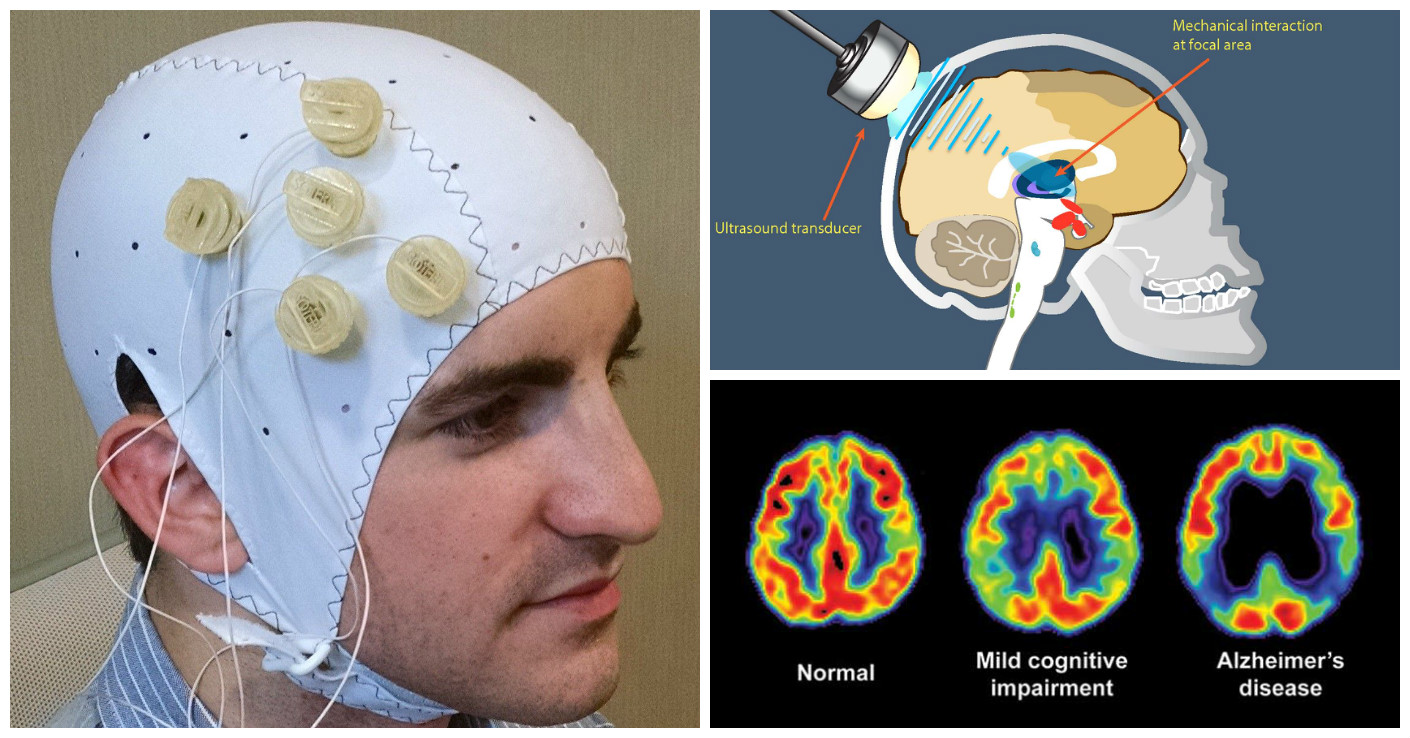
These Australian researchers have come up with a non-invasive ultrasound technology that clears the brain of neurotoxic amyloid plaques – structures that are responsible for memory loss and a decline in cognitive function in Alzheimer’s patients.

If a person has Alzheimer’s disease, it’s usually the result of a build-up of two types of lesions – amyloid plaques, and neurofibrillary tangles. Amyloid plaques sit between the neurons and end up as dense clusters of beta-amyloid molecules, a sticky type of protein that clumps together and forms plaques. And neurofibrillary tangles are found inside the neurons of the brain, and they’re caused by defective tau proteins that clump up into a thick, insoluble mass. This causes tiny filaments called microtubules to get all twisted, which disrupts the transportation of essential materials such as nutrients and organelles along them.

The team describes the technique as using a particular type of ultrasound called a focused therapeutic ultrasound, which non-invasively beams sound waves into the brain tissue. By oscillating super-fast, these sound waves are able to gently open up the blood-brain barrier, which is a layer that protects the brain against bacteria, and stimulate the brain’s microglial cells to activate. Microglial cells are basically waste-removal cells, so they’re able to clear out the toxic beta-amyloid clumps that are responsible for the worst symptoms of Alzheimer’s.

“We’re extremely excited by this innovation of treating Alzheimer’s without using drug therapeutics,” one of the team, Jürgen Götz, said in a press release. “The word ‘breakthrough’ is often misused, but in this case I think this really does fundamentally change our understanding of how to treat this disease, and I foresee a great future for this approach.”

The team reports fully restoring the memory function of 75 percent of the mice they tested it on, with zero damage to the surrounding brain tissue. The team says they’re planning on starting trials with higher animal models, such as sheep, and hope to get their human trials underway in 2017.

hey found that the treated mice displayed improved performance in three memory tasks – a maze, a test to get them to recognise new objects, and one to get them to remember the places they should avoid.

As a technology lover you may like our daily important technology news series. It’s a playlist and you can retrieve the total day-wise videos. Please consider subscribing our YouTube channel:

Author: Technology and Beyond

Tagged : / /

Why you shouldn’t bother to buy so-called organic foods!

This guy goes out of his way to avoid organic food every single time. He lays out his argument on the basis of three seriously considered factors:

  1. Informed confidence that we are safe buying “conventional” foods
  2. Recognizing that some of the best farming practices from an environmental perspective are not always allowed or practical under the organic rules
  3. An ethical problem with the tactics that some organic advocates and marketers employ which seriously misrepresents their “conventional” competition.

He goes on further to explain that for the last forty years, he and his wife have shared the shopping and cooking for their mostly home-based meals. They have always gardened, but also bought much of their fruit- and vegetable-rich diet from stores.

“I was a child of the generation influenced by “Silent Spring.” I was a dues-paying member of the Wilderness Society in high school. I grew up helping my beloved grandfather in his organic garden in the 1960s.  Some of our best friends in the late 1970s were pioneers in the development of the commercial organic industry. I’ve spent a significant proportion of my career developing biological and natural product-based pesticides which are applicable to organic. I fully appreciate the contribution that the organic movement made in the early 20th century when it highlighted the importance of fostering soil health. My problems with institutional organic are not at all about its founding ideals or about organic farmers, but rather about organic’s self-imposed limitations and about the ethics of a subset of its promoters.” he says.

Many consumers believe that the Organic label means the food has superior nutrition and is safer, especially in regard to pesticide residues.  This is not true. Studies have shown no appreciable difference in nutrition between crops grown either organically or conventionally.

The USDA, which oversees the foods labeled as “Certified Organic”, states quite clearly on its website about its role in organic,  that “Our regulations do not address food safety or nutrition.”  Foods labelled “Certified Organic” must adhere to certain rules and regulations but aren’t endowed with any particular nutritional or safety features.

Next Page For More

Tagged : /

Verified by ExactMetrics